
Public art has become an essential part of modern landscape design, cultural tourism development, municipal renewal, and architectural placemaking. Among the many materials and sculptural styles available today, weathering steel has gained a distinctive position because it combines structural strength, long outdoor service life, natural rust-colored beauty, and minimal maintenance requirements. The geometric hollow-pattern weathering steel decorative sculpture presented here is designed as a large-scale outdoor art installation that merges modern abstraction with functional spatial guidance. With a height range of approximately 3 to 4 meters and a width range of about 2.5 to 3.5 meters, it is suitable for parks, waterfront landscapes, city squares, resort entrances, cultural districts, commercial plazas, and civic open spaces.
This sculpture is not simply an object placed in a landscape. It is conceived as an interactive visual medium. Its openwork structure allows viewers to see the surrounding environment through the sculpture, turning natural scenery, architecture, pedestrians, light, and shadow into part of the artwork. As people walk around it, the sculpture changes continuously. What appears solid from one angle becomes transparent from another. What seems like a heavy metal form becomes a frame for the sky, the sea, trees, buildings, or urban movement. This dynamic coexistence of reality and illusion is the core aesthetic value of the product.
Compared with conventional outdoor decorative sculptures, this geometric hollow-pattern sculpture offers stronger environmental adaptability, a more contemporary visual language, better interaction with space, and reduced long-term maintenance costs. It is manufactured from weathering steel, a high-performance structural material known for developing a protective oxide layer when exposed to outdoor conditions. This naturally formed surface reduces the speed of corrosion and gives the sculpture a warm, evolving rust-brown tone. In coastal, rainy, windy, or high-exposure environments, the material provides a durable solution for clients who require both artistic quality and engineering reliability.
Jiangsu Xinyesheng Sculpture Co., Ltd. manufactures this product through advanced metal sculpture production methods, including design modeling, material selection, precision cutting, forming, welding, surface treatment, assembly testing, and quality inspection. The company’s experience across bronze sculptures, stainless steel sculptures, marble sculptures, fiberglass sculptures, and weathering steel sculptures gives it a broad understanding of artistic fabrication and outdoor installation requirements. This multidisciplinary manufacturing capability is one of the reasons the company can produce custom public artworks that meet both aesthetic expectations and practical engineering standards.
Geometric Hollow-Pattern Weathering Steel Decorative Sculpture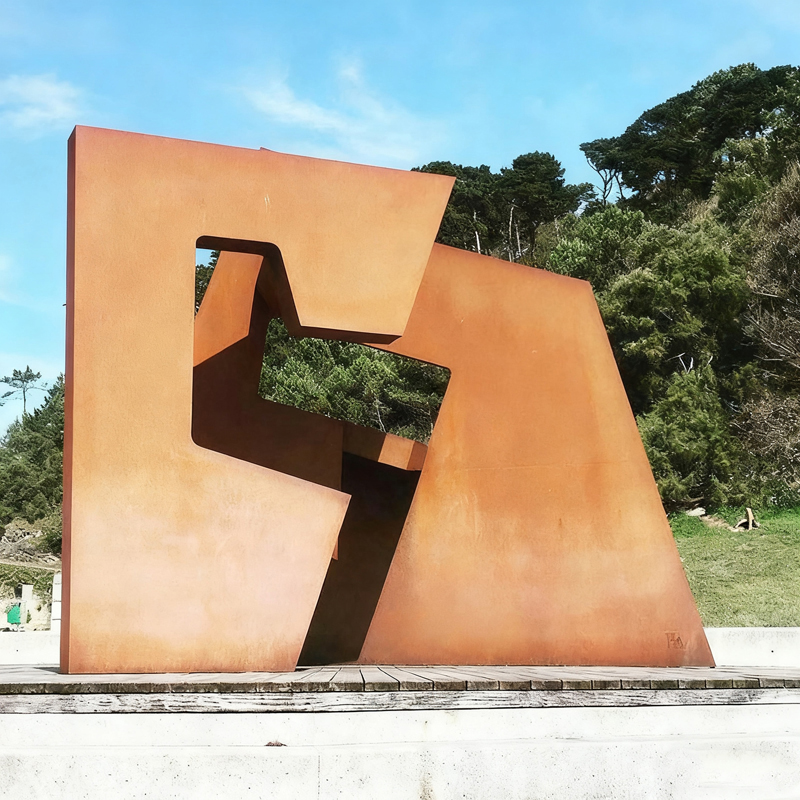
Content
The geometric hollow-pattern weathering steel decorative sculpture is based on a powerful contrast: the apparent weight of steel and the visual lightness of open space. Weathering steel is often associated with strength, permanence, and industrial character. By cutting and shaping the material into a hollow geometric form, the sculpture transforms that sense of heaviness into something more fluid and interactive. The empty spaces are as important as the solid parts. They allow air, light, landscape, and human movement to pass through the artwork.
This type of sculpture is especially suitable for contemporary public environments because it does not depend on a traditional figurative subject. Instead, it communicates through proportion, rhythm, geometry, material texture, and spatial experience. Abstract geometric sculpture has the advantage of being widely adaptable. It can harmonize with modern architecture, minimalist gardens, waterfront promenades, ecological parks, museum courtyards, and commercial developments. It does not impose a single narrative. Instead, it invites viewers to interpret it through their own movement and perspective.
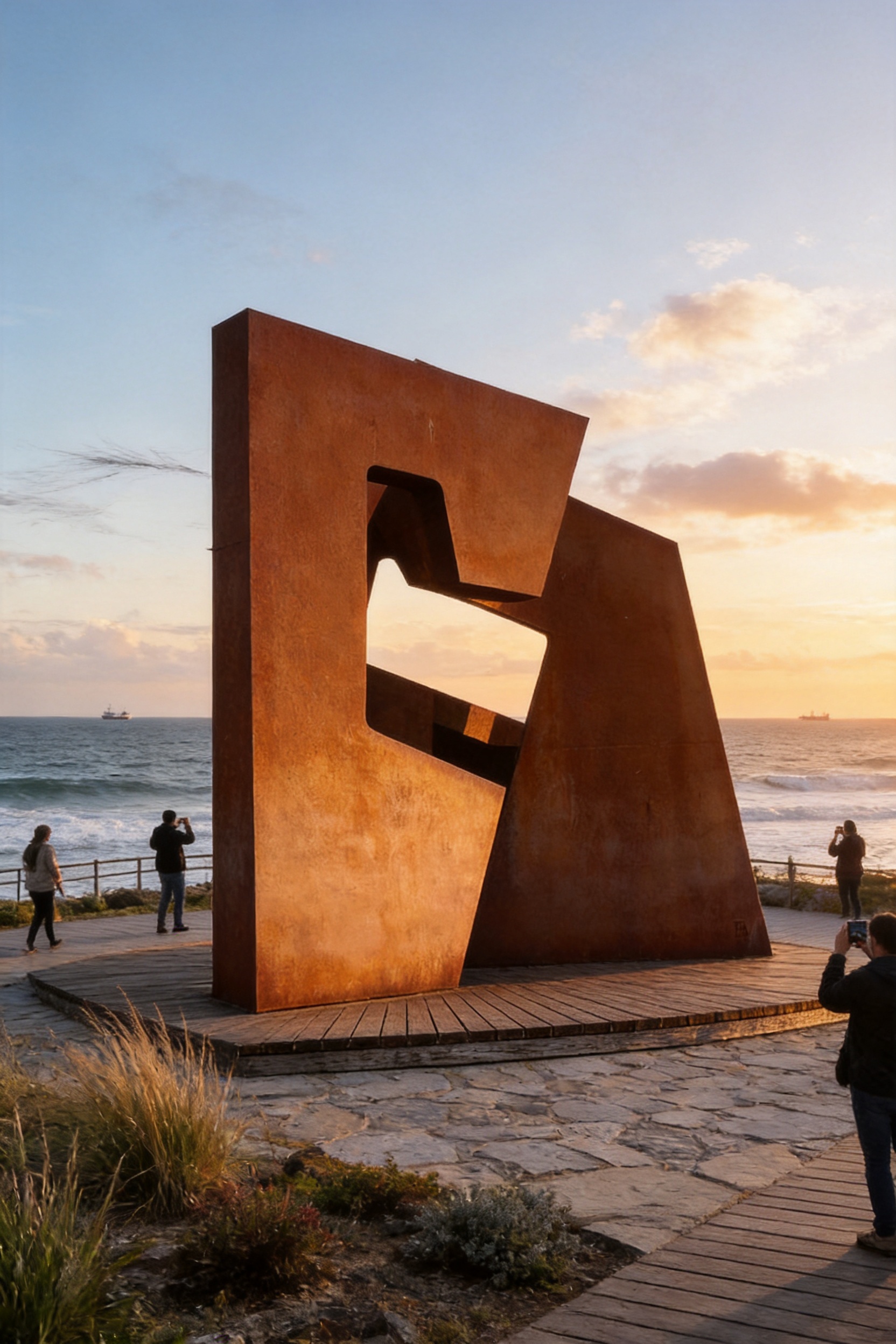
The hollow pattern creates a framing effect. When installed near a seaside walkway, the openings can frame waves, sky, boats, or distant islands. In a park, the sculpture can frame trees, paths, lawns, seasonal flowers, and visitors. In a city square, it can frame glass facades, historical buildings, fountains, or urban traffic. This function makes the sculpture more than a decorative object. It becomes a viewing instrument that reorganizes the visual relationship between the viewer and the environment.
The sculpture’s rust-colored surface is also central to its identity. Unlike painted metal finishes that may fade, peel, or require repeated maintenance, weathering steel gradually develops a stable patina. This patina changes subtly over time, giving the sculpture a living surface. In the early stage, the color may appear orange, reddish brown, or golden brown. As oxidation stabilizes, the tone becomes deeper and more mature. This process allows the sculpture to integrate naturally with soil, stone, wood, plants, and architectural materials.
In public art, emotional durability is as important as physical durability. A sculpture should continue to interest people after the first viewing. The hollow-pattern weathering steel sculpture achieves this through changing light, shadow, season, weather, and viewpoint. Morning sun, evening light, rainwater, mist, snow, and artificial night illumination all alter its appearance. This ability to remain visually engaging is one of its major advantages over simpler static monuments or mass-produced outdoor ornaments.
Weathering steel, sometimes known as atmospheric corrosion-resistant steel, is especially valuable for outdoor sculpture because it forms a protective layer under natural exposure. This surface layer slows further corrosion and reduces the need for paint or frequent coating renewal. For public projects, this is a significant economic and operational advantage. Municipal departments, landscape developers, resort operators, and commercial property owners often need art installations that can remain attractive for decades without intensive maintenance.
The sculpture’s core performance depends on this material advantage. Weathering steel provides high tensile strength, good structural stability, and strong resistance to wind, rain, and outdoor temperature variation. In areas with salt spray, humidity, and intense sunlight, material selection becomes even more important. Ordinary carbon steel may rust rapidly and require ongoing protective coating. Some painted surfaces can crack, fade, or blister. Weathering steel, by contrast, is designed to use oxidation as part of its protective and aesthetic function.
Another advantage is that weathering steel has a natural appearance that suits both urban and ecological contexts. Stainless steel can be highly reflective and visually striking, but it may not always blend with natural landscapes. Bronze is noble and classic, but the cost can be higher for large-scale works. Fiberglass is lightweight and versatile, but it may not offer the same sense of permanence and structural authenticity. Marble has timeless elegance, yet it is heavy, less flexible in forming large hollow geometric structures, and may be vulnerable to staining or weathering in some outdoor conditions. Weathering steel occupies a balanced position: strong, sculptural, modern, natural, and cost-effective for large outdoor installations.
The material also supports large-scale fabrication. For a sculpture in the 3 to 4 meter height range, structural integrity is essential. The artwork must withstand wind loads, transportation stress, installation procedures, and long-term exposure. Weathering steel can be cut, bent, rolled, welded, and assembled into complex shapes while maintaining the strength required for public environments. This makes it ideal for hollow-pattern geometric forms where both precision and durability are required.
Maintenance savings are particularly important when considering the full life-cycle value of a sculpture. A lower initial price is not always the best choice if the product requires repainting, repair, replacement, or frequent cleaning. The weathering steel sculpture is designed for a service life exceeding 25 years under appropriate design and installation conditions. Its surface matures naturally rather than deteriorating in the usual sense. For clients seeking long-term value, this makes it a practical and competitive option.
Large-scale outdoor sculpture often serves multiple roles. It may be a landmark, a meeting point, a visual axis, a symbolic gateway, a photo location, or a wayfinding element. The geometric hollow-pattern sculpture is particularly effective because its form can divide space without completely blocking sightlines. It creates spatial layers while preserving openness. This is valuable in parks, waterfronts, plazas, and cultural tourism sites where designers want to guide movement without building heavy barriers.
When positioned at the entrance of a scenic area, the sculpture can act as a symbolic threshold. Visitors pass near or through its visual field, recognizing that they are entering a designed cultural or recreational environment. In a municipal square, it can define a central gathering point. In a commercial district, it can increase brand-independent visual identity and encourage social media photography. In a resort or coastal promenade, it can connect the built environment with the natural horizon.
The hollow pattern also makes the sculpture safer and more comfortable in public environments compared with fully solid walls or opaque installations. It does not create a blind obstruction. People can see through it, which supports openness, visibility, and public security. The perforated structure reduces visual heaviness while maintaining a strong artistic silhouette. This balance is a key advantage in contemporary landscape architecture, where public spaces must feel both designed and accessible.
Spatial guidance is achieved through scale, orientation, and opening direction. The sculpture can be installed to frame a specific view, mark a pedestrian route, or strengthen the composition of a plaza. Its geometry can echo nearby architecture, paving patterns, bridges, sculpture trails, or garden layouts. When lighting is added, the openwork structure casts shadows and patterns onto the ground or nearby walls, extending the artwork beyond its physical body. At night, it can become a luminous landmark while still retaining the warm, matte character of weathering steel.
This layered role gives the product an advantage over purely ornamental sculptures. It contributes to design strategy. It can help organize space, enhance visitor experience, and create a memorable identity for a site. For landscape architects and project owners, this multifunctionality provides greater return on investment because the sculpture supports both visual appeal and spatial planning.
The highlight of this product is the dynamic aesthetics created by the coexistence of solid steel and hollow space. The sculpture’s material is real, heavy, durable, and tactile. Yet its hollow geometry creates illusion, transparency, and visual movement. The viewer’s perception changes continuously. From one direction, the sculpture may appear as a bold mass. From another, it becomes a delicate frame. This shifting experience is one of the strongest reasons to choose a hollow-pattern design for public art.
Dynamic aesthetics do not require mechanical movement. In this sculpture, movement is produced by the viewer, the changing environment, and the interaction between light and form. As a person approaches, the openings expand and contract visually. Lines overlap. Background scenes enter and leave the frame. Shadows move across the ground. In windy seaside locations, clouds and waves seen through the openwork can make the sculpture seem even more alive. In parks, leaves and branches viewed through the openings add seasonal motion.
This visual complexity creates high photographic value. Public art today often plays a role in digital culture. Visitors photograph and share memorable places. A sculpture that frames views, changes with perspective, and responds to light naturally encourages photography. Unlike a flat sign or simple decorative object, this sculpture creates multiple compositions from different positions. Every visitor can discover a unique view.
The contrast between weight and transparency also gives the sculpture intellectual depth. It suggests the relationship between human-made structure and natural environment, permanence and change, enclosure and openness, object and space. These themes are widely relevant in modern urban design. A successful public sculpture should not only decorate a site but also provoke a deeper awareness of place. This product achieves that through material, form, and interaction rather than through excessive ornament.
The rust-colored surface strengthens the sense of time. While the geometric form feels modern, the oxidation process feels natural and gradual. This combination avoids the coldness sometimes associated with industrial metal. The sculpture appears contemporary but not sterile. It can stand beside stone, concrete, glass, timber, water, and vegetation with equal confidence.
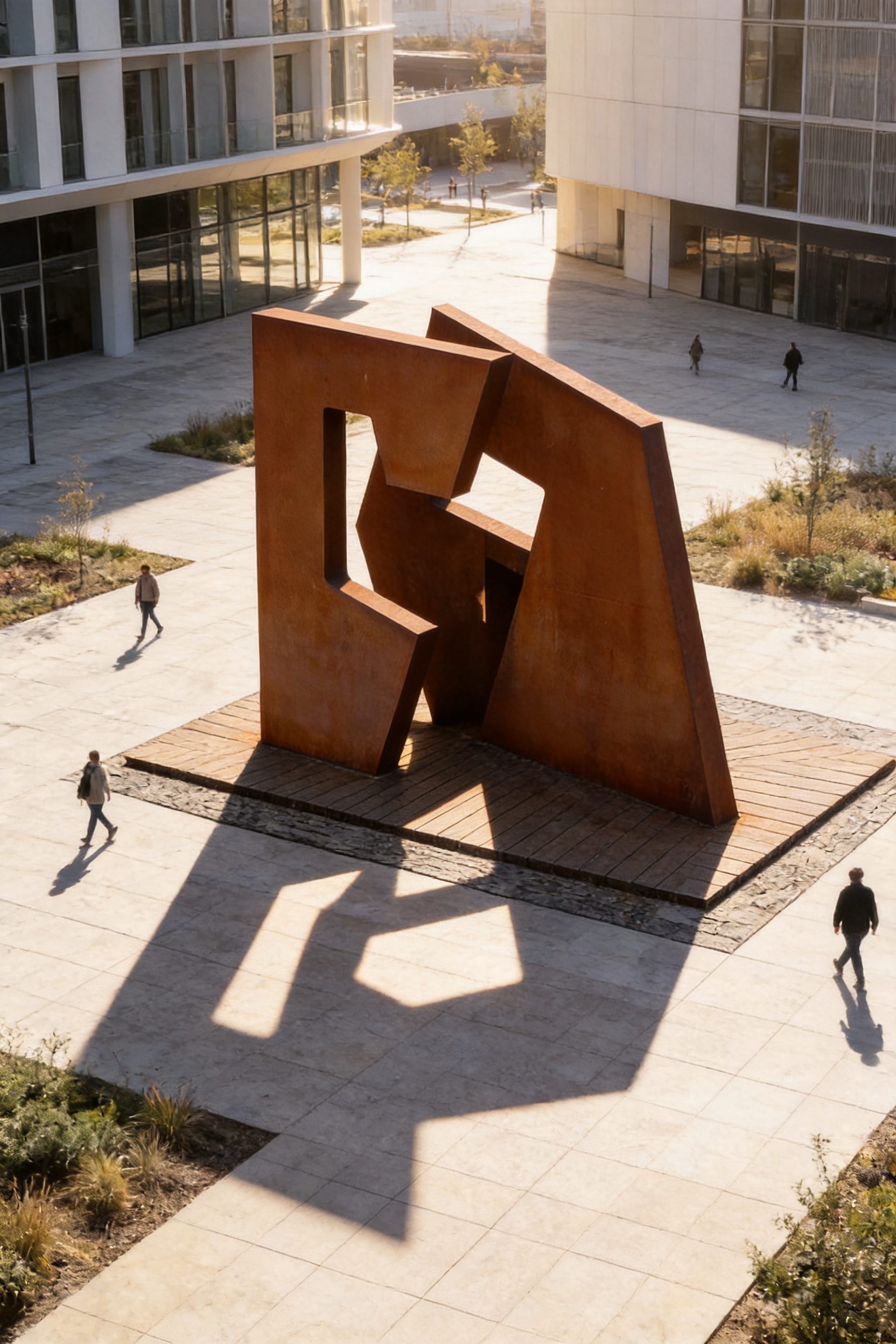
Clients selecting outdoor sculpture often compare several material and design options. Each has value, but the geometric hollow-pattern weathering steel sculpture offers a distinctive combination of advantages. It is important to evaluate not only the initial appearance but also long-term performance, installation practicality, environmental compatibility, customization potential, and maintenance requirements.
| Comparison Factor | Geometric Hollow-Pattern Weathering Steel Sculpture | Common Competing Options |
|---|---|---|
| Outdoor durability | Strong corrosion resistance with protective patina and long service life exceeding 25 years under suitable conditions. | Painted carbon steel may require repainting; some fiberglass products may age under ultraviolet exposure; stone may stain or crack depending on environment. |
| Maintenance demand | Low maintenance because the surface naturally oxidizes and stabilizes without requiring regular paint renewal. | Painted finishes, polished surfaces, and coated products often require periodic cleaning, repair, or refinishing. |
| Visual interaction | Openwork structure frames views and changes with viewing angle, light, weather, and movement. | Solid sculptures may provide strong form but often have less interaction with the surrounding scenery. |
| Landscape integration | Rust-brown texture harmonizes with plants, soil, stone, water, concrete, and modern architecture. | Highly reflective or bright painted surfaces may not suit all natural or minimalist settings. |
| Structural strength | High tensile strength supports large-scale outdoor installation and complex geometric fabrication. | Lightweight decorative materials may need hidden reinforcement; brittle materials can limit structural possibilities. |
| Design flexibility | Can be customized in scale, pattern, curvature, module structure, base design, and installation method. | Some traditional processes are less efficient for large hollow geometric forms. |
| Life-cycle value | Competitive cost range with low maintenance and strong long-term visual evolution. | Lower initial cost products may have higher repair or replacement costs over time. |
The table shows why weathering steel is increasingly selected for public art and landscape installations. It does not attempt to replace every material. Bronze, stainless steel, marble, and fiberglass all remain valuable for particular artistic goals. However, for a large geometric hollow-pattern sculpture intended for long-term outdoor use, weathering steel provides a rare combination of structural authenticity, natural surface evolution, low maintenance, and modern visual appeal.
A successful weathering steel sculpture depends not only on material choice but also on manufacturing quality. Poor cutting, inaccurate forming, weak welding, uncontrolled surface treatment, or inadequate structural design can reduce both appearance and durability. Jiangsu Xinyesheng Sculpture Co., Ltd. emphasizes advanced fabrication processes to ensure that each sculpture meets project requirements from concept development to installation support.
The manufacturing process begins with design communication. Clients may provide a concept sketch, site plan, architectural rendering, size requirement, or reference image. The company’s technical team evaluates the sculpture’s intended location, scale, viewing distance, foundation conditions, transportation limitations, and local climate. For a hollow-pattern sculpture, pattern density, opening size, edge treatment, structural ribs, and installation anchors must be considered from the beginning. The goal is to preserve artistic transparency while maintaining strength and safety.
Digital modeling is usually the next stage. Three-dimensional modeling allows designers and engineers to study the sculpture from multiple angles. It helps determine proportions, curvature, panel segmentation, joint locations, and internal support. For public projects, digital visualization is valuable because it allows the client to understand the final effect before production. The model can also assist with structural analysis, fabrication drawings, and cutting data.
Precision cutting is essential for hollow-pattern sculpture. The openwork design requires clean edges and accurate geometry. Advanced cutting methods, such as CNC plasma cutting or laser cutting depending on thickness and design requirements, help achieve consistent patterns. Accurate cutting reduces assembly errors, improves visual quality, and supports efficient welding. In contrast, manually cut or poorly controlled patterns can appear uneven and reduce the refined character of a modern sculpture.
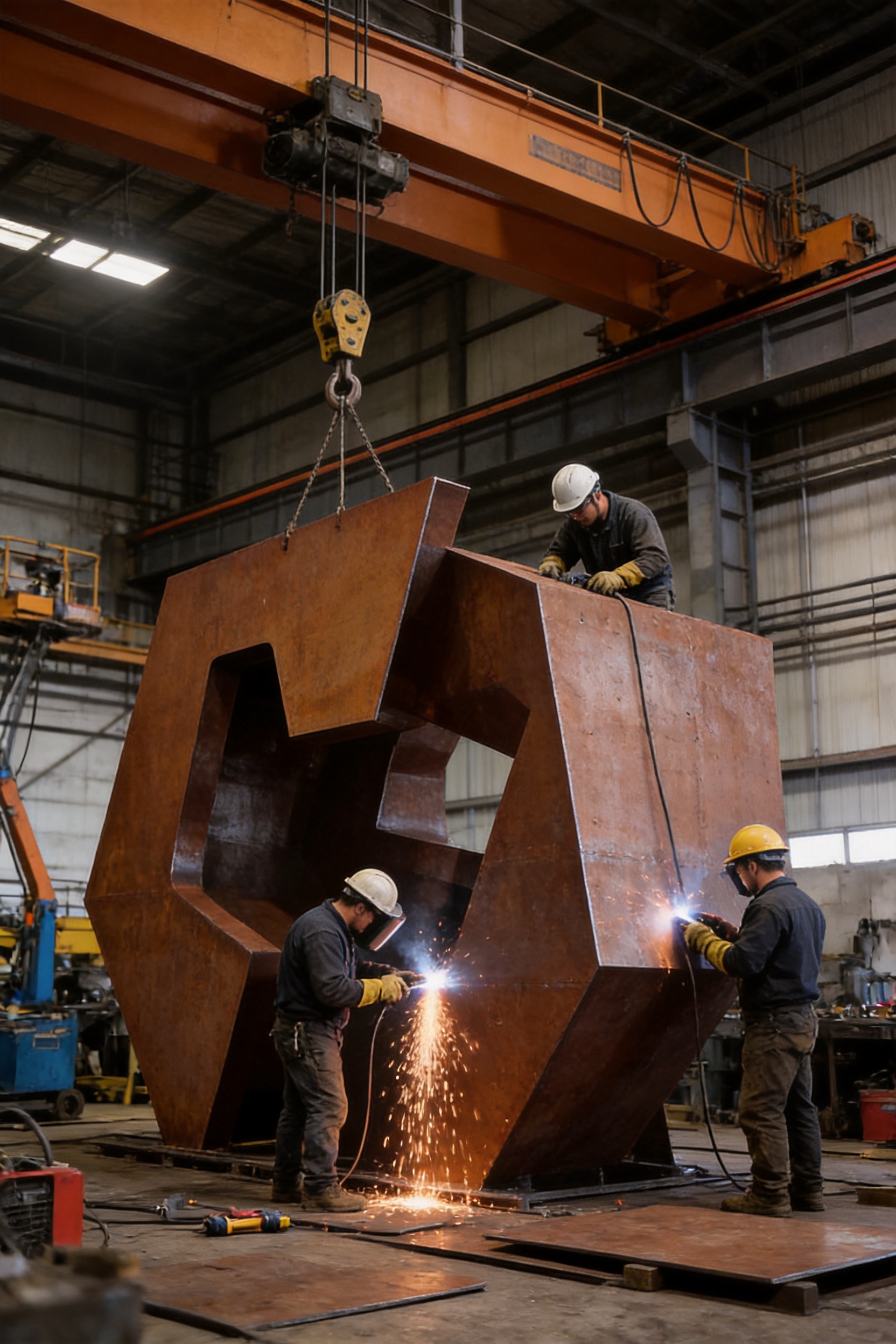
After cutting, the steel components are formed according to the design. Depending on the sculpture’s shape, this may involve rolling, bending, pressing, or segmented fabrication. Large geometric sculptures often require careful control of curvature and alignment. Skilled technicians combine machinery with hand craftsmanship to achieve the desired form. This is where industrial fabrication and artistic sensitivity must work together. A technically correct shape must also look visually balanced and expressive.
Welding is another critical stage. The sculpture must be strong enough for outdoor installation, but the welds should not distract from the artwork. Experienced welders control heat input, joint alignment, penetration, and surface finishing. For hollow-pattern structures, weld distortion must be carefully managed because openwork panels can deform if handled improperly. After welding, grinding and finishing are performed to refine edges, transitions, and visible surfaces.
Surface preparation affects the quality of the weathering steel patina. The sculpture may undergo cleaning, blasting, oxidation guidance, or controlled pre-rusting depending on project requirements. Some clients prefer a naturally developing surface after installation, while others request a more mature rust tone before shipment. The company can coordinate the surface process to meet the desired appearance while respecting the material’s natural characteristics.
Trial assembly and quality inspection help reduce installation risk. For large sculptures, the work may be divided into modules for transport and assembled on site. Before shipping, modules can be checked for fit, alignment, bolt holes, weld quality, surface consistency, and overall dimensions. This reduces the possibility of unexpected problems during installation. Proper packaging is also important because weathering steel surfaces and geometric edges must be protected during transport.
Public sculpture must be beautiful, but it must also be safe. A large outdoor artwork is exposed to wind, rain, public contact, possible climbing behavior, ground movement, and maintenance operations. Engineering considerations are therefore integrated into the design and fabrication process. The geometric hollow-pattern weathering steel sculpture is produced with attention to structural strength, stability, anchoring, edge safety, and site compatibility.
The sculpture’s height of 3 to 4 meters gives it strong visual presence, but this scale also requires a reliable foundation. Depending on the site, installation may involve embedded steel plates, anchor bolts, concrete footings, concealed base structures, or customized mounting systems. The base design must transfer loads safely to the ground. In windy regions or open waterfront areas, wind load evaluation is especially important because the sculpture’s height and surface area influence stability. The hollow pattern can reduce wind resistance compared with a fully solid panel, which is another practical advantage of the openwork design.
Edge finishing is essential in public spaces. Cut metal edges must be processed to reduce sharpness and improve safety. Welded joints, corners, and contact areas should be checked carefully. If the sculpture is located in a site where children may approach it, additional attention should be given to opening sizes, reachable edges, and anti-climbing considerations. Public art should invite viewing and interaction while avoiding unnecessary hazards.
Drainage is also relevant. Weathering steel performs best when the surface can dry after wetting. Design details should avoid long-term water accumulation in hidden pockets or horizontal cavities. Proper drainage openings, slope design, and installation planning help support the development of a stable patina. This is one reason professional sculpture fabrication differs from ordinary metal decoration. The product must be designed for the real behavior of water, air, and outdoor exposure.
For coastal environments, salt spray and humidity require careful material and detail selection. Weathering steel is known for corrosion resistance, but design and installation should still support good ventilation and avoid continuous water retention. In special environments, the company can discuss plate thickness, surface treatment, structural reinforcement, and maintenance recommendations with the client to ensure suitable performance.
Lighting integration may also be considered. Ground lights, concealed uplights, or linear lighting can emphasize the hollow pattern at night. However, electrical installation should be planned so that fixtures, conduits, and maintenance access do not damage the sculpture’s appearance or create water-trapping areas. Coordination between sculpture manufacturer, landscape contractor, lighting designer, and project owner helps achieve the best result.
One of the strongest advantages of this sculpture type is customization. Although the standard product information identifies a height of 3 to 4 meters and a width of 2.5 to 3.5 meters, the concept can be adapted for different project scales and site identities. Public art is most successful when it belongs to its location. Customization allows the sculpture to reflect the character of a city, park, cultural attraction, resort, or commercial development.
Size customization is often the first consideration. A sculpture for a small garden courtyard may need a more compact scale, while a landmark for a municipal plaza may require larger dimensions. Proportion is more important than size alone. The height, width, thickness, opening scale, and base relationship must match the surrounding environment. A well-proportioned sculpture appears intentional and integrated rather than oversized or insignificant.
Pattern customization allows the artwork to connect with local themes. The hollow geometry can be designed with angular patterns, flowing lines, cellular structures, abstract symbols, architectural references, or natural inspirations. For a coastal site, patterns might suggest waves, wind, shells, or navigation. For a cultural district, the geometry might reference local architecture or historical motifs in an abstract way. For a modern business park, the pattern might emphasize technology, precision, and innovation.
Surface customization is also possible within the natural character of weathering steel. Clients may choose a raw weathering process, controlled pre-oxidation, darker patina, or more uniform rust tone. The final appearance will continue to evolve outdoors, but the starting condition can be adjusted according to project schedule and visual preference. For projects requiring immediate presentation, pre-rusting can help the sculpture look mature at the time of opening.
Structural customization includes plate thickness, internal reinforcement, modular segmentation, installation base, lifting points, and anchoring methods. These details may not be visible, but they determine long-term performance. A responsible manufacturer treats them as part of the artwork rather than secondary technical items. For international projects, modular design can also reduce shipping difficulty and simplify on-site assembly.
Functional customization can transform the sculpture into a more interactive installation. It may be designed as a walk-through frame, a gateway element, a photo landmark, a seating-adjacent feature, a light-and-shadow installation, or a series of repeating modules along a path. It can also be combined with landscaping, water features, paving, signage, or architectural walls. The hollow structure makes it especially suitable for integration with lighting and view corridors.
Seaside and park landscapes require materials that can tolerate environmental exposure while maintaining visual harmony with nature. The geometric hollow-pattern weathering steel sculpture is well suited to these locations because it is strong, corrosion resistant, visually warm, and capable of framing open views. At the seaside, the sculpture can interact with the horizon, sky, waves, and changing weather. In parks, it can relate to trees, paths, lawns, and seasonal colors.
Coastal environments are particularly demanding. Salt spray, wind, humidity, and strong sunlight can damage many outdoor materials. Weathering steel provides a durable solution when properly designed and detailed. Its high tensile strength helps the sculpture withstand wind and weather, while its patina offers a naturally protective surface. The openwork design can reduce the feeling of obstruction along scenic routes, allowing visitors to enjoy views through the artwork.
In park landscapes, the sculpture can serve as both a focal point and a spatial organizer. Placed at a path intersection, it can attract visitors and guide movement. Installed near a lawn or water feature, it can become a visual anchor. Positioned among trees, it can create a dialogue between geometric human-made form and organic natural growth. Its rust-brown tone often works beautifully with green vegetation, autumn leaves, stone paving, and timber structures.
The sculpture is also suitable for cultural tourism projects because it offers memorable visitor engagement. Scenic areas increasingly seek installations that encourage exploration and photography. A hollow-pattern sculpture provides many photo angles and can frame iconic views. This makes it valuable for destination identity. It can become a recognizable image associated with the site without relying on commercial logos or temporary decoration.
For municipal projects, the sculpture expresses modernity, permanence, and civic investment. Weathering steel has a dignified but approachable character. It does not require shiny luxury to appear valuable. Instead, it communicates strength, time, and integration with public space. This makes it suitable for urban renewal, ecological corridors, riverside promenades, transportation hubs, and community squares.
Jiangsu Xinyesheng Sculpture Co., Ltd. provides sculpture manufacturing services across multiple material categories, including bronze, stainless steel, marble, fiberglass, and weathering steel. This wide production scope is a meaningful advantage because different projects require different artistic and technical solutions. A company familiar with multiple materials can better advise clients on the best choice for a specific site, budget, style, and performance requirement.
For weathering steel sculpture, the company’s strengths include custom design communication, large-scale metal fabrication, skilled welding, surface treatment control, and project-oriented production management. Outdoor sculptures are rarely identical to ordinary industrial products. They require a balance of art, engineering, logistics, and installation planning. The company’s ability to handle custom projects helps clients transform design ideas into buildable and durable artworks.
Advanced manufacturing processes improve consistency and quality. Digital design and fabrication drawings reduce uncertainty. Precision cutting improves the accuracy of hollow patterns. Skilled forming techniques allow the sculpture to achieve strong geometric presence. Professional welding and finishing ensure durability and visual refinement. Surface treatment experience helps create the desired weathering steel appearance. Quality inspection before shipment reduces installation risk.
Another competitive strength is the ability to support projects at different stages. Some clients may already have a complete design and need fabrication. Others may have only a concept and need design development. Some may require a sculpture adapted to an existing landscape plan. Others may need guidance on size, base design, and installation method. A flexible manufacturer can cooperate with designers, contractors, developers, and municipal clients according to project needs.
Cost-performance is also important. The listed price range of approximately US$4268.34 to US$7967.57 reflects a product positioned for serious outdoor installation while remaining accessible compared with many large-scale custom public artworks. Actual pricing can vary depending on dimensions, steel thickness, pattern complexity, surface treatment, internal structure, packaging, shipping, and installation requirements. When compared with products that require frequent repainting or replacement, weathering steel often provides stronger long-term value.
The company’s manufacturing base in Jiangsu Province supports access to metalworking resources, skilled labor, and export logistics. For overseas clients, communication, packaging, modular design, and shipment preparation are important parts of the service. Large outdoor sculptures must be protected during transit and prepared for efficient assembly. Professional handling reduces risk and helps ensure that the sculpture arrives ready for installation.
Installation planning should begin early in the project. A sculpture of this scale requires coordination between the manufacturer, project owner, landscape contractor, structural engineer, and installation team. Site conditions such as soil bearing capacity, foundation location, underground utilities, access for lifting equipment, drainage, pedestrian circulation, and lighting should be reviewed before final production.
The foundation must be designed according to the sculpture’s weight, height, wind exposure, and base structure. In many cases, a reinforced concrete foundation with anchor bolts is suitable. The anchor system may be concealed for a clean appearance. If the sculpture is installed on paving, the foundation should be coordinated so that the finished ground level aligns neatly with the base. If installed in soft landscape, drainage and soil contact should be considered carefully.
Transportation access is another practical issue. A 3 to 4 meter sculpture may be shipped as a whole piece or divided into modules depending on size, route, container limits, and site access. Modular construction can simplify shipping but requires precise connection design. Trial assembly at the factory helps ensure that modules fit correctly. On site, lifting points and assembly sequence should be planned to avoid damage to the patina or deformation of openwork panels.
The sculpture’s orientation affects its artistic impact. Before installation, designers should study main viewing angles, sun path, background scenery, pedestrian flow, and night lighting. Because the hollow pattern frames views, the sculpture should be positioned to capture meaningful scenery. A poor orientation may reduce its interactive value, while a thoughtful orientation can transform the entire site experience.
Landscape integration can be enhanced through surrounding materials. Weathering steel pairs well with natural stone, gravel, concrete, dark paving, timber decking, ornamental grasses, water surfaces, and minimalist planting. The rust tone can be repeated in smaller site elements such as edging, benches, signs, or planters to create a coherent design language. However, care should be taken to manage runoff from new weathering steel surfaces, as early-stage rust water may stain light-colored paving if drainage is not considered.
Lighting should be subtle and strategic. Uplighting can emphasize the sculpture’s height and cast patterned shadows. Backlighting can enhance the openwork silhouette. Integrated ground lighting can make the sculpture a nighttime landmark. The warm weathering steel surface often works well with warm white light, while cooler light can create a more dramatic modern effect. The final choice depends on the project atmosphere.
One of the main benefits of weathering steel is low maintenance, but low maintenance does not mean no care at all. Proper installation and occasional inspection help the sculpture achieve its intended service life. The protective patina develops best when the surface experiences cycles of wetting and drying. Areas with constant moisture, poor drainage, or trapped debris should be avoided or corrected.
During the early oxidation stage, the surface color may change noticeably. This is normal and part of the material’s aesthetic development. The sculpture may appear brighter orange at first and then gradually become deeper brown. Clients should understand this natural process before installation. It is not a defect but a defining characteristic of weathering steel.
Basic maintenance may include periodic visual inspection, removal of accumulated leaves or debris, checking anchor bolts, confirming drainage, and cleaning unwanted surface contaminants. In public spaces, graffiti or accidental staining should be addressed with appropriate methods. Harsh chemicals should be avoided unless recommended by professionals because they may affect the patina.
If the sculpture is installed near light-colored paving, early runoff management is useful. Temporary protection, drainage design, gravel borders, or darker adjacent materials can reduce visible staining during the initial weathering period. Once the patina stabilizes, runoff typically becomes less pronounced. Good detailing from the beginning helps preserve both the sculpture and its surrounding landscape.
Compared with painted metal sculptures, the long-term care burden is significantly lower. Painted works may require recoating after years of exposure, especially in harsh climates. Polished stainless steel may require cleaning to remove fingerprints, water marks, or deposits. Fiberglass may need surface repair if coatings degrade. Weathering steel’s natural patina allows it to age gracefully, which is especially valuable for public projects with limited maintenance budgets.
The geometric hollow-pattern weathering steel decorative sculpture is suitable for a wide range of outdoor and semi-outdoor environments. Its combination of scale, transparency, and durable material makes it especially effective where a site needs a strong visual identity without losing openness.
In city squares, it can become a landmark and meeting point. Its modern geometry communicates civic confidence and contemporary design. The openwork form keeps the square visually connected and avoids creating a heavy obstruction. With lighting, it can remain active and attractive at night.
In parks, it can mark entrances, path junctions, lawns, or scenic viewpoints. The sculpture’s rust tone harmonizes with plants and natural textures. Seasonal changes in vegetation create continuous variation through the hollow frame. It can also serve as an educational example of material aging and environmental design.
In seaside landscapes, it can frame the horizon and create a memorable photo location. The material’s corrosion resistance and strength support long-term outdoor exposure. The contrast between solid steel and moving water produces a poetic visual effect.
In cultural tourism destinations, it can create a signature installation that encourages visitor engagement. The sculpture can be customized to reflect local culture, natural features, or architectural identity. Its abstract form allows broad interpretation and avoids limiting the site to a single theme.
In commercial plazas and real estate developments, it can enhance property image and create a premium outdoor environment. A well-designed sculpture gives visitors and tenants a sense of quality, permanence, and artistic attention. It can support branding indirectly through atmosphere rather than signage.
In museum, gallery, and cultural center settings, it can function as a transitional artwork between building and landscape. Its geometric abstraction and material honesty are compatible with contemporary art and architecture. It can also create a strong entrance sequence or courtyard focal point.
For landscape architects, the sculpture offers a flexible design tool. It can be used as a focal point, frame, screen, threshold, axis marker, or sculptural wall. Because it is hollow, it can shape space without closing it. Because it is weathering steel, it contributes texture and color without requiring decorative coating. Because it is geometric, it coordinates well with modern site planning.
For project owners, the value lies in visual impact, durability, and life-cycle economy. A public sculpture is an investment in identity. It should attract attention, withstand weather, support visitor experience, and remain relevant for years. This product meets those goals through a combination of material performance and interactive aesthetics.
For contractors, the product can be manufactured with installation practicality in mind. Modular fabrication, anchor planning, lifting considerations, and factory trial assembly can reduce site risk. Clear communication between manufacturer and contractor helps ensure smooth installation.
For municipal decision-makers, the sculpture provides a contemporary public art solution with manageable maintenance requirements. Its abstract language is inclusive and adaptable. It does not depend on fragile finishes or excessive upkeep. It can become part of urban renewal, cultural development, or ecological landscape improvement.
For resort and tourism developers, the sculpture can create a memorable destination image. Visitors are drawn to artworks that invite participation and photography. The hollow frame naturally encourages people to look through, walk around, and discover different views. This can increase dwell time and emotional connection to the place.
Quality control is a decisive factor in sculpture manufacturing. A large outdoor artwork must meet aesthetic, structural, and dimensional expectations. Jiangsu Xinyesheng Sculpture Co., Ltd. applies production control across multiple stages to help ensure reliable results.
Before production, drawings and specifications are reviewed. Dimensions, material thickness, pattern layout, module divisions, base plates, anchor points, and surface requirements should be confirmed. This prevents misunderstandings and supports accurate fabrication. For custom projects, approval drawings are especially important because they become the reference for production and inspection.
During cutting and forming, dimensional accuracy is checked. Openwork patterns must align with the overall geometry. Irregular spacing or distorted edges can reduce the high-end appearance of the sculpture. Skilled workers and precision equipment help maintain consistency.
During welding, joints are inspected for strength, alignment, and finish quality. Because the sculpture will be exposed outdoors, weld reliability is essential. Grinding and finishing should be performed carefully to maintain the intended visual style. The goal is not to erase all evidence of craftsmanship but to present a refined and professional surface.
Surface treatment is monitored to achieve the desired weathering effect. Weathering steel is natural, so some variation is expected and desirable. However, the overall appearance should be controlled enough to meet client expectations. If pre-oxidation is requested, the process should be performed evenly and safely.
Before shipment, the sculpture or modules can be checked for overall dimensions, connection fit, surface condition, stability, packaging protection, and accessory completeness. Installation components such as bolts, plates, or connection parts should be clearly identified. Proper packaging reduces damage during transportation and helps the installation team work efficiently upon delivery.
Its main difference is the combination of strong weathering steel material, large-scale geometric abstraction, and interactive hollow-pattern design. It does not simply occupy space; it frames the surrounding environment and changes visually as viewers move. The contrast between solid steel and open space creates dynamic aesthetics that many ordinary solid sculptures cannot achieve.
Yes. Weathering steel is designed to form a protective oxide layer under outdoor exposure. This layer slows corrosion and gives the material its characteristic rust-brown appearance. With proper design, drainage, and installation, the sculpture can achieve a service life exceeding 25 years.
No regular painting is required. The surface is intended to oxidize naturally and develop a stable patina. This is a major advantage over painted carbon steel sculptures, which may require periodic coating maintenance.
Yes. The standard reference size is approximately 3 to 4 meters in height and 2.5 to 3.5 meters in width, but dimensions, hollow patterns, curvature, surface tone, module structure, and installation base can be customized according to project requirements.
It is suitable for seaside and waterfront landscapes when properly designed and installed. Weathering steel offers strong corrosion resistance and high tensile strength. For salt spray environments, details such as drainage, ventilation, steel thickness, and foundation design should be carefully considered.
The hollow structure allows viewers to see scenery through the sculpture. It creates framed views of nature, architecture, and people. As the viewer changes position, the relationship between solid steel, open space, and background scenery changes, making the static sculpture feel visually dynamic.
Yes. Ground lighting, uplighting, backlighting, or integrated landscape lighting can be used to emphasize the hollow pattern and create dramatic night effects. Lighting should be planned carefully so that electrical components do not interfere with drainage, safety, or the sculpture’s appearance.
The foundation depends on site conditions, sculpture size, wind exposure, and installation method. A reinforced concrete foundation with anchor bolts is commonly used. The manufacturer can coordinate base design details with the project team.
During the early weathering stage, some rust-colored runoff may occur, especially after rain. Proper drainage design, gravel borders, darker paving, or temporary protection can reduce staining. Once the patina stabilizes, runoff generally decreases.
The company offers multi-material sculpture manufacturing experience, custom design support, advanced metal fabrication processes, skilled welding, surface treatment capability, and project-oriented quality control. These strengths help transform a design concept into a durable and visually refined public artwork.
The geometric hollow-pattern weathering steel decorative sculpture is a strong solution for modern outdoor public art. It combines durable material performance, contemporary geometric design, interactive viewing, natural surface evolution, and practical low maintenance. Its weathering steel body provides corrosion resistance and structural strength, while its openwork pattern creates transparency, framed views, and dynamic visual experiences. This makes it suitable for seaside landscapes, parks, city squares, cultural tourism destinations, municipal projects, commercial plazas, and architectural environments.
Compared with many competing outdoor sculpture options, this product offers excellent life-cycle value. It does not depend on fragile painted surfaces. It does not require the high material cost of large bronze works. It has stronger structural authenticity than many lightweight decorative alternatives. It integrates more naturally with outdoor landscapes than highly reflective or overly artificial finishes. Most importantly, it creates an active relationship between sculpture, viewer, and environment.
Jiangsu Xinyesheng Sculpture Co., Ltd. supports the product with advanced manufacturing processes, including digital modeling, precision cutting, forming, welding, surface treatment, trial assembly, and quality inspection. The company’s experience in bronze, stainless steel, marble, fiberglass, and weathering steel sculpture production allows it to serve diverse custom project needs. For clients seeking a landmark artwork that can endure weather, enrich public space, and deliver modern artistic value, this weathering steel hollow-pattern sculpture is a compelling choice.
With its balance of strength and openness, permanence and change, reality and illusion, the sculpture represents the direction of contemporary public art: not merely an object to be observed, but a spatial experience to be entered, photographed, interpreted, and remembered.
ASTM International. Standard Specification for High-Strength Low-Alloy Structural Steel, Atmospheric Corrosion Resistant.
Broto, Carles. Urban Sculptures and Public Art in Contemporary Landscape Design. Links International.
Crankshaw, Ned. Creating Vibrant Public Spaces: Streetscape Design in Commercial and Historic Districts. Island Press.
Deutsche, Rosalyn. Evictions: Art and Spatial Politics. MIT Press.
Harris, Charles W., and Nicholas T. Dines. Time-Saver Standards for Landscape Architecture. McGraw-Hill.
Kwon, Miwon. One Place After Another: Site-Specific Art and Locational Identity. MIT Press.
Lynch, Kevin. The Image of the City. MIT Press.
Metals Handbook. Corrosion: Fundamentals, Testing, and Protection. ASM International.
Pollock, Griselda, and Joyce Zemans. Museums After Modernism: Strategies of Engagement. Blackwell Publishing.
Thompson, Catharine Ward. Landscape Architecture: A Very Short Introduction. Oxford University Press.
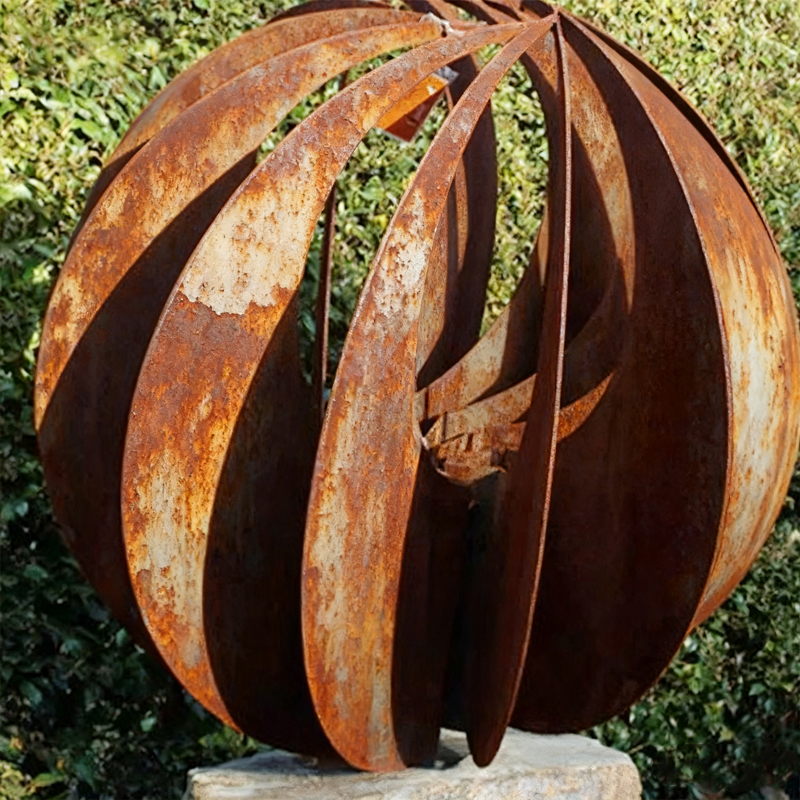 Hollow-Pattern Spherical Weathering Steel Decorative Sculpture
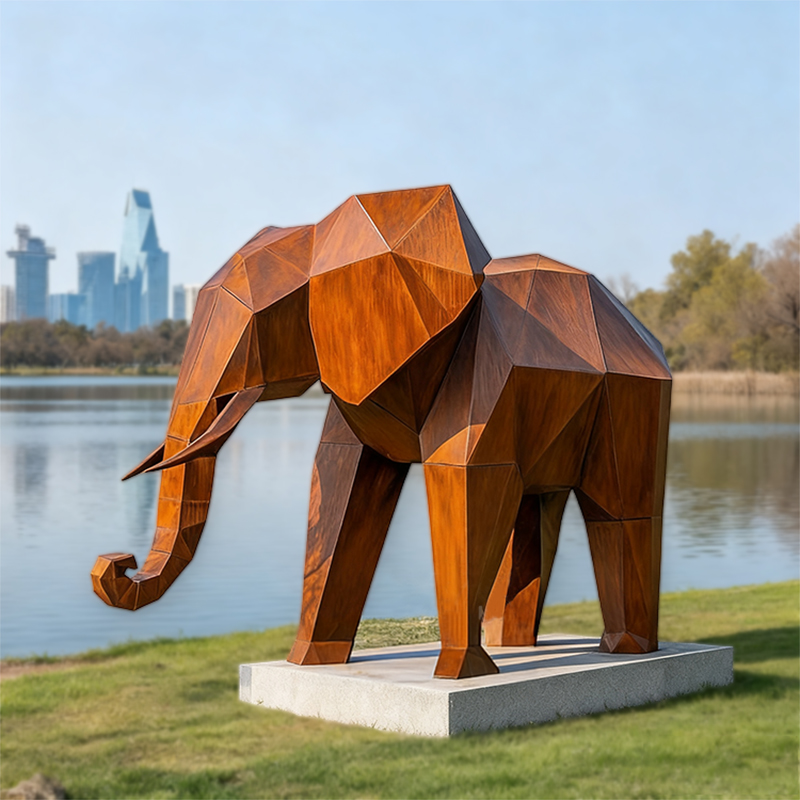 Weathering Steel Faceted Geometric Elephant Animal Sculpture
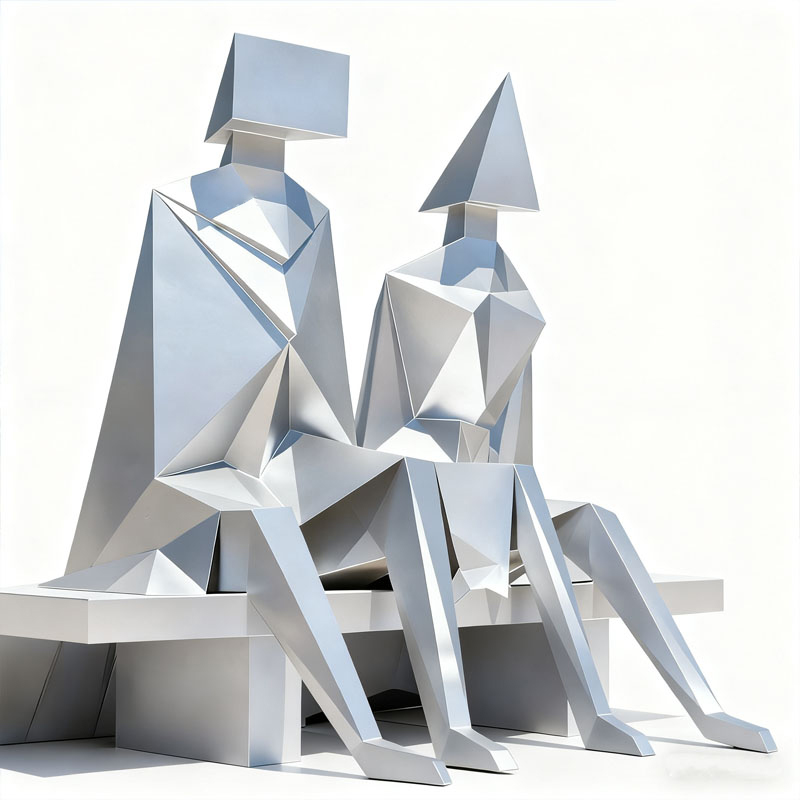 Geometric Stainless Steel Human Figure Sculpture
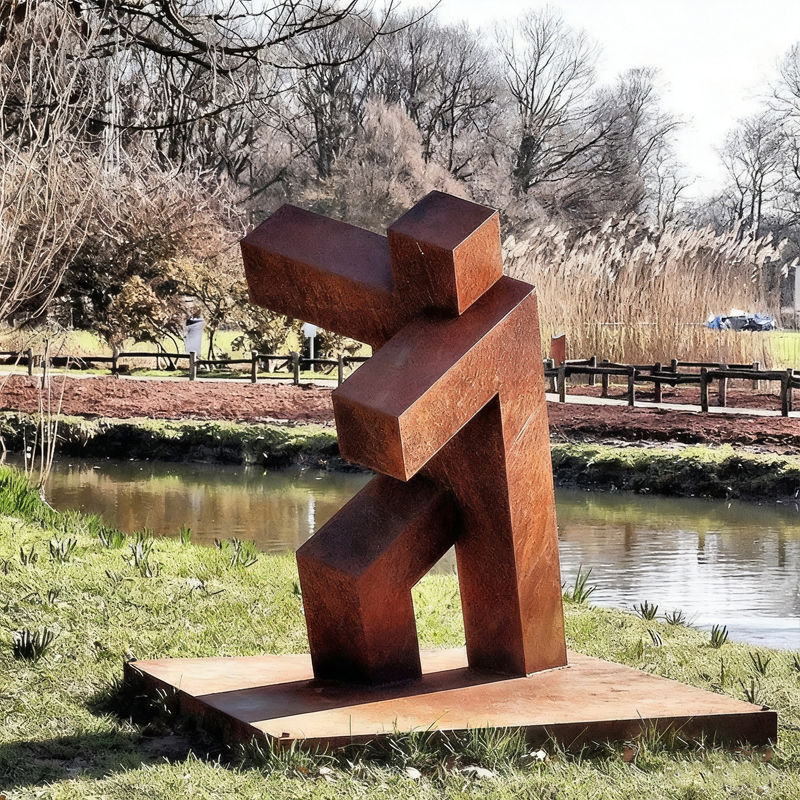 Abstract Weathering Steel Decorative Sculpture
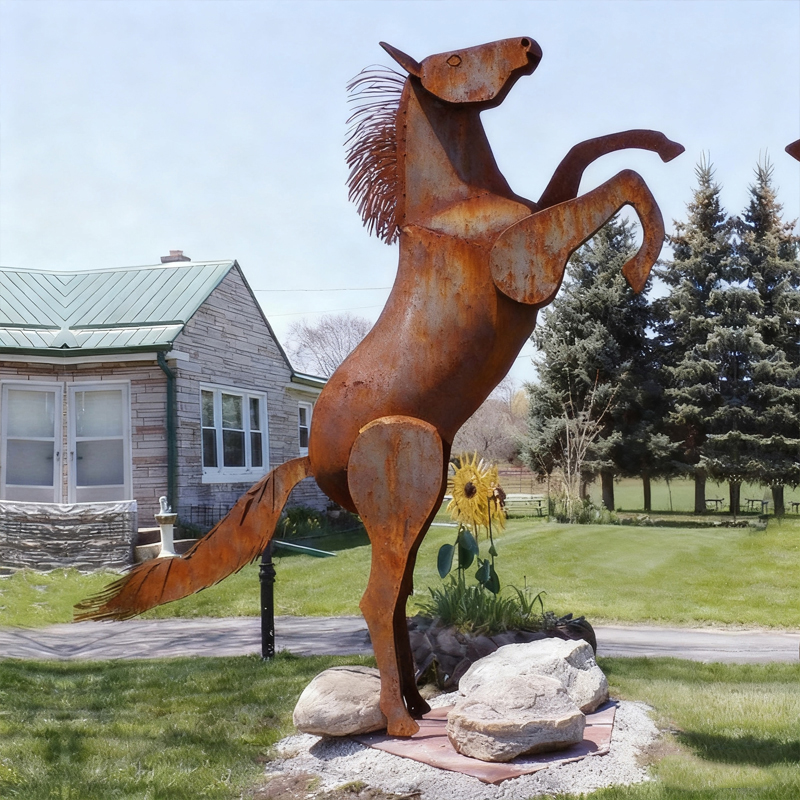 Weathering Steel Galloping Horse Animal Sculpture
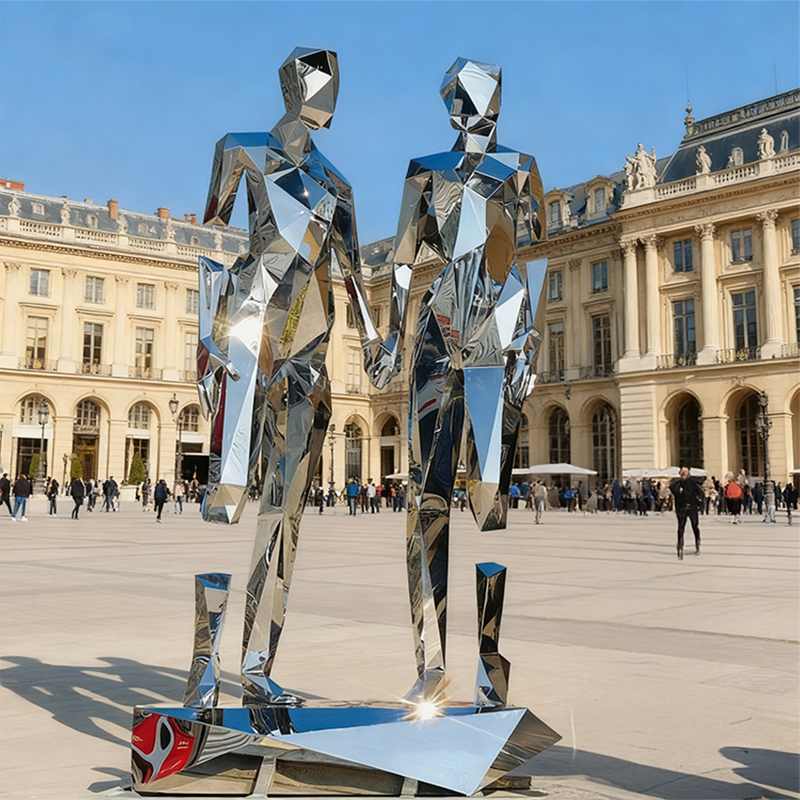 Geometric Faceted Mirror Stainless Steel Double Figure Sculpture



Daniel H.

Amanda R.

Robert B.

Jennifer S.

James W.

Barry G.

Michael T.

Emily K.

David L.

Sarah M.


Mikey XV

Jagxue

 English
 Español
 عربى
عربى Français
 italiano
 Deutsch