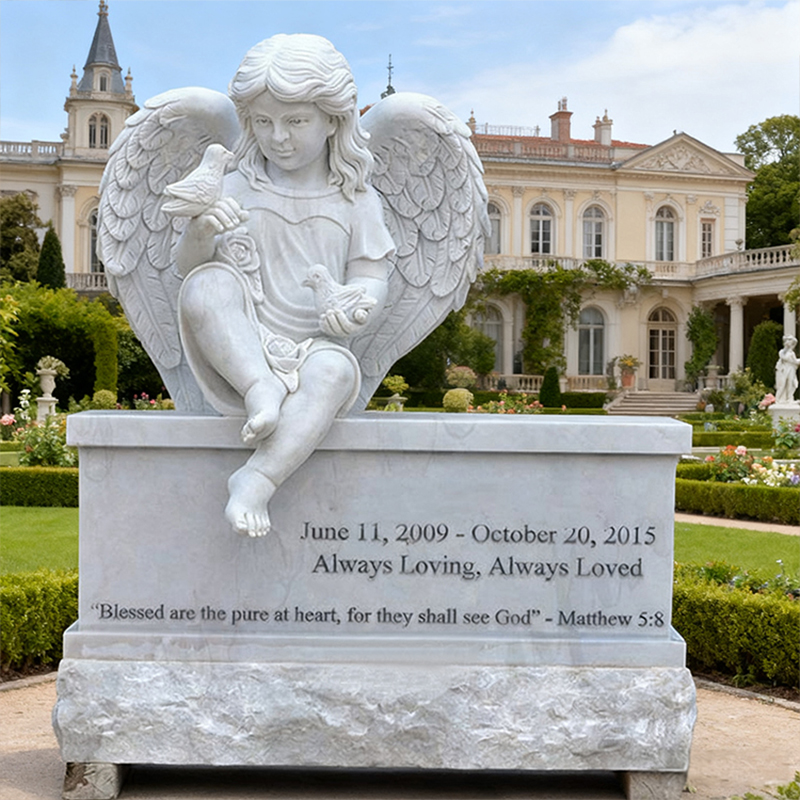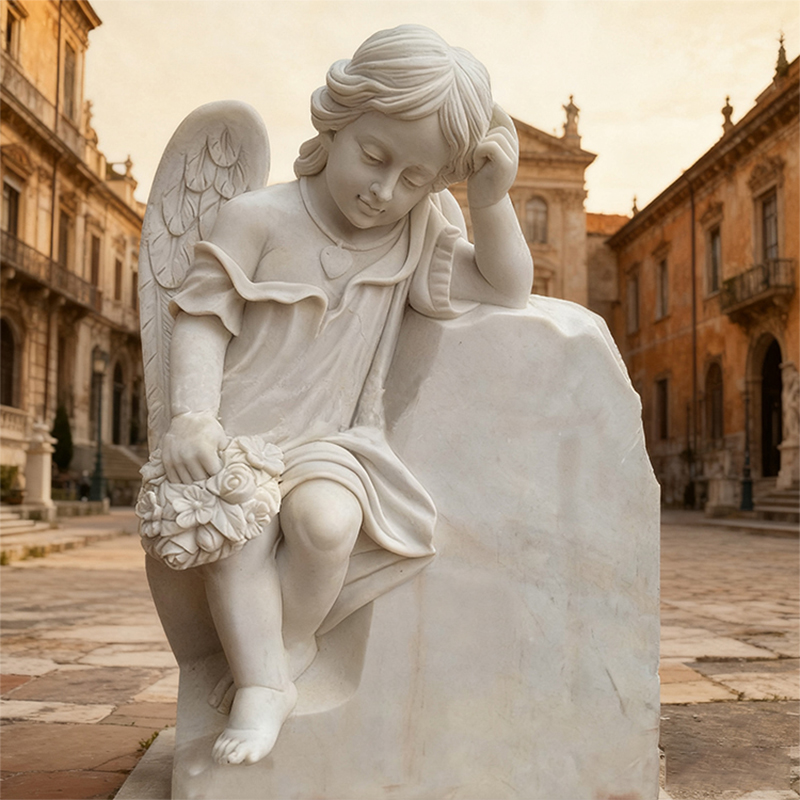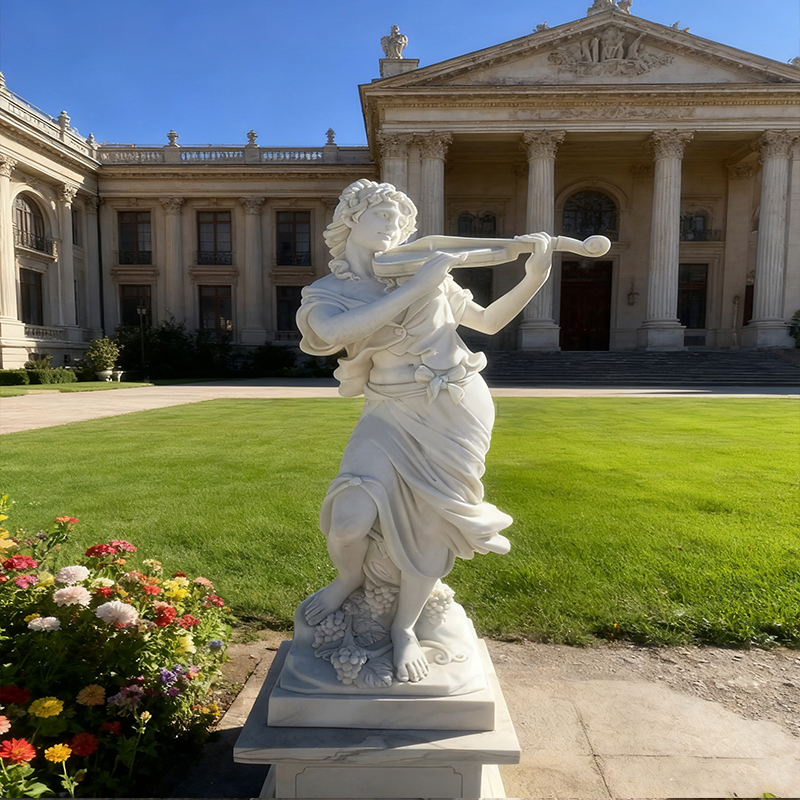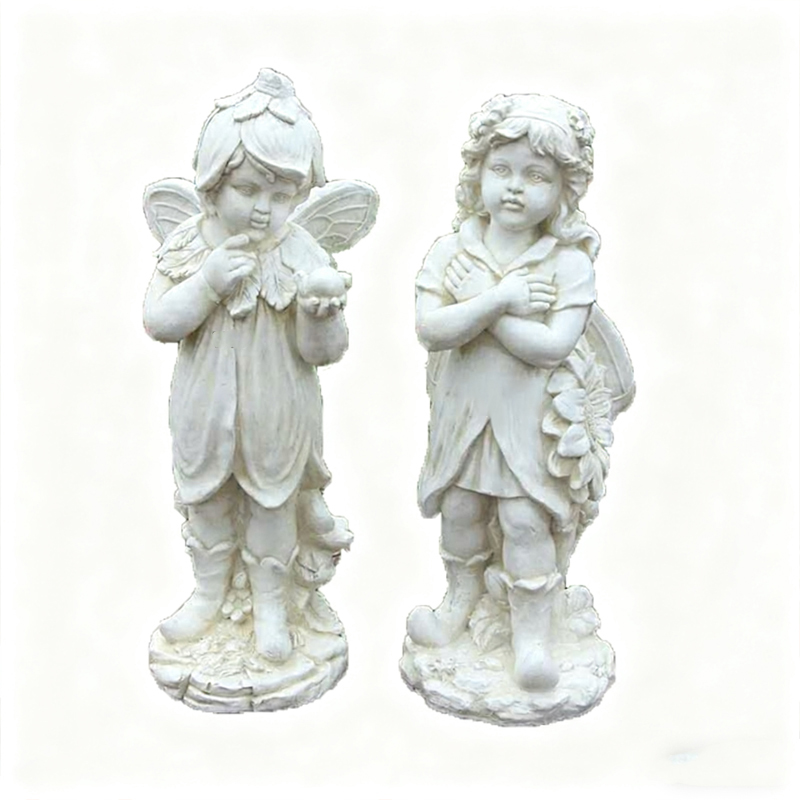
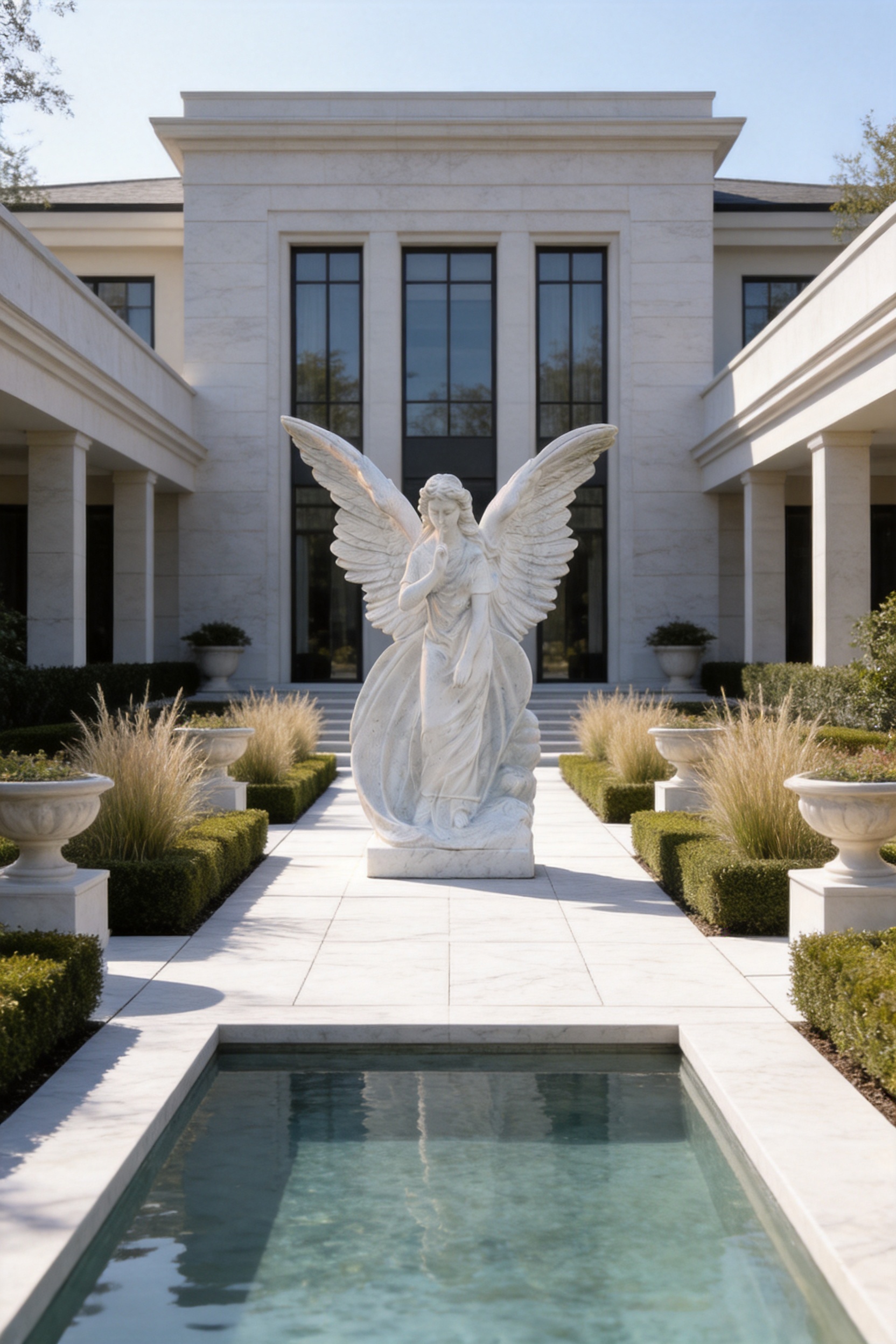
A white marble angel statue combines artistic symbolism, natural stone beauty, and long-term outdoor performance in a single architectural feature. With its outstretched wings, solemn expression, flowing drapery, and bright natural finish, this sculpture is designed to create an atmosphere of blessing, remembrance, dignity, and quiet reflection. It can serve as a focal point in a cemetery, church garden, memorial space, villa courtyard, estate entrance, or formal landscape.
This particular sculpture is hand-carved from natural white marble and is available in total heights of approximately 180 centimeters and 250 centimeters. Its proportions make it suitable for both intimate private settings and larger public or religious environments. The design balances monumental presence with an approachable human form, allowing the angel to function as a spiritual symbol as well as a refined decorative element.
The sculpture is produced by Jiangsu Xinyesheng Sculpture Co., Ltd., a China-based sculpture manufacturer specializing in bronze sculptures, stainless steel sculptures, marble sculptures, fiberglass sculptures, weathering steel sculptures, and custom European-style works. The company’s product range allows buyers to work with a manufacturer capable of handling different materials, artistic styles, and project requirements through one production source.
Content
Angel sculptures have been used for centuries to express protection, hope, remembrance, guidance, and spiritual presence. Their meaning is especially powerful in places associated with worship, mourning, family heritage, and contemplation. A white marble angel carries these meanings through both its subject and its material.
White marble is traditionally associated with purity, light, peace, and permanence. Its smooth surface reflects daylight softly, while its natural mineral structure provides subtle tonal variations that prevent the sculpture from appearing flat or artificial. When placed outdoors, the stone may appear bright and luminous in the morning, warm and gentle in afternoon sunlight, and calm and distinguished under evening illumination.
The outspread wings are one of the most important visual features of the design. They create a broad silhouette that can be recognized from a distance, while also suggesting shelter, openness, and protection. In a cemetery, the wings may represent a guardian presence. In a church courtyard, they can reinforce themes of faith and heavenly care. In a private villa garden, they create a classical focal point with emotional depth.
The solemn and serene expression gives the figure a dignified character rather than a theatrical one. This makes the sculpture appropriate for locations where visual restraint is important. Instead of overwhelming its surroundings with aggressive movement or excessive ornament, the angel provides a calm and contemplative presence.
Flowing drapery adds movement to the composition. The folds of the garment create shadows and highlights across the body, giving the stone a sense of softness and natural rhythm. This contrast between solid marble and apparently light fabric is a key measure of a sculptor’s skill. It requires careful control of depth, edge definition, surface transitions, and overall proportion.
Natural marble has long been selected for important sculpture because it combines strength with exceptional visual refinement. Unlike painted or coated materials, marble obtains its character from the stone itself. The color, grain, translucency, and texture remain integral to the work rather than being added as a surface treatment.
For a white marble angel, this material choice is particularly appropriate. The pale surface reinforces the symbolism of purity and light, while the stone’s density gives the figure a substantial and permanent appearance. A marble sculpture feels rooted in its setting. It does not look temporary, lightweight, or industrial when installed in a carefully designed landscape.
Marble also provides a useful balance between crisp detail and soft visual expression. Feather edges, facial features, hair, hands, folds of cloth, and wing contours can all be developed with varying levels of definition. The result is a sculpture that can be appreciated from a distance while still rewarding close observation.
Because natural marble is quarried stone, each block has individual characteristics. Slight changes in veining, tone, mineral inclusions, and texture are normal. These variations should not be considered manufacturing defects. They are part of the authenticity of natural stone and ensure that every finished sculpture has a distinct material identity.
Buyers seeking an entirely uniform color should discuss stone selection and sample approval with the manufacturer before production. Buyers who appreciate natural variation can treat these characteristics as part of the sculpture’s uniqueness. The manufacturing team can help determine whether a particular block is appropriate for the desired design, size, finish, and installation environment.
The wings create the statue’s strongest horizontal element. Their spread gives the figure visual breadth and helps the sculpture occupy a landscape without requiring a large architectural base. The wing arrangement also directs the eye outward, making the statue feel open and welcoming.
From a design perspective, wings must be carefully balanced. They should appear expressive without making the statue top-heavy. The connection between the wings and the body requires sufficient structural integrity, particularly when the work will be installed outdoors and exposed to wind, rain, temperature changes, and seasonal maintenance activities.
The wing feathers are also important to the appearance of the finished work. If carved too deeply, they may look harsh or overly graphic. If carved too shallowly, they may lose definition under changing light. A skilled production process seeks a layered effect in which the larger feather structure is visible from a distance and the smaller carved transitions become apparent at closer range.
The face is the emotional center of an angel sculpture. A successful expression must be readable without becoming exaggerated. The supplied design emphasizes solemnity and serenity, making it suitable for memorial and religious settings where quiet dignity is preferred.
Facial carving requires precision because small changes in the eyes, mouth, cheeks, and brow can alter the entire character of the figure. The expression should remain composed from multiple viewing angles. This is especially important for a large outdoor sculpture, which may be seen from pathways, entrances, roads, or surrounding buildings rather than from only one frontal position.
The flowing garment provides a visual transition between the upper body, wings, and lower support structure. Natural drapery should follow the underlying form of the figure while also responding to imagined movement. The folds must vary in size and direction so that they do not appear mechanically repeated.
On white marble, drapery is expressed through light and shadow. Raised ridges catch illumination, while deeper recesses create cooler shadow. This contrast allows the garment to appear dimensional even when viewed from a considerable distance. The treatment also helps the sculpture retain visual interest throughout the day as the direction of sunlight changes.
The design follows the visual language of European-style sculpture, in which proportion, balance, posture, and controlled ornament are central. The figure is intended to look formal and enduring rather than trend-driven. This makes it compatible with classical architecture, traditional gardens, memorial landscapes, churches, estates, and heritage-inspired developments.
Proportion is especially important when selecting between the 180-centimeter and 250-centimeter versions. The smaller height may be appropriate for a private garden, family memorial, interior atrium, or sheltered courtyard. The larger height is better suited to open landscapes, church grounds, public memorial areas, large villa entrances, and spaces where the statue must remain visually prominent from a distance.
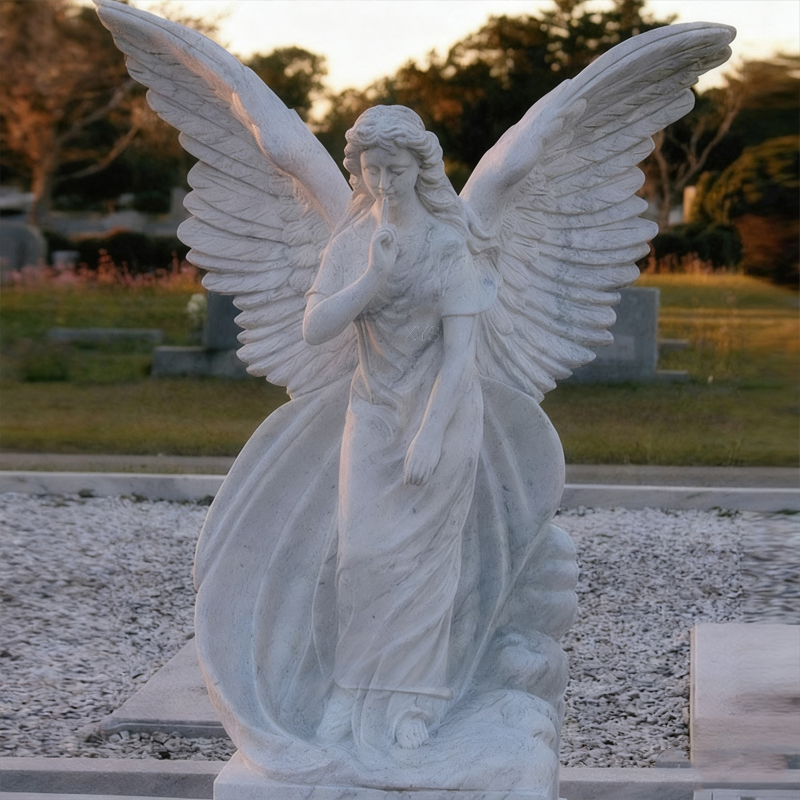
White Marble Angel Statue
Buyers often compare marble with bronze, stainless steel, fiberglass, and weathering steel. Each material has its own advantages, but white marble offers a distinctive combination of symbolism, tactile quality, and classical permanence.
| Material | Typical Visual Character | Key Strength | Consideration for Angel Sculptures |
|---|---|---|---|
| Natural white marble | Bright, refined, classical, softly reflective | Permanent stone presence and detailed carving potential | Requires careful handling, suitable installation, and periodic cleaning |
| Bronze | Warm metallic, dark, patinated, traditional | Strong sculptural presence and rich surface aging | Does not provide the luminous white appearance associated with purity |
| Stainless steel | Modern, reflective, contemporary | Clean modern appearance and corrosion resistance when properly specified | May feel less traditional for memorial or classical religious settings |
| Fiberglass | Lightweight, adaptable, often painted | Lower weight and flexible production possibilities | Surface finish and long-term outdoor perception differ from solid natural stone |
| Weathering steel | Rust-colored, architectural, industrial | Strong contemporary character and distinctive oxidation finish | Generally unsuitable when a pure white, devotional appearance is required |
Compared with bronze, white marble creates a lighter and more spiritual visual effect. Bronze can be highly expressive and durable, but its dark or warm patina tends to communicate historical weight, power, or tradition. White marble communicates serenity and light more directly.
Compared with stainless steel, marble is less reflective and less technologically modern. This can be an advantage in sacred or memorial landscapes. A marble angel absorbs and reflects daylight in a softer manner, avoiding sharp glare and maintaining a human, tactile quality.
Compared with fiberglass, marble offers greater material authenticity and a stronger sense of permanence. Fiberglass can be useful for temporary exhibitions, lightweight installations, or projects with strict load limitations. However, a solid natural stone statue generally provides a more substantial experience and greater connection to classical sculpture traditions.
Compared with weathering steel, marble offers a completely different emotional language. Weathering steel is often chosen for bold contemporary projects and industrial landscapes. White marble is better suited to settings requiring grace, spiritual symbolism, elegance, and a sense of timeless continuity.
A cemetery requires sculpture that communicates respect without becoming visually distracting. The white marble angel is well suited to this purpose because its subject matter and material both support remembrance. Its calm face and extended wings create a guardian-like presence, while its pale surface distinguishes it from ordinary landscape ornaments.
The statue may be placed near a family burial plot, at the center of a memorial garden, beside a mausoleum, or along a pathway leading to a commemorative area. It can also serve as a central element in a larger memorial composition that includes engraved stone, planting, benches, water features, or architectural walls.
Scale should be selected carefully. A 180-centimeter figure can create an intimate relationship with visitors and may be appropriate when people will approach the statue closely. A 250-centimeter figure can establish a stronger landmark quality and may be more suitable for a large cemetery or open memorial setting.
Placement should consider sightlines, visitor circulation, drainage, maintenance access, and the relationship between the statue and nearby monuments. The angel should be visible without obstructing paths or creating a cramped composition. A clear background, such as a clipped hedge, pale wall, or open lawn, can help the white marble form remain readable.
In church environments, an angel statue can reinforce architectural themes and create a transition between built space and garden space. It may be positioned near an entrance, beside a chapel, in a cloister garden, near a prayer area, or at the edge of a cemetery connected with the church.
The classical appearance of the sculpture allows it to work with stone façades, columns, arches, traditional paving, and formal planting. It can also contrast effectively with darker brick or aged masonry. The bright surface draws attention without requiring additional color or decorative lighting.
Before installation on religious property, the purchaser should confirm any relevant requirements regarding foundation design, safety, access, local planning rules, and the theological or cultural appropriateness of the selected figure. The manufacturer can provide dimensional and production information for review by architects, clergy, landscape designers, and project managers.
Lighting can significantly influence the atmosphere of a church installation. Soft frontal lighting can emphasize the face and wings, while low-angle lighting can reveal drapery and feather carving through shadow. Excessively strong lighting should be avoided because it may flatten the surface or create glare.
A white marble angel can introduce a formal focal point into a villa courtyard or estate garden. It works particularly well in spaces using symmetrical planting, clipped hedges, classical fountains, gravel paths, stone paving, or architectural axes.
In a courtyard, the statue may be placed at the end of a visual corridor or centered against a wall, hedge, or water feature. In a larger estate, it can mark an intersection of pathways, frame a garden vista, or provide a destination at the end of a long lawn.
The sculpture does not need to be used in an explicitly religious setting. Its themes of protection, peace, memory, and elegance can also support a refined residential landscape. However, buyers should consider the overall atmosphere of the property. The angel is most successful where the surrounding architecture and planting support a sense of order and permanence.
For a private courtyard, the 180-centimeter size often provides a balanced relationship with human scale. The 250-centimeter version can be selected when the property has a high boundary wall, broad lawn, large entrance court, or monumental architectural features.
The company behind this sculpture operates across several sculpture categories, including marble, bronze, stainless steel, fiberglass, and weathering steel. This broad material capability is valuable for buyers who are developing multiple installations or comparing materials for a larger project.
A manufacturer with experience across different materials must understand that each medium requires a different production approach. Marble depends on stone selection, structural planning, controlled carving, surface finishing, and careful transport. Bronze requires model preparation, molding, casting, chasing, and patination. Stainless steel demands fabrication accuracy, welding control, grinding, and surface treatment. Fiberglass involves mold work and composite finishing, while weathering steel requires attention to plate fabrication and oxidation behavior.
For the white marble angel, the production process begins with design interpretation and stone selection. The manufacturer must evaluate the proposed height, wing span, body proportions, base structure, likely installation conditions, and visual expectations. The stone block should be large enough to accommodate the composition while allowing the carver to avoid unsuitable areas where possible.
The next stage involves transferring the design into a workable form. Depending on the project, this may include scaled drawings, reference images, a model, dimensional specifications, or a digital design. Clear approval at this stage helps ensure that the final expression, wing position, drapery, base, and overall dimensions match the buyer’s expectations.
Rough shaping removes excess stone and establishes the principal volumes. At this point, the figure begins to emerge as a recognizable form, but the surface remains intentionally broad. The production team must maintain sufficient material around delicate areas such as fingers, feather edges, facial features, and drapery projections.
Progressive carving then develops the anatomy, wings, clothing, and symbolic details. Skilled hand carving is particularly important for areas that depend on subtle transitions. The face, hands, folds of cloth, and feather patterns cannot be treated as simple geometric surfaces if the sculpture is to retain a natural and expressive quality.
Fine carving refines the surface and clarifies the transitions between recessed and raised areas. The goal is not merely to make the stone smooth. Different parts of the sculpture may require different levels of finish. Facial planes may need a soft refinement, while feather edges and drapery folds may require clearer definition.
Final finishing can include smoothing, polishing, honing, or a controlled natural finish, depending on the requested appearance. A highly polished surface may increase brightness and reflectivity, while a honed or softer finish can provide a more understated and tactile appearance. The suitable choice depends on the setting, lighting, architectural style, and maintenance preferences.
Quality control should examine overall proportion, surface consistency, structural transitions, detail clarity, base stability, and the presence of any unacceptable damage. Natural stone variation remains part of the material, but cracks, weak areas, or accidental chips should be assessed before shipment.
The company’s ability to manufacture custom European-style sculpture is another important strength. Buyers are not limited to a standard catalog concept. They can discuss changes to scale, posture, facial expression, wing position, base form, finish, and installation requirements. Customization should be confirmed before production, including drawings, dimensions, material expectations, packaging, and delivery arrangements.
Hand carving gives the sculpture an individual character that is difficult to reproduce through purely industrial methods. The carver responds to the specific stone block, adjusting details according to the material’s structure and the intended visual result.
At the same time, hand craftsmanship benefits from controlled planning. Accurate dimensions, approved references, production checkpoints, and careful inspection help ensure that artistic individuality does not result in inconsistent proportions. The strongest manufacturing approach combines traditional carving skill with organized project management.
The company’s material range provides an advantage for commercial buyers, landscape designers, property developers, and art consultants who may require several types of sculpture. A project might use white marble angels in a memorial garden, bronze figures at an entrance, stainless steel forms in a contemporary plaza, and weathering steel pieces in a modern landscape.
Working with a manufacturer familiar with these materials can simplify communication about style, scale, finish, and delivery. It also creates an opportunity to develop a coordinated sculpture program rather than treating every material as a separate procurement process.
European-style sculpture is recognized for its attention to anatomy, proportion, drapery, mythology, religious symbolism, and architectural relationship. Producing this style successfully requires more than copying a silhouette. The manufacturer must understand how the figure stands, how the clothing supports the composition, how the wings balance the body, and how the sculpture will be read in three-dimensional space.
Custom European-style work is particularly valuable when the buyer needs a statue to correspond with an existing building or landscape. The height may need to align with a doorway, plinth, column, or garden axis. The design may also need to match other sculptures already present on the property.
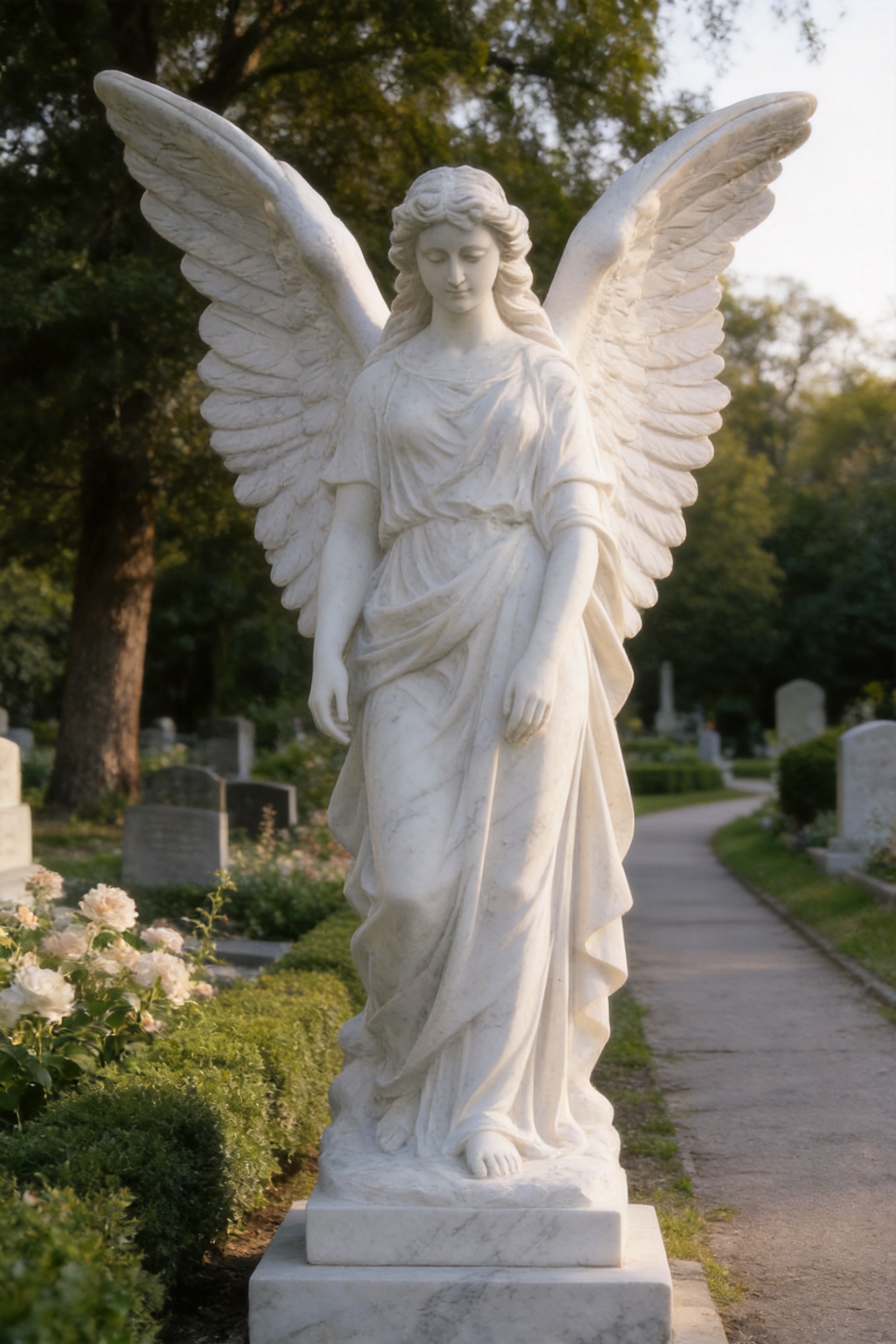
The available heights are approximately 180 centimeters and 250 centimeters. These dimensions refer to the total height of the finished statue and should be considered together with any plinth, base, foundation, or surrounding architectural element.
| Statue Height | Recommended Setting | Visual Effect | Planning Notes |
|---|---|---|---|
| 180 centimeters | Private gardens, intimate courtyards, family memorials, sheltered religious areas | Human-scaled, approachable, refined | Confirm relationship with nearby walls, plants, benches, and pathways |
| 250 centimeters | Large estates, church grounds, open cemeteries, formal entrances, public memorial landscapes | More monumental and visible from a distance | Review foundation, wind exposure, access equipment, and long-distance sightlines |
Installation should begin with a site assessment. The purchaser should review soil conditions, drainage, frost exposure, prevailing wind, pedestrian movement, vehicle access, lifting requirements, and the visibility of the statue from key viewpoints.
A solid stone sculpture requires an adequately designed foundation. The foundation should be level, stable, and capable of supporting the total load. The specific design depends on the weight of the statue, the base configuration, local ground conditions, climate, and applicable construction requirements. A qualified local contractor or structural professional should be consulted for final installation planning.
The connection between the sculpture and its base must also be considered. Depending on the design and site, installation may involve a stone plinth, reinforced concrete foundation, concealed anchoring, or other appropriate support methods. The manufacturer should receive complete information about the installation location so that the base and transport plan can be discussed in advance.
Transport protection is especially important for marble sculptures with projecting wings, fingers, feather edges, and drapery details. Professional crating should prevent movement and reduce the risk of impact during handling. The buyer should clarify whether the quotation includes packaging, loading, shipping, insurance, unloading, and installation assistance.
Natural marble has strong weather resistance when properly selected, finished, installed, and maintained. It can remain outdoors for many years in a wide range of environments. However, no natural stone is completely unaffected by weather, pollution, biological growth, freezing conditions, or improper cleaning.
The surface should be inspected periodically for dirt accumulation, bird deposits, plant growth, staining, or signs of water retention. Routine cleaning with clean water and a soft brush is often sufficient for light surface dirt. A mild, stone-appropriate cleaning method should be used when additional cleaning is required.
Harsh acids, abrasive powders, aggressive pressure washing, and unapproved chemical treatments should be avoided. These methods can damage the finish, open the surface, create discoloration, or affect delicate carved areas. A professional stone conservator should be consulted if the statue has serious staining, biological growth, or accidental damage.
Drainage is an important part of long-term protection. Water should not remain trapped against the base or in areas where repeated freezing and thawing may create stress. In cold climates, the installation design should account for frost and ground movement. In coastal or polluted environments, more frequent cleaning may be appropriate.
White marble may gradually develop a softer, aged appearance outdoors. Some buyers prefer the clean, bright character of recently finished stone, while others appreciate the natural aging process. Maintenance expectations should be discussed before purchase so that the finish and care plan are appropriate for the intended location.
Mass-produced decorative figures are often designed for quick installation and low initial cost. They may be made from molded resin, composite material, cement, or painted fiberglass. Such products can be suitable for temporary decoration or small-scale residential use, but they generally provide a different experience from a hand-carved natural marble sculpture.
The white marble angel offers depth that comes from the stone itself. The wings, face, and drapery are not merely printed or coated onto a manufactured shell. They are shaped through the removal of material, allowing the sculpture to possess real volume and tactile transitions.
Natural stone also contributes to long-term visual stability. Painted surfaces may fade, chip, or require recoating. Molded products may show seams or repeated patterns. A hand-carved marble figure has a more individual appearance, with natural variations that make the finished work distinct.
The initial investment in marble may be higher than that of a lightweight decorative figure, but the comparison should include expected service life, visual importance, replacement risk, maintenance, and the symbolic value of the installation. For a cemetery, church, estate, or permanent memorial, the material quality may justify selecting a more substantial sculpture.
Before placing an order, buyers should prepare a clear project brief. The brief should identify the desired height, installation location, preferred finish, base requirements, viewing distance, delivery destination, and any required modifications to the standard design.
Buyers should also explain whether the statue will be installed indoors or outdoors, whether the site is exposed to strong wind or freezing temperatures, and whether the sculpture will be viewed primarily from the front or from multiple directions. These details can influence the design and production decisions.
For custom work, an approval process should be established. This may include drawings, digital renderings, a small model, or photographs of comparable details. Buyers should approve the overall pose, facial expression, wing span, garment treatment, base design, and approximate stone appearance before carving begins.
Natural marble should be discussed in realistic terms. Buyers should understand that the final piece may contain variations in tone and veining. If a particularly uniform white appearance is essential, stone samples or photographs of the selected block should be reviewed before production.
Pricing depends on height, stone selection, carving complexity, finish, base design, packaging, shipping, and customization. The listed sizes are 180 centimeters and 250 centimeters, with pricing available by quotation. A formal quotation should state the product specifications and clarify what is included.
For project buyers, communication should also cover production time, inspection opportunities, export packaging, shipping method, documentation, unloading, and installation responsibilities. These details are especially important for large stone sculptures because the logistics can be as significant as the artistic production.
A specialized sculpture manufacturer provides more than a finished object. The manufacturer contributes material knowledge, artistic interpretation, production planning, quality control, packing experience, and communication support throughout the project.
Jiangsu Xinyesheng Sculpture Co., Ltd. offers a broad sculpture portfolio covering classical and contemporary materials. This allows buyers to explore alternatives while retaining access to custom production. The company’s focus on European-style sculpture is relevant to the angel statue because the design depends on classical figure treatment, balanced drapery, symbolic posture, and formal composition.
For international buyers, a direct relationship with the manufacturer can also support more efficient discussion of dimensions, revisions, material preferences, and project quantities. The purchasing process should remain specific and documented, especially where the sculpture is part of a larger architectural or landscape contract.
The manufacturer can be contacted for quotations and project discussions through the supplied business channels. Contact details include the telephone numbers +86-13812599789 and +86-18914187530, as well as the email address postmaster@xingyesheng.com. The company is located at No. 103, Building 22, No. 1585 Xicheng Road, Qingyang Town, Jiangyin City, Jiangsu Province, Jiangsu Province, China.
When comparing this white marble angel with competing products, buyers should evaluate more than the product photograph. The following checklist can help structure the purchasing decision.
First, confirm the material. The product is described as natural white marble, not painted resin, fiberglass, or artificial stone. Ask about the expected color range, veining, surface finish, and whether stone photographs or samples can be provided.
Second, review the dimensions. Confirm whether the stated 180-centimeter or 250-centimeter height includes the base. Check the approximate width, depth, wing span, and estimated weight because these values affect shipping and installation.
Third, examine the carving quality. Look closely at the face, eyes, hands, feather transitions, drapery, and connection between the wings and body. A high-quality sculpture should maintain coherent detail across both prominent and less visible areas.
Fourth, assess the suitability of the finish. Determine whether the surface is polished, honed, or naturally refined. Ask how the selected finish is expected to perform under the intended lighting and weather conditions.
Fifth, clarify the production process. Confirm whether the piece is hand-carved, machine-assisted, or produced through a combination of methods. Ask how design approval and quality inspection are managed.
Sixth, evaluate installation support. Confirm foundation expectations, anchoring considerations, crating, loading, shipping, and whether professional installation is included or arranged separately.
Seventh, compare the manufacturer’s material capabilities. A supplier able to work with marble, bronze, stainless steel, fiberglass, and weathering steel may offer greater flexibility for future projects or coordinated site development.
Finally, compare the total value rather than only the purchase price. A permanent stone sculpture should be evaluated according to artistic quality, material authenticity, longevity, project relevance, logistics, and the emotional or architectural importance of the location.
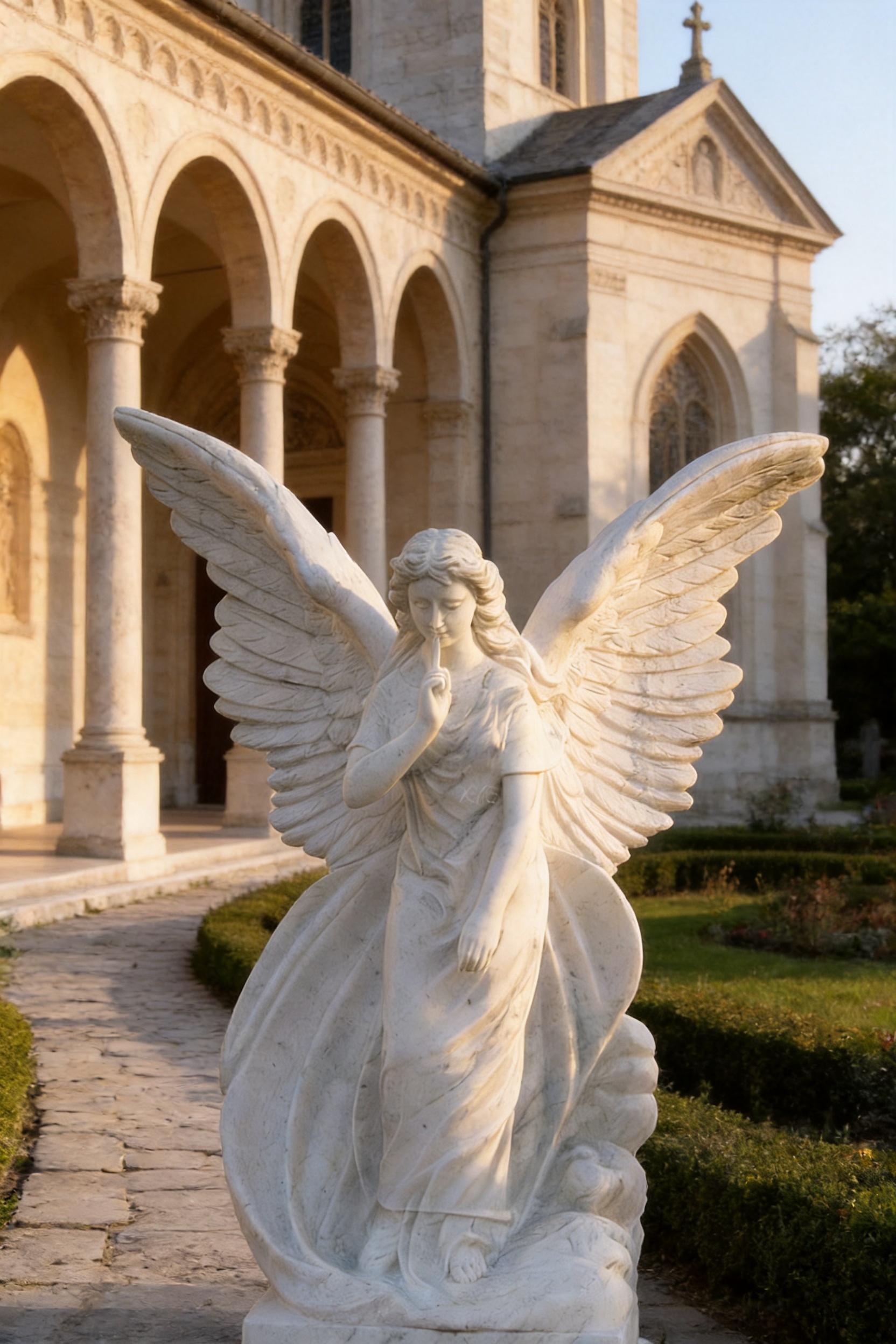
The statue is hand-carved from natural white marble. Because the stone is natural, individual pieces may display slight differences in color, texture, mineral content, or veining.
The listed total heights are approximately 180 centimeters and 250 centimeters. Buyers should confirm the exact dimensions, including the width, depth, wing span, base, and estimated weight when requesting a quotation.
Yes. The product description identifies strong weatherproof resistance and recommends the statue for cemeteries, churches, and villa courtyards. Outdoor performance also depends on proper stone selection, foundation design, drainage, installation, climate, and maintenance.
The manufacturer specializes in custom European-style sculpture, so buyers can discuss adjustments to dimensions, pose, base design, finish, and other project requirements. Custom details should be approved before production begins.
The 180-centimeter version is often appropriate for an intimate garden, private courtyard, or family memorial because it maintains a closer relationship with visitors. The 250-centimeter version may be more suitable for a large estate, open lawn, or monumental entrance.
Both sizes may be suitable. The 180-centimeter statue can work well in a smaller memorial garden or near a family plot. The 250-centimeter statue provides stronger visibility and a more monumental presence in an open cemetery, church ground, or large memorial landscape.
Natural marble may change subtly with exposure to weather, dust, pollution, biological growth, and sunlight. Regular care can help preserve its appearance, but buyers should expect the possibility of gradual natural aging.
Light dirt can often be removed with clean water and a soft brush. Harsh acids, abrasive products, and unapproved chemicals should be avoided. For difficult staining or biological growth, a stone conservation professional should be consulted.
Marble provides a bright, serene, classical appearance associated with purity and light. Bronze offers a darker metallic character, often with a warm or aged patina. The better choice depends on the desired symbolism, architecture, maintenance expectations, and landscape style.
Fiberglass is lighter and may be more convenient for temporary or weight-sensitive installations. Natural marble provides greater material authenticity, tactile depth, and a stronger sense of permanence, making it suitable for important memorial, religious, and architectural settings.
A large natural stone sculpture should not be installed without reviewing the load-bearing capacity and stability of the surface. A qualified local contractor should assess the foundation, drainage, anchoring, soil, and local weather conditions before installation.
A quotation should identify the stone type, statue height, approximate dimensions, finish, base, customization, packaging, shipping, insurance, delivery terms, and installation responsibilities. Buyers should request clarification if any of these items are not stated.
Although the design is classical and European-style, it can be used in contemporary landscapes when placed deliberately. The contrast between white marble and modern architecture, dark paving, minimalist planting, or simple water features can create a strong visual composition.
The product is described as hand-carved from natural stone. Its visual character comes from the depth of carving, the individual qualities of the marble, the sculptural treatment of the face and drapery, and the substantial presence of solid stone rather than a thin molded or painted surface.
The listed price is available by quotation for the 180-centimeter and 250-centimeter versions. Buyers can contact the manufacturer by email or telephone and provide the required size, destination, customization, and installation information.
The white marble angel statue is a strong choice for buyers seeking a permanent sculpture with spiritual symbolism, classical beauty, and a refined architectural presence. Its hand-carved natural stone construction gives it a distinctive tactile quality, while the white surface supports themes of purity, peace, protection, and remembrance.
The outspread wings make the statue visually recognizable and symbolically meaningful. The solemn expression supports quiet reflection. The flowing drapery introduces movement and depth. Together, these details create a work that can function as a memorial, a religious landmark, a garden focal point, or an elegant feature in a private estate.
Compared with bronze, stainless steel, fiberglass, and weathering steel, white marble offers a unique combination of luminosity, classical tradition, natural variation, and permanence. Its value is especially apparent in settings where the emotional meaning of the sculpture matters as much as its decorative role.
The manufacturer’s experience with marble and other sculpture materials provides flexibility for custom projects and coordinated landscape programs. Buyers can request the 180-centimeter or 250-centimeter version, discuss custom European-style requirements, and obtain a quotation based on material, dimensions, finish, packaging, and delivery.
With appropriate site planning, professional installation, responsible maintenance, and clear communication during production, this white marble angel can remain a dignified and enduring presence for generations.
1. Product specification supplied for the White Marble Angel Statue, including material, dimensions, applications, and design description.
2. Company product categories supplied for bronze sculptures, stainless steel sculptures, marble sculptures, fiberglass sculptures, and weathering steel sculptures.
3. General principles of natural stone selection, carving, finishing, installation, cleaning, and conservation for outdoor sculpture.
4. General principles of classical European figure sculpture, including proportion, drapery, wing composition, symbolism, and architectural placement.
5. General landscape design considerations for memorial gardens, church grounds, villa courtyards, formal estates, and outdoor architectural sculpture.



Daniel H.

Amanda R.

Robert B.

Jennifer S.

James W.

Barry G.

Michael T.

Emily K.

David L.

Sarah M.


Mikey XV

Jagxue

 English
 Español
 عربى
 Français
 italiano
 Deutsch