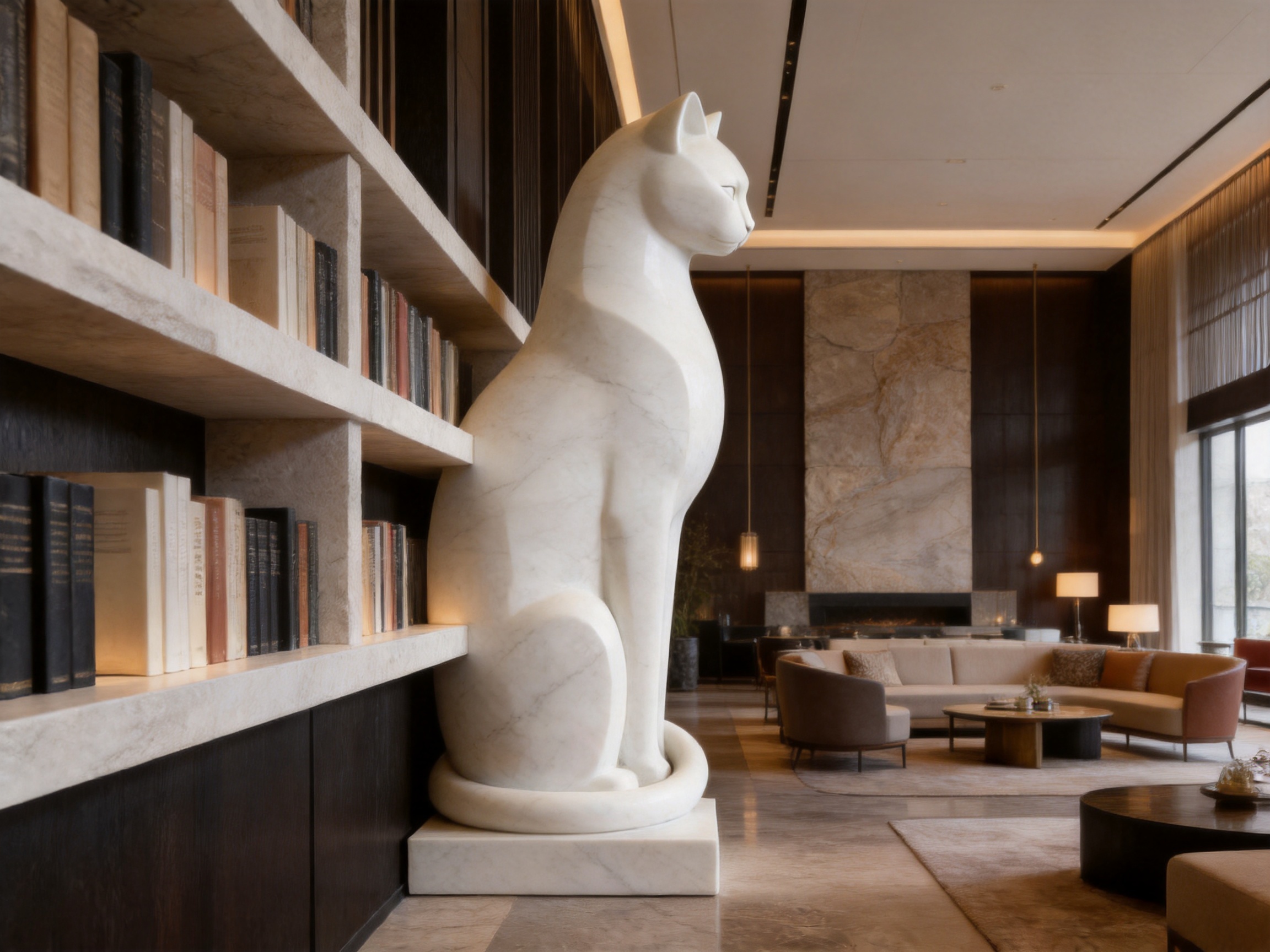
A well-designed bookend does more than keep books upright. It can define the character of a room, introduce a sense of refinement to a shelf, and transform an everyday organizational object into a small work of art. The White Marble Abstract Cat-Form Bookend is created for exactly this purpose. Carved from a single block of natural pure white stone, it combines the practical stability of a substantial book support with the visual appeal of a minimalist animal sculpture.
Its design is based on the graceful outline of a cat. Rather than presenting a highly detailed or realistic animal figure, the form is simplified into smooth, rounded lines. This abstract approach gives the piece a quiet elegance that can complement modern interiors, classical settings, hospitality environments, private collections, and exhibition spaces. The sculpture is decorative without becoming visually overwhelming, making it suitable for both residential and commercial applications.
Available in sizes from 60 to 120 centimeters, the piece can serve as a large-scale bookend, a shelf accent, a console decoration, or an independent sculptural object. The listed price is $3,300 for the 60-centimeter version and $6,600 for the 120-centimeter version. Custom sizes and materials are also available, providing flexibility for interior designers, architects, hospitality buyers, art dealers, collectors, and private clients.
Content
The White Marble Abstract Cat-Form Bookend belongs to the category of marble animal sculptures. Its central design idea is the fusion of animal symbolism, architectural simplicity, and functional use. The cat form is naturally associated with grace, alertness, independence, and protection. In decorative traditions, cats may also carry auspicious meanings connected with prosperity, good fortune, and guardianship.
The sculpture is made from a single block of natural pure white stone. This construction method is important because it allows the visual form to remain continuous from one area to another. Instead of assembling several pieces, joining separate components, or applying a surface effect to a composite body, the sculptor develops the shape from one solid mass. The result is a unified silhouette with uninterrupted curves and a strong sense of visual integrity.
Its smooth and rounded lines are especially appropriate for contemporary environments. White marble has a naturally luminous appearance, and its neutral color enables the piece to work with many interior palettes. It can sit against dark wood, warm-toned flooring, neutral walls, metallic furniture, or richly colored fabrics. In a minimalist room, it can become a subtle focal point. In a more decorative interior, it can provide a calm visual counterpoint to patterned surfaces and elaborate furnishings.
| Product Element | Available Information | Design or Use Value |
|---|---|---|
| Product type | Abstract cat-form bookend and marble animal sculpture | Combines functional organization with artistic decoration |
| Primary material | Natural pure white stone | Provides a clean appearance, visual permanence, and a refined surface |
| Construction | Carved from a single block | Creates a continuous form without visible assembly lines |
| Design language | Smooth, rounded, minimal, and elegant | Suitable for modern, luxury, hospitality, and exhibition settings |
| Available size range | 60–120 centimeters | Supports different display scales and spatial requirements |
| Listed price | 60 cm: $3,300; 120 cm: $6,600 | Offers clear reference pricing for project planning |
| Customization | Custom size and material available | Allows adaptation to architectural and collection requirements |
White marble has long been valued for its association with sculpture, architecture, and refined interiors. Its visual strength comes from a balance of solidity and luminosity. Although it is a heavy and durable natural material, its pale surface can appear light, soft, and almost fluid when shaped into rounded forms. This contrast is particularly effective in an abstract animal sculpture.
In the cat-form bookend, the white stone supports a restrained design vocabulary. The piece does not depend on bright color, painted decoration, ornamental carving, or complicated surface effects. Instead, its appeal comes from proportion, contour, light, shadow, and material authenticity. As daylight or interior lighting moves across the curves, subtle changes in highlight and shade help reveal the cat’s outline.
The neutral color also makes the sculpture easy to coordinate with different design schemes. A black bookshelf can emphasize its whiteness and create a dramatic contrast. A natural oak cabinet can make it feel warm and organic. Against pale walls, the piece can create a layered tonal effect rather than a sharp visual interruption. In a hotel lounge or gallery, the white stone can communicate cleanliness, permanence, and understated luxury.
Natural stone is also valued because each block has its own visual character. Even when a piece is specified as pure white, the stone may contain delicate variations in tone, grain, or veining. These natural distinctions ensure that every finished sculpture has an individual identity. For buyers seeking a completely uniform manufactured appearance, this variation should be understood as part of the material’s authenticity. For collectors and designers, it can be one of the reasons natural marble is preferred over artificial substitutes.
The use of a single block is one of the most important distinguishing features of this product. A one-piece sculpture begins with the selection of a solid stone mass large enough to contain the intended design. The overall silhouette is then developed through a sequence of shaping and finishing operations. This approach demands careful planning because the final form depends on the relationship between the block’s dimensions, its internal structure, and the desired proportions of the cat.
A single-block construction gives the sculpture visual continuity. The head, body, curves, and supporting areas belong to the same material body rather than appearing as separate parts connected during assembly. This is especially valuable for a minimalist design, where even a small seam or inconsistent transition could interrupt the purity of the form.
Single-piece carving can also strengthen the sense that the animal has emerged from the stone itself. This is a traditional sculptural idea, but it remains highly relevant in contemporary design. The viewer sees a quiet, complete object rather than a collection of manufactured components. The result is appropriate for buyers who want a sculpture with an authentic material presence and a lasting artistic identity.
From a practical perspective, a unified body can simplify visual maintenance because there are no decorative joints or separately attached elements that define the appearance. However, as with all natural stone products, the sculpture should still be handled carefully, supported properly, and protected from impact during transportation and installation.
Many decorative objects are attractive but have no practical role. Conversely, ordinary bookends are often functional but visually unremarkable. This product occupies the space between the two categories. It performs the basic task of supporting books while introducing the presence of a carefully designed sculpture.
The cat’s rounded silhouette allows it to read as an artistic object even when it is placed among books. It can organize a private library, study, reading room, office, or reception area without looking like a conventional office accessory. This dual role is particularly useful in luxury interiors, where designers often prefer furnishings and accessories that are both useful and expressive.
Its large available dimensions also distinguish it from small decorative bookends. A 60-centimeter version can make a clear visual impact on a substantial shelf or console. A 120-centimeter version can function as a prominent architectural accent, especially in a hotel lobby, club, gallery, showroom, or spacious residential interior. The buyer can select the size according to the surrounding furniture, ceiling height, shelf scale, and desired degree of visual emphasis.
The term “bookend” does not limit the sculpture to use with books. Depending on its size and placement, it may also support a broader styling concept. It can stand beside a column of art books, act as a visual anchor on a long cabinet, accompany indoor plants, or be positioned as a freestanding decorative form. The product’s functional identity adds meaning, but its sculptural design permits multiple applications.
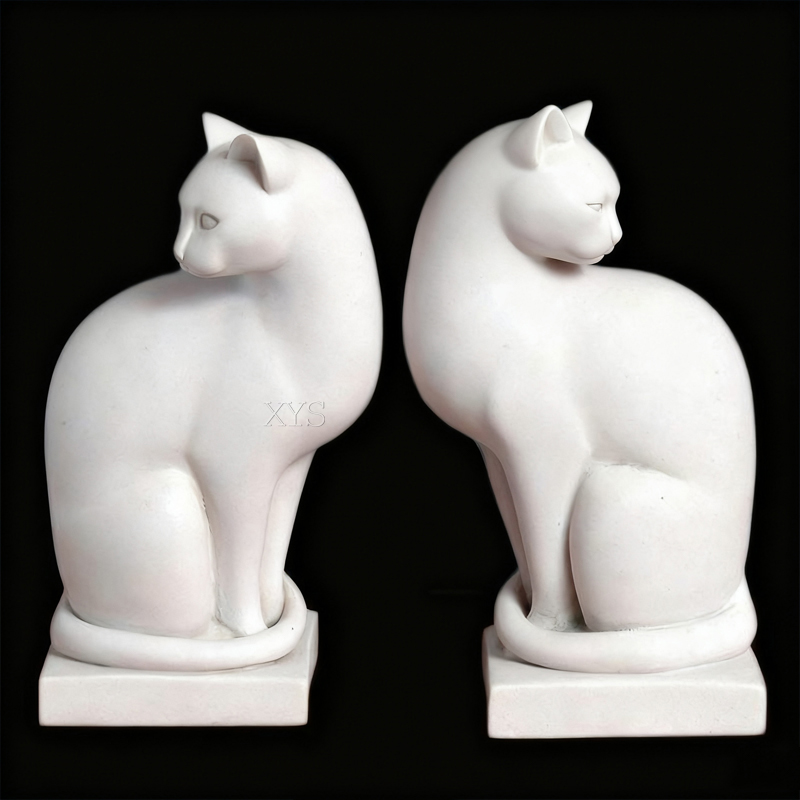
White Marble Abstract Cat-Form Bookend
Conventional bookends are usually manufactured from metal, wood, plastic, ceramic, or inexpensive cast materials. They may be useful, but many are designed primarily as utilitarian accessories. Their visual language often focuses on simple brackets, geometric shapes, or lightweight decorative motifs. The White Marble Abstract Cat-Form Bookend offers a different level of presence.
Natural pure white stone has a tactile and visual authenticity that synthetic materials often struggle to reproduce. The weight, coolness, grain, and light response of marble contribute to a more substantial experience. This makes the sculpture suitable for buyers who value natural materials and handcrafted or sculptural qualities.
A cat-form design creates a recognizable identity without relying on excessive ornament. The piece can become associated with a particular interior, collection, or brand environment. In comparison, generic metal or plastic bookends may perform the same basic function but contribute little to the overall atmosphere of a room.
In premium residences, boutique hotels, private clubs, and gallery-like settings, accessories must be able to coexist with high-quality architecture and furniture. A large white marble sculpture can meet this requirement more effectively than a mass-produced accessory. Its proportions, surface, and material can support a carefully composed interior rather than appearing temporary or disposable.
Trendy colors and novelty shapes may lose their appeal as interior styles change. A simple animal silhouette carved in white stone is more adaptable. Its minimalism allows it to remain relevant across different design periods. The piece can move from a contemporary apartment to a traditional study, from a hospitality project to a private art collection, without losing its essential character.
A standard bookend generally provides physical support. This sculpture adds emotional and symbolic value through the cat form. Its graceful profile can suggest calmness, watchfulness, prosperity, and protection. The result is an object that supports books physically while contributing to the psychological atmosphere of a room.
The product category includes bronze, stainless steel, fiberglass, weathering steel, and marble sculptures. Each material has its own strengths, and the best choice depends on the setting, design objective, and maintenance expectations. The white marble cat-form sculpture offers specific advantages for clients seeking a soft, elegant, and materially authentic presence.
| Material | Typical Visual Character | Relative Strength of White Marble in This Application |
|---|---|---|
| Bronze | Warm, dark, metallic, and historically traditional | White marble offers a lighter, cleaner, and more spatially neutral appearance |
| Stainless steel | Reflective, crisp, industrial, and contemporary | White marble provides softer reflections and a more tactile natural surface |
| Fiberglass | Lightweight, versatile, and often coated or painted | White marble offers greater natural weight and a more authentic stone identity |
| Weathering steel | Rust-colored, rugged, architectural, and expressive | White marble creates a calmer and more refined contrast for interiors |
| White marble | Luminous, substantial, refined, and natural | Well suited to luxury interiors, minimalist rooms, and symbolic animal sculpture |
Bronze may be preferred when a client wants a classical patina or a dark, historic appearance. Stainless steel is useful for highly contemporary or outdoor environments where reflective metal is part of the design concept. Fiberglass can be advantageous when low weight or complex painted finishes are priorities. Weathering steel is often selected for bold outdoor installations and industrial landscapes.
White marble occupies a different position. It is especially effective where the design needs softness, visual quiet, natural weight, and a sense of permanence. Its color can brighten a space without creating the sharp glare associated with polished metal. Its stone character also allows it to bridge the gap between fine art and interior furnishing.
For the cat-form design specifically, marble’s rounded surface is an advantage. The material supports an organic outline and gentle transitions. A metallic version might emphasize sharp reflections and a more mechanical quality, while fiberglass might depend heavily on paint or coating. White marble allows the animal’s silhouette to remain central.
Jiangsu Xinyesheng Sculpture Co., Ltd. supplies custom sculptures in multiple material categories, including bronze, stainless steel, marble, fiberglass, and weathering steel. This broad material capability is relevant to buyers because it indicates an ability to compare materials according to project requirements rather than forcing every design into one production method.
For the White Marble Abstract Cat-Form Bookend, the manufacturing process begins with a design concept that must be translated into a stable stone form. Because the product is carved from a single block, the work requires coordination between design development, stone selection, rough shaping, detailed carving, surface finishing, and final inspection.
The first manufacturing strength is the ability to interpret an abstract design without losing its recognizable subject. A cat form based on smooth, minimal lines must be carefully proportioned. If the curves are too sharp, the sculpture may look mechanical. If they are too vague, the animal identity may disappear. The production team must preserve the balance between abstraction and recognition.
At the selected size, the silhouette must also remain visually stable. A 60-centimeter piece and a 120-centimeter piece should share the same design language, even though their proportions and structural demands may differ. Scaling is therefore not simply a matter of enlarging a drawing. It requires attention to thickness, support areas, curvature, visual weight, and the relationship between the sculpture and its intended setting.
Stone preparation is a central part of the production process. The selected block must be sufficiently large for the intended dimensions and appropriate for the planned form. Its surface appearance, internal characteristics, and structural suitability all influence how the design can be developed.
Working from a single block allows the manufacturer to plan the sculpture as one continuous volume. Rough material can be removed progressively, preserving the essential support areas while the overall silhouette emerges. This approach requires discipline because unnecessary removal cannot easily be reversed. Careful measurement and staged inspection help maintain the planned proportions.
Rough shaping establishes the broad form of the cat. At this stage, the objective is not yet to create the final surface. Instead, the block is reduced to a general mass that follows the approved design. The manufacturer must leave sufficient material for later refinement while removing excess stone efficiently.
Controlled material removal is especially important for a one-piece sculpture. The production team must consider the direction of the form, the balance of the body, and the locations where curves transition into supporting surfaces. The process may combine modern shaping equipment with skilled manual work, depending on the design and the required finish. The aim is to achieve accurate geometry without losing the character of natural stone.
After the initial shaping, the surface is refined to develop the smooth and rounded lines specified for the product. This is where the abstract cat begins to gain its final personality. Subtle changes in curvature affect whether the sculpture feels elegant, dynamic, calm, or heavy.
A refined transition between surfaces is essential to the visual quality of minimalist sculpture. When there are few details, every contour becomes important. The production team must ensure that no abrupt flat areas, unintended ridges, or distracting irregularities interfere with the intended silhouette. The rounded form should appear deliberate and controlled while still preserving the natural identity of the stone.
Surface finishing determines how the marble receives light and how it feels to the touch. A carefully finished white stone surface can reveal the distinction between illuminated planes and shaded curves. The finish must support the design rather than obscure it.
Depending on project requirements, the finish may be adjusted toward a smoother, more polished appearance or a softer honed character. The provided product description emphasizes smooth and elegant lines, so the finishing stage should maintain a clean and refined visual effect. Custom projects can discuss the preferred finish during the approval process.
Quality control for a sculptural product involves more than checking dimensions. It includes reviewing the continuity of the form, the treatment of the surface, the stability of the base or support area, and the consistency between the approved design and the finished piece.
For custom orders, communication is equally important. Buyers may have specific size requirements, installation conditions, material preferences, or interior references. Jiangsu Xinyesheng Sculpture Co., Ltd. offers custom size and material options, allowing the product concept to be adapted to different project conditions. This flexibility is valuable for architects, designers, developers, and art consultants who need a sculpture to fit a defined spatial program.
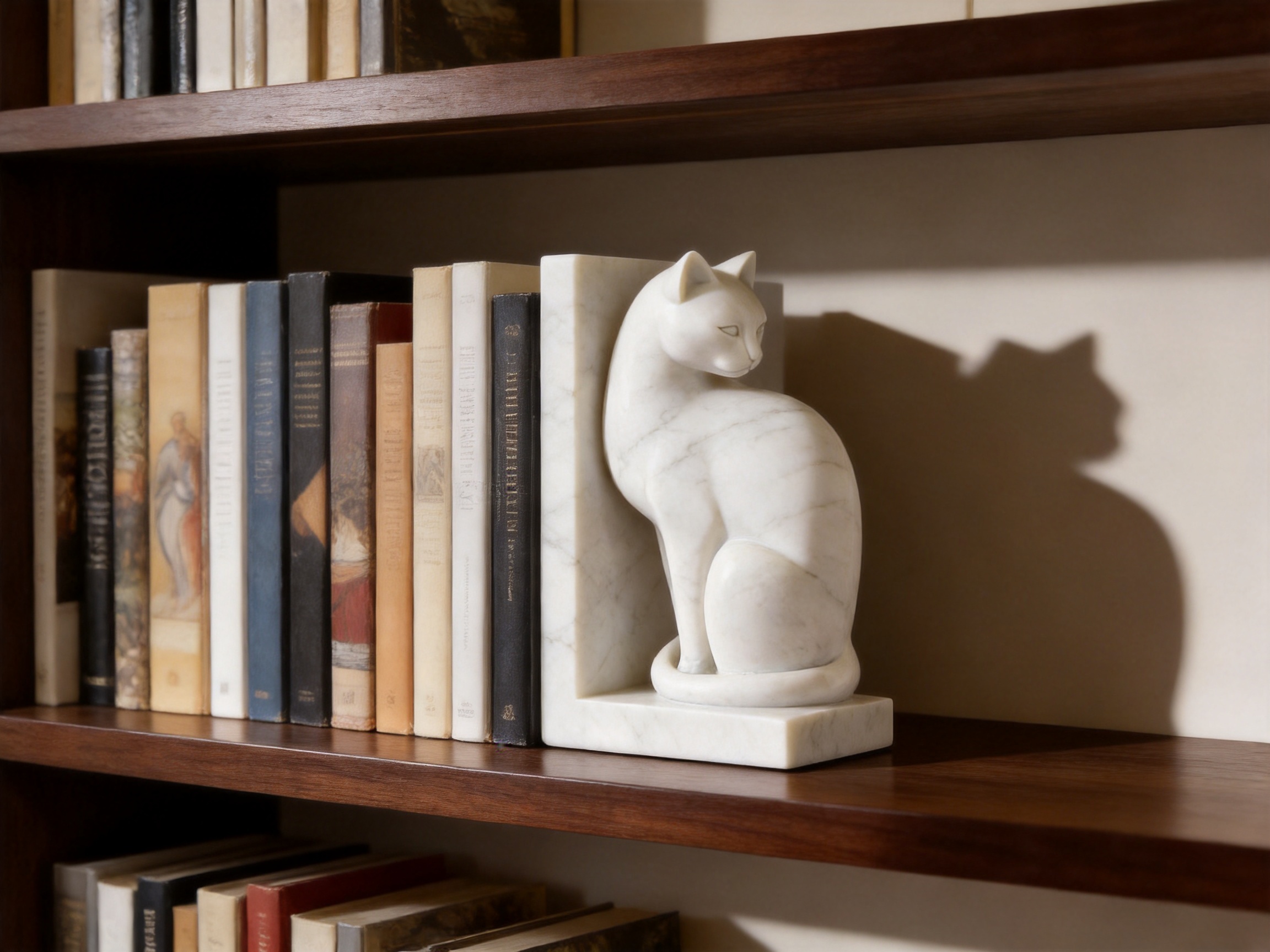
The quality of a natural stone sculpture is the result of several connected decisions rather than one isolated technique. The choice of block affects the available design. The design affects the carving strategy. The carving strategy affects the surface finish. The finished surface affects the way light reveals the form. A capable manufacturer must coordinate all of these stages.
The single-block approach provides a strong foundation for quality because it reduces the need to hide or manage visible assembly points. However, it also requires greater accuracy during shaping. The manufacturer must understand how to preserve the integrity of the stone while developing a smooth, recognizable, and stable form.
The company’s ability to produce different sculpture materials is another practical strength. A buyer may begin with a marble concept and later compare it with a bronze or stainless steel version for another location. A supplier familiar with multiple material categories can help maintain a consistent design idea across different projects while adjusting the technical solution to the environment.
For the white marble cat-form bookend, quality is visible through restraint. There are no unnecessary decorative additions to distract from imperfections in proportion or surface. The value of the piece depends on the accuracy of the silhouette, the smoothness of the lines, the authenticity of the stone, and the balance between functional and artistic purpose.
In a private residence, the sculpture can be used in a library, home office, reading room, living room, entrance hall, or primary bedroom. Its function can change according to placement. On a bookshelf, it provides organization and creates a visual endpoint for a group of books. On a console, it reads more clearly as a decorative sculpture. In a study, it can reinforce an atmosphere of concentration, refinement, and personal taste.
The cat form is suitable for homeowners who appreciate animal symbolism but prefer a sophisticated interpretation rather than a literal figurine. The minimal outline allows the piece to remain mature and architectural. It can appeal to collectors of animal art, admirers of natural stone, or buyers who want a meaningful decorative object without excessive ornament.
In a large residence, the 120-centimeter version can occupy a substantial display area. It may stand near a staircase, on a wide built-in shelf, or beside a collection of books and objects. In smaller spaces, the 60-centimeter size may provide the desired character while remaining easier to integrate into the existing furniture plan.
The product description specifically identifies high-end homes, hotel clubs, and art exhibition halls as suitable settings. Hospitality interiors benefit from objects that are easy to recognize, durable in appearance, and capable of communicating a premium design standard. A white marble sculpture can perform this role in a lobby, executive lounge, private dining area, library, reception zone, or members’ club.
In a hotel setting, the cat form may also support a theme of calmness, elegance, or protection. Its symbolic associations can be incorporated into the narrative of the interior without requiring explanatory signage. Guests may simply experience it as a graceful sculptural accent, while designers can connect it to a broader concept involving nature, fortune, or quiet luxury.
Clubs and private hospitality venues often use books, art objects, and natural materials to create an atmosphere of exclusivity. The marble bookend can complement leather seating, wood paneling, stone counters, metal lighting, and curated art collections. Its neutral color gives designers freedom to position it near different finishes without creating a conflict.
In an art exhibition hall, the product can be presented as an example of contemporary functional sculpture. Its identity is not limited to furniture accessory or interior decoration. The combination of an animal form, natural stone, and practical purpose raises interesting questions about the relationship between art and use.
Retail showrooms and design studios can use the sculpture to demonstrate how a single object can connect product design, craft, and interior architecture. It can be placed beside furniture collections, material samples, architectural models, or other sculptures. Because it is available in multiple sizes, it can be selected to support either a focused display or a larger spatial composition.
Commercial offices may also use it in executive meeting rooms, reception areas, libraries, or client lounges. The piece can communicate attention to detail and a preference for enduring materials. In these environments, it is important to confirm that the display surface is sufficiently strong and stable for the selected size and weight.
Customization is one of the product’s significant commercial advantages. The available size range is 60–120 centimeters, but custom sizes can be discussed for projects that require a different scale. A designer may need a smaller version for a compact display shelf, a taller version for a hospitality lobby, or a coordinated series in multiple dimensions.
Custom sizing should consider more than the overall height. The width, depth, base area, visual balance, and relationship to nearby objects must also be reviewed. A larger piece may require a reinforced plinth or carefully planned installation area. A narrow shelf may require an adjusted profile. Providing drawings, photographs, measurements, and installation information can help the manufacturer develop a suitable proposal.
Custom material is also available. Although the featured product is carved from natural pure white stone, the broader material range includes bronze, stainless steel, fiberglass, and weathering steel. This allows the cat-form concept to be adapted for different environments. For example, a metal interpretation may be considered for an outdoor project, while fiberglass may be explored when a lighter object is required.
Material changes will affect more than color. They can alter the weight, surface reflection, tactile quality, weather resistance, structural behavior, and maintenance requirements of the sculpture. Buyers should therefore evaluate the complete project objective rather than selecting a material only for appearance.
Before ordering, buyers should identify the intended location and the role the sculpture will play. Is it primarily a bookend, a decorative object, a lobby centerpiece, or part of an exhibition? The answer will influence the preferred size, finish, base treatment, and installation method.
Measurements should include the available width, depth, and height. Buyers should also consider the viewing distance. A 60-centimeter sculpture may appear prominent on a shelf but understated in a large lobby. A 120-centimeter sculpture may be ideal for an open public area but too dominant for a compact study.
The surrounding palette should be reviewed as well. White marble works well with dark, warm, and neutral finishes, but the degree of contrast will affect the visual result. Lighting is equally important. Directional lighting can emphasize the rounded lines, while diffuse lighting can create a quieter and softer presentation.
For a commercial project, buyers should request information about packaging, transportation, unloading, installation, and final positioning. Natural stone is substantial, and larger sculptures should be moved with appropriate equipment and professional care. The display surface must be capable of supporting the finished piece, and the sculpture should be protected from impact.
Natural marble should be treated as a valued stone surface. Regular dusting with a soft, clean cloth can help maintain its appearance. If cleaning is necessary, a mild method appropriate for natural stone should be used. Abrasive powders, harsh acids, aggressive solvents, and rough tools may damage or dull the surface.
Spills should be addressed promptly, especially if the sculpture is displayed in an area where food, beverages, cosmetics, or colored materials are present. Although the product is intended for decorative and functional use, it should not be treated as indestructible. Sudden impacts, dragging across hard surfaces, or placing heavy objects against delicate areas may cause damage.
Outdoor placement requires additional discussion. The supplied description presents the piece primarily for homes, hotels, clubs, and exhibition halls. If a buyer intends to install it outdoors, the stone type, local climate, drainage, temperature changes, pollution, and mounting method should be evaluated with the manufacturer before production.
Good maintenance is part of preserving the sculpture’s artistic value. The objective is not to make the natural stone look artificial, but to keep its surface clean, its contours visible, and its material character intact.
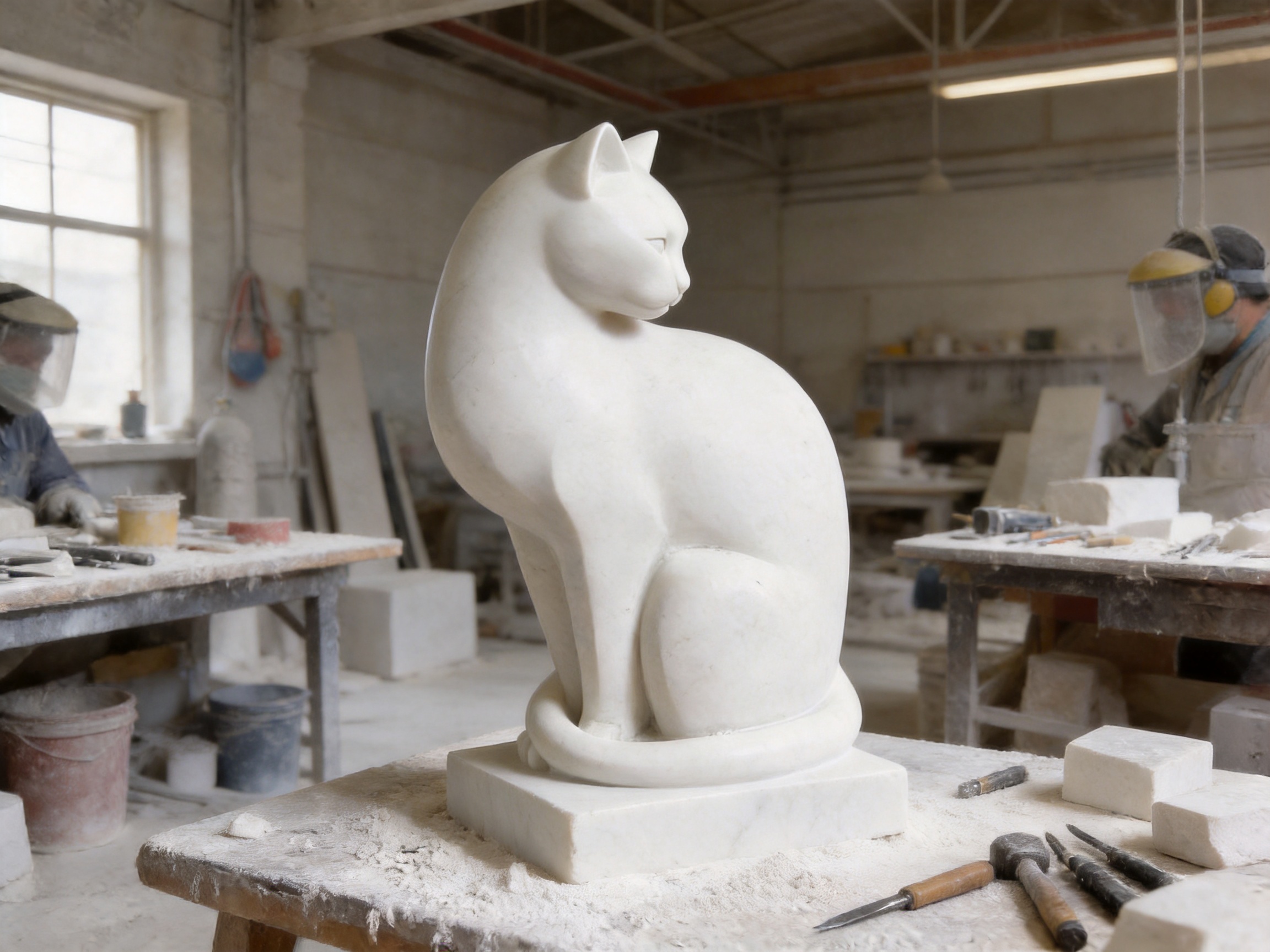
Design-led projects often require objects that can perform several roles at once. They must be practical enough to justify their presence, visually distinctive enough to support the concept, and refined enough to match the quality of the surrounding architecture. The White Marble Abstract Cat-Form Bookend meets these requirements through the combination of function, symbolism, natural material, and minimalist form.
Its strongest competitive advantage is not based on a single decorative feature. Instead, it comes from the interaction of multiple qualities. The single-block construction supports visual continuity. The white marble provides a luminous and substantial surface. The cat form adds emotional and symbolic meaning. The bookend function gives the piece a practical reason to exist. The available size and material customization supports different project conditions.
Many products can provide one or two of these benefits. A conventional bookend may be functional and inexpensive. A small figurine may be symbolic and decorative. A large metal sculpture may be visually powerful. This product is distinctive because it occupies the intersection of these categories while maintaining a restrained visual language.
For a buyer comparing suppliers, the manufacturer’s ability to work across several sculpture materials is also important. Jiangsu Xinyesheng Sculpture Co., Ltd. can support product development in marble and other material categories, which may be useful when an interior project includes multiple sculpture types. The company’s custom size and material availability further supports tailored procurement rather than a one-size-fits-all purchase.
It is a functional and decorative sculpture shaped as an abstract cat. It is designed to hold or organize books while also serving as an interior art object. The piece belongs to the category of marble animal sculptures.
The product is carved from a single block of natural pure white stone. The material gives it a luminous appearance, substantial weight, and authentic natural-stone character.
The design is abstract. It uses smooth, rounded, minimal lines to suggest the graceful form of a cat without relying on highly detailed anatomical carving.
The listed size range is 60–120 centimeters. Custom sizes are also available for projects with specific spatial or display requirements.
The listed price is $3,300 for the 60-centimeter version and $6,600 for the 120-centimeter version. Final pricing for custom sizes, materials, finishes, packaging, transportation, and related services should be confirmed for each order.
Yes. Custom material options are available. The manufacturer works with several sculpture materials, including bronze, stainless steel, marble, fiberglass, and weathering steel. Material selection should be based on the intended location, appearance, weight, and maintenance requirements.
It can be used in private studies, libraries, living rooms, luxury residences, hotel clubs, reception areas, executive offices, showrooms, and art exhibition halls. The appropriate size should be selected according to the scale and function of the space.
A single-block sculpture is developed from one continuous piece of stone, which helps preserve the continuity of the form and avoids visible assembly seams. It can create a more unified visual and tactile experience, although it requires careful planning and controlled carving.
Natural stone may show variations in tone, grain, or subtle veining. These differences are part of the material’s natural identity. Buyers requiring a particular appearance should discuss stone selection and expectations with the manufacturer before production.
The product is presented primarily for interior and exhibition-related settings. Outdoor use should be discussed in advance because climate, stone characteristics, drainage, installation, and local environmental conditions can affect long-term performance.
It should be dusted with a soft cloth and cleaned only with methods suitable for natural stone. Abrasive cleaners, harsh acids, rough tools, and strong solvents should be avoided. Spills should be removed promptly.
No. Although it is designed as a bookend, its sculptural character allows it to function as a console accent, shelf decoration, lobby artwork, exhibition object, or standalone interior sculpture.
This design offers more than basic book support. It combines practical use with natural stone, a recognizable animal form, symbolic meaning, and a refined sculptural presence. It is intended for buyers who want their functional accessories to contribute to the overall design of a space.
The White Marble Abstract Cat-Form Bookend demonstrates how a practical object can be elevated through thoughtful design and skilled stone production. Its single-block construction, smooth rounded lines, natural pure white stone, and graceful animal form create a product that is both useful and artistic.
Compared with conventional bookends, it offers greater material authenticity, stronger visual identity, and a more substantial presence. Compared with alternative sculpture materials, white marble provides a softer, quieter, and more naturally luminous character. Its symbolism of grace, fortune, and protection adds emotional meaning without compromising its minimalist appearance.
Jiangsu Xinyesheng Sculpture Co., Ltd. supports the product with custom size and material capabilities and experience across multiple sculpture categories. The manufacturing approach depends on coordinated design interpretation, single-block stone preparation, controlled shaping, curve refinement, surface finishing, and quality review. These strengths make the product suitable for both individual buyers and professional design projects.
With listed sizes from 60 to 120 centimeters and reference prices of $3,300 and $6,600, the sculpture can be specified for different spatial scales. Whether placed in a private library, luxury residence, hotel club, showroom, or exhibition hall, it offers a durable and expressive way to bring sculpture into everyday surroundings. It is not merely an accessory for books; it is a carefully considered object that connects function, symbolism, natural material, and contemporary artistic form.
1. General principles of natural-stone selection, carving, finishing, and maintenance for interior sculpture.
2. Architectural and interior-design practices concerning the use of marble in residential, hospitality, and exhibition environments.
3. Comparative material characteristics of bronze, stainless steel, fiberglass, weathering steel, and marble sculpture.
4. Product specifications supplied for the White Marble Abstract Cat-Form Bookend, including material, size range, pricing, design description, and customization options.
5. General design considerations for functional sculpture, animal-form abstraction, proportion, display scale, and interior integration.



Daniel H.

Amanda R.

Robert B.

Jennifer S.

James W.

Barry G.

Michael T.

Emily K.

David L.

Sarah M.


Mikey XV

Jagxue

 English
 Español
 عربى
 Français
 italiano
 Deutsch