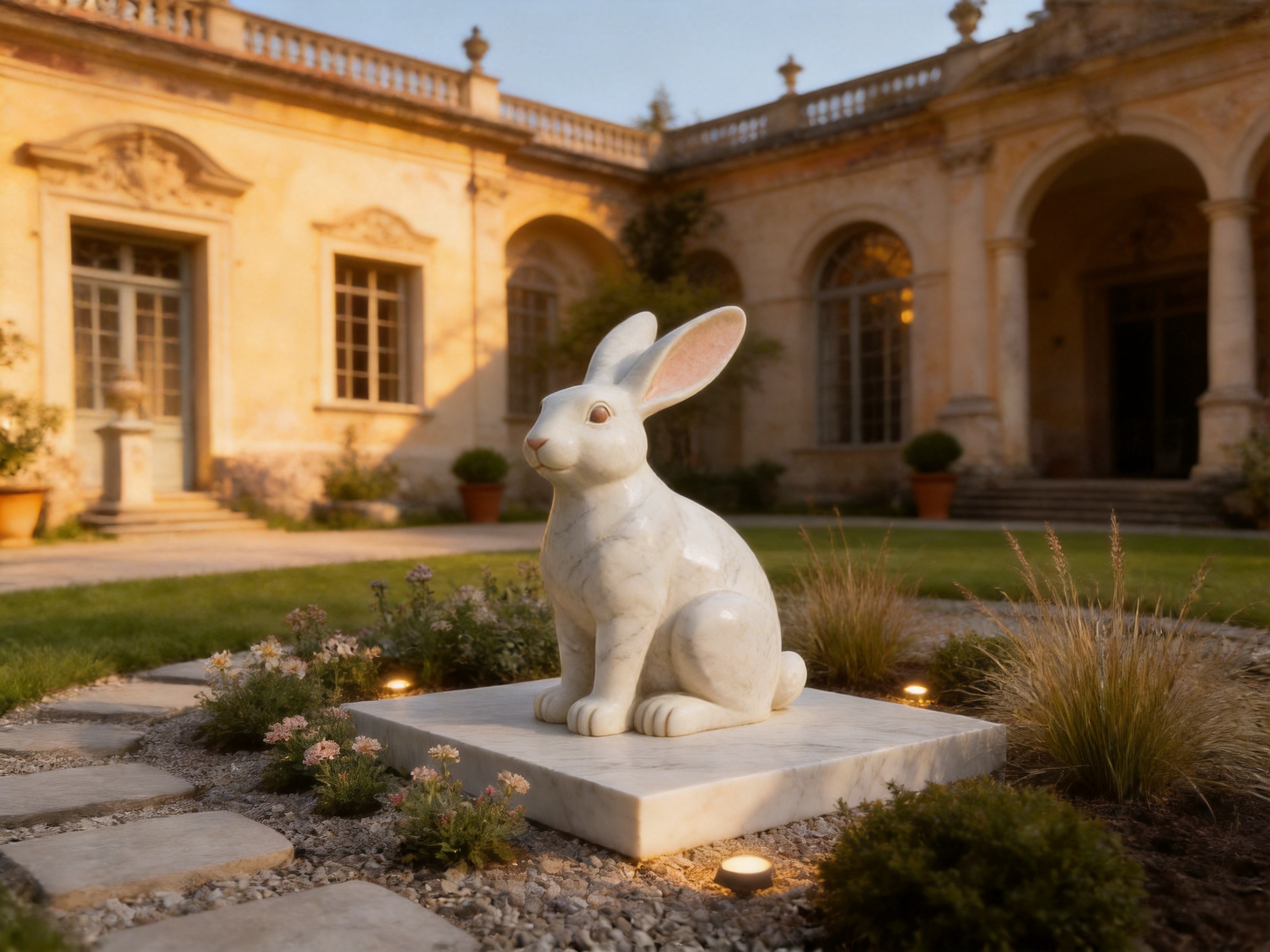
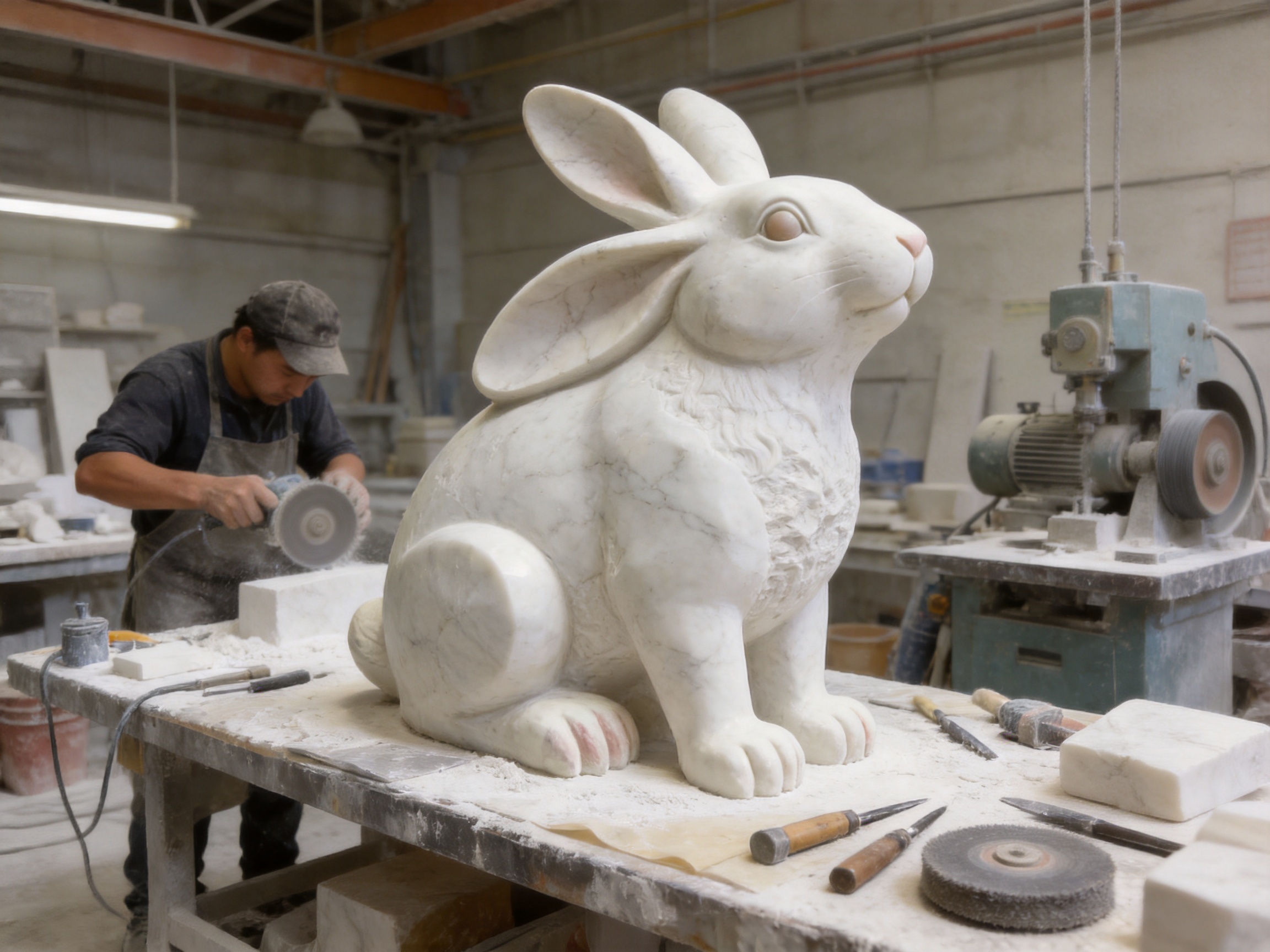
A well-designed garden sculpture can transform an ordinary outdoor area into a memorable landscape. The Marble Animal Rabbit Sculpture combines the charm of an animal figure with the permanence, visual depth, and natural elegance of carved stone. Measuring approximately 70 × 60 × 35 centimeters, it is proportioned for gardens, lawns, terraces, courtyards, entrance areas, and other locations where a decorative focal point is needed without overwhelming the surrounding space.
Its appeal comes from the balance between expressive form and practical durability. The rabbit’s anthropomorphic expression gives the sculpture a distinctive personality, while the delicate surface treatment helps create a more refined appearance than a mass-produced garden ornament. Placed beside flowers, ornamental grasses, landscape stones, pathways, or architectural features, the sculpture can add warmth and visual interest to both traditional and contemporary environments.
Manufactured by Jiangsu Xinyesheng Sculpture Co., Ltd., the piece reflects a production philosophy centered on custom sculpture, material selection, careful forming, detailed finishing, and suitability for outdoor display. The company serves buyers seeking sculpture products for residential gardens, hospitality projects, public landscapes, commercial developments, and private collections.
Content
The Marble Animal Rabbit Sculpture is an outdoor decorative sculpture designed to combine artistic expression with long-term usability. Its subject is immediately recognizable, but its styling goes beyond a simple animal replica. The anthropomorphic expression creates a sense of character, making the rabbit appear more engaging and suitable for spaces where visitors can view it from multiple angles.
The compact but substantial dimensions allow the sculpture to function in several ways. It can stand independently as a focal point, become part of a small garden composition, or be used as one element in a larger decorative arrangement. Its 70-centimeter height provides a noticeable presence at ground level, while the 60-centimeter length and 35-centimeter width help it fit naturally into most garden layouts.
Unlike small lightweight ornaments that can appear temporary, a marble sculpture has visual authority. Its stone construction communicates quality and permanence. The material also interacts with changing daylight, creating variations in color, shadow, and surface emphasis throughout the day. In a garden setting, these changes help the sculpture remain visually interesting rather than appearing static.
| Product Feature | Details | Primary Benefit |
|---|---|---|
| Product type | Marble animal sculpture | Combines natural stone character with decorative design |
| Subject | Rabbit with an expressive, anthropomorphic appearance | Adds personality and emotional appeal to outdoor areas |
| Dimensions | Approximately 70 × 60 × 35 cm | Suitable for gardens, terraces, courtyards, and landscaped entrances |
| Intended use | Outdoor decoration and landscape enhancement | Creates a focal point beside plants, stones, paths, and architectural features |
| Material character | Weather-resistant marble construction | Supports long-term display in changing outdoor conditions |
| Listed price range | US$761.12–US$1,212.31 | Provides a reference range for purchasing and project budgeting |
Marble has been valued in sculpture for centuries because it combines structural strength with a refined visual surface. Its natural mineral composition gives each piece a distinctive appearance, while its ability to receive detailed finishing allows sculptors and fabricators to create expressive shapes, subtle transitions, and carefully controlled textures.
For a rabbit sculpture, marble is especially suitable because it can communicate both softness and stability. The subject itself is associated with gentleness, alertness, and natural movement. Marble gives those qualities a lasting physical form. Rounded body areas can appear smooth and calm, while facial details, ears, paws, and fur-like textures can provide definition and character.
Natural stone also offers a stronger sense of permanence than many lightweight synthetic alternatives. Fiberglass and resin ornaments may be convenient for certain applications, but they can sometimes look less substantial in formal landscapes. Marble, by contrast, provides weight, presence, and a material quality that complements stone paving, masonry walls, classical architecture, and high-end garden design.
The natural variation of marble can also help each finished sculpture feel individual. Even when sculptures are produced according to the same design, subtle differences in tone, veining, and surface pattern may create a unique visual identity. This is valuable for buyers who want decorative pieces that do not appear completely uniform or industrial.
The design of this rabbit sculpture is based on more than anatomical representation. Its anthropomorphic expression gives it a welcoming and slightly imaginative personality. That quality can make the sculpture particularly effective in family gardens, boutique hotels, restaurants, themed landscapes, residential developments, and public spaces intended to feel approachable.
An animal figure can communicate emotion more quickly than an abstract object. Visitors immediately understand the subject, while the stylized expression encourages them to look more closely. This combination of recognition and interpretation makes the sculpture suitable for landscapes that require an artistic focal point without becoming overly formal or difficult to understand.
The delicate texture is another important design feature. Texture helps define the form under changing light and prevents large areas of stone from appearing visually flat. Carefully controlled texturing can suggest fur, movement, facial expression, or the transition between different anatomical areas. When balanced with smoother surfaces, it creates contrast and visual depth.
The rabbit’s form can also contribute to the mood of a garden. In a formal European-style setting, it can provide a decorative accent inspired by traditional estate gardens. In a modern courtyard, it can introduce an organic silhouette that softens architectural lines. In a children’s or family-oriented environment, its friendly subject can make the area feel more welcoming.
The sculpture is designed for outdoor decorative use, making it suitable for a broad range of landscape applications. Its size is large enough to be noticed but moderate enough to work within carefully planned planting schemes. It can be positioned near an entrance, beside a pathway, or within a planting bed where the surrounding vegetation frames the figure.
In a French manor-style garden, the rabbit can serve as an informal counterpoint to clipped hedges, symmetrical paths, fountains, and stone balustrades. Its animal form introduces liveliness into an otherwise structured setting. It may also work effectively near an estate entrance or along a garden axis where a sequence of decorative elements guides visitors through the landscape.
On a residential lawn, the sculpture can stand alone as a feature. A simple placement with adequate space around the figure allows viewers to appreciate the silhouette and surface details. For a more layered arrangement, it can be combined with low shrubs, seasonal flowers, decorative gravel, landscape boulders, or a small water feature.
On a terrace, the sculpture can help connect architectural space with the natural environment. When positioned near a seating area, it becomes part of the visual experience without requiring additional functional infrastructure. It can also be placed beside a conservatory, garden room, poolside area, or outdoor dining space, provided that the supporting surface is stable and properly prepared.
Hotels, resorts, restaurants, and commercial developments can use animal sculptures to create recognizable visual points. A distinctive rabbit figure may contribute to the identity of a landscaped entrance, courtyard, children’s area, or themed hospitality environment. Because the subject is friendly and non-threatening, it can be appropriate for spaces intended for a wide range of visitors.
Public and semi-public projects may also benefit from the sculpture’s combination of clear subject matter and durable material. It can be included in a park, civic garden, cultural venue, educational site, or residential community. For large projects, several related sculptures can be arranged to create a narrative or visual sequence, although spacing and scale should be carefully considered.
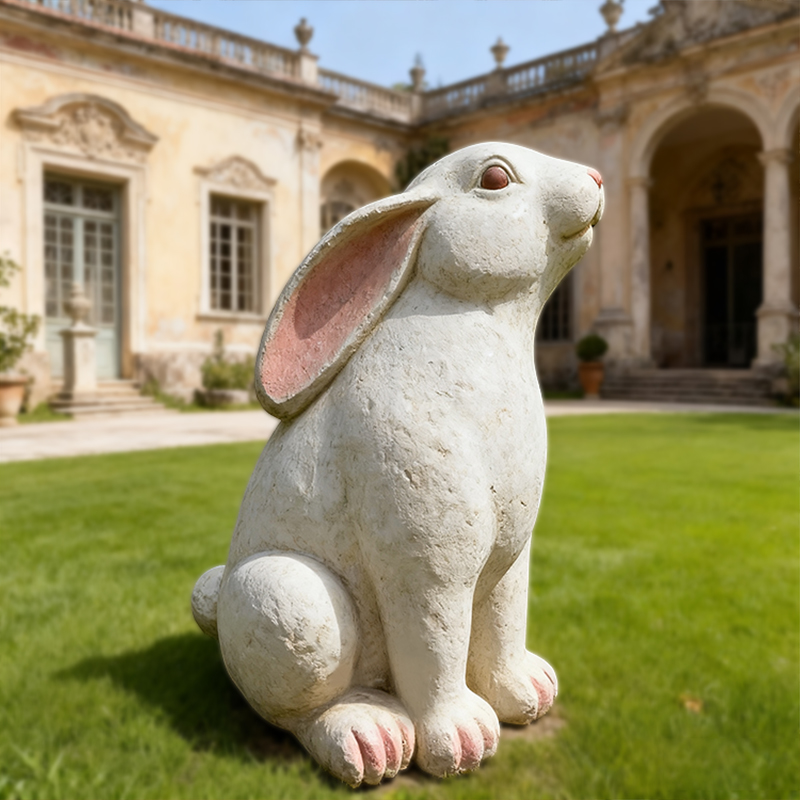
Marble Animal Rabbit Sculpture
One of the principal advantages of marble is its substantial appearance. Compared with thin metal sheet ornaments, lightweight plastic figures, or hollow resin decorations, a marble sculpture generally feels more permanent and grounded. This distinction is important in premium gardens and architectural landscapes where every visible element contributes to the perceived quality of the environment.
The substantial visual character of marble also allows the sculpture to hold its own beside stone walls, paving, columns, steps, and mature landscaping. Lightweight ornaments can sometimes be visually lost in large gardens, while a properly proportioned marble piece remains legible from a distance.
Printed finishes and artificial coatings may imitate stone, but they cannot fully reproduce the depth and subtle variation of natural marble. The surface of a marble sculpture can display mineral variation, tonal movement, and a tactile quality that changes with weather and light. These characteristics help distinguish the sculpture from uniform factory-produced decorations.
Natural variation also makes the piece more adaptable to different color schemes. Depending on the marble tone and surrounding materials, it can complement green planting, warm masonry, gray paving, dark mulch, or bright floral displays. The result is an object that can be integrated into multiple landscape styles.
The product description identifies the sculpture as made from weather-resistant materials capable of withstanding outdoor conditions such as sunlight, rain, and temperature changes. This makes it more suitable for permanent garden display than decorative products intended mainly for indoor use or temporary seasonal decoration.
Outdoor durability does not mean that maintenance is unnecessary. Proper placement, stable installation, periodic cleaning, and attention to local climate conditions remain important. Nevertheless, the material and construction approach provide a strong foundation for long-term use, helping the sculpture retain its decorative role over time.
A rabbit sculpture with an anthropomorphic expression offers more personality than a generic garden marker. It can create an emotional response, encourage conversation, and become a memorable feature of a property. This artistic value is particularly important for buyers who want more than a basic landscape accessory.
Because the sculpture is both decorative and representational, it can suit buyers with different preferences. Traditional customers may appreciate its connection with classical garden ornament, while contemporary customers may value its simplified silhouette and expressive character.
Jiangsu Xinyesheng Sculpture Co., Ltd. specializes in sculpture production across several categories, including bronze sculptures, stainless steel sculptures, marble sculptures, fiberglass sculptures, and weathering steel sculptures. This range indicates experience with different materials, forming methods, surface treatments, and application requirements.
For a marble animal sculpture, successful manufacturing depends on the coordination of design interpretation, material selection, shaping, detailing, finishing, inspection, and packing. Each stage influences the final result. A strong production process must preserve the intended character of the design while ensuring that the finished sculpture is stable, visually balanced, and suitable for its intended environment.
The first manufacturing challenge is translating a visual concept into a physical form. A rabbit may appear simple at first glance, but small changes in ear position, body proportion, head angle, facial expression, and surface texture can significantly affect its personality. The production team must understand the design intent before shaping the material.
Design interpretation may involve reviewing drawings, reference images, dimensions, or customer requirements. For customized projects, the manufacturer can coordinate the desired size, pose, finish, and stylistic direction before production begins. This helps reduce misunderstandings and gives buyers a clearer basis for approval.
Marble selection affects the sculpture’s appearance, weight, workability, and final price. The stone must be suitable for the intended shape and sufficiently sound for outdoor use. Attention to natural structure, visible variation, and potential weak areas is important because animal forms may include projecting elements such as ears, paws, or tails.
Material preparation should be handled carefully to create a stable starting point for shaping. A well-prepared block or section of stone allows the production team to plan the orientation of the sculpture and make efficient use of the available material. Proper planning can also help preserve visual continuity in the stone’s natural pattern.
The main form can be developed through a combination of experienced craftsmanship and appropriate stone-working equipment. Modern sculpture manufacturing often uses measured templates, digital references, cutting equipment, grinding tools, and precision handwork. The exact balance depends on the complexity of the design and the desired finish.
Mechanical shaping can efficiently establish the broad proportions of the rabbit, while skilled manual work refines the transitions that give the sculpture its character. This combination is an important strength because machines can support consistency, but expressive details often require human judgment.
During shaping, the production team must consider the sculpture from multiple viewpoints. A piece intended for outdoor display may be seen from the front, side, rear, and above. The form therefore needs to remain coherent from different angles. Proportion, balance, center of gravity, and contact with the ground must all be evaluated throughout production.
After the primary form is established, attention turns to facial expression, anatomical transitions, ears, paws, body contours, and surface texture. These details distinguish a refined sculpture from a basic cutout or generic ornament.
Texture should be applied with restraint. Excessive uniform texturing may make a sculpture look artificial, while insufficient definition may cause the form to lose its visual identity. The goal is to create enough variation for the rabbit to read clearly without overwhelming the natural beauty of the marble.
Experienced finishing personnel can adjust the balance between smooth and textured areas. The face may require greater smoothness to preserve expression, while selected body areas may receive more tactile definition. Edges and transitions can be softened or sharpened according to the design language.
Surface finishing determines how the marble reflects light and how easily the sculpture can be integrated into a landscape. Depending on the design, the surface may be polished, honed, naturally textured, or finished through a combination of treatments.
A polished finish can emphasize the elegance of the stone and make selected areas stand out. A honed finish may provide a softer, more understated appearance. Textured zones can add depth and reduce visual monotony. The manufacturer’s ability to coordinate these finishes is important for creating a balanced final product.
Quality control should address both artistic and practical considerations. Visual inspection can evaluate the accuracy of the silhouette, clarity of the facial expression, consistency of the surface finish, and quality of the transitions. Practical inspection can consider stability, visible defects, edge conditions, base preparation, and packing requirements.
For export-oriented sculpture production, careful packing is especially important. Marble is durable, but it is also heavy and can be vulnerable to impact at projecting or detailed areas. Appropriate protective materials, secure internal support, and suitable outer packaging help reduce the risk of damage during handling and transportation.
Custom design is a major advantage for buyers who need a sculpture adapted to a specific project. The rabbit design can serve as a starting point for modifications in size, pose, surface treatment, marble appearance, or surrounding composition. Customization allows the product to respond to the scale and character of a particular property.
A residential customer may request a smaller or larger version to suit an existing garden. A hotel or resort may require a more prominent sculpture that can be seen from a driveway or lobby entrance. A landscape contractor may need several pieces with coordinated proportions. An architect or designer may request a particular finish so that the sculpture complements nearby stonework.
Customization can also involve developing a related series. For example, a project might include several animal figures with similar finishing but different poses. A coordinated group can create a stronger visual identity than unrelated ornaments purchased from different suppliers.
When requesting customization, buyers should provide clear information about the intended location, viewing distance, preferred dimensions, climate, installation surface, and desired artistic style. Photographs or drawings of the site can help the manufacturer understand how the sculpture will function within the wider landscape.
Although the sculpture is designed for outdoor use, correct installation contributes significantly to safety and longevity. The supporting area should be stable, level, and capable of carrying the weight of the marble. Uneven or unstable ground may create stress, tipping risk, or unwanted movement.
For lawn placement, a prepared stone or concrete base may be appropriate depending on the soil and local conditions. In planting beds, the base should remain protected from standing water and excessive soil movement. On terraces or paved areas, the supporting surface should be checked for levelness and load capacity before installation.
The sculpture should be positioned where its silhouette can be seen clearly. Avoid placing it directly in front of dense visual clutter unless the intention is to create a hidden or discovery-style garden feature. A small amount of open space around the rabbit can make its shape easier to appreciate.
Planting can be used to frame the sculpture without concealing it. Low flowers or groundcover may soften the base, while taller plants can provide a layered backdrop. However, aggressive vines, dense shrubs, or rapidly growing vegetation should not be allowed to cover the facial details or place constant moisture against the stone.
Lighting can extend the sculpture’s visual impact into the evening. Low-angle landscape lighting may emphasize texture and create shadows, while softer frontal lighting can preserve the expressive face. Fixtures should be installed carefully so that wiring, water, and heat do not create avoidable maintenance problems.
Marble outdoor sculptures generally benefit from simple, consistent maintenance. Dust, soil splashes, pollen, leaves, and organic residue can accumulate on the surface, particularly in gardens with dense planting. Regular gentle cleaning helps preserve the stone’s appearance and prevents deposits from becoming difficult to remove.
A soft brush or clean cloth can be used for loose surface material. When water is needed, clean water and a non-abrasive method are usually preferable. Harsh acidic cleaners, aggressive scouring pads, and untested chemicals should be avoided because they may affect the surface finish or natural appearance of the marble.
Inspection should be carried out periodically, especially after severe weather. Buyers should look for changes in the base, movement, impact damage, unusual staining, or drainage problems. Early attention can prevent a minor issue from becoming a more serious repair requirement.
In regions with repeated freeze-thaw cycles, installation and drainage deserve particular attention. Water retained in cracks, joints, or poorly drained areas may expand when frozen. Local professionals can advise on suitable base preparation and seasonal protection based on the climate.
The sculpture should also be protected from accidental impact caused by lawn equipment, vehicles, heavy tools, or construction activity. A clear buffer around the sculpture can reduce the likelihood of damage and make routine gardening easier.
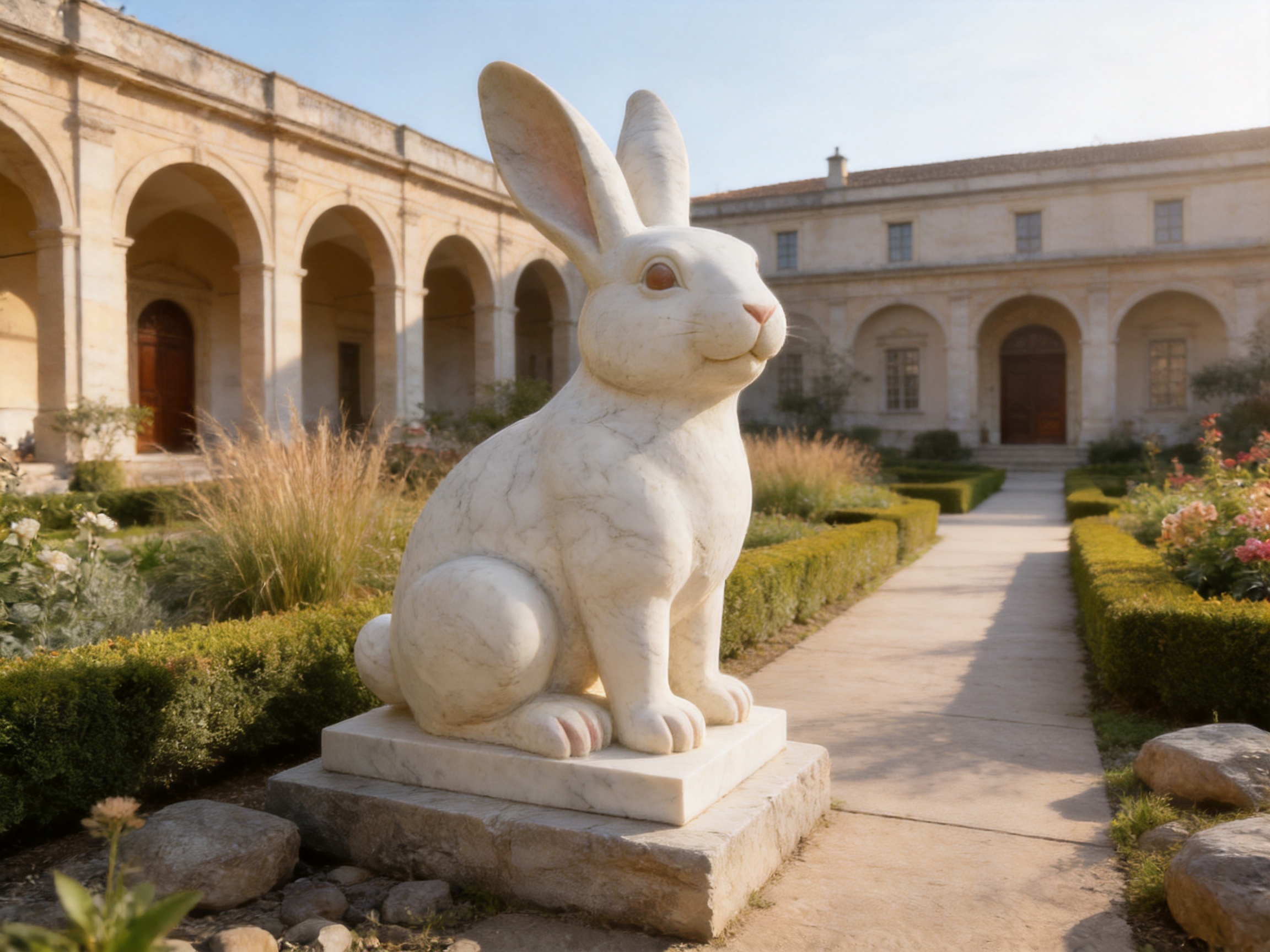
The rabbit’s refined form can complement formal garden structures associated with European estates. It may be positioned beside clipped hedges, gravel paths, stone benches, fountains, or symmetrical planting beds. In this context, the sculpture acts as a decorative accent that adds a sense of life and narrative to an orderly composition.
In a modern courtyard, the sculpture can create contrast against clean architectural lines. The natural material introduces warmth and organic character, while the simplified animal silhouette remains compatible with restrained design. A minimal setting with gravel, concrete, architectural plants, and controlled lighting can emphasize the sculpture’s shape.
Flower-rich gardens can benefit from the rabbit’s association with nature. Placed near flowering borders or informal planting, it can appear integrated into the garden rather than imposed upon it. The sculpture may also support a seasonal display, with different plants changing the surrounding colors throughout the year.
Hotels, restaurants, resorts, and retail properties often require outdoor elements that are attractive, durable, and easy for visitors to recognize. A distinctive animal sculpture can become a meeting point, photo location, or memorable part of the property’s visual identity.
The listed price range for the Marble Animal Rabbit Sculpture is US$761.12–US$1,212.31. The final quotation may depend on order quantity, customization, marble selection, finishing requirements, packaging, and shipping arrangements. Buyers should request a detailed quotation that distinguishes the product price from transportation, installation, and any project-specific service.
Before placing an order, customers should confirm the exact dimensions, stone appearance, finish, production schedule, packaging method, and delivery terms. If color or veining is important, photographs or samples should be discussed in advance because natural marble can vary.
For commercial or landscape projects, it is useful to provide a complete specification sheet. This may include the number of pieces, required delivery date, site conditions, preferred finish, installation plan, and any branding or design requirements. Clear specifications help the manufacturer provide a more accurate proposal.
Customers should also consider the total project cost rather than the product price alone. A durable sculpture may require a prepared base, lifting equipment, professional placement, landscape lighting, and ongoing maintenance. Planning these elements together can improve the final result and reduce unexpected expenses.
A specialized sculpture manufacturer offers more than a catalog of finished objects. The manufacturer can help interpret a design, select a suitable material, adjust dimensions, coordinate production, and prepare the sculpture for delivery. This support is valuable when the piece must meet a specific architectural or landscaping brief.
Jiangsu Xinyesheng Sculpture Co., Ltd. produces multiple sculpture categories, including marble, bronze, stainless steel, fiberglass, and weathering steel works. This material diversity can help buyers compare options according to appearance, budget, weight, maintenance expectations, and site requirements.
The company’s product range also suggests an ability to work across different artistic styles. Marble can provide classical elegance, stainless steel can create a contemporary appearance, bronze can offer traditional richness, fiberglass can support lightweight forms, and weathering steel can deliver a distinctive industrial character. Customers can therefore discuss a project with a supplier familiar with varied sculpture applications.
For buyers seeking European-style sculpture or custom metal statues in addition to marble animal pieces, this broader manufacturing background may simplify supplier coordination. A single experienced manufacturer may be able to develop related elements for one project while maintaining a consistent level of design communication.
| Material | Visual Character | Typical Strength | Important Consideration |
|---|---|---|---|
| Marble | Natural, refined, timeless | Substantial appearance and detailed sculptural potential | Heavy and should be installed on a stable base |
| Bronze | Classic, warm, historically established | Suitable for detailed figures and traditional outdoor settings | Patina and surface care should be considered |
| Stainless steel | Modern, reflective, architectural | Strong contemporary presence | Reflective surfaces may require regular cleaning |
| Fiberglass | Flexible, lightweight, adaptable | Useful when lower weight is important | Finish and weather exposure should be evaluated |
| Weathering steel | Industrial, earthy, evolving | Distinctive outdoor architectural appearance | Rust-colored runoff and surrounding surfaces require planning |
For the rabbit design specifically, marble is an excellent choice when the buyer wants a grounded, elegant, and permanent visual effect. Other materials may be more appropriate when low weight, strong reflectivity, or an industrial style is the priority. The best selection depends on the project’s design language and practical conditions.
The value of a sculpture is not determined only by its size or material cost. Craftsmanship affects how successfully the design is communicated. A well-executed rabbit sculpture should have a balanced silhouette, a convincing expression, stable proportions, and a surface treatment that supports the form.
Craftsmanship is particularly important for animal sculpture because viewers are sensitive to posture and expression. Small inaccuracies may make an animal appear stiff, unbalanced, or generic. Careful shaping and finishing help create a more natural and appealing presence.
At the same time, the sculpture does not need to be hyper-realistic to be successful. A stylized or anthropomorphic approach can be highly effective when the proportions and details are intentionally controlled. The goal is to create a coherent artistic identity that remains attractive from close and distant viewing positions.
Long-lasting products can support more responsible purchasing because they are less likely to require frequent replacement. A durable marble sculpture can remain in a landscape for many years, allowing the buyer to enjoy a consistent decorative feature rather than repeatedly purchasing short-lived ornaments.
Material selection should still be considered in relation to transport and installation. Marble is heavy, so shipping and handling require planning. Consolidated orders, careful packaging, and professional installation can help manage logistical requirements. For major projects, buyers should coordinate the delivery route and unloading method before production is completed.
The sculpture can also contribute to a more sustainable landscape concept by functioning as a permanent visual anchor. Seasonal planting can change around it, while the sculpture remains constant. This creates flexibility for gardeners and landscape designers who want to update colors and textures without replacing the central decorative element.
The listed size is approximately 70 × 60 × 35 centimeters. This proportion is suitable for many lawns, terraces, courtyards, planting beds, and garden pathways. Buyers requiring a different scale should discuss customization before ordering.
Yes. The product is described as an outdoor decorative sculpture made from weather-resistant materials intended to withstand sunlight, rain, and temperature changes. Proper installation, drainage, cleaning, and protection from accidental impact remain important for long-term performance.
Yes. Although it is designed for outdoor display, its refined marble appearance can also suit entrance halls, conservatories, galleries, reception areas, hotels, restaurants, and other interior spaces where the floor can support its weight.
Its marble construction provides greater visual weight, natural surface variation, and a stronger sense of permanence. The expressive rabbit design and delicate texture also give it more artistic character than a basic decorative figure.
Custom sculpture production is part of the manufacturer’s business focus. Buyers can inquire about changes to dimensions, pose, finish, marble appearance, or related design requirements. Customized specifications should be confirmed before production begins.
It should be placed on a stable, level, load-bearing surface. Depending on the site, this may be a prepared stone base, concrete foundation, or structurally suitable paved area. Professional advice is recommended for heavy sculptures, sloped sites, public spaces, and areas exposed to strong weather.
Loose dirt can be removed with a soft brush or cloth. Clean water and gentle, non-abrasive methods are generally preferable. Strong acids, abrasive pads, and untested chemicals should be avoided because they may affect the stone surface.
The listed price range is US$761.12–US$1,212.31. The final amount may vary according to customization, quantity, material selection, packaging, shipping, and other project requirements.
Yes. It can be used as an individual focal point or combined with flowers, landscape stones, shrubs, paths, and other decorative elements. Buyers working on larger projects should provide site details and quantity requirements when requesting a quotation.
A useful inquiry should include the desired quantity, dimensions, delivery location, required date, intended use, preferred finish, site photographs if available, and any customization requirements. This information helps the manufacturer prepare a more accurate response.
The Marble Animal Rabbit Sculpture offers a strong combination of decorative personality, natural material quality, practical outdoor suitability, and adaptable scale. Its expressive rabbit form can make a garden feel more welcoming, while its marble construction provides the visual permanence expected in a carefully designed landscape.
Compared with lightweight or generic garden ornaments, it offers greater substance, more distinctive surface character, and stronger artistic value. Its size allows it to function in private gardens, terraces, courtyards, hospitality environments, commercial landscapes, and public-facing outdoor spaces.
The manufacturing strengths of Jiangsu Xinyesheng Sculpture Co., Ltd. support buyers who need both standard sculpture products and custom solutions. Experience across marble, bronze, stainless steel, fiberglass, and weathering steel allows the company to address different design and material requirements. For this rabbit sculpture, the combination of design interpretation, material preparation, sculptural shaping, detail work, surface finishing, inspection, and export packing is central to achieving a reliable final product.
With suitable placement and basic maintenance, the sculpture can remain a lasting feature of the landscape. It can stand independently, complement flowers and stones, or become part of a larger composition. For buyers seeking a refined outdoor animal sculpture with durable material character and a friendly artistic presence, this marble rabbit is a compelling choice.
1. Product information supplied for the Marble Animal Rabbit Sculpture, including dimensions, listed price range, intended outdoor use, and material description.
2. Company information supplied for Jiangsu Xinyesheng Sculpture Co., Ltd., including product categories and custom sculpture focus.
3. General principles of outdoor landscape design concerning focal points, visual balance, planting integration, and pedestrian viewing angles.
4. General stone-care guidance for natural marble used in decorative and architectural applications.
5. General sculpture-production principles concerning design interpretation, material preparation, forming, detailing, finishing, inspection, packaging, and installation.



Daniel H.

Amanda R.

Robert B.

Jennifer S.

James W.

Barry G.

Michael T.

Emily K.

David L.

Sarah M.


Mikey XV

Jagxue

 English
 Español
 عربى
 Français
 italiano
 Deutsch