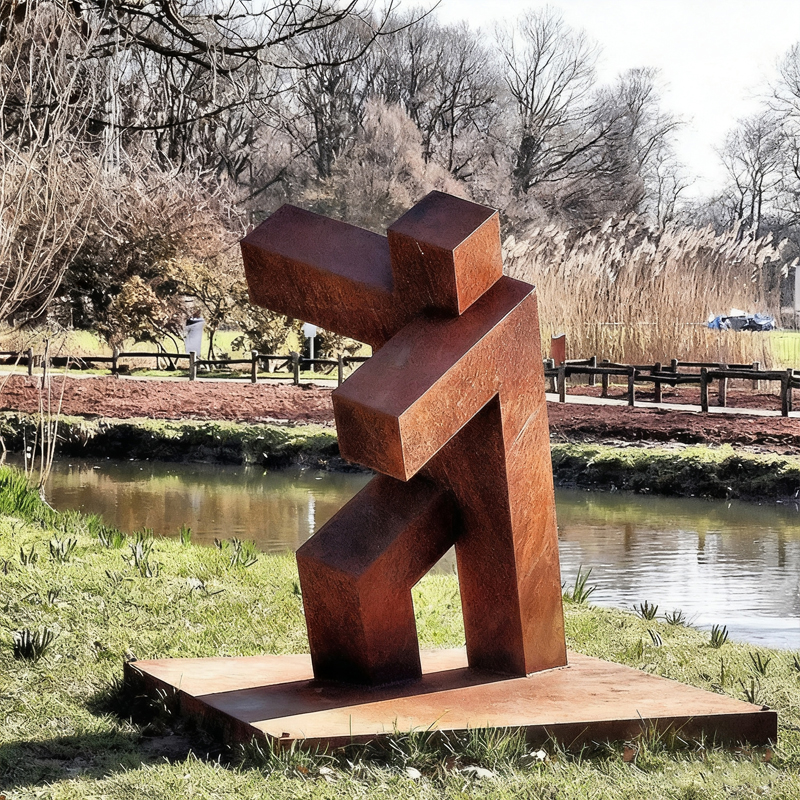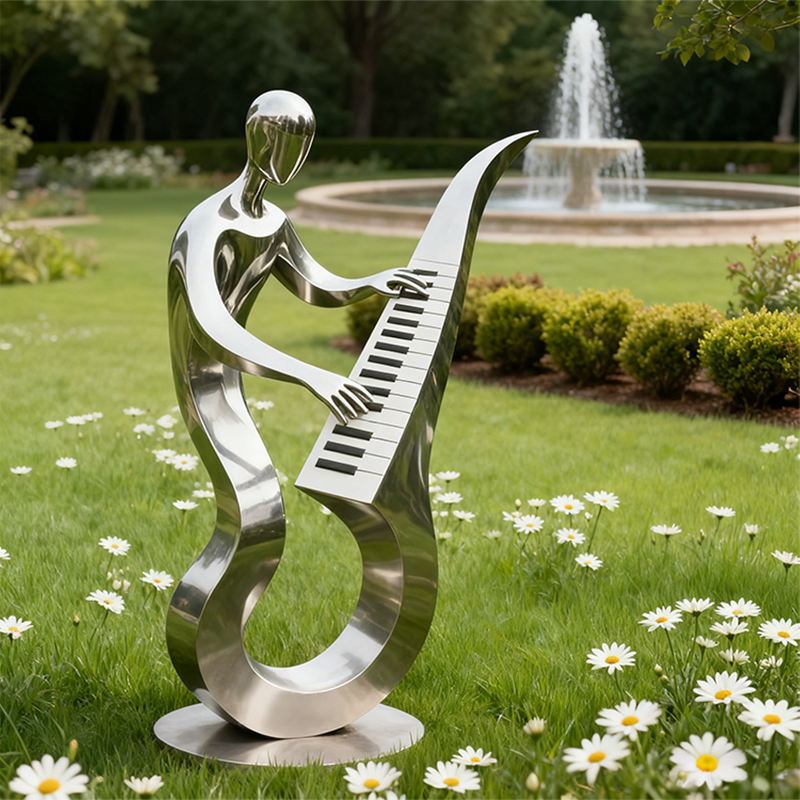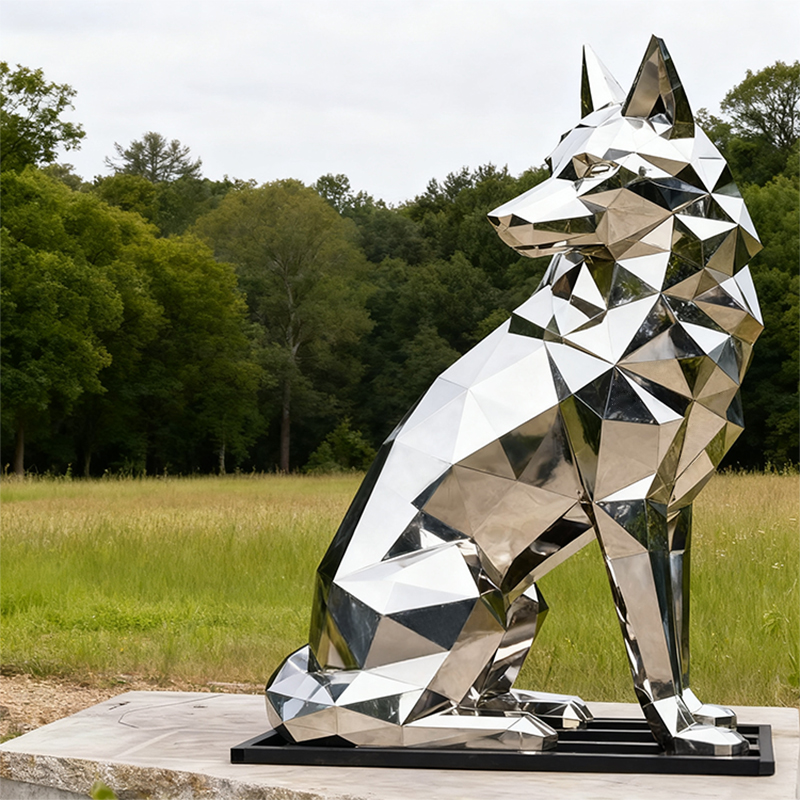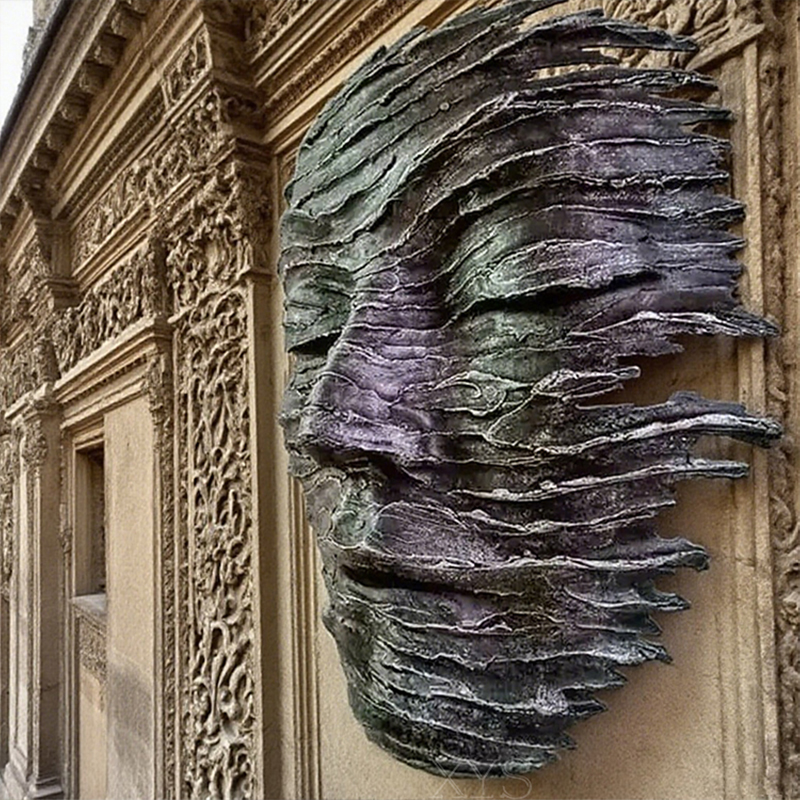
Outdoor public art has become an important part of how cities, commercial districts, parks, and landscaped developments express identity. A successful sculpture does more than occupy an empty space. It creates a landmark, encourages people to pause, supports photography and social interaction, and gives a location a distinctive visual character. The Outdoor Abstract Stainless Steel Art Sculpture is designed for precisely this purpose. Its contemporary form, durable materials, reflective surfaces, and symbolic inspiration make it suitable for large-scale outdoor environments where visual impact and long-term performance are equally important.
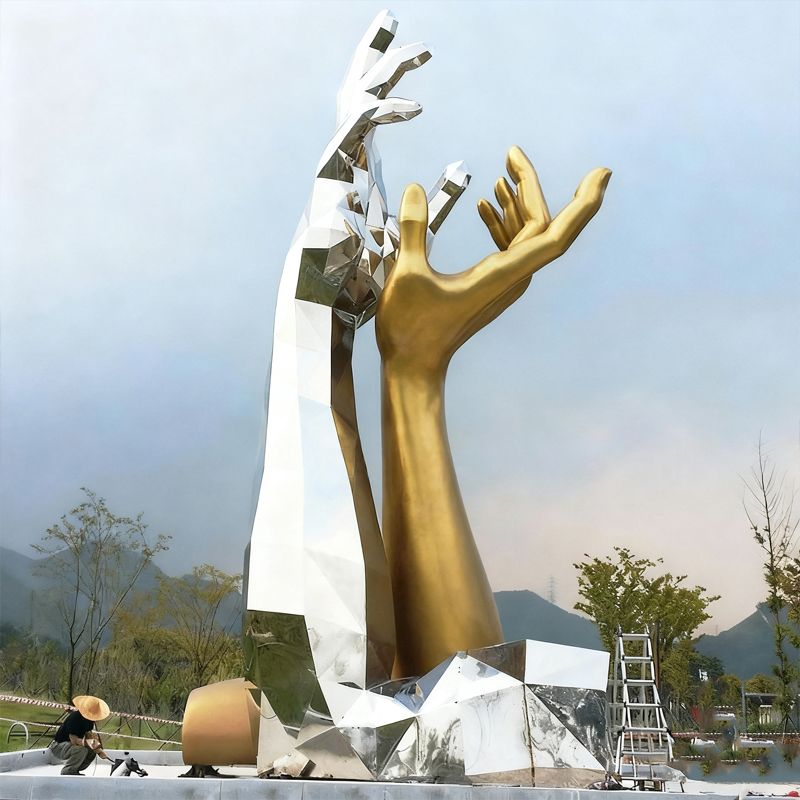
Inspired by clasped hands, the sculpture communicates unity, cooperation, connection, and hopeful anticipation. These themes are broadly understandable, allowing the piece to work across cultural and commercial settings. It may serve as a welcoming feature at a park entrance, a central landmark in a civic square, a visual focal point in a shopping district, or an identity-building installation outside a hotel, office complex, museum, or public institution.
Manufactured by Jiangsu Xinyesheng Sculpture Co., Ltd., this custom stainless steel sculpture combines contemporary artistic design with practical engineering. The main structure can be produced in high-quality 304 or 316 stainless steel, depending on the installation environment and the buyer’s performance requirements. Its welded one-piece construction provides structural stability, while the combination of mirrored stainless steel and gilded facets produces a changing display of light throughout the day.
Available in an approximate height range of 200 to 300 centimeters, the sculpture offers a strong presence without becoming unsuitable for medium-sized landscapes. Custom dimensions, surface treatments, and design details can also be discussed for individual projects. The listed price range is approximately USD 4,499.32 to USD 8,862.31, with the final cost depending on size, material grade, finish, engineering requirements, packaging, and customization.
Outdoor Abstract Stainless Steel Art Sculpture
Content
The central concept of clasped hands gives this sculpture an emotional and social meaning that extends beyond its physical form. Abstract public art often succeeds when viewers can interpret it quickly while still discovering additional details through repeated observation. The hand-inspired structure provides that balance. At first glance, the viewer may recognize two forms coming together. On closer inspection, the angled surfaces, open spaces, and transitions between polished and gilded areas create a more complex visual experience.
Hands are universally associated with communication, assistance, partnership, welcome, and shared effort. A sculpture based on this idea can support the identity of many different places. In a public park, it may represent community and connection. In a commercial district, it may suggest cooperation and prosperity. At the entrance to a company campus, it can communicate teamwork. In a civic setting, it may evoke inclusion and mutual support.
This symbolic flexibility is a major advantage over purely decorative sculptures that may look attractive but have little connection with their surroundings. A meaningful concept gives project planners more opportunities to integrate the sculpture into a landscape narrative, architectural concept, cultural program, or destination branding strategy.
The design is also suitable for photography. Its open, sculptural profile allows people to view it from multiple angles, while the reflective skin captures changing daylight, surrounding buildings, landscaping, and movement. Visitors may photograph themselves beside it, creating organic social media exposure for the location. In commercial developments, this can transform the sculpture into a recognizable photo spot that contributes to foot traffic and visitor engagement.
The sculpture uses abstract geometry rather than literal anatomical detail. This approach gives it a modern appearance and allows it to remain visually relevant in different architectural environments. The angled edges and sculptural planes create a clear silhouette from a distance, while the varied surfaces add detail when the viewer approaches.
Many outdoor sculptures lose visual strength when they are viewed against bright skies or large architectural backgrounds. This design addresses that challenge through its reflective stainless steel body and carefully considered facet arrangement. Mirrored surfaces can catch direct sunlight, while angled sections produce darker reflections and changing tonal contrasts. The result is a sculpture that does not appear visually flat.
The gilded facets introduce a warmer color accent into the primarily metallic composition. This contrast can help the sculpture stand out in landscapes dominated by concrete, stone, glass, or green planting. The gold-toned areas may also complement warm architectural materials, decorative lighting, bronze-colored details, or autumnal landscaping.
Unlike painted metal, which may gradually fade, peel, or require periodic recoating, the polished and gilded surface strategy is intended to provide a more distinctive and durable visual finish. Proper treatment and maintenance remain important, but the overall design offers a more sophisticated alternative to standard single-color outdoor metal sculpture.
The sculpture’s height of approximately 200 to 300 centimeters provides a useful scale for many public projects. At this size, it can be seen over low planting, read clearly from pedestrian paths, and remain proportionate to plazas and landscaped courtyards. Larger or smaller versions may be considered when the project requires a different relationship between the artwork, the architecture, and the surrounding circulation space.
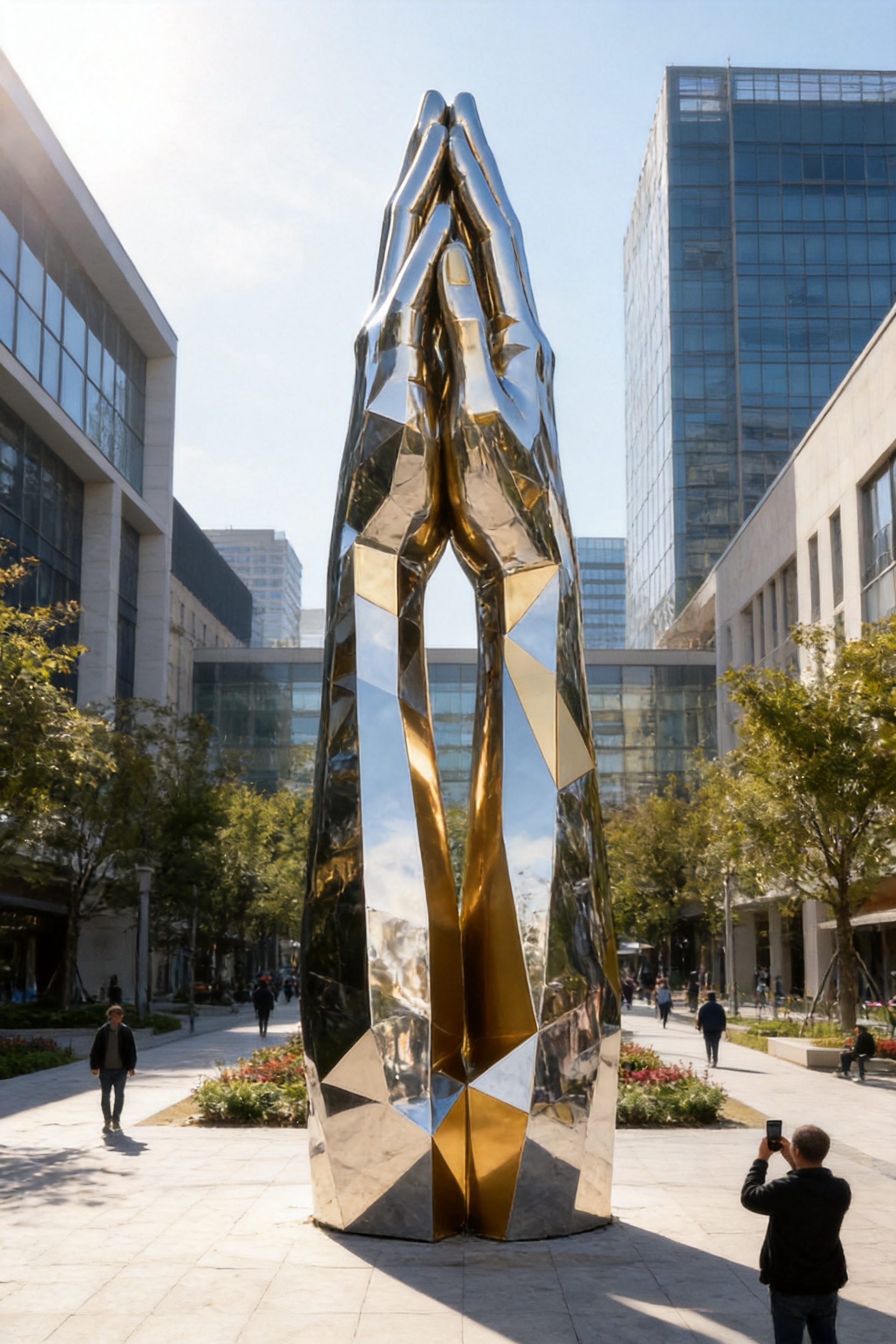
Material selection is one of the most important decisions in outdoor sculpture manufacturing. The piece may be exposed to rain, humidity, dust, ultraviolet radiation, temperature changes, air pollution, and accidental contact. For this reason, the sculpture is offered in 304 or 316 stainless steel, enabling buyers to select an appropriate grade for the intended environment.
Grade 304 stainless steel is widely used for architectural and artistic applications because it provides a strong combination of corrosion resistance, formability, durability, and cost efficiency. It is suitable for many urban, commercial, residential, and landscaped environments. When properly fabricated and finished, 304 stainless steel can maintain a clean and attractive appearance through years of outdoor exposure.
Grade 316 stainless steel offers enhanced resistance in more demanding conditions. Its composition provides additional protection in environments affected by coastal salt, high humidity, chlorides, or more aggressive atmospheric exposure. For seaside promenades, waterfront properties, resort developments, and locations where corrosion risk is elevated, 316 stainless steel may be the preferred option.
The availability of two material grades gives buyers greater flexibility than a fixed-material product. Instead of paying for the same material regardless of location, the purchaser can work with the manufacturer to align the steel grade with the installation conditions, expected service life, and project budget.
Both options support the sculpture’s modern appearance and structural requirements. The final selection should consider not only the general climate but also nearby sources of salt, chemical pollutants, irrigation spray, standing water, and cleaning agents. Professional guidance during the specification stage can help ensure that the selected grade is appropriate for the site.
Outdoor art must be designed for real environmental conditions rather than showroom display. Stainless steel provides a durable foundation for this purpose. Its resistance to acid and alkali corrosion helps it perform in a variety of urban and landscaped settings. The material is also resistant to ordinary weathering, making it suitable for long-term placement where regular repainting would be inconvenient or disruptive.
Stainless steel does not eliminate every maintenance requirement. Surface deposits, airborne pollutants, mineral residue, and contact contamination should still be removed when necessary. However, compared with ordinary carbon steel, it greatly reduces the risk of rust-related deterioration and repeated surface restoration. This can lower maintenance demands over the life of the installation.
The sculpture’s one-piece welded construction further supports outdoor durability. Fewer visible joints and connections can create a cleaner appearance while reducing areas where moisture may collect. A continuous fabricated body also helps the sculpture read as a unified artistic form rather than a collection of assembled parts.
Jiangsu Xinyesheng Sculpture Co., Ltd. specializes in the production of custom metal sculptures for decorative, architectural, commercial, and public environments. The company’s manufacturing strengths are reflected in the way this product combines artistic interpretation, stainless steel forming, precision welding, surface finishing, and project customization.
The production process begins with design communication. Buyers can provide reference images, sketches, dimensions, site requirements, or general concepts. These materials can then be translated into a sculpture proposal that considers proportion, structure, surface treatment, viewing distance, installation conditions, and the intended emotional effect.
For a design inspired by clasped hands, the manufacturer must balance visual symbolism with structural practicality. The forms need to remain recognizable while supporting their own weight and resisting wind loads. Curves, folds, angled facets, and transitions must be developed in a way that can be cut, shaped, joined, polished, and finished consistently.
After the design direction is confirmed, the sculpture can be developed through detailed measurements and fabrication planning. The dimensions of each major component, the placement of seams, the internal support strategy, and the final surface treatment all influence the finished appearance. Careful planning at this stage helps prevent visible inconsistencies and reduces unnecessary rework.
Stainless steel sculpture manufacturing requires more than simply cutting flat sheets and joining them together. The metal must be formed into a controlled three-dimensional body that follows the intended artistic geometry. Curved sections, tapered shapes, and angled planes must be coordinated so that the final sculpture looks balanced from different viewpoints.
The use of fabrication techniques appropriate to stainless steel allows the manufacturer to create bold, contemporary forms without sacrificing durability. The body is assembled into a unified structure, with welding used to connect the components and create a strong continuous form. The welding process must be carefully managed because excessive heat, contamination, or uneven finishing may affect the appearance of polished stainless steel.
For a public sculpture, structural strength is especially important. The piece may be exposed to wind pressure, vibration, accidental contact, and seasonal temperature changes. A fully welded construction provides a robust foundation for long-term outdoor placement. The internal design and anchoring method should still be matched to the selected site by qualified project professionals.
Visible seams can distract from an abstract sculpture if they are not properly controlled. The one-piece welded approach is intended to produce a visually integrated body. After welding, the seams can be refined through grinding, blending, and finishing processes so that the transitions between sections are consistent with the desired surface treatment.
Polished stainless steel is particularly demanding because reflections can reveal even small irregularities. A surface that looks acceptable under workshop lighting may appear inconsistent in direct sunlight. Professional finishing therefore requires attention to the direction of polishing, the continuity of reflective areas, and the relationship between adjoining facets.
The company’s ability to combine welding with surface refinement is an important advantage over low-cost decorative products assembled from visibly separate pieces. A more unified construction improves both the sculpture’s appearance and its perceived quality. It also supports the clean, modern character expected from a landmark installation.
The visual identity of this sculpture depends on the interaction between mirrored stainless steel and gilded facets. A mirrored finish reflects the environment, causing the sculpture to change in response to weather, sunlight, nearby architecture, and viewer movement. The gilded sections add visual warmth and help define selected planes within the abstract composition.
Surface preparation is essential before polishing or applying decorative treatment. The metal should be cleaned, refined, and checked so that scratches, weld marks, and uneven areas do not compromise the final result. The reflective sections require a consistent level of polish, while the gold-toned sections must be applied with attention to coverage, adhesion, and visual uniformity.
The contrast between silver reflection and gold color also gives the sculpture a layered appearance. During the morning, low-angle light may emphasize the warm facets. At midday, the mirrored sections may produce stronger highlights. In the evening, architectural or landscape lighting can create another interpretation of the same form.
This changing appearance is an important advantage over static finishes. The sculpture remains visually active without requiring mechanical movement. Its apparent character evolves naturally as the surrounding conditions change.
Outdoor art buyers often compare products according to appearance, durability, customization, maintenance, symbolism, and total project value. This sculpture offers a combination of these qualities rather than focusing on only one feature.
| Evaluation Factor | Outdoor Abstract Stainless Steel Art Sculpture | Common Alternative |
|---|---|---|
Material durability |
304 or 316 stainless steel options provide strong corrosion resistance for varied outdoor conditions. |
Lower-grade metals may require more frequent protective coatings or repairs. |
Visual impact |
Mirrored surfaces, gilded facets, and angled planes create changing light and shadow effects. |
Single-color painted surfaces may provide less depth and environmental interaction. |
Symbolic meaning |
Clasped-hand inspiration communicates unity, cooperation, welcome, and shared purpose. |
Purely ornamental forms may have limited narrative connection with the site. |
Structural approach |
Fully welded, one-piece construction supports a unified appearance and robust installation. |
Multi-part products may show more joints or require additional assembly at the site. |
Customization |
Size and design details can be adapted for individual projects. |
Mass-produced products may offer limited dimensions and finish choices. |
Maintenance |
Stainless steel is comparatively easy to clean and does not depend on frequent repainting. |
Painted or untreated steel may need periodic coating renewal and rust control. |
Visitor engagement |
The recognizable concept and reflective surface encourage viewing, photography, and sharing. |
Less distinctive installations may have lower landmark and destination value. |
One important advantage is the balance between artistic expression and practical performance. Some sculptures are visually impressive but difficult to maintain outdoors. Others are durable but lack the design quality needed for a prominent public location. This product is intended to bridge that gap through a meaningful concept, carefully finished stainless steel, and a construction approach suited to long-term installation.
In a park, the sculpture can function as a central gathering point or a visual destination along a pedestrian route. Its metallic surface contrasts with trees, grass, flowers, stone paths, and water features. The clasped-hand concept can reinforce the idea of a shared public space where people meet, relax, and participate in community life.
The sculpture may be installed on a paved plinth, a landscaped island, or an open lawn, depending on the site design. A sufficient viewing area around the artwork allows visitors to walk around it and appreciate the changing reflections. Low planting can frame the base without hiding the main form.
Urban plazas require sculptures that can be read from multiple distances. The strong silhouette of this abstract stainless steel piece can remain visible across an open square, while the detailed facets reward viewers who approach it. Its symbolic meaning also makes it appropriate for civic environments where themes of cooperation, public participation, and community identity are important.
In a city square, the sculpture may be positioned near seating, a pedestrian crossing, a transit connection, or an event area. The installation can become a meeting point that helps visitors describe and remember the location. Its reflective surface may also connect visually with surrounding glass, steel, and stone architecture.
Commercial areas benefit from memorable visual features. A distinctive sculpture can help differentiate one development from another and create a recognizable point of reference for visitors. The photo-friendly design may encourage customers to share images of the location online, supporting informal marketing and destination awareness.
The gold-toned facets can complement premium retail environments, hospitality properties, restaurants, and mixed-use developments. When combined with suitable landscape lighting, the sculpture can remain visible after sunset and contribute to the atmosphere of an evening commercial district.
Hotels and resorts often use sculpture to establish a sense of arrival. Positioned near an entrance, driveway, lobby approach, or garden courtyard, the piece can communicate quality and contemporary design. The clasped-hands concept may also suggest hospitality, welcome, and connection.
On corporate campuses, the sculpture can represent cooperation and shared ambition. Its modern form may suit technology, finance, design, manufacturing, and property developments. Custom sizing can help the artwork relate proportionally to a low-rise courtyard or a larger architectural frontage.
Museums, universities, libraries, and cultural centers can use the sculpture as an outdoor extension of their public programming. The abstract design encourages interpretation and discussion, while its durable material supports permanent display. It may be used to mark an entrance, frame a courtyard, or support a theme related to social connection and collective creativity.
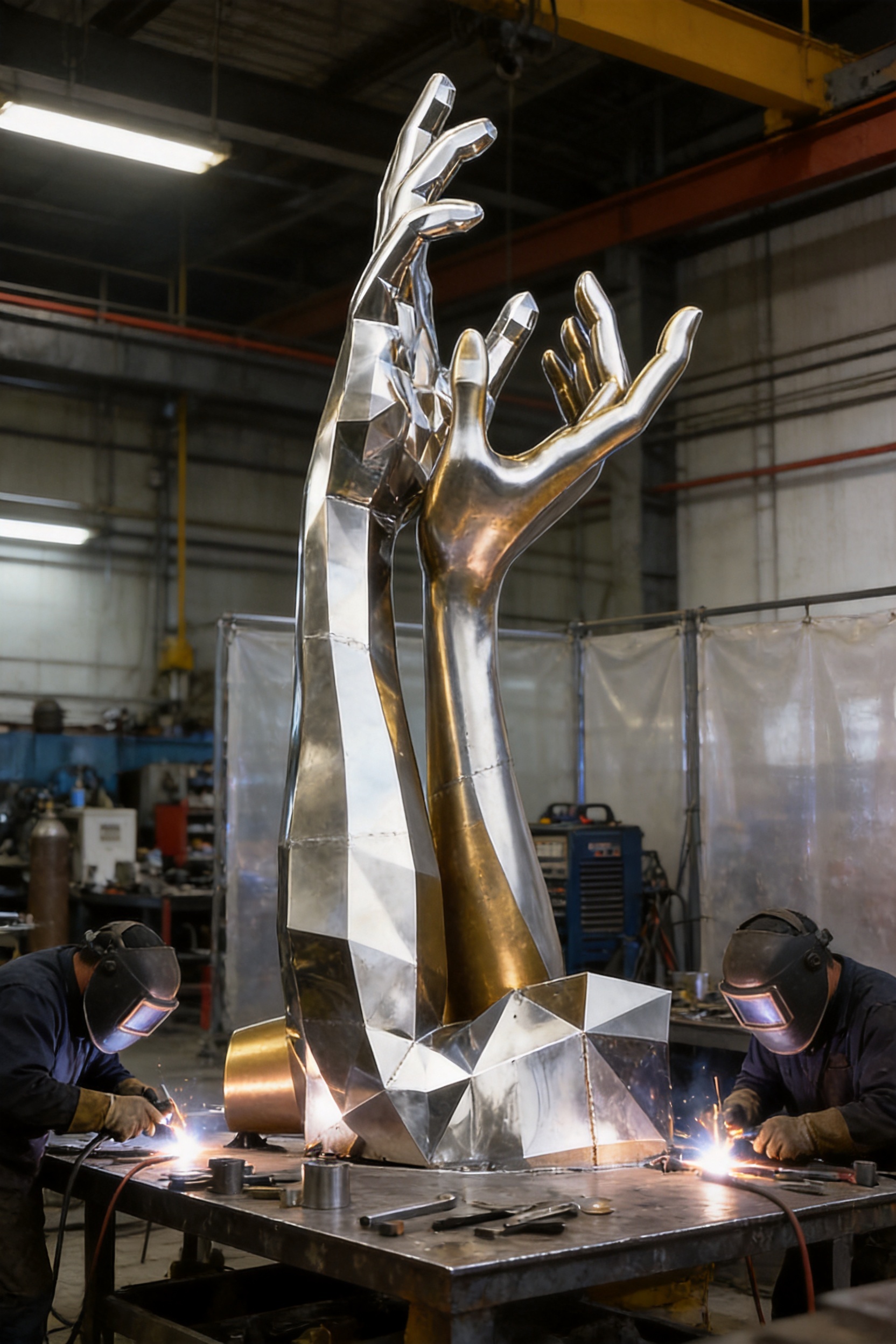
Public sculpture projects rarely have identical requirements. The available area, viewing distance, architectural scale, local climate, budget, installation method, and cultural context all influence the final specification. For this reason, the manufacturer offers customization of size and details.
Height is one of the most important variables. A 200-centimeter sculpture may be suitable for a garden, courtyard, or intimate commercial setting. A 300-centimeter version may provide greater visibility in a city plaza or broad landscaped entrance. Other dimensions may be considered when the sculpture must relate to a particular building façade, pathway, sign system, or landscape axis.
Surface treatment can also be discussed. Buyers may request a specific balance between mirrored stainless steel and gilded areas, subject to technical feasibility and design approval. The goal is to preserve the sculptural concept while aligning the finish with the wider color palette of the site.
Design details may be adapted for branding, cultural interpretation, or architectural coordination. Customization does not necessarily mean adding literal logos or text. It may involve modifying proportions, openings, edge angles, surface contrasts, or the relationship between the main forms.
Before production, the buyer should provide accurate site information wherever possible. Relevant details include the intended foundation area, surrounding clearance, prevailing wind conditions, access for delivery equipment, local regulations, and the presence of underground utilities. This information helps the manufacturer and project team develop a more appropriate solution.
A high-quality sculpture requires a proper installation strategy. The artwork should be placed on a stable foundation capable of supporting its weight and transferring environmental loads safely. The anchoring system, base plate, embedded components, and foundation design should be reviewed by qualified professionals according to local building conditions.
Wind exposure is particularly important for an outdoor sculpture with a substantial vertical profile. The final design should consider the sculpture’s height, projected area, center of gravity, local wind speed, ground conditions, and surrounding structures. The fully welded body provides a strong starting point, but the complete installation must be engineered as a system.
Site access should also be considered. The delivery route must accommodate the sculpture’s dimensions, packaging, lifting requirements, and final positioning. Early coordination can reduce the risk of delays or unexpected handling costs.
Once installed, the sculpture should be inspected periodically. Routine care may include removing dust, rain marks, bird residue, leaves, mineral deposits, and other surface contaminants. Cleaning should be performed with products and tools appropriate for stainless steel and the decorative finish. Abrasive materials or unsuitable chemicals may create scratches or affect the appearance.
Coastal and industrial sites may require more frequent cleaning than sheltered inland locations. Regular maintenance is beneficial because it prevents deposits from accumulating and helps preserve the reflective quality of the surface. Any unusual discoloration, impact damage, or loosened installation component should be addressed promptly.
Stainless steel offers a combination of structural and aesthetic qualities that few other materials provide. It is strong enough for substantial outdoor forms, adaptable to complex fabrication, and capable of receiving polished or decorative finishes. Its clean appearance complements modern architecture while also contrasting effectively with natural landscapes.
Bronze is valued for its traditional character and warm patina, but it may not provide the same reflective performance as mirrored stainless steel. Marble offers natural beauty but can be vulnerable to impact, staining, and weather-related surface changes. Fiberglass can support lightweight forms, yet it may require more attention to coating integrity and ultraviolet exposure. Weathering steel develops a distinctive rust-colored patina, but that appearance is not suitable for every project or architectural palette.
Stainless steel is therefore particularly appropriate when the buyer wants a contemporary landmark with strong light interaction and a clean, durable surface. The use of 304 or 316 grades further expands its suitability for different environments.
The material also supports relatively straightforward cleaning. When correctly fabricated and maintained, the surface can remain visually crisp for a long period. This is valuable for public installations where access may be limited and repeated restoration would create disruption.
The value of a public sculpture should be considered beyond its purchase price. A successful installation may contribute to a site’s identity, visitor experience, photography potential, property presentation, and long-term visual appeal. A well-made sculpture can remain an asset for many years, whereas a lower-cost product may create additional expenses through repair, repainting, replacement, or appearance-related dissatisfaction.
The listed price range of approximately USD 4,499.32 to USD 8,862.31 reflects the different possibilities associated with size, material, finish, and customization. A buyer comparing quotations should review the complete specification rather than focusing only on the initial figure. Material grade, welding quality, surface preparation, decorative treatment, packaging, structural requirements, and installation support can all affect the total project value.
Manufacturing directly through a specialized sculpture company may also provide a more efficient path than purchasing through multiple intermediaries. Direct communication can help clarify the artistic concept, confirm measurements, review finish expectations, and coordinate customization. It may also make it easier to discuss revisions before production begins.
For developers, landscape designers, architects, municipal buyers, and commercial property owners, the most useful comparison is often the combination of durability, distinctiveness, customization, and service life. This sculpture is designed to compete not only as an attractive object but also as a long-term visual investment.
Jiangsu Xinyesheng Sculpture Co., Ltd. is positioned as a custom sculpture manufacturer and supplier serving projects that require made-to-order metal artwork. Its production approach combines design interpretation with practical fabrication, allowing customers to move from a general concept toward a finished outdoor installation.
A key strength is the ability to work with different sculpture categories and materials, including stainless steel, bronze, marble, fiberglass, and weathering steel. This broader manufacturing experience can be useful when a project team is comparing materials or developing a coordinated collection of artworks for one property.
For the featured stainless steel sculpture, the company’s strengths include the use of 304 or 316 stainless steel, fully welded construction, reflective finishing, gilded surface details, and customization of dimensions. These capabilities address the main requirements of a high-visibility outdoor art project: structural integrity, weather resistance, visual refinement, and adaptability.
Another advantage is the combination of contemporary art aesthetics with public cultural value. The product is not presented as a generic metal ornament. Its hand-inspired form has a clear theme, while the manufacturing process is focused on turning that theme into a durable three-dimensional landmark.
Communication is especially important in custom sculpture manufacturing. The company can discuss the proposed size, intended environment, finish, design details, and project expectations with buyers before fabrication. Clear communication helps ensure that the delivered artwork is aligned with the planned location and the client’s visual objectives.
The artwork should be considered as part of a complete site rather than as an isolated product. Its placement, base, lighting, paving, planting, and surrounding sightlines influence how effectively it performs.
A circular or gently curved paved area can encourage visitors to move around the sculpture and experience its changing reflections. In a linear landscape, the sculpture may be aligned with a path or visual axis to create a sense of arrival. In a plaza, surrounding seating can turn the artwork into a social landmark rather than a purely visual object.
Lighting should be planned carefully. Low-angle lighting can emphasize the angled facets and create strong shadows, while softer illumination can reveal the overall silhouette without excessive glare. The reflective surface may produce bright highlights, so fixture positions should be tested to avoid discomfort for pedestrians and drivers.
Planting can provide contrast and scale. Green foliage, ornamental grasses, flowering plants, and low shrubs may frame the sculpture while keeping its main form visible. Designers should avoid allowing dense vegetation to cover the lower sections or prevent routine access for cleaning.
The base and surrounding paving should also complement the artwork. Neutral stone, concrete, dark tile, or carefully selected colored materials may support the metallic finish. The best choice depends on the architecture and landscape palette of the project.
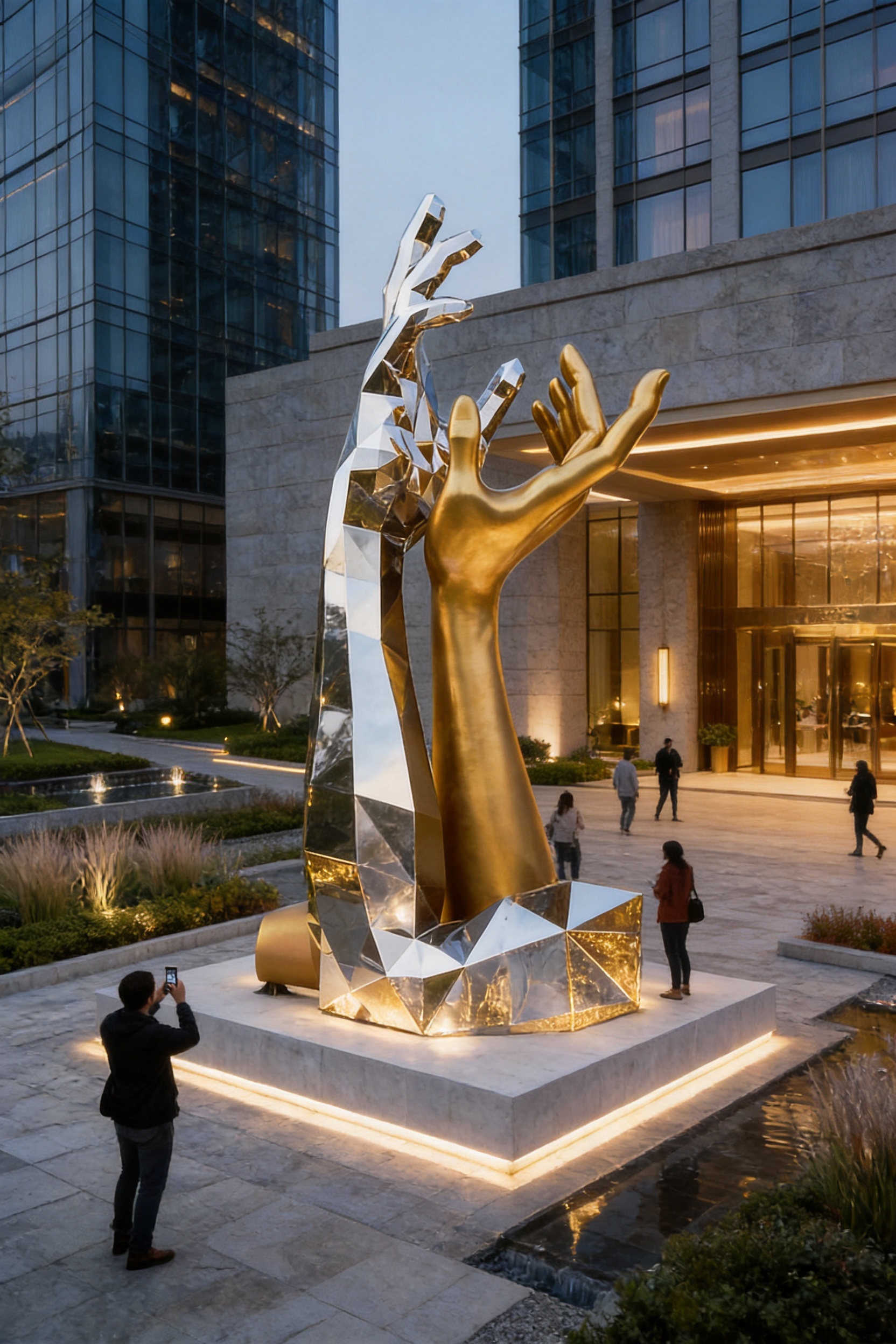
The design symbolizes unity, cooperation, connection, welcome, and hopeful anticipation. Its meaning can be adapted to civic, commercial, educational, hospitality, and corporate environments.
The main body can be made from 304 or 316 stainless steel. The appropriate grade depends on the installation environment, especially factors such as coastal exposure, humidity, pollution, and contact with chlorides.
Yes. It is designed for outdoor locations such as parks, city squares, commercial districts, landscaped entrances, and public facilities. Proper foundation design, anchoring, installation, and routine cleaning are important for long-term performance.
The approximate height range is 200 to 300 centimeters. Custom sizes may be discussed when a project requires a different scale or proportion.
Design details and finish requirements can be customized. The standard concept combines mirrored stainless steel with gilded facets, but project-specific adjustments should be confirmed during the design and production discussion.
Stainless steel generally offers better corrosion resistance and easier long-term care than ordinary painted steel. Painted surfaces may fade, peel, chip, or require recoating, while stainless steel provides a durable metallic appearance when properly fabricated and maintained.
No. Grade 304 may be suitable for many inland urban and commercial environments. Grade 316 is often considered for coastal, waterfront, highly humid, or chloride-exposed locations. Site conditions should be reviewed before the material is selected.
It is comparatively low maintenance, but it should still be cleaned periodically. Dust, pollution, mineral deposits, bird residue, and other contaminants should be removed using suitable stainless steel care methods. Coastal and industrial environments may require more frequent attention.
Yes. Its symbolic concept, reflective surface, gold-toned facets, and strong silhouette make it suitable for visitor photography. In commercial districts and hospitality settings, it can support destination recognition and informal social media promotion.
Useful information includes the desired height, installation location, material preference, environmental conditions, surface finish, delivery requirements, foundation limitations, and any available drawings or reference images. More complete information usually leads to a more accurate proposal.
The stated price range is approximately USD 4,499.32 to USD 8,862.31. The final quotation may vary according to size, material grade, finish, customization, packaging, engineering, and delivery requirements.
The installation should use a stable foundation and an appropriate anchoring system designed for the sculpture and site conditions. Qualified local professionals should review wind loads, soil conditions, foundation dimensions, lifting access, and applicable regulations.
Yes. Its dimensions and design details can be adapted for individual projects. Buyers may coordinate the sculpture with architectural proportions, landscape plans, visitor circulation, brand themes, or cultural concepts.
The Outdoor Abstract Stainless Steel Art Sculpture is a strong option for projects seeking a contemporary landmark with symbolic meaning and dependable outdoor performance. Its clasped-hands inspiration gives it a clear connection with unity and cooperation, while its abstract geometry allows viewers to interpret the form from different perspectives.
The combination of mirrored stainless steel and gilded facets creates a dynamic surface that responds to sunlight, weather, architecture, landscaping, and evening illumination. The use of 304 or 316 stainless steel provides flexibility for different environments, and the fully welded one-piece construction supports a robust, unified appearance.
Compared with ordinary painted metal or mass-produced decorative products, the sculpture offers stronger material performance, greater visual depth, more meaningful symbolism, and broader customization potential. It can serve parks, civic spaces, commercial districts, hotels, corporate campuses, cultural institutions, and landscaped entrances.
Through custom design communication, stainless steel fabrication, welding, surface refinement, and decorative finishing, Jiangsu Xinyesheng Sculpture Co., Ltd. provides a manufacturing approach suited to distinctive public art projects. For buyers seeking a durable, photo-friendly, and visually memorable sculpture, this piece offers a balanced combination of contemporary design, engineering practicality, and long-term public value.
1. American Iron and Steel Institute. Stainless Steel Selection and Application Principles.
2. ASTM International. Standard Practices for Stainless Steel Fabrication and Corrosion-Resistant Applications.
3. International Organization for Standardization. Stainless Steel Designation, Surface Finish, and Corrosion-Resistance Guidance.
4. National Association of Architectural Metal Manufacturers. Architectural Metal Finishing and Maintenance Principles.
5. International Council on Monuments and Sites. Principles for the Conservation and Presentation of Public Art.
6. Landscape Institute. Public Realm Design, Placemaking, and Outdoor Art Integration.



Daniel H.

Amanda R.

Robert B.

Jennifer S.

James W.

Barry G.

Michael T.

Emily K.

David L.

Sarah M.


Mikey XV

Jagxue

 English
 Español
 عربى
 Français
 italiano
 Deutsch