
The Bronze Bodybuilder Mr. Muscle Sculpture is a dramatic human figure artwork created for spaces that demand strength, energy, confidence, and visual authority. Standing 1.8 meters tall, the sculpture presents a highly muscular professional bodybuilder in a powerful stance, with exaggerated anatomy, a resolute facial expression, and an intense physical presence. It is designed to function not merely as decoration, but as a landmark object capable of shaping the identity of a gym, fitness studio, commercial complex, public plaza, art park, or cultural tourism destination.
Its design combines classical figurative sculpture with the visual language of modern fitness culture. The exaggerated muscle structure makes the work immediately recognizable from a distance, while the carefully developed facial expression and stance create a more detailed experience for viewers who approach it closely. The bronze finish adds permanence, depth, and a sense of artistic seriousness, allowing the work to stand apart from ordinary gym ornaments, lightweight resin figures, and mass-produced decorative statues.
Manufactured by Jiangsu Xinyesheng Sculpture Co., Ltd., the sculpture reflects a production approach centered on custom metal artwork, realistic human-form modeling, surface treatment, and application-oriented design. The supplied product specification identifies the sculpture as a bronze human figure artwork with a total height of 1.8 meters and a listed price of CNY 40,500. Its combination of sculptural impact, durable material character, and adaptable placement makes it suitable for professional buyers seeking a memorable focal point rather than a standard interior accessory.
Content
The bodybuilder has become an important cultural symbol of discipline, self-improvement, perseverance, and physical achievement. A sculpture based on this figure can communicate those values instantly. In a fitness environment, it reinforces the purpose of the venue. In a commercial space, it creates a bold visual identity. In a public setting, it introduces a recognizable human subject whose physical power can attract attention and encourage photography, conversation, and repeated visits.
The Bronze Bodybuilder Mr. Muscle Sculpture uses an intentionally exaggerated realistic technique. This approach does not attempt to reproduce the body with ordinary proportions. Instead, it enlarges the visual effect of the muscles, shoulders, chest, arms, legs, and overall silhouette. Such exaggeration is especially effective in large spaces, where subtle modeling may disappear when viewed from a distance. The strong contours remain legible under different lighting conditions and from multiple viewing angles.
The sculpture’s stance is equally important. A powerful bodybuilder figure must appear stable, controlled, and prepared. The posture gives the artwork a sense of motion held in suspension, suggesting the moment before or after a major physical effort. This creates a more compelling presence than a simple standing mannequin. The figure appears to possess intention, not merely mass, which helps the sculpture function as a character and a symbol at the same time.
The resolute expression adds emotional focus. Muscular anatomy alone can communicate physical power, but the face gives that power a psychological dimension. The viewer encounters determination, concentration, and confidence. These qualities are particularly appropriate for fitness clubs, sports facilities, training centers, and motivational commercial interiors, where the sculpture can become part of the venue’s visual storytelling.
Bronze has been used for human figure sculpture for centuries because it combines structural strength with rich visual possibilities. It can support complex forms, preserve expressive modeling, and accept a wide range of patinas and surface treatments. For a bodybuilder sculpture, these qualities are essential. The material must communicate weight, durability, and permanence while also revealing the fine transitions between muscle groups, tendons, facial planes, and clothing or body details.
Compared with painted fiberglass, bronze generally offers a more substantial and authoritative appearance. Fiberglass can be useful when low weight, rapid production, or specific color effects are priorities, but it may not provide the same sense of solidity. The Bronze Bodybuilder Mr. Muscle Sculpture is intended to look like a lasting monument rather than a temporary promotional prop. Its metallic body and dense visual character help it command attention in busy surroundings.
Compared with stainless steel, bronze offers a warmer and more historically associated surface. Stainless steel can create a clean, reflective, and contemporary effect, but its brightness may compete with the anatomy of a realistic figure. Bronze, by contrast, can emphasize shadows and highlights in a controlled manner. The final appearance is more tactile and sculptural, making it particularly suitable for a human subject with deeply modeled muscles.
Compared with marble, bronze provides greater flexibility for complex poses and projecting forms. Marble is admired for its natural veining and classical dignity, yet large thin or extended elements can require careful structural planning. Bronze is well suited to dynamic human compositions because the material and fabrication method can accommodate a wide range of gestures, muscular projections, and expressive silhouettes.
Compared with ordinary cast metal products with a flat painted finish, this sculpture benefits from a heat-colored and artificially aged surface. That treatment gives the bronze visual variation rather than a single uniform color. Highlights can follow raised anatomy, while recessed areas retain darker tones. The result is a stronger perception of depth, age, and material authenticity.
The surface of the sculpture is described as heat-colored and artificially aged. These treatments are important because bronze is not valued only for its strength; it is also valued for the way it responds to color, oxidation, heat, and finishing techniques. A carefully treated surface allows the sculpture to express different moods, from heroic and monumental to industrial and contemporary.
Heat coloring can produce nuanced tonal changes across the bronze surface. Instead of appearing like a flat brown object, the figure can display variations between darker recesses, warmer midtones, and brighter raised areas. On a muscular figure, this variation helps reveal the body’s structure. The chest, shoulders, arms, abdomen, thighs, and calves can each catch light differently, enhancing the illusion of volume.
Artificial aging adds an established, enduring character. The sculpture can appear as though it belongs to a longer artistic tradition, even when placed in a modern gym or commercial development. This balance between contemporary subject matter and time-honored material treatment gives the work broader design compatibility. It can sit alongside modern architecture, landscape design, classical elements, or industrial interiors without appearing visually insignificant.
The finishing process also supports practical display considerations. A surface with controlled tonal variation is often more forgiving than a completely polished finish because minor dust, changing light, and normal environmental variation are less visually disruptive. For a sculpture installed in a public or commercial location, this can help maintain a consistent impression between maintenance cycles.
Surface treatment should always be considered together with the installation environment. Outdoor placement may require a suitable protective strategy, regular inspection, and maintenance appropriate to the local climate. Indoor placement may focus more on lighting, dust control, visitor circulation, and protection from accidental contact. The bronze finish gives the artwork a strong foundation, while correct site planning preserves its appearance over time.
Bronze Bodybuilder Mr. Muscle Sculpture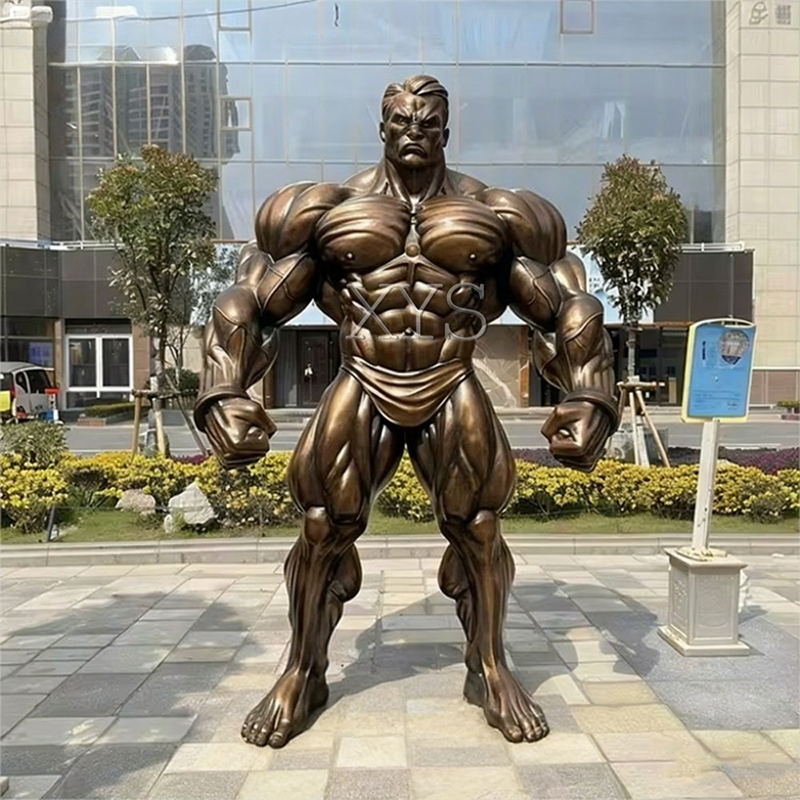
Many decorative statues are selected because they fill an empty area, match a theme, or provide a recognizable object for a limited budget. The Bronze Bodybuilder Mr. Muscle Sculpture is positioned differently. It is designed as a statement piece with a strong narrative and a clear relationship to strength, athletic achievement, and ambition. This makes it particularly effective where the purchaser wants the artwork to contribute to branding, visitor experience, and spatial identity.
One advantage is immediate recognition. The bodybuilder subject can be understood without extensive interpretation. Visitors do not need specialist knowledge of contemporary art to appreciate the figure’s physical power and determined expression. This accessibility is valuable in commercial spaces and public areas that receive diverse audiences.
A second advantage is visual distance. The exaggerated anatomy produces a bold silhouette that can be noticed from across a room, an entrance court, a lobby, or a plaza. Smaller or less dramatically modeled figures may disappear among architectural features, signage, equipment, or landscaping. This sculpture is intended to hold its position as a visual anchor.
A third advantage is emotional association. A generic abstract form may be visually interesting but may not communicate a specific idea. The bodybuilder figure suggests effort, transformation, competition, confidence, and personal discipline. A fitness business can connect those associations to its own services. A sports-related commercial space can use the sculpture to reinforce a culture of performance. A public art site can present it as an exploration of the contemporary ideal of the human body.
A fourth advantage is material credibility. Bronze has a recognized place in public art and figurative sculpture. Its appearance can increase the perceived importance of a venue and help distinguish a permanent installation from seasonal decoration. This is especially useful for buyers who want an artwork that remains relevant after an opening event or promotional campaign has ended.
Fiberglass sculptures can be practical in certain situations, especially when the buyer requires a lightweight object, a highly specific painted color, or a cost-efficient temporary installation. However, a bronze figure offers a different set of advantages. Its visual weight is greater, its surface has a more authentic metallic character, and its presence is more suitable for buyers seeking long-term artistic value.
The dense appearance of bronze helps the figure feel grounded. This is important for a bodybuilder subject, because the concept depends on physical force and stability. A lightweight replica may communicate the outline of a muscular person, but it may not generate the same psychological impression of strength.
Bronze also responds more naturally to directional lighting. Spotlights can produce controlled highlights along the shoulders, arms, chest, abdomen, and legs, while deep shadows remain visible in the recesses. A painted fiberglass surface may rely more heavily on its applied color to create visual effect. Bronze allows the modeling and light to work together.
For permanent or semi-permanent installations, bronze can also be perceived as a more prestigious investment. It is appropriate for a venue that wants to signal quality, durability, and seriousness. The sculpture can become part of the site’s long-term identity rather than being treated as replaceable décor.
Stainless steel has exceptional value in modern sculpture. Its reflective quality, clean geometry, and resistance to corrosion make it popular in contemporary architectural environments. Nevertheless, the reflective nature of stainless steel can be less suitable for a highly realistic bodybuilder figure. Reflections may fragment the anatomy or compete with the surrounding building, sky, lighting, and landscape.
Bronze provides a more controlled reading of the human form. Its surface absorbs and reflects light in a balanced manner, helping the viewer follow the sculptor’s anatomical decisions. The figure’s muscles remain the primary subject instead of becoming a mirror for the environment.
The warm tone of bronze can also create a more human and approachable atmosphere. Stainless steel often communicates technology, speed, and precision. Bronze can communicate achievement, tradition, endurance, and physical presence. For a gym or fitness center that combines modern equipment with motivational design, the warmer material can provide a strong visual counterpoint.
Bronze is also less dependent on perfectly clean surroundings to look intentional. A reflective steel figure may show fingerprints, water marks, landscaping reflections, and changing weather conditions very clearly. A heat-colored and aged bronze finish offers greater visual texture and can integrate more naturally into a landscape or architectural composition.
Marble remains one of the most respected materials for classical human sculpture. Its translucent surface and natural veining can be extraordinarily beautiful. However, a dynamic bodybuilder composition may benefit from the structural flexibility and surface character of bronze. Bronze can support a visually forceful pose while preserving a sense of lightness in extended elements and complex contours.
The subject also creates an interesting relationship between historical and contemporary art. A marble figure may immediately evoke classical mythology or traditional academic sculpture. The bronze bodybuilder combines the legacy of realistic human modeling with a distinctly modern subject: the trained, competitive, highly developed body. This gives the artwork a contemporary identity while retaining the authority of figurative sculpture.
For commercial buyers, bronze can also be easier to integrate into various design themes. It can feel appropriate in an industrial-style fitness studio, an upscale lobby, a public garden, or an outdoor cultural destination. The surface treatment can be selected or adjusted to complement surrounding materials such as concrete, stone, glass, brick, wood, and steel.
The product is supplied by Jiangsu Xinyesheng Sculpture Co., Ltd., a sculpture manufacturer based in Jiangsu Province, China. The company’s stated business focus includes bronze sculptures, stainless steel sculptures, marble sculptures, fiberglass sculptures, and weathering steel sculptures. This range indicates experience across several major sculpture materials and gives buyers access to different visual and structural solutions when developing a custom artwork program.
The company’s production strengths are particularly relevant to a realistic bronze human figure. Such a sculpture requires more than a general metalworking capability. It requires the ability to coordinate artistic modeling, structural planning, mold or casting preparation, metal finishing, surface coloration, and final inspection. Each stage affects the final expression of the bodybuilder’s anatomy and the reliability of the completed work.
The realistic modeling stage is central to the product’s value. Muscle groups must be exaggerated without losing anatomical logic. The shoulders, chest, arms, abdomen, back, hips, and legs must relate to one another as parts of a believable body. Facial expression and posture must also remain consistent with the concept. An experienced sculpture producer can translate a design direction into a three-dimensional form that works from front, side, rear, and diagonal viewpoints.
Structural planning is equally important. A 1.8-meter human figure must maintain stability during handling, transportation, installation, and use in its intended environment. Internal support, base integration, weight distribution, and connection details should be considered before the sculpture reaches the finishing stage. These technical decisions are not visible in the completed artwork, but they strongly influence its safety and service life.
Bronze fabrication requires careful coordination between form and metal. The casting or metal-forming process must preserve important details while avoiding unwanted distortion, voids, roughness, or inconsistent thickness. Complex anatomy contains many transitions, recesses, and projecting shapes. Production planning helps ensure that the finished surface retains the sharpness and softness required by the original design.
After the metal body is produced, finishing becomes a major source of distinction. Grinding, refinement, blending, and polishing can determine whether the anatomy appears controlled or visually confused. A bodybuilder sculpture depends on readable planes and contours. Excessively rough treatment can obscure details, while excessive polishing can make the figure appear artificial. The described heat-colored and artificially aged finish seeks a balance between clarity, depth, and metallic character.
The company’s multi-material scope is also a practical advantage for project buyers. A customer may require a bronze centerpiece along with a stainless steel logo sculpture, a fiberglass promotional figure, or a weathering steel landscape installation. Working with a manufacturer capable of producing different sculpture categories can simplify communication and support a more unified design language across a larger site.
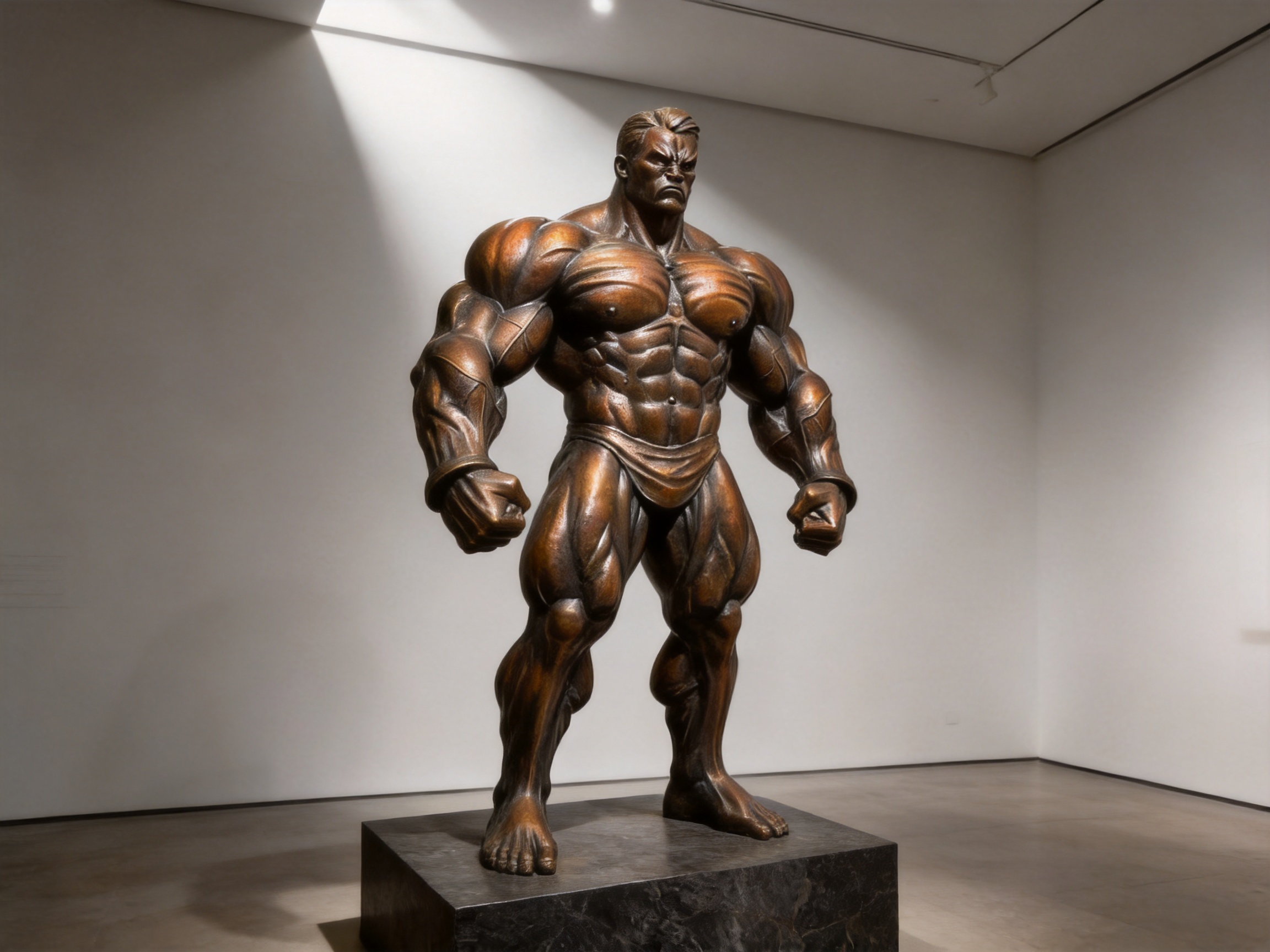
Although the supplied product is presented as a specific Bronze Bodybuilder Mr. Muscle Sculpture, the design concept can serve as a foundation for customization. Buyers may need a different total height, a modified pose, a revised facial expression, a custom base, or an adjusted surface tone. A professional sculpture manufacturer can discuss these requirements during the design and quotation process.
Scale is one of the most important customization decisions. The listed height is 1.8 meters, which is close to the height of a real adult figure and therefore offers an immediate human relationship. A larger version can create a more monumental effect in an outdoor plaza or entrance court. A smaller version may suit a reception area, showroom, executive office, or private collection.
Pose can also be adapted to suit the purpose of the installation. A front-facing stance communicates directness and confidence. A slightly turned figure can create stronger movement and invite viewers to walk around it. A pose involving a raised arm, flexed posture, or competition-inspired gesture may be suitable for a gym or sports venue, provided the change preserves structural stability and visual balance.
The base should be considered as part of the artwork rather than an afterthought. A simple bronze or dark metal plinth may provide a clean gallery appearance. A stone base can connect the sculpture to landscape architecture. A reinforced concealed mounting system may be appropriate where the artwork must withstand public access or outdoor conditions. The correct base height and proportion can improve both visibility and safety.
Surface color is another opportunity for project-specific adaptation. A darker aged bronze can create a serious, monumental atmosphere. A warmer brown tone may feel more traditional. A more varied heat-colored surface can emphasize the industrial character of a fitness or sports facility. The selected tone should be evaluated in relation to surrounding materials and the color temperature of the lighting system.
Custom design should begin with a clear project brief. The buyer should provide the intended location, approximate viewing distance, installation environment, preferred dimensions, budget, deadline, and any relevant brand or architectural requirements. Detailed communication at the beginning reduces the possibility of revisions later and helps the manufacturer recommend an appropriate construction and finishing strategy.
The sculpture is especially well suited to gyms and fitness studios because its subject is directly connected to the purpose of the space. It can be installed near the main entrance, reception desk, membership area, training floor, stairway, or lounge. In each location, it can support the atmosphere of ambition and achievement that fitness businesses seek to create.
At an entrance, the figure can act as a recognizable landmark. Members and visitors can use it as a meeting point, and new customers may immediately understand that the venue is focused on strength and physical development. At reception, the sculpture can become part of the first visual impression, helping the facility appear more distinctive than a standard gym filled only with equipment and wall graphics.
On a training floor, the artwork can provide motivation without interrupting practical circulation. The installation should be positioned so that it does not obstruct exercise equipment, emergency routes, accessibility paths, or staff visibility. The strong silhouette may also work well behind a photo area or near a branded backdrop, creating an opportunity for member engagement and social media activity.
Premium fitness clubs can use the bronze material to communicate a more sophisticated identity. The figure does not need to appear childish, cartoonish, or purely promotional. Its realistic modeling and aged metallic surface make it compatible with upscale interiors, dark wood, stone, architectural lighting, and carefully designed reception spaces.
In commercial spaces, a strong sculpture can perform several functions simultaneously. It can decorate a lobby, identify a development, define an entrance, support an advertising campaign, or create a memorable location within a larger complex. The bodybuilder subject is especially appropriate for sports retailers, wellness centers, performance clinics, athletic clubs, lifestyle developments, and health-oriented commercial projects.
In city plazas and public art settings, the sculpture can contribute to a broader conversation about the modern body, achievement, competition, and self-discipline. Its realistic style makes it accessible to general audiences, while the exaggerated proportions encourage discussion about ideals of strength and physical perfection. It can therefore operate both as a visually powerful object and as a subject for interpretation.
Art parks and cultural tourism destinations often benefit from sculptures that are easy to recognize and photograph. The figure’s scale and pose can make it a natural gathering point. Visitors may photograph themselves beside it, while the bronze surface provides a durable and distinctive appearance in changing daylight. A thoughtfully designed setting can frame the sculpture with paving, planting, lighting, signage, or architectural forms.
Outdoor placement requires professional planning. The site should provide a stable foundation, proper drainage, adequate clearance, and a secure mounting solution. Local conditions such as wind, rain, humidity, temperature variation, salt exposure, and public contact should be reviewed before installation. The manufacturer or installation contractor should confirm the recommended support and maintenance arrangements for the specific site.
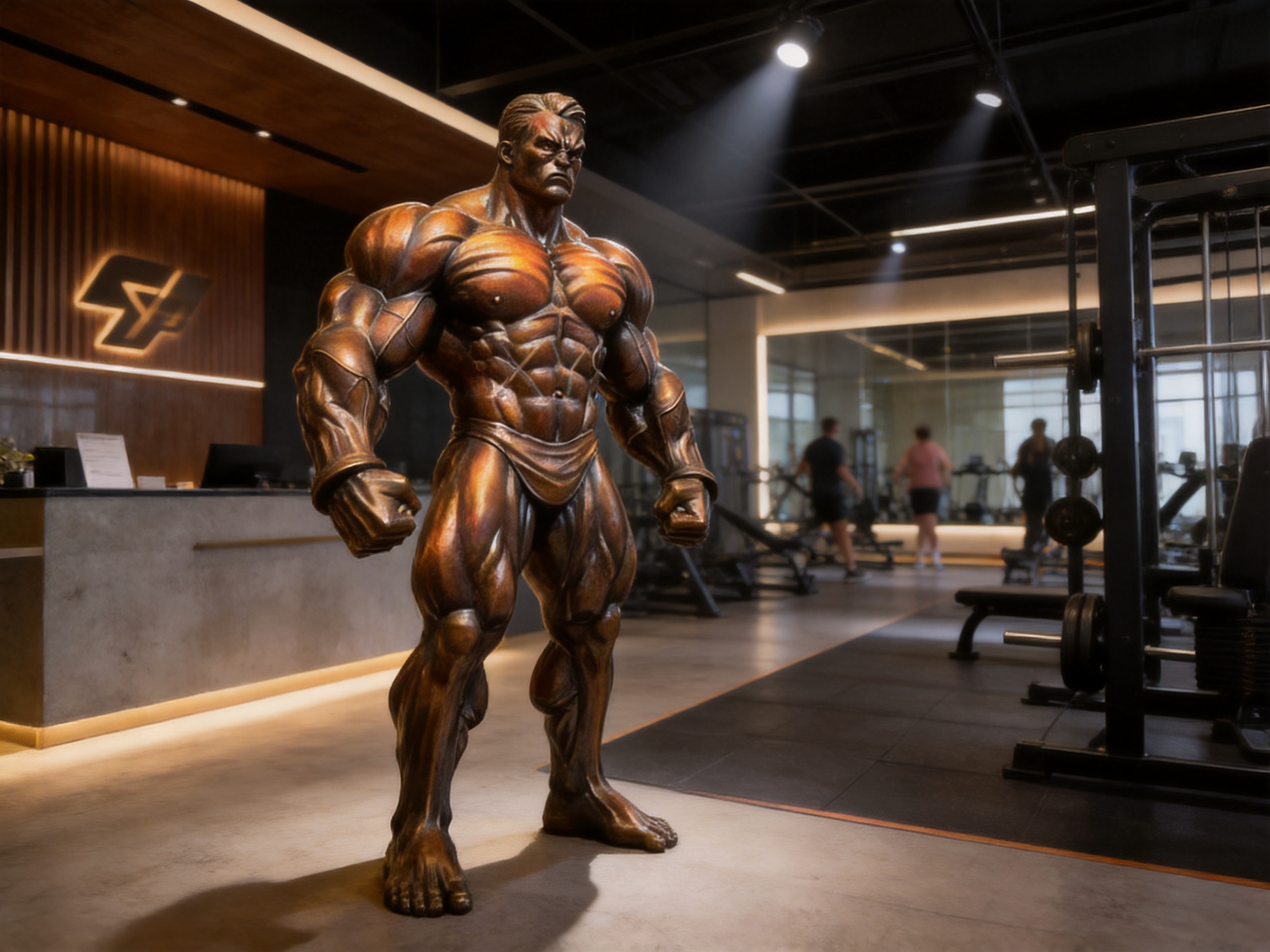
Lighting can significantly influence how the bodybuilder figure is perceived. Directional lighting from above and slightly to the side can emphasize the chest, shoulders, arms, abdomen, and facial expression. Too much frontal light may flatten the anatomy. Excessively low lighting may create dramatic shadows but reduce facial clarity and visitor safety.
For an indoor gym, neutral or warm-white lighting can help the bronze surface appear rich without overpowering the surrounding exercise environment. For a commercial lobby, a narrower spotlight can separate the figure from the background and create a premium presentation. In an outdoor plaza, a combination of uplighting and soft fill lighting can maintain visibility at night while preserving the sculptural shadows that define the anatomy.
Lighting should be tested from the main viewing routes before final installation. A sculpture may look excellent from one direction but lose clarity from another if the light source is too concentrated. Because the figure is designed to be viewed from multiple angles, the lighting plan should support circulation rather than a single fixed viewpoint.
The background also matters. Against a pale wall, a dark bronze figure can achieve strong contrast. Against dark stone or black architectural finishes, a warmer or lighter surface may be more effective. In a landscape setting, surrounding greenery can soften the metallic appearance while providing contrast with the human form.
| Item | Specification |
|---|---|
| Product name | Bronze Bodybuilder Mr. Muscle Sculpture |
| Category | Bronze Human Figure Sculptures |
| Material | Bronze |
| Technique and finish | Exaggerated realistic modeling with heat-colored and artificially aged surface treatment |
| Total height | 1.8 meters |
| Primary applications | Gyms, fitness studios, commercial spaces, city plazas, art parks, and cultural tourism destinations |
| Listed price | CNY 40,500 |
| Supplier type | Custom sculpture manufacturer and metal statue supplier |
The listed price should be treated as a product reference for the stated specification. Final project pricing may depend on customization, quantity, packaging, delivery, installation, site requirements, taxes, and other commercial conditions. Buyers should confirm the final quotation and production details before placing an order.
The 1.8-meter height is a practical size for many public and commercial applications. It is large enough to create a strong presence while remaining suitable for indoor installation in many buildings. For outdoor projects or larger architectural spaces, buyers may request a different scale after reviewing the relationship between the figure, the surrounding structures, and the intended viewing distance.
Professional buyers should evaluate a bronze sculpture through several connected criteria. Artistic quality is the first consideration. The figure should have convincing proportions, clear anatomy, a stable pose, and an expression that supports the intended concept. Since the product uses exaggerated realism, the enlargement of the muscles should appear deliberate rather than accidental.
Surface quality is equally important. Buyers should review whether the bronze finish is consistent with the project’s expectations, whether the highlights and darker areas support the modeling, and whether the artificial aging appears natural. A good finish should enhance the sculpture rather than conceal weak form development.
Structural quality should also be discussed. The manufacturer should be able to provide appropriate information about the base, mounting points, internal reinforcement, handling method, and installation recommendations. This is particularly important for public spaces where the sculpture may be exposed to wind, vibration, accidental contact, or repeated visitor interaction.
Packaging and transportation planning deserve attention as well. A realistic human figure may contain delicate projecting elements, fine facial details, or narrow transitions that require careful protection. Professional crating, moisture control, impact protection, and clear handling instructions can reduce the risk of damage before installation.
Documentation helps maintain clarity throughout the project. Buyers may request approved drawings, dimensions, finish references, installation diagrams, maintenance guidance, and inspection records where appropriate. These documents are useful for architects, contractors, facility managers, and purchasing teams who may all be involved in the same project.
Bronze is durable, but no outdoor artwork is maintenance-free. A regular care program helps preserve the surface treatment and allows small issues to be identified before they become serious. Maintenance frequency should reflect the environment. An indoor sculpture in a controlled lobby may need only routine dust removal and periodic inspection. An outdoor sculpture in a humid, coastal, or polluted location may require more frequent review.
Cleaning should be performed with methods appropriate for the applied finish. Harsh abrasives, aggressive chemicals, and unapproved polishing compounds may change the appearance of the heat-colored or artificially aged surface. Facility managers should follow the manufacturer’s recommendations or consult a qualified conservator before using unfamiliar cleaning products.
Inspection should include the sculpture body, base, mounting points, joints, drainage areas, and surrounding foundation. Signs of movement, corrosion at connections, water accumulation, impact damage, or unauthorized climbing should be addressed promptly. In public areas, discreet barriers, landscaping, or changes in placement may help protect the sculpture while preserving visibility.
Indoor care should focus on dust, fingerprints, cleaning chemicals, and accidental impact from furniture or equipment. If the sculpture is placed in a gym, it should be positioned away from areas where weights, machines, or movable equipment could strike the figure. A clear circulation zone can protect both the artwork and the people using the facility.
A successful sculpture purchase begins with a clear understanding of the site. Measure the available width, depth, ceiling height, doorway dimensions, elevator capacity, and route from delivery point to final position. A 1.8-meter sculpture may fit comfortably in the final space but still encounter difficulties at doorways, staircases, corridors, or loading areas.
Determine whether the artwork will be installed indoors or outdoors. This decision affects the base, anchoring system, protective treatment, drainage, lighting, and maintenance plan. It may also influence the final surface tone because indoor and outdoor lighting reveal bronze differently.
Review the viewing distance and expected audience movement. If visitors will walk around the sculpture, all sides should be considered during design and finishing. If the figure will face a primary entrance, the front view may receive special emphasis while the surrounding space supports a clear visual approach.
Confirm the timeline early. Custom sculpture production may include design approval, modeling, mold preparation, casting or fabrication, finishing, inspection, packing, transport, and installation. A buyer with an event opening or construction deadline should communicate that date before production begins.
Ask for confirmation of the final dimensions, material, finish, base details, packaging method, delivery terms, and installation responsibilities. Clear written specifications reduce misunderstandings and help all project participants coordinate effectively.
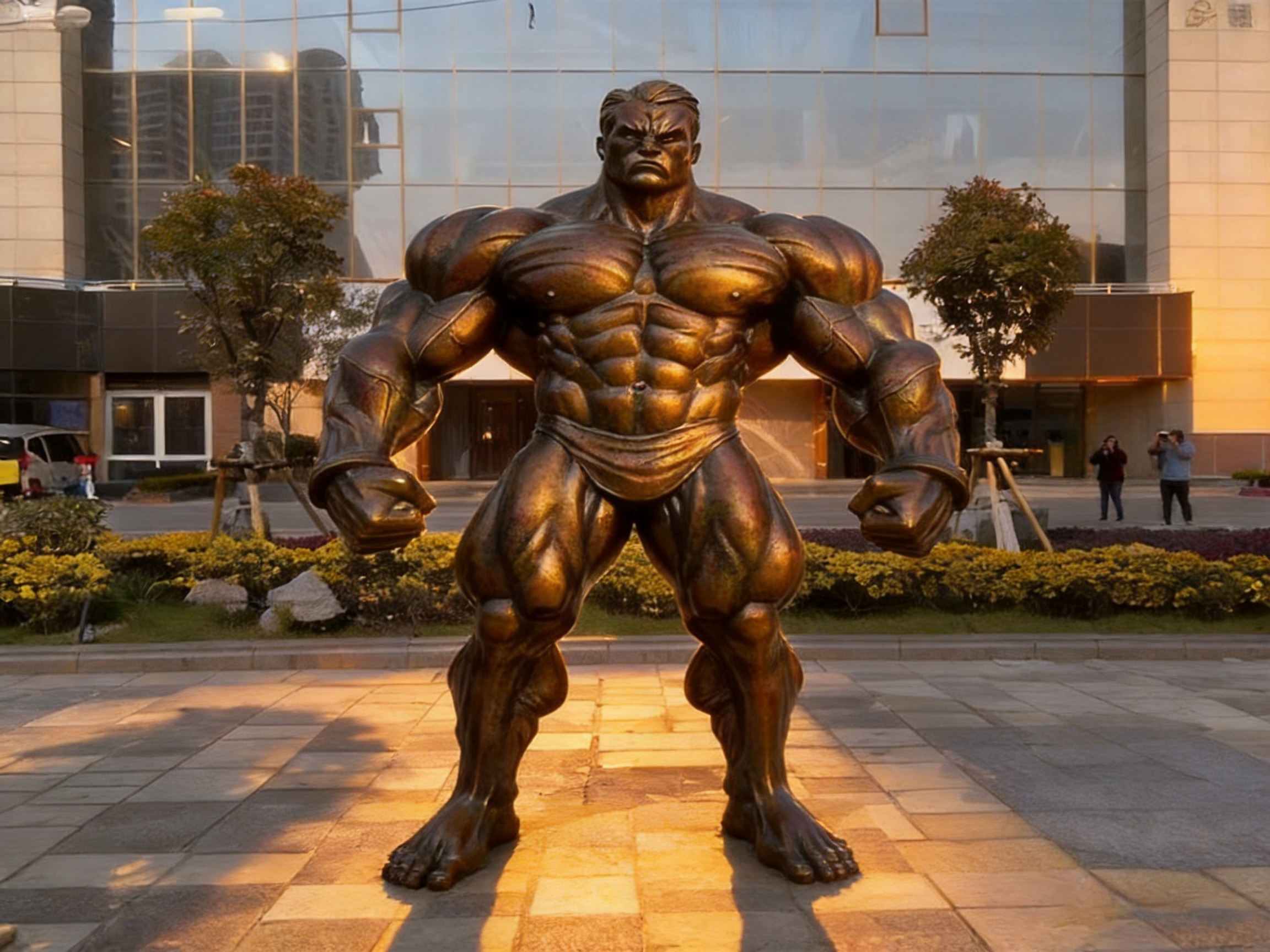
The commercial value of a sculpture is not limited to its material cost. A successful landmark artwork can improve the memorability of a venue, strengthen visual branding, encourage visitor interaction, and provide a distinctive setting for photography. The Bronze Bodybuilder Mr. Muscle Sculpture has particular potential because its subject is direct, energetic, and closely connected to performance.
For a gym, the sculpture can communicate the facility’s values before a visitor speaks with a staff member. For a sports retailer, it can create a strong visual environment that supports product displays. For a wellness or lifestyle complex, it can add a premium artistic element to an otherwise functional architectural space. For a city or cultural destination, it can become part of the site’s image and visitor experience.
The sculpture can also serve as a long-term investment in identity. Posters, digital advertisements, and temporary displays change frequently. A bronze landmark can remain in place for years, becoming associated with the building or organization. Its physical presence gives the venue a recognizable reference point that digital graphics alone cannot provide.
The combination of realistic anatomy and bronze finishing broadens the audience. Fitness enthusiasts may appreciate the subject directly, while general visitors may respond to the figure’s heroic scale and strong craftsmanship. This broad appeal improves the sculpture’s usefulness in public-facing environments.
| Comparison factor | Bronze bodybuilder sculpture | Painted fiberglass figure | Reflective stainless steel figure | Marble figure |
|---|---|---|---|---|
| Visual character | Warm, substantial, historic, and sculptural | Lightweight and color-dependent | Bright, modern, and reflective | Classical, natural, and stone-based |
| Suitability for exaggerated anatomy | Strong, with detailed modeling and tonal depth | Possible, but dependent on surface coating | Often less direct because reflections can interrupt detail | Possible, but complex projecting forms require careful planning |
| Brand impression | Permanent, prestigious, and authoritative | Promotional, flexible, and accessible | Technological and contemporary | Traditional and classical |
| Lighting response | Reveals form through controlled highlights and shadows | Relies heavily on painted color | Reflects the surrounding environment strongly | Responds softly through natural stone surfaces |
| Best application | Landmark gyms, public art, premium commercial spaces, and cultural destinations | Temporary displays, themed décor, and lightweight installations | Modern architectural environments and abstract public art | Classical interiors, gardens, and traditional settings |
The stated total height is 1.8 meters. Buyers should confirm the complete dimensions, including the base or mounting structure, if the sculpture is being installed in a confined interior or transported through restricted access points.
The sculpture is made from bronze and belongs to the category of bronze human figure sculptures. Its bronze surface receives heat coloring and artificial aging to create a rich metallic appearance with visual depth.
It is described as suitable for city plazas, art parks, and cultural tourism destinations, which may include outdoor environments. Before installation, the buyer should confirm the recommended protective treatment, foundation, anchoring system, drainage, and maintenance plan for the specific climate and site.
The supplied information identifies a finished product with a 1.8-meter height. As a custom sculpture manufacturer, the supplier may be able to discuss adjustments to size, posture, base design, finish, or other details. Custom requirements should be confirmed during the quotation and design approval process.
Bronze offers a heavier, more permanent, and more prestigious visual character. It also provides natural tonal depth that can reveal the sculpture’s anatomy under changing light. Fiberglass may be preferable where low weight or temporary use is more important, but bronze is well suited to a landmark artwork intended for long-term display.
The style makes the figure visible from a distance and emphasizes strength, physical development, determination, and achievement. These qualities are directly related to the atmosphere of a gym or fitness studio, allowing the sculpture to reinforce the venue’s purpose and identity.
Directional lighting from above and slightly to the side can emphasize the muscles and facial expression. The exact arrangement depends on the site, but buyers should avoid lighting that completely flattens the form or creates unsafe glare for visitors.
The surface should be cleaned and inspected using methods suitable for its heat-colored and artificially aged finish. Abrasive materials and strong chemicals should be avoided unless specifically approved. Outdoor installations should be inspected regularly for moisture, connection issues, impact damage, and changes in the surface.
The supplied product information lists the price as CNY 40,500. The final cost may vary according to customization, quantity, packaging, delivery, installation, taxes, and project-specific requirements.
The product is supplied by Jiangsu Xinyesheng Sculpture Co., Ltd., a sculpture manufacturer located in Jiangyin City, Jiangsu Province, China. The company’s stated product range includes bronze, stainless steel, marble, fiberglass, and weathering steel sculptures.
The buyer should confirm the final dimensions, material, finish, pose, base, mounting method, packaging, delivery conditions, production schedule, installation responsibilities, and maintenance recommendations. These details are especially important for public and commercial projects.
The Bronze Bodybuilder Mr. Muscle Sculpture is a commanding figurative artwork designed to express strength through anatomy, posture, expression, scale, and material. Its exaggerated realistic modeling gives it immediate visual impact, while the heat-colored and artificially aged bronze surface adds depth, dignity, and a lasting metallic presence.
Its advantages over conventional decorative figures include stronger recognition, greater landmark potential, a more authoritative material character, and a clear connection to discipline and physical achievement. Compared with fiberglass, stainless steel, and marble alternatives, bronze offers a distinctive balance of weight, warmth, modeling clarity, and long-term artistic presence.
The sculpture is especially appropriate for gyms, fitness studios, sports-related commercial spaces, public plazas, art parks, and cultural tourism destinations. Its 1.8-meter height allows it to relate naturally to viewers while remaining large enough to define a reception area, entrance, lobby, or outdoor gathering point.
Supported by a manufacturer with experience across multiple sculpture materials, the product can also serve as a starting point for broader custom projects. Buyers can discuss modifications to scale, pose, base, finish, and installation requirements to create an artwork that responds to a particular architectural or commercial environment.
For organizations seeking a durable and memorable centerpiece, this bronze bodybuilder figure offers more than physical decoration. It presents a visual statement about ambition, resilience, self-improvement, and human strength. With thoughtful placement, appropriate lighting, professional installation, and regular care, it can become a defining feature of its surroundings for many years.
1. Product specification supplied for the Bronze Bodybuilder Mr. Muscle Sculpture.
2. Manufacturer information supplied for Jiangsu Xinyesheng Sculpture Co., Ltd.
3. General principles of bronze figurative sculpture, metal casting, patination, and surface finishing.
4. General guidance on public art installation, sculpture foundations, lighting, and maintenance.
5. General comparative considerations concerning bronze, stainless steel, marble, fiberglass, and weathering steel sculptures.
 Bronze Parent-Child Reading Sculpture – Modern Artistic Design
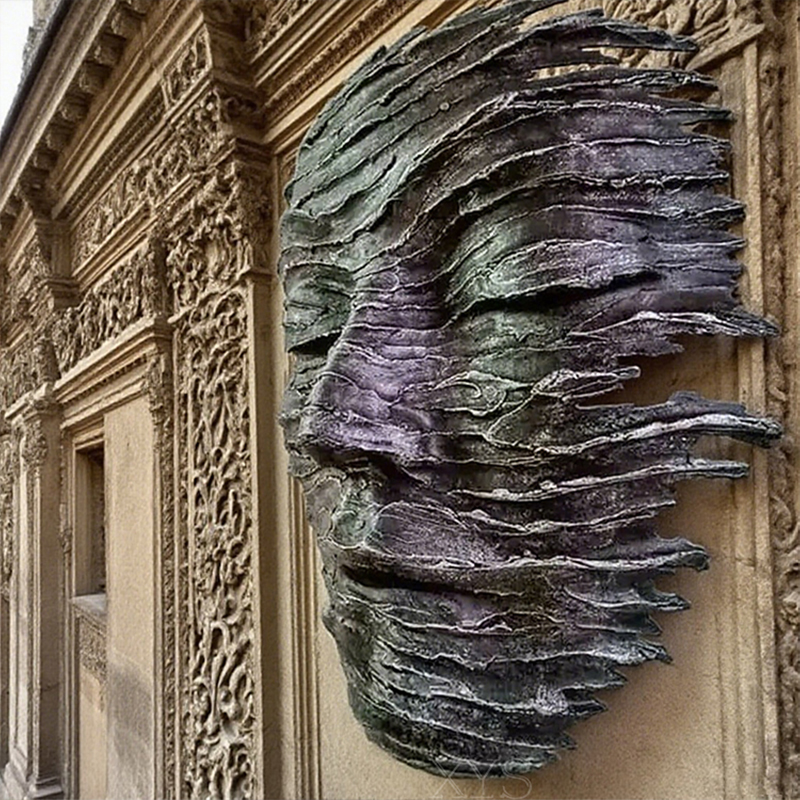 Bronze Abstract Stacked Face Sculpture – Modern Wall Art
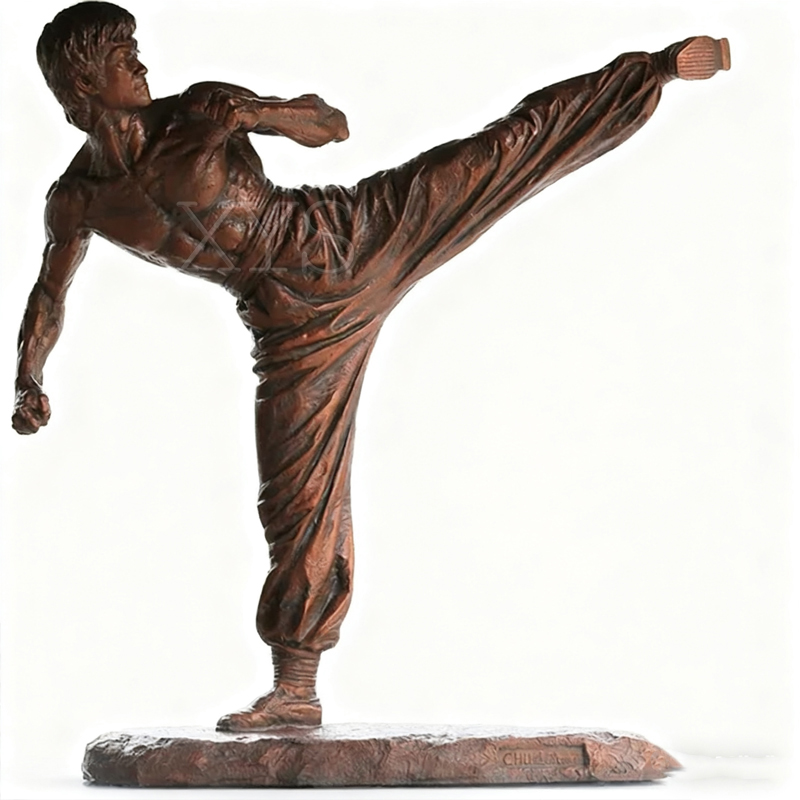 Bronze Life-Size Bruce Lee Martial Arts Sculpture – Outdoor Display
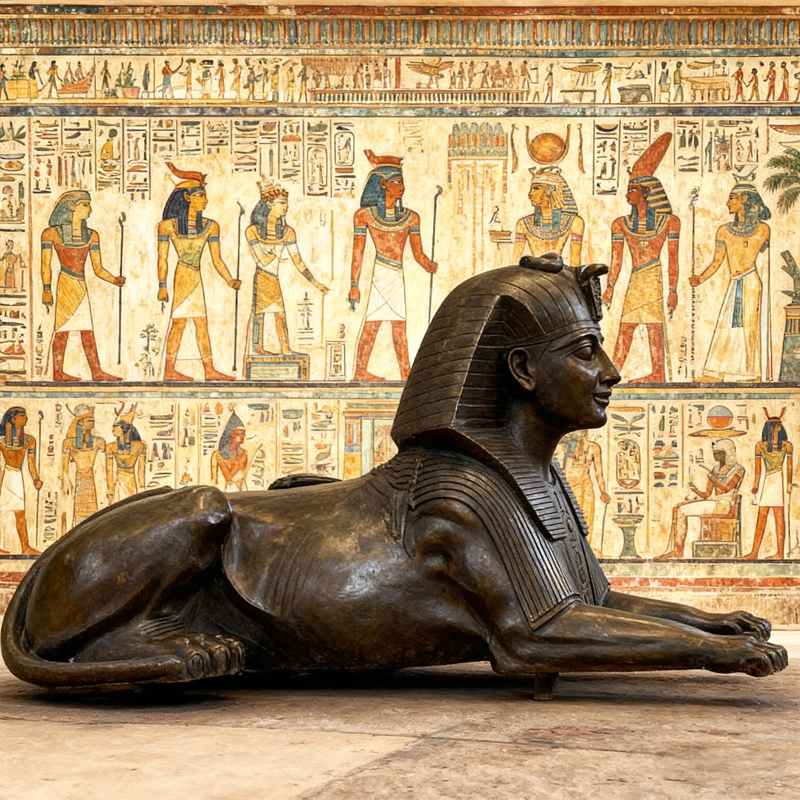 Bronze Large Sphinx Sculpture – Ancient Egyptian Mythology
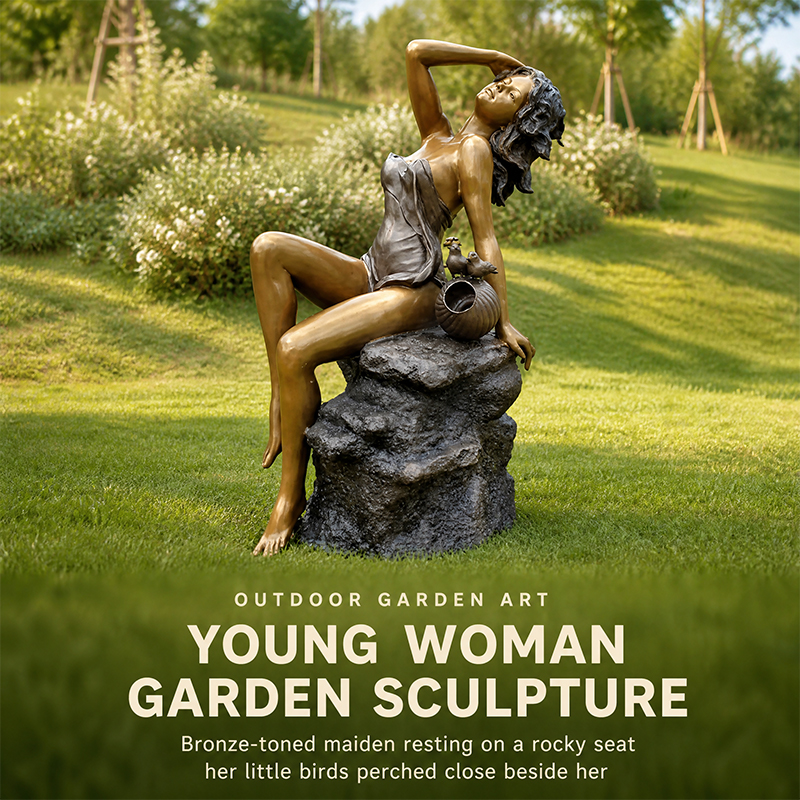 Contemporary Life-Size Bronze Nude Female Sculpture
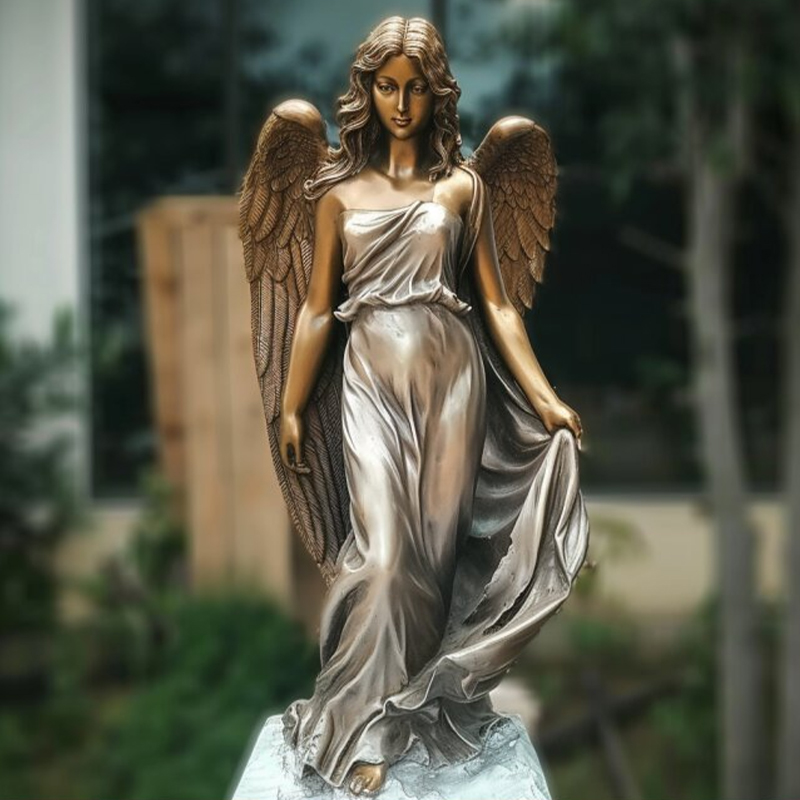 Bronze Angel Sculpture



Daniel H.

Amanda R.

Robert B.

Jennifer S.

James W.

Barry G.

Michael T.

Emily K.

David L.

Sarah M.


Mikey XV

Jagxue

 English
 Español
 عربى
عربى Français
 italiano
 Deutsch