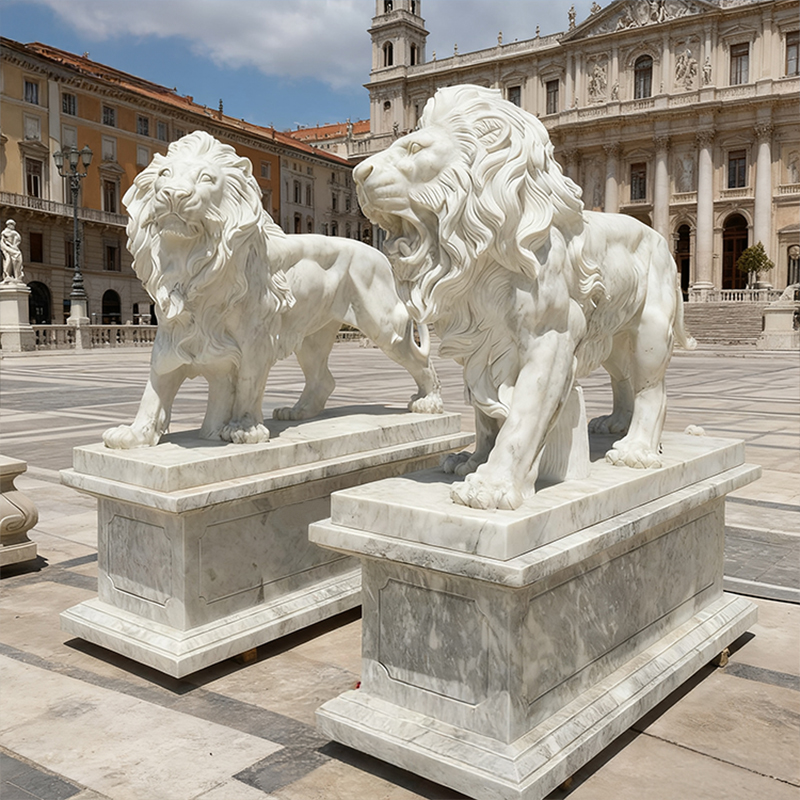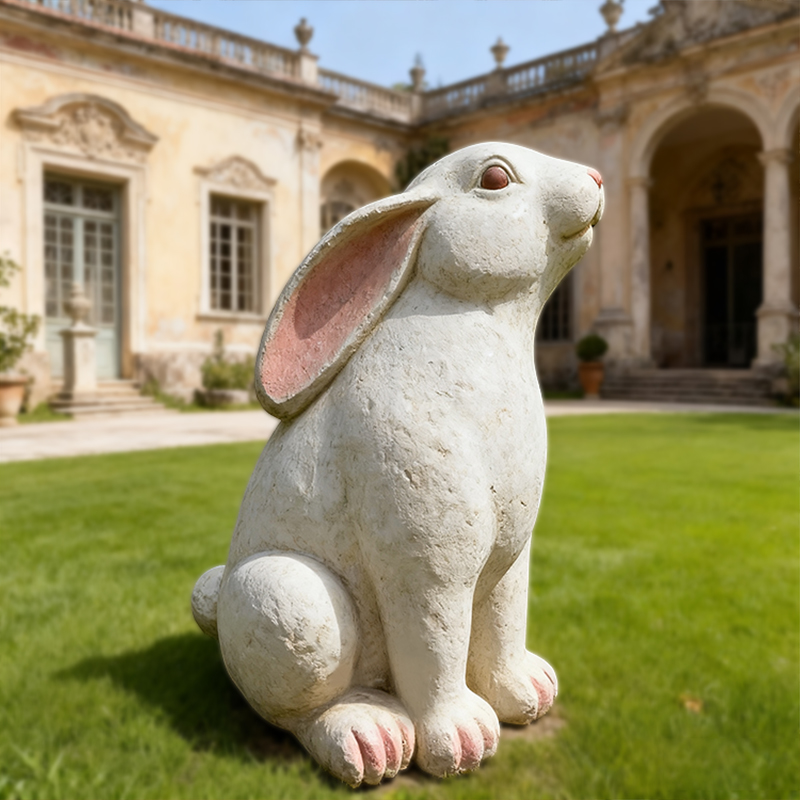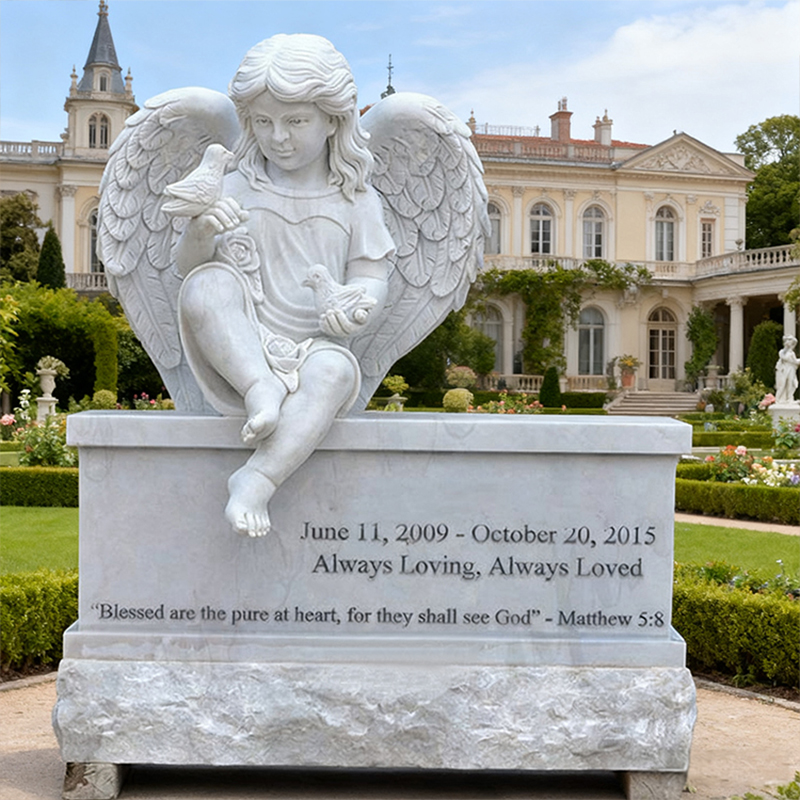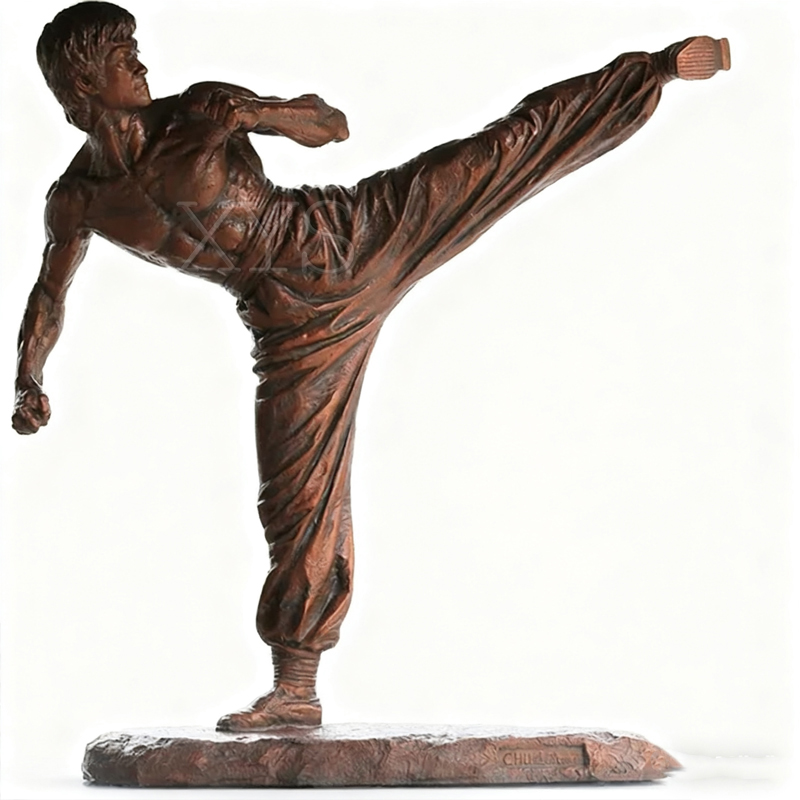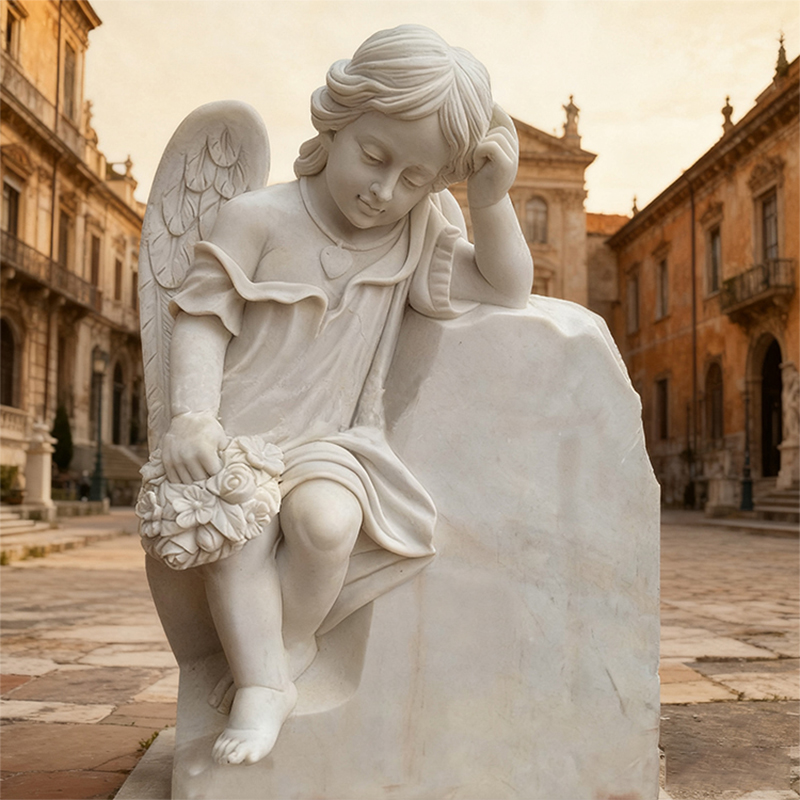
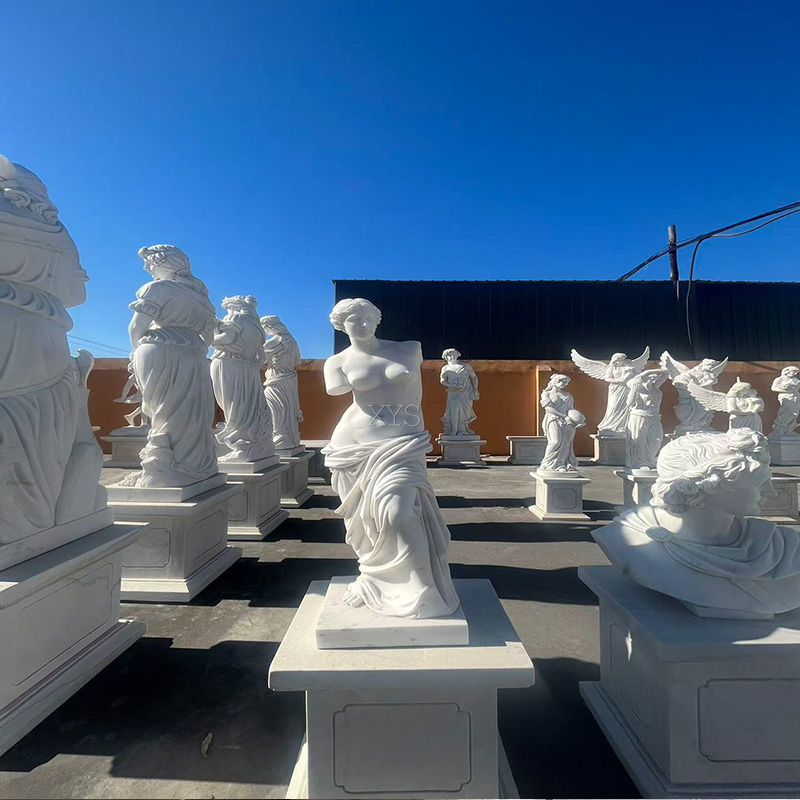
European white marble figure sculpture represents one of the most enduring forms of architectural and landscape art. Combining the natural beauty of stone with the expressive language of classical European sculpture, this type of artwork can transform a courtyard, plaza, gallery, hotel, or private estate into a space with greater depth, identity, and cultural presence. The European White Marble Figure Sculpture described in this article is hand-carved from natural white marble and designed for buyers who value authenticity, durability, customization, and refined artistic expression.
With a total height of 2 meters or more and full size and form customization available, the sculpture can be adapted to a wide range of architectural settings. Its clean white appearance, warm tactile texture, realistic drapery, and expressive human form make it suitable for both formal public environments and carefully designed private landscapes. A listed reference price of $19,800 places the piece within the premium custom sculpture market, where material quality, craftsmanship, scale, and long-term visual impact are more important than mass-produced affordability.
Unlike decorative imitations made from resin, cement, or low-grade composite materials, a natural marble figure sculpture offers an authentic stone presence. Every surface reflects the interaction between the artist’s tools and the material’s individual grain. Subtle variations in tone, veining, density, and translucency ensure that each finished sculpture has a distinct character. This individuality is one of the most important advantages of natural marble over standardized factory-made ornaments.
The sculpture can include classic European artistic images such as Venus and other idealized human figures. Its lifelike drapery and carefully developed facial and bodily expressions create a sense of movement and emotional connection. At the same time, the simple white palette allows the sculpture to work harmoniously with greenery, stone paving, water features, modern architecture, historic buildings, and neutral interior finishes.
European White Marble Figure Sculpture
Content
Marble has been used for monumental and figurative sculpture for thousands of years because it combines strength with visual refinement. Its fine grain allows a sculptor to create delicate edges, flowing fabric, hair, facial features, fingers, and other details that are difficult to reproduce convincingly in coarse stone or industrial materials. When properly selected and worked, white marble can create both powerful mass and exceptional delicacy in the same artwork.
The visual quality of white marble is especially valuable in figure sculpture. Human anatomy depends on subtle transitions between light and shadow. A cheek, shoulder, knee, or fold of fabric may be defined by only a few millimeters of surface variation. White marble responds naturally to daylight and artificial illumination, revealing these transitions without requiring bright colors or painted finishes.
Natural marble also provides a sense of permanence. Buyers seeking a sculpture for a villa courtyard, civic plaza, hotel entrance, or institutional collection often want an artwork that will remain relevant for many years. Marble’s association with classical architecture and museum-quality art gives the sculpture a cultural authority that many synthetic alternatives cannot equal.
Another advantage is the material’s ability to suit different design languages. A traditional garden may use a Venus figure as a focal point among clipped hedges and fountains. A contemporary hotel may place the same type of sculpture against glass, concrete, and water to create a contrast between historical form and modern architecture. A gallery can use it as a centerpiece, while a luxury residence may position it at the end of a processional walkway.
Because natural marble is quarried from geological formations, no two blocks are perfectly identical. Fine lines, gentle tonal differences, and occasional mineral patterns are normal features of the material. These variations should not automatically be treated as flaws. Instead, they contribute to the sculpture’s individuality and help distinguish genuine natural stone from printed, molded, or artificially coated substitutes.
For custom projects, the selection of a suitable block is an important part of the manufacturing process. The block must provide enough volume for the intended figure, while its internal structure and visible characteristics should support the desired composition. A skilled production team evaluates the relationship between the stone and the design before carving begins. This helps reduce unnecessary waste and allows natural patterns to be positioned in visually appropriate areas.
White marble is particularly effective in outdoor environments because it interacts with changing light throughout the day. Morning light can emphasize soft surface transitions, while afternoon sunlight can create stronger shadows in drapery and recessed details. Under evening illumination, carefully placed spotlights can highlight the figure’s silhouette and create a ceremonial atmosphere.
The material’s light color also helps it remain visually clear at a distance. In a garden or plaza, a darker sculpture may blend into vegetation or lose detail under weak lighting. A white marble figure is easier to identify as a focal point and can provide a calm visual anchor within a complex landscape.
The European figure tradition places strong emphasis on proportion, gesture, balance, anatomy, and the relationship between the human body and surrounding space. The proposed sculpture draws on this tradition through a composition that may feature a classical female figure, such as Venus, with realistic drapery and a composed expression.
Classical figure sculpture is not merely a representation of a person. It is a carefully organized arrangement of mass, rhythm, and negative space. The position of the head, the angle of the shoulders, the direction of the torso, and the fall of the fabric all contribute to the viewer’s perception of movement and emotion. Even a standing figure can appear to move when the weight is distributed dynamically between the legs and the upper body is given a subtle turn.
The artistic strength of this sculpture lies in its ability to combine recognizable human form with idealized beauty. The features can remain natural enough to convey life while retaining the balanced proportions associated with European classical art. This combination allows the sculpture to appeal to collectors, architects, landscape designers, hospitality developers, and buyers looking for a statement piece with broad cultural appeal.
Drapery is one of the most demanding elements in marble figure carving. Fabric must appear soft even though it is made from hard stone. The sculptor must create folds that have believable weight, direction, and tension. Deep folds produce strong shadows, while shallow ridges catch highlights. If the transitions are too regular, the fabric can look mechanical; if they are too rough, the figure may lose elegance.
Well-executed marble drapery creates a visual dialogue between concealment and revelation. It can suggest the form beneath the cloth without making the figure appear static or overly exposed. This balance is central to the classical European aesthetic and contributes significantly to the sculpture’s refined character.
Facial expression is equally important. A neutral or gently contemplative expression allows the sculpture to fit many environments and avoids the limitations of a highly specific narrative. The result can appear dignified in a hotel lobby, serene in a garden, or intellectually engaging in a gallery.
A total height of 2 meters or above gives the sculpture a strong physical presence. At this scale, the work becomes more than a decorative object. It enters the viewer’s personal visual field and creates an architectural relationship with nearby buildings, trees, walls, entrances, and pathways.
Scale must be considered in relation to the installation site. A 2-meter figure may be ideal for a courtyard or interior atrium, while a larger version may be needed for a public plaza or broad garden. Full customization allows the buyer to adjust height, width, base proportions, gesture, drapery treatment, and other formal elements to suit the site.
Customization is especially valuable when the sculpture must fit an existing architectural axis. For example, a figure placed at the end of a narrow walkway may need a more vertical composition, while a sculpture beside a large fountain may require greater width and stronger gestures to maintain visual balance. A custom manufacturing partner can adapt the form so that the sculpture functions as part of the overall design rather than appearing as an unrelated object.
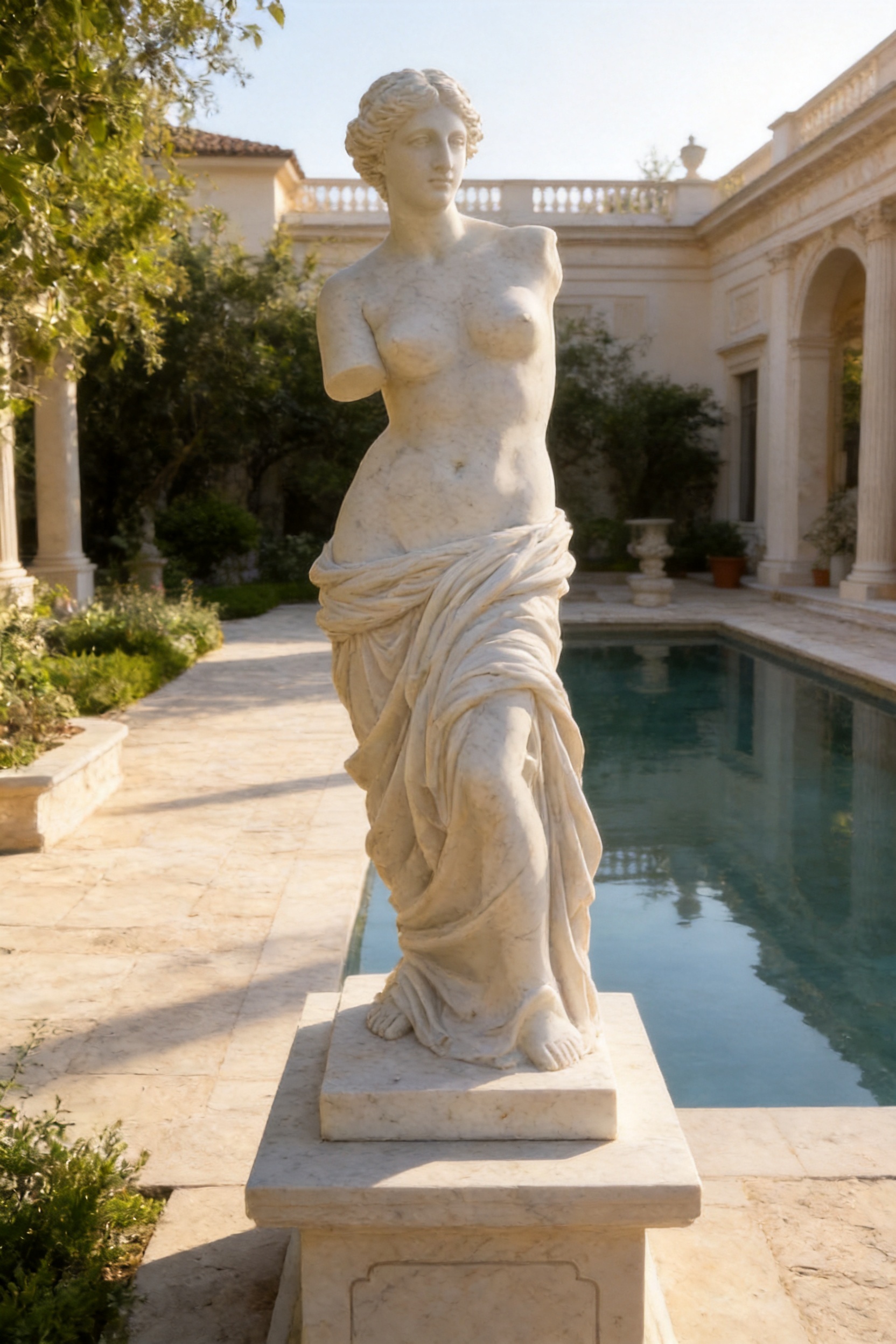
The market offers many decorative statues made from fiberglass, resin, cement, cast stone, or metal. These materials can be useful for certain projects, particularly when low weight, rapid production, or limited budgets are primary concerns. However, a hand-carved natural marble figure provides several advantages for buyers seeking premium quality and long-term artistic value.
| Comparison Factor | Natural White Marble Figure | Mass-Produced Resin or Fiberglass Figure | Cast Cement or Reconstituted Stone |
|---|---|---|---|
| Material authenticity | Made from genuine natural stone with unique geological character | Manufactured composite material with a repeated surface pattern | Man-made mixture that may imitate stone |
| Surface detail | Supports refined hand-carved anatomy, drapery, and facial features | Dependent on mold quality and often less nuanced | Can reproduce broad details but may appear coarse |
| Visual depth | Natural light reflection and subtle stone variation | Usually relies on paint, gel coat, or surface finish | Often has a more granular or uniform appearance |
| Individuality | Every block and hand-finished surface is distinctive | Multiple copies may look nearly identical | Repeated molds can reduce uniqueness |
| Perceived permanence | Strong association with classical and monumental art | Typically viewed as decorative rather than collectible | Suitable for landscape use but may lack premium refinement |
| Customization potential | Full size and form customization is available | Often limited by existing molds | Customization may require new molds or prototypes |
| Best application | Luxury estates, galleries, hotels, plazas, and permanent collections | Temporary displays, lightweight décor, and lower-cost projects | Large-scale budget landscaping and general outdoor ornament |
The table shows that material choice should be based on project goals rather than price alone. A synthetic statue may have a lower initial cost, but it generally does not provide the same tactile authenticity, visual depth, or collector appeal as hand-carved marble. For an entrance feature expected to communicate quality and permanence, natural marble can deliver stronger long-term value.
Bronze, stainless steel, and weathering steel are also important sculpture materials. Metal offers excellent opportunities for abstract design, large-scale construction, reflective surfaces, and dramatic color changes. However, metal and white marble create very different artistic effects.
White marble is particularly effective when the desired impression is elegance, serenity, historical continuity, or classical refinement. Its matte-to-satin surface is softer than polished stainless steel and less visually industrial than weathering steel. It can make a space feel more ceremonial and culturally rooted.
For human figures, marble also offers a direct connection to the long history of European sculpture. A bronze figure may communicate strength and patina, while a white marble figure often communicates ideal beauty, purity, balance, and timelessness. The choice depends on the identity of the site, but marble remains one of the strongest options for classical figurative work.
The quality of a custom marble sculpture depends on more than the final polishing stage. It results from a sequence of decisions involving design interpretation, stone selection, proportion control, carving, surface refinement, inspection, and finishing. The production approach for the European White Marble Figure Sculpture is centered on hand-carved craftsmanship, which enables the artist and production team to respond to the specific characteristics of the stone and the requirements of the design.
The process begins with a discussion of the buyer’s artistic and architectural requirements. Important considerations may include the preferred subject, overall height, pose, viewing distance, installation environment, base design, surface finish, and relationship to surrounding structures.
A classical Venus figure may be requested as a direct interpretation of a traditional image, or the buyer may prefer a new composition inspired by European sculpture. In either case, the design must be translated into a form suitable for stone. The team considers balance, structural support, delicate projections, transport requirements, and the visual effect from multiple viewing angles.
For a site-specific project, photographs, drawings, dimensions, or architectural plans can help guide customization. The sculpture may need to align with a doorway, frame a water feature, face a particular approach, or maintain a specific clearance from nearby walls and landscaping. Early attention to these details helps prevent costly changes later.
After the design direction is established, a suitable natural white marble block is selected. The block should be large enough to accommodate the figure and base while allowing room for carving and finishing. Its shape, density, grain, and visible markings are reviewed in relation to the design.
Block selection is especially important for figures with extended arms, flowing drapery, raised sections, or other fragile elements. The structural integrity of these parts must be considered before material is removed. A knowledgeable production team can adjust the composition or orientation of the figure so that the natural strength of the marble supports the finished work.
The use of a genuine stone block is a significant difference between custom carving and molded reproduction. With molded products, the surface is determined largely by a fixed pattern. With natural marble, the artist works with a living geological material whose characteristics influence the final appearance. This creates a more individual and authentic result.
Rough shaping removes excess stone and establishes the broad proportions of the figure. At this stage, the main masses of the head, torso, limbs, drapery, and base are defined. The goal is not yet to create final details, but to ensure that the overall composition is correctly balanced.
Accurate proportion control is essential. A small error in the relationship between the head and shoulders or between the torso and legs can affect the entire impression of the figure. The production team must continually evaluate the sculpture from the front, sides, and rear so that it remains convincing from different viewpoints.
Once the rough form is established, the carving becomes progressively more precise. Broad planes are refined into anatomical transitions, folds, facial features, hands, feet, and ornamental details. Different tools and levels of abrasion may be used to move from material removal to surface refinement.
Hand finishing is particularly valuable in areas where subtle variations matter. The transition from cheek to jaw, the curve of a shoulder, or the edge of a fabric fold may require careful attention that cannot be reduced to a simple mechanical operation. Skilled artisans can make small adjustments that improve expression, balance, and realism.
The final surface may be developed according to the artistic requirements of the design. A highly polished surface can emphasize brightness and formal elegance, while a honed or softer finish can produce a more natural and understated appearance. Some areas may be treated differently to create contrast between skin, fabric, hair, and base elements.
Surface finishing should support the sculpture’s form rather than conceal it. Excessive gloss may flatten the visual distinction between planes, while an overly rough surface may weaken the refined character expected from a European figure. The finishing decision should therefore be made in relation to the installation lighting, viewing distance, and desired mood.
Inspection takes place throughout production rather than only at the end. Proportions, surface quality, structural areas, details, edges, and overall appearance are reviewed as the sculpture develops. This staged approach allows issues to be addressed while they can still be corrected.
For a custom sculpture, quality inspection should include comparison with the approved design direction, review of dimensions, examination of visible surfaces, and confirmation of the final finish. Particular attention is appropriate for thin drapery edges, fingers, facial details, projecting ornaments, and the connection between the figure and its base.
The result is a production process that combines artistic judgment with disciplined craftsmanship. This combination is one of the main strengths of a specialized sculpture manufacturer: the buyer receives not only a material object, but also an organized path from concept to finished artwork.
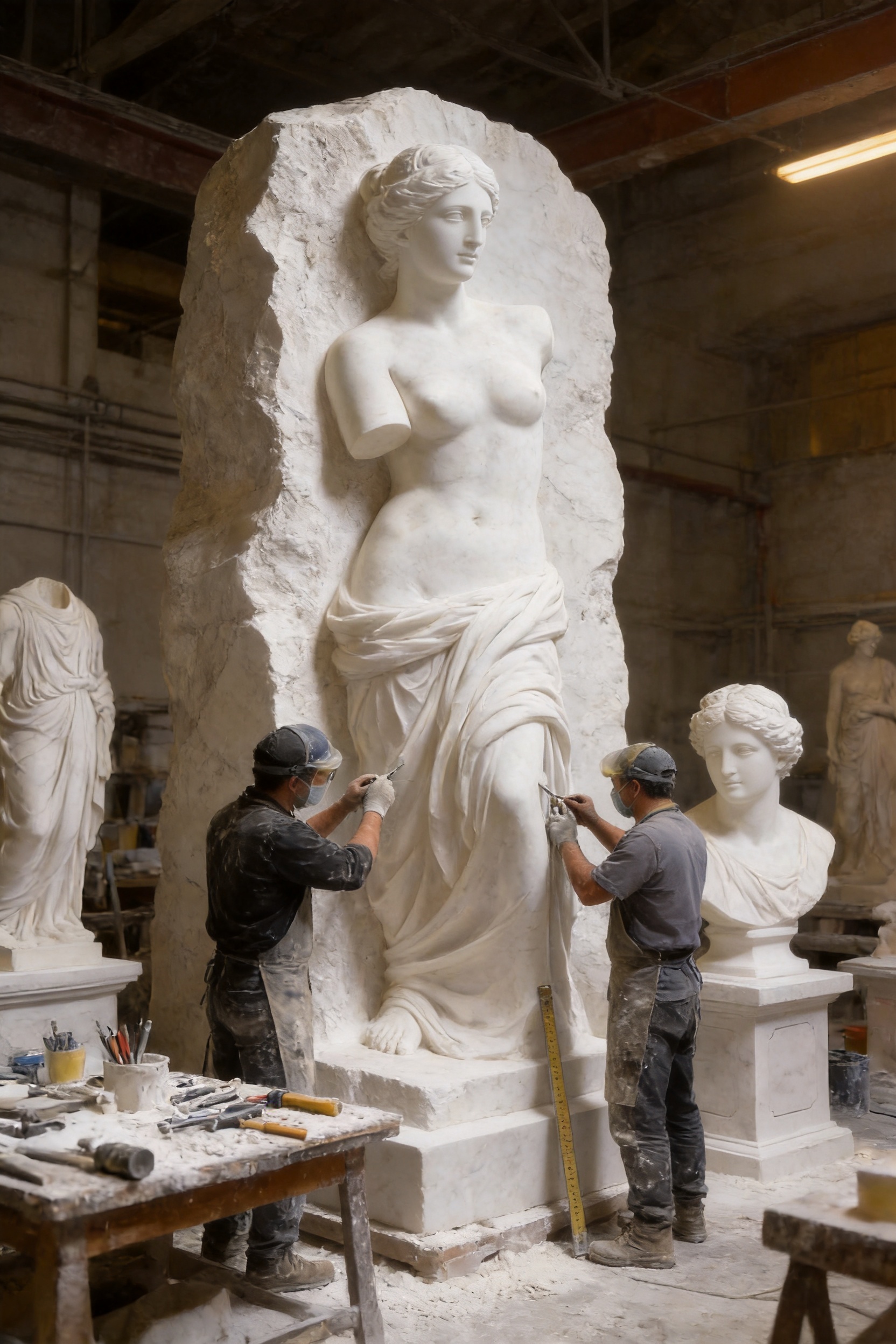
Full size and form customization allows the sculpture to be adapted to the needs of the project. Buyers may begin with the general concept of a European figure and then refine the work according to the setting, brand identity, architectural style, or personal collection preferences.
The reference specification indicates a total height of 2 meters and above, with customization available. This broad range can accommodate installations from intimate private courtyards to substantial civic or hospitality environments.
Height affects the viewer’s relationship with the figure. A life-size or slightly larger sculpture can feel approachable and human. A significantly larger version can create a monumental impression and establish the work as a landmark. The correct size depends on the surrounding architecture, the distance from the main viewing point, and whether the sculpture will be seen at ground level or on a raised platform.
Form customization can include adjustments to pose, gesture, drapery arrangement, head direction, base shape, and decorative elements. A figure facing toward an entrance may create a welcoming focal point, while a figure turned toward a garden or fountain may support a more contemplative composition.
Customization should preserve the structural and artistic integrity of the figure. Delicate projecting features may require thoughtful proportions and reinforced support through the composition. An experienced manufacturer can help balance the buyer’s visual preferences with the practical requirements of carving, transportation, and installation.
The base is not merely a support component. It influences the perceived height, authority, and relationship of the sculpture to the ground. A simple square plinth can create a formal architectural appearance, while a shaped marble base may produce a more integrated artistic effect.
Base dimensions should be considered together with the installation surface. Outdoor projects may require a foundation capable of supporting the combined weight of the sculpture and plinth. The manufacturer can coordinate base proportions and provide project information for the architect, contractor, or installation team.
White marble can be finished in several ways depending on the desired appearance. A polished finish may emphasize luminosity and luxury. A honed finish can create a softer, more contemporary impression. Selective finishing may also be considered when the design includes differences between flesh, fabric, hair, and architectural elements.
Because the sculpture is made from natural stone, the finish will interact with the material’s grain and tonal variation. This makes sample review valuable for major projects. Buyers can evaluate how the surface responds to natural or artificial light before confirming the final production approach.
The sculpture is described as weatherproof and weather-resistant for long-term outdoor display. This makes it suitable for villa courtyards, plazas, landscaped entrances, hotel clubs, and other environments exposed to changing weather conditions.
Natural marble has been used historically in exterior architecture and sculpture, but long-term performance depends on several factors, including local climate, installation quality, drainage, cleaning practices, pollution levels, freeze-thaw exposure, and the specific characteristics of the stone. A professional project should therefore consider the site environment before installation.
The installation area should provide a stable, level, and properly engineered foundation. The ground must support the substantial weight of a large marble sculpture, particularly when the work includes a solid base or plinth. Water should not collect around the base, and drainage should be planned to reduce prolonged moisture exposure.
In regions with freezing temperatures, the installation design should take seasonal expansion and contraction into account. In coastal or highly polluted environments, regular maintenance may be more important because airborne salts, dust, and pollutants can accumulate on the surface.
Marble is strong, but projecting or thin elements can be vulnerable to impact. Garden equipment, vehicles, construction materials, and careless handling may damage fingers, drapery edges, or other delicate details. The sculpture should be positioned where it can be appreciated without being exposed to unnecessary physical risk.
Professional handling is important during unloading and placement. Lifting points, protective padding, suitable equipment, and a controlled installation sequence should be arranged before delivery. A large custom sculpture should never be moved casually or dragged across a hard surface.
Routine maintenance generally involves removing dust, leaves, soil, and other deposits with appropriate gentle methods. Abrasive cleaners, harsh acids, aggressive pressure washing, and unapproved chemical treatments may damage the stone or alter the surface finish.
For premium installations, a maintenance plan can include periodic visual inspection, careful cleaning, review of drainage around the base, and assessment of any areas exposed to unusual impact or staining. The exact maintenance schedule should reflect the local climate and the sculpture’s finish.
In a private courtyard, a European marble figure can serve as a central focal point around which planting, paving, lighting, and seating are organized. The white stone contrasts effectively with green foliage and darker paving. It can also create a visual connection between the residence and the garden, particularly when the architecture incorporates columns, arches, balustrades, or other classical references.
A figure sculpture may be placed beside a reflecting pool, at the end of an axis, within a circular planting bed, or beneath a covered colonnade. The choice of position affects the viewer’s experience. A prominent central location communicates formality, while a partially framed position among plants may create a sense of discovery.
Public plazas require artwork that can be recognized from multiple directions and appreciated by viewers at different distances. A figure of 2 meters or more can provide the necessary presence without overwhelming a pedestrian environment. Larger custom versions may be appropriate where the plaza is broad or surrounded by tall buildings.
In a public setting, the sculpture can contribute to the identity of a development, cultural district, hotel complex, or commercial destination. Its classical language may suggest heritage, quality, and permanence, while its natural material provides a tactile contrast to concrete, glass, and steel.
Galleries and cultural institutions may use a marble figure as a permanent display, a thematic centerpiece, or part of an exhibition exploring European artistic traditions. The neutral white surface works well under controlled lighting and allows visitors to focus on form, texture, and technique.
For indoor display, floor loading, door dimensions, elevator access, and turning space must be considered. Because the sculpture is large and heavy, logistical planning should begin before the artwork is shipped. A well-designed installation can make the sculpture appear effortless, but that result depends on careful preparation behind the scenes.
Luxury hotels and private clubs often use sculpture to communicate a sense of arrival and exclusivity. A marble figure in a lobby, entrance court, lounge, or garden can reinforce a refined hospitality concept. The work may be paired with high-quality stone flooring, warm lighting, water features, or classic architectural details.
The sculpture’s quiet color is advantageous in hospitality environments because it complements many interior schemes. It does not compete aggressively with furniture, artwork, floral arrangements, or branded color palettes. Instead, it provides a stable visual landmark that guests can remember.
Custom sculpture production requires more than access to stone. It requires the coordination of design understanding, material knowledge, artisan skill, dimensional control, finishing expertise, packing, and project communication. Jiangsu Xinyesheng Sculpture Co., Ltd. operates as a China-based sculpture manufacturer and supplier serving custom sculpture requirements across several material categories, including bronze, stainless steel, marble, fiberglass, and weathering steel.
This multi-material capability is a practical strength for buyers and design professionals. Although the featured product is a white marble figure, many projects include several types of artwork. A hotel development, for example, may require a classical marble figure for the entrance, stainless steel accents for a contemporary garden, and bronze elements for an interior lounge. Working with a manufacturer familiar with multiple materials can simplify coordination and support a more unified procurement process.
A specialized manufacturer can connect the customer’s concept with the realities of production. This includes evaluating the scale, clarifying the desired appearance, identifying suitable material, planning the base, and coordinating finishing requirements. For buyers who have a clear artistic idea but do not yet have a fully developed technical drawing, this type of cooperation can be particularly useful.
Integrated production also helps maintain consistency between the approved concept and the finished sculpture. Each stage can be reviewed before the next stage proceeds. This reduces the risk of creating a technically complete work that does not match the client’s intended proportions, mood, or site requirements.
Large sculptures often travel long distances before reaching their final site. Export-oriented production requires careful attention to packaging, protection, documentation, dimensions, weight, and handling. These considerations are especially important for natural marble because the material is heavy and the finished figure may contain delicate details.
A manufacturer experienced in international orders can help buyers and project teams plan around these requirements. The customer should still confirm destination-specific import, tax, insurance, and installation obligations, but early communication with the manufacturer can make the overall process more predictable.
The availability of bronze, stainless steel, marble, fiberglass, and weathering steel sculptures indicates a broad production scope. This range allows the manufacturer to respond to different aesthetic and functional needs. Marble can provide classical elegance, bronze can add warmth and historical character, stainless steel can deliver a modern reflective effect, fiberglass can reduce weight, and weathering steel can create a strong architectural presence through controlled rust tones.
For buyers comparing suppliers, a broad product range can be an advantage when it is supported by genuine material expertise. It suggests that the manufacturer is accustomed to adapting processes to different physical properties rather than relying on one standardized production method.
Before ordering a custom European white marble figure sculpture, buyers should establish the intended location, viewing distance, height, finish, pose, base design, budget, delivery schedule, and installation method. Clear information at the beginning helps the manufacturer provide a more accurate proposal.
The listed reference price is $19,800. The final price of a customized sculpture may depend on dimensions, marble selection, design complexity, carving time, finish, base construction, packaging, shipping, insurance, installation, and any additional engineering requirements. Buyers should request a complete quotation that distinguishes the artwork price from logistics and site-related expenses.
Premium natural stone sculpture should be evaluated as a long-term asset rather than as a simple decorative purchase. The initial investment covers not only the stone but also artistic labor, material preparation, craftsmanship, quality control, and the ability to create a unique piece for a specific project.
For a major commission, buyers should approve the design direction before full production begins. Useful approval materials may include sketches, reference images, dimensional drawings, digital views, or a physical model, depending on the project. The objective is to establish a shared understanding of the figure’s pose, proportions, expression, drapery, base, and finish.
Buyers should also clarify how much variation is acceptable in the natural marble. Since the material is not artificially uniform, the finished artwork may contain tonal differences or subtle veins. These characteristics are part of the stone’s identity, but expectations should be discussed in advance.
Installation should be treated as part of the sculpture project rather than as an afterthought. The site must be checked for access, foundation strength, lifting equipment, doorway dimensions, overhead clearance, and final positioning. Outdoor foundations may need to be prepared before the sculpture arrives.
Architects, landscape designers, contractors, and property managers should coordinate these details with the manufacturer and the installation team. A beautiful sculpture can lose some of its impact if it is positioned too close to surrounding objects, placed on an undersized base, or poorly illuminated.
Lighting can significantly influence the appearance of a marble figure. Directional light from above or from the side can emphasize facial features, drapery, and the rhythm of the body. Soft frontal light can produce a calmer and more evenly visible presentation. Uplighting can make the sculpture appear more monumental, particularly when it is installed outdoors.
Lighting should be tested at different times of day for outdoor projects. Excessive brightness may create harsh glare on polished surfaces, while insufficient illumination may hide important details. Warm lighting can give the white stone a gentle and welcoming appearance, whereas cooler lighting can create a sharper, gallery-like effect.
The background is also important. Dark foliage, textured stone walls, deep-colored paving, or water can help define the silhouette. Against a light building façade, stronger side lighting or a darker planting backdrop may be necessary to maintain contrast.
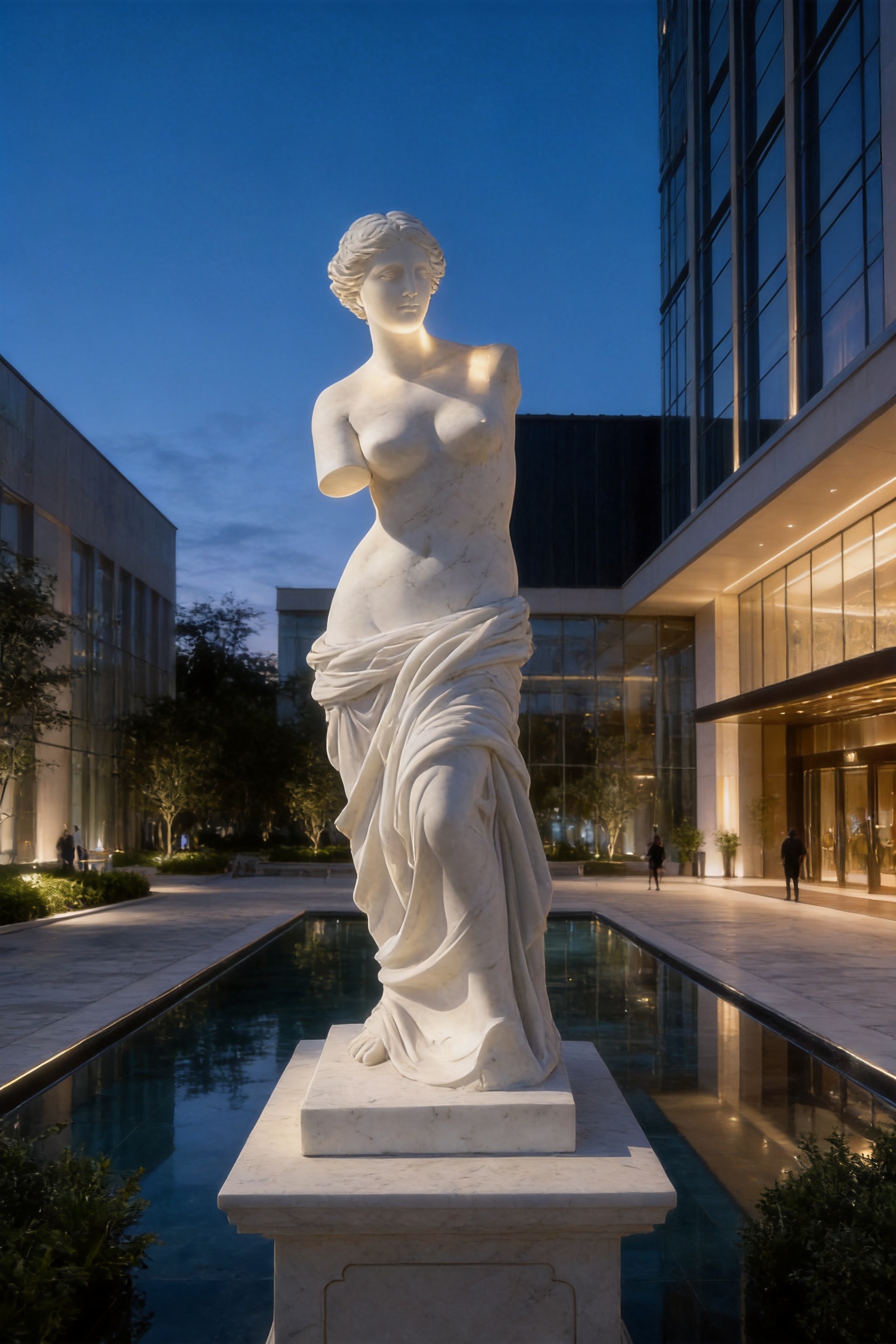
The sculpture is hand-carved from natural white marble. Its appearance is characterized by a clean white color, a warm tactile texture, and natural variation associated with genuine stone.
It represents a European classical figure style and may include artistic images such as Venus. The design emphasizes lifelike drapery, balanced proportions, human expression, and a refined classical presence.
Yes. The product is described as weatherproof and weather-resistant for long-term outdoor display. Appropriate site preparation, drainage, handling, cleaning, and maintenance remain important for preserving the artwork over time.
The total height is 2 meters and above, and the size can be fully customized. The appropriate height should be determined according to the installation site, viewing distance, surrounding architecture, and desired visual impact.
Yes. Full form customization is available. Buyers can discuss the preferred figure, pose, drapery, expression, base, proportions, and other design details with the manufacturer before production.
Natural marble offers greater material authenticity, unique geological character, stronger tactile presence, and a closer connection to the tradition of classical sculpture. Fiberglass and resin can be lighter and less expensive, but they usually provide a more standardized decorative appearance.
White marble communicates classical elegance, calmness, and permanence. Bronze offers warmth and patina, while stainless steel creates a contemporary reflective or industrial effect. The best choice depends on the architectural identity and atmosphere desired for the site.
The listed reference price is $19,800. The final cost may change according to size, form, carving complexity, marble selection, finish, base, packaging, shipping, insurance, and installation requirements.
Suggested applications include villa courtyards, plazas, art galleries, hotel clubs, landscaped entrances, private estates, cultural venues, and other locations seeking a European artistic atmosphere.
Maintenance should include gentle removal of dust and environmental deposits, periodic inspection, protection from impact, and attention to drainage. Harsh chemicals, abrasive tools, and aggressive cleaning methods should be avoided unless specifically approved by a stone-care professional.
Buyers should confirm the subject, size, pose, finish, base, natural marble characteristics, price, production schedule, packaging, shipping arrangements, insurance, installation requirements, and approval procedure.
Yes. The company’s listed product categories include bronze sculptures, stainless steel sculptures, marble sculptures, fiberglass sculptures, and weathering steel sculptures. This range may support projects requiring several materials or different artistic styles.
The European White Marble Figure Sculpture is a strong choice for buyers seeking an authentic, durable, and visually distinguished artwork. Hand-carved natural white marble gives the piece a depth and individuality that mass-produced synthetic products cannot easily reproduce. Its European classical character, realistic drapery, expressive figure, and clean white surface allow it to function equally well in traditional gardens, contemporary architectural spaces, luxury hospitality environments, galleries, and public plazas.
Its minimum height of 2 meters creates a meaningful visual presence, while full size and form customization allows the sculpture to respond to specific architectural and landscape requirements. The combination of natural material, artisan carving, progressive refinement, detailed finishing, and staged quality inspection provides a production foundation suited to premium custom projects.
Jiangsu Xinyesheng Sculpture Co., Ltd. offers this marble figure within a wider manufacturing scope that includes bronze, stainless steel, fiberglass, and weathering steel sculpture. That multi-material capability can be valuable for designers and developers who need coordinated artwork across different areas of a project. Buyers can select the material and artistic language most appropriate to each space while working with a supplier experienced in custom sculpture production.
With a listed reference price of $19,800, the sculpture is positioned as a substantial art investment rather than a disposable decoration. When supported by appropriate site planning, professional installation, considered lighting, and regular care, it can remain a defining feature of a property for many years. Its classical form and natural stone character provide lasting visual value, while customization makes it possible to create a work that is closely aligned with the identity of the space.
1. Product specification provided for the European White Marble Figure Sculpture, including material, application, customization, size, and reference price.
2. General principles of natural stone selection, carving, finishing, installation, and maintenance for architectural sculpture.
3. Historical studies of European classical figure sculpture and the use of marble in Western art and architecture.
4. Professional guidance concerning outdoor landscape artwork, foundation preparation, drainage, lighting, handling, and long-term care.
5. Comparative material knowledge covering marble, bronze, stainless steel, fiberglass, and weathering steel sculpture applications.



Daniel H.

Amanda R.

Robert B.

Jennifer S.

James W.

Barry G.

Michael T.

Emily K.

David L.

Sarah M.


Mikey XV

Jagxue

 English
 Español
 عربى
 Français
 italiano
 Deutsch