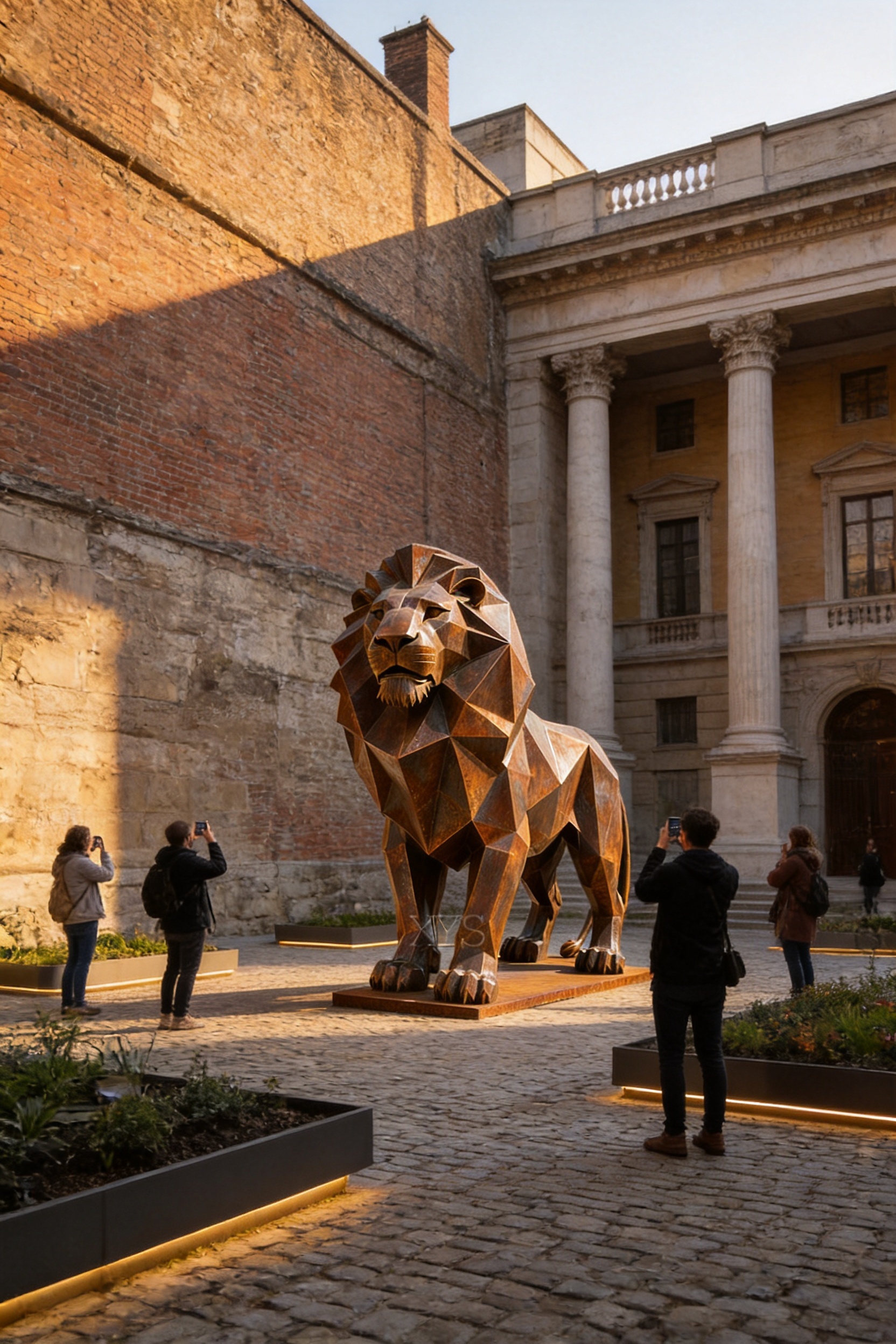
Public sculpture has the power to transform an ordinary open space into a recognizable cultural destination. In city squares, civic plazas, historical districts, cultural parks, and tourism areas, a carefully selected landmark can communicate identity, strength, heritage, and contemporary vision at the same time. The Weathering Steel Faceted Geometric Lion Animal Sculpture is designed for precisely this purpose. It combines the commanding symbolism of the lion with a crisp, architectural geometry and the naturally evolving surface of weathering steel.
Standing approximately 2 to 2.5 meters high and extending approximately 2.5 to 3 meters in length, this sculpture offers a substantial presence without overwhelming the surrounding architectural environment. Its scale enables it to function as a visual anchor in an open plaza, while its angular profile gives viewers a memorable image from multiple directions. The listed price range is approximately US$5,122.01 to US$8,451.31, depending on final specifications, size, detailing, finish, and project requirements.
Unlike conventional stone lions or mass-produced decorative statues, this work interprets a traditional guardian image through contemporary metal fabrication. Its folded planes, sharp transitions, and faceted silhouette create a dynamic visual rhythm. At the same time, its rust-colored weathering steel surface introduces warmth and historical depth, allowing the sculpture to complement brick, stone, concrete, glass, and classical architectural façades.
Produced by Jiangsu Xinyesheng Sculpture Co., Ltd., the sculpture reflects the company’s focus on custom metal statuary and large-scale artistic fabrication. The company provides sculpture production from China and serves projects requiring distinctive outdoor metal artwork, custom dimensions, and a strong relationship between material, form, and site.
Content
The lion has appeared in civic monuments, palace entrances, religious buildings, heraldic imagery, and public art for centuries. It is commonly associated with courage, guardianship, authority, dignity, and protection. In a municipal setting, a lion sculpture can therefore communicate a sense of permanence and collective confidence. It can also become a landmark that visitors use to recognize a particular square, cultural district, or historical location.
This sculpture preserves the recognizable character of the lion while moving away from traditional realism. Rather than reproducing every anatomical detail with a smooth surface, it reduces the animal into a series of carefully organized geometric facets. The mane, head, shoulders, chest, legs, and body are expressed through planes and edges. This approach creates an image that remains readable as a lion but also functions as an abstract metal composition.
The result is especially suitable for sites where historic symbolism and modern design must coexist. A classical building may require an artwork with a dignified and monumental presence, but a newly developed public square may benefit from a more contemporary visual language. The faceted lion bridges these two requirements. Its subject is familiar and culturally resonant, while its surface treatment is modern, architectural, and visually distinctive.
From a distance, the sculpture reads as a strong, recognizable animal form. At closer range, viewers discover changes in plane, shadow, seam, and texture. Natural light moves across the surfaces throughout the day, producing different tonal effects in the morning, at noon, and near sunset. Artificial lighting can further emphasize the angular structure by projecting dramatic shadows across the body and ground.
Geometric faceting provides more than an unconventional appearance. It gives the sculpture a clear visual structure that can be appreciated from multiple viewpoints. Traditional sculptures often rely on rounded modeling and continuous transitions. A faceted design instead uses controlled breaks in the surface, allowing each plane to catch light differently.
This treatment is particularly effective in open urban environments. A sculpture placed in a large square must remain legible from a distance, even when surrounded by paving, landscaping, street furniture, vehicles, and architectural façades. Broad angular planes create a bold silhouette that is less likely to disappear into the background. The lion’s head, shoulders, and body remain visually readable across a range of viewing distances.
Faceted geometry also helps the sculpture communicate energy. A smooth lion may appear formal and static, while the angular design suggests movement, tension, and controlled power. The edges give the body a sense of forward momentum and strengthen the impression of a living guardian. This quality can make the sculpture more engaging for photographs, tourism promotion, and social media sharing.
Another benefit is the relationship between form and fabrication. Flat or gently angled steel panels can be digitally planned, cut, shaped, and assembled into a complex three-dimensional body. The process makes it possible to create a large sculpture with a strong visual effect while maintaining control over weight, internal structure, and material use.
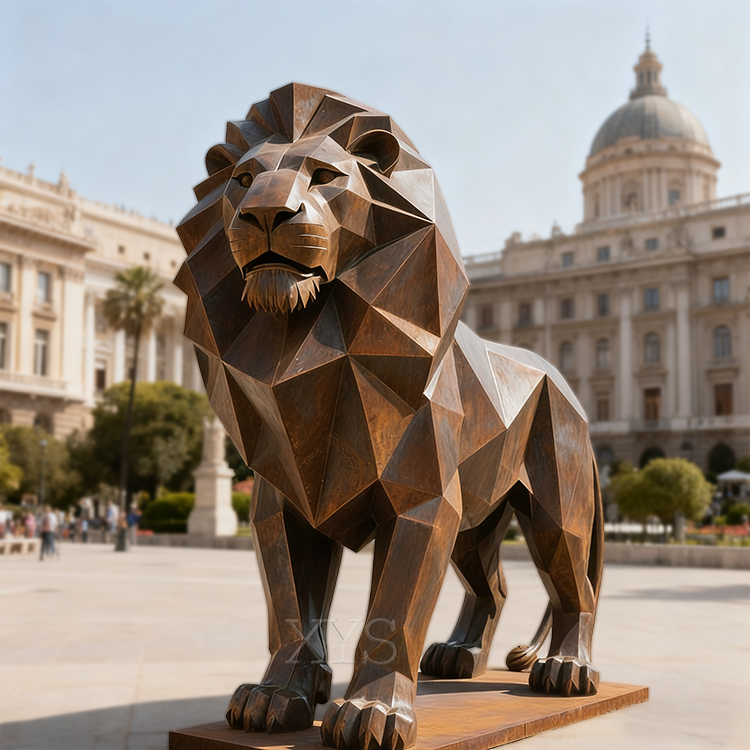
Weathering Steel Faceted Geometric Lion Animal Sculpture
The central material advantage of this lion sculpture is weathering steel. Unlike ordinary painted mild steel, weathering steel is designed to develop a stable protective patina when exposed to suitable outdoor conditions. Over time, the surface changes from a relatively fresh metallic appearance to deeper shades of orange, copper, brown, and rust red.
This naturally developing finish gives the sculpture a sense of time and place. Instead of remaining visually unchanged, the surface gradually responds to the surrounding environment. The effect can make the sculpture appear increasingly integrated with its setting, especially when it is installed near natural stone, brick, timber, earth, or mature landscaping.
Under appropriate exposure conditions, the patina acts as a protective layer that helps reduce continued corrosion of the underlying steel. This is why weathering steel is widely considered for outdoor structures, landscape features, architectural elements, and public artworks. The material is valued for its combination of structural strength, distinctive appearance, and reduced dependence on conventional repainting.
For public art purchasers, reduced maintenance can be a major advantage. A sculpture installed in a civic square may be difficult or expensive to access for repainting. It may also be exposed to dust, sunlight, wind, rain, and seasonal temperature changes. A weathering steel surface can reduce the need for regular coating renewal when the sculpture is properly designed, fabricated, installed, and placed in an environment suitable for weathering steel.
The product information indicates an outdoor service life exceeding 25 years and describes the sculpture as requiring no additional painting or routine maintenance under appropriate conditions. Actual performance depends on climate, drainage, pollution levels, salt exposure, contact with continuously damp surfaces, and installation details. For coastal or heavily salted environments, site-specific engineering and material recommendations should be confirmed before production.
The changing surface is one of the sculpture’s most distinctive artistic features. A painted sculpture receives its final color during production, but a weathering steel sculpture continues to develop after installation. This process can produce a layered appearance that reflects the passage of time.
In the early stages, the finish may appear brighter and more varied. As oxidation progresses, the color typically becomes richer and more settled. The result is not necessarily uniform, and variations may occur across exposed planes, edges, weld areas, and sheltered sections. These differences contribute to the authenticity of the material and help prevent the sculpture from looking mechanically manufactured.
For architects, landscape designers, and municipal planners, this quality can support a broader design narrative. The sculpture can symbolize continuity, heritage, or the relationship between a new public project and the history of its location. Its material evolution becomes part of the artwork rather than a sign of deterioration.
Traditional stone lions have a strong connection to history and ceremonial architecture. They can be highly durable and visually impressive, but they are also heavy, difficult to transport, and often dependent on intensive carving or casting processes. Their mass can create additional requirements for foundations, lifting equipment, shipping, and installation.
The faceted weathering steel lion offers a lighter and more flexible alternative. Its hollow or panel-based construction can reduce material weight compared with a solid stone block of similar visual size. Lower weight may simplify transportation and on-site positioning, although foundation and anchoring requirements must still be professionally assessed for each project.
Stone also tends to communicate permanence through mass and smooth or carved surfaces. Weathering steel communicates permanence differently. It uses a strong structural material and a changing patina to create a monument that feels both durable and contemporary. This makes it more suitable for projects that want a cultural symbol without reproducing a historical statue literally.
Painted steel offers another comparison. Painted finishes can provide almost any color, but they require careful surface preparation, coating application, inspection, and periodic renewal. Scratches, impact damage, ultraviolet exposure, and moisture can lead to maintenance requirements. Weathering steel eliminates the need for a conventional decorative paint system and provides a natural color range that is particularly compatible with outdoor architecture.
Mass-produced fiberglass sculptures can be lightweight and economical, but they may not offer the same structural character or material depth as steel. Fiberglass can also require specialized repairs if its surface is damaged. Weathering steel provides a more substantial tactile and visual presence, which is valuable for a landmark intended to remain in a public space for many years.
| Comparison Factor | Weathering Steel Faceted Lion | Traditional Stone Lion | Painted Steel Lion | Fiberglass Lion |
|---|---|---|---|---|
| Visual language | Contemporary, angular, architectural | Classical, carved, monumental | Flexible, depending on paint color | Flexible, often smooth or molded |
| Surface development | Natural rust-colored patina evolves over time | Usually stable, with gradual natural aging | Color remains stable but coatings may weather | Surface may require protection and repair |
| Outdoor maintenance | Low maintenance under suitable conditions | Generally low, but cleaning and stone care may be needed | Periodic coating inspection and renewal may be required | Inspection and surface repair may be required |
| Weight considerations | Potentially lighter panel-based construction | Very heavy due to solid stone mass | Varies with internal structure | Usually lightweight |
| Customization potential | Strong potential for custom geometry and dimensions | Custom carving can be time-consuming | Strong potential with fabrication expertise | Strong molding potential, depending on tooling |
| Architectural compatibility | Works with classical, industrial, landscape, and modern settings | Best suited to traditional or monumental contexts | Depends heavily on color and coating design | Often more decorative or contemporary |
The sculpture is designed for landmark applications rather than small indoor decoration. Its size and symbolic subject make it appropriate for public areas where people can view it from several directions and where the artwork can participate in the identity of the site.
In a city square, the lion can serve as a central focal point, a gateway marker, or a visual counterpoint to surrounding buildings. Its strong silhouette can help organize an otherwise open space. It may be positioned near a central axis, at the end of a pedestrian route, beside a fountain, or within a landscaped island.
Because the sculpture has a formal and powerful character, it can support civic themes without relying on text or signage. Visitors can understand its presence intuitively through the established cultural meaning of the lion. The contemporary facets then distinguish the work from ordinary symbolic statuary.
The warm, rust-colored appearance of weathering steel can complement brick walls, stone façades, aged masonry, and other historic materials. Instead of attempting to imitate old stone, the sculpture creates a deliberate contrast between heritage architecture and present-day design.
This contrast should be carefully planned. The sculpture may work best when placed in a courtyard, forecourt, garden, or adjacent public space rather than directly against a delicate historic façade. A professional site plan should consider sightlines, pedestrian circulation, drainage, lighting, and the possibility of runoff from the weathering surface during early patination.
A distinctive animal sculpture can become a memorable meeting point and photographic landmark. The lion’s recognizable form attracts attention, while the faceted construction gives the image a unique identity. Cultural parks, museum precincts, tourism developments, creative districts, and public gardens can use the sculpture to reinforce a sense of place.
For tourism projects, a landmark does not need to be covered in text or branding to become recognizable. A strong silhouette and unusual material can create an image that visitors remember and share. The sculpture can also be incorporated into seasonal lighting, festivals, public art trails, and educational programs about metal, design, and urban culture.
Hotels, resorts, business parks, universities, headquarters, and mixed-use developments may use a sculpture of this type at an entrance or central courtyard. The lion’s symbolism can suggest confidence and protection, while the custom-made nature of the artwork distinguishes the site from standard commercial landscaping.
When used in a private development, the sculpture should be integrated into the broader master plan. Paving materials, planting schemes, lighting temperatures, signage, and building finishes can all influence how the weathering steel is perceived. A well-planned installation can make the artwork appear to belong naturally to the site rather than being added as an afterthought.
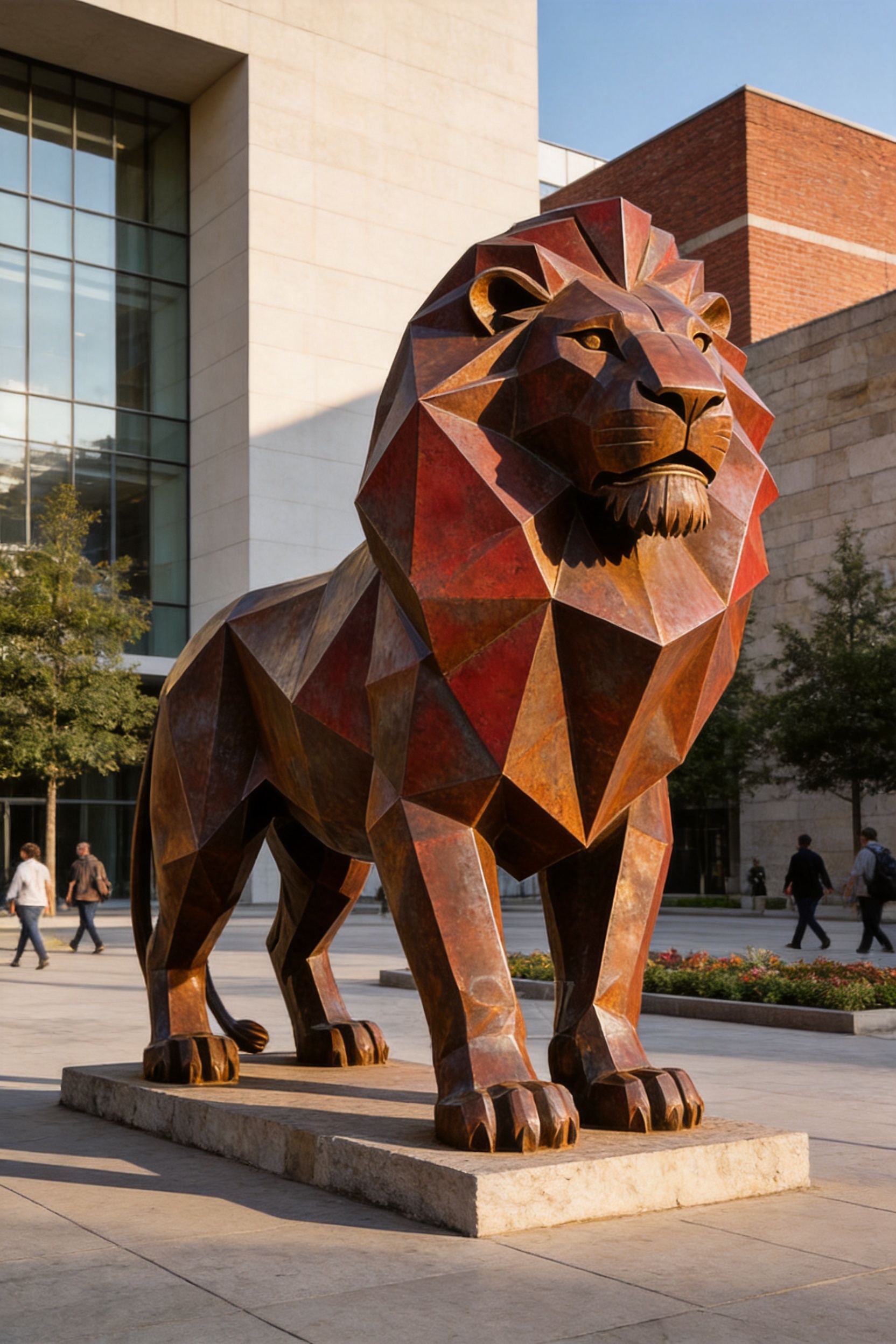
The listed dimensions provide a practical starting point for a medium-to-large outdoor landmark. A height of 2 to 2.5 meters gives the lion a strong human-scale relationship while remaining suitable for many plazas, entrances, and landscaped environments. A length of 2.5 to 3 meters allows the body to appear substantial without requiring an exceptionally large site.
Custom sculpture projects may require adjustments to height, length, width, posture, facial expression, mane geometry, base design, or degree of abstraction. The final proportions should be reviewed in relation to the viewing distance and the surrounding architecture. A sculpture placed at the center of a large square may need greater scale than one installed beside a building entrance.
Customization can also address practical site conditions. The sculpture may be designed with a concealed base plate, internal reinforcement, removable access panels, lifting points, or a foundation connection suited to the installation plan. These details should be determined before production so that the artwork, packaging, transport, and foundation work are coordinated.
Clients may also request modifications to the patina appearance. Weathering steel naturally develops its finish, but the initial surface treatment and preparation can influence the early visual result. Some projects prefer a relatively bright orange tone, while others seek a deeper brown-red appearance. The expected color development should be discussed as part of the approval process.
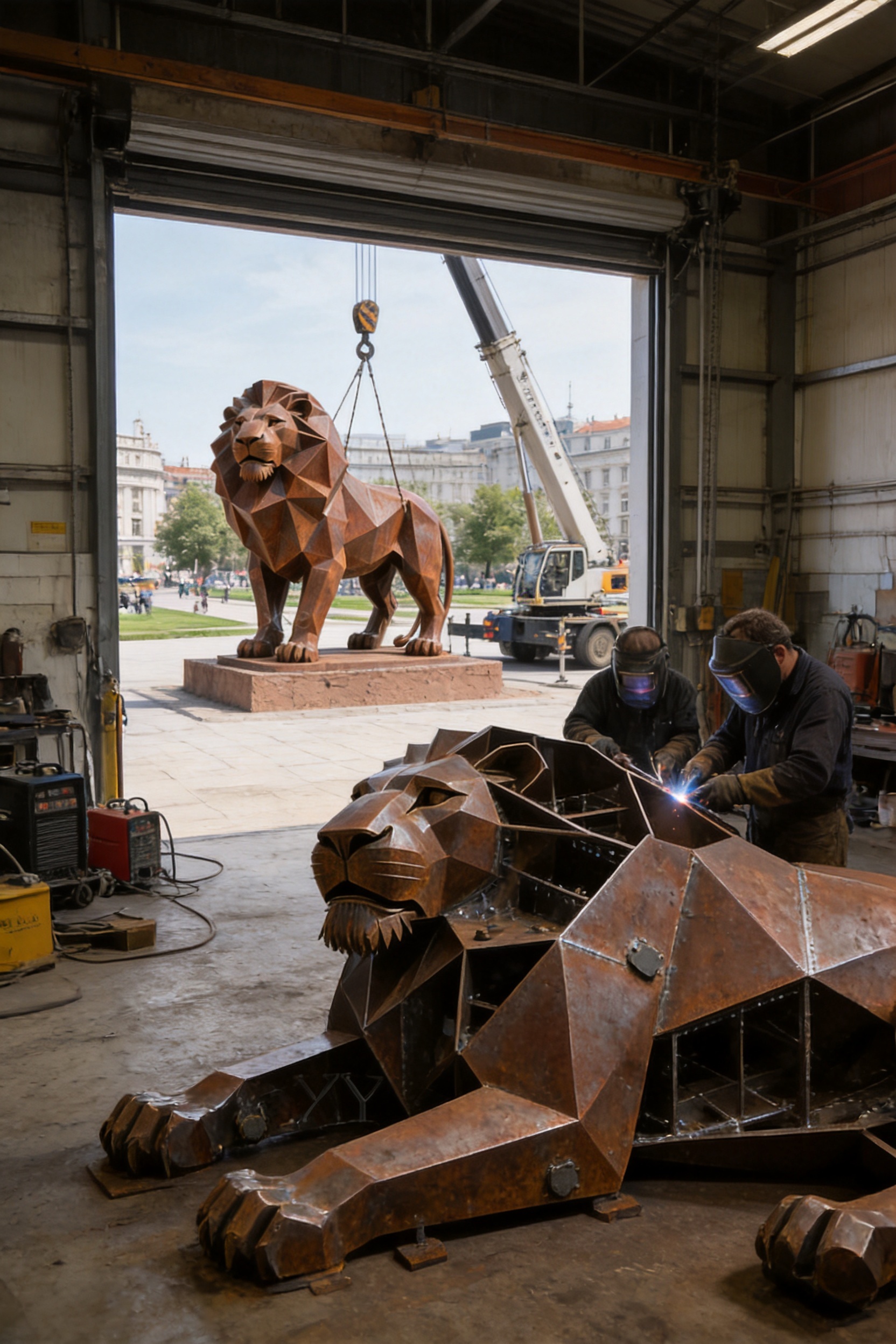
Large metal sculpture requires more than artistic modeling. It demands coordinated design, accurate fabrication, structural planning, skilled welding, surface preparation, inspection, and careful logistics. Jiangsu Xinyesheng Sculpture Co., Ltd. focuses on custom metal statues and sculpture manufacturing, making this type of project suitable for a production workflow that combines design interpretation with practical fabrication.
The production process begins with an agreed concept and a clear set of project requirements. These may include the desired dimensions, viewing angles, site conditions, material preference, finish, delivery location, and budget. The lion’s form can then be developed into a structured design that defines the major planes, edges, openings, and support points.
Digital planning is especially valuable for a faceted sculpture. A three-dimensional model can help establish proportion and symmetry while preserving intentional asymmetry where appropriate. It can also help identify how individual panels meet and how the geometry will be divided for cutting, forming, assembly, and transport.
Before fabrication, the design may be reviewed through drawings, digital renderings, dimensions, and material specifications. This stage allows the client to confirm the overall character of the lion and reduces the risk of costly changes after cutting or welding has begun.
Weathering steel must be selected with consideration for outdoor exposure and the intended structural role of each component. Panels, internal supports, base plates, and connection elements should be specified according to the size and location of the sculpture.
For a faceted form, accurate panel preparation is important. Each section must correspond correctly with adjacent sections so that the final planes align and the silhouette remains clean. Computer-guided cutting can improve repeatability, especially when multiple panels share related angles or contours. Edges can then be prepared for assembly and welding.
Efficient material planning may also reduce unnecessary waste. A well-organized cutting layout can make better use of steel sheets while maintaining the required strength and visual quality. This is an important advantage for custom manufacturing because every project may involve different dimensions and geometric requirements.
After cutting, panels are formed or positioned to create the three-dimensional body. Depending on the geometry, some sections may remain relatively flat while others require controlled bending or shaping. Temporary fixtures and internal supports can help maintain alignment during assembly.
Welding is a critical stage because it affects both structural integrity and appearance. The weld sequence should be planned to control distortion and preserve the intended angles. Excessive heat in one area can cause movement or unevenness, so experienced fabricators use appropriate procedures, staging, and inspection methods.
Once the main body has been assembled, welds may be checked, cleaned, and refined where necessary. The goal is not to erase every sign of fabrication, since a metal sculpture can appropriately reveal aspects of its construction, but to ensure that seams, edges, and transitions support the artistic design rather than distract from it.
A public sculpture must remain stable under expected environmental forces. Wind exposure, height, center of gravity, anchoring, internal framing, and foundation design all influence safety. A hollow metal body can be lighter than a solid stone sculpture, but it still requires adequate reinforcement and secure attachment to the site.
For this reason, the internal structure should be developed in coordination with the final dimensions and installation conditions. A sculpture installed in an exposed coastal plaza may require different considerations from one placed in a sheltered courtyard. The production team and the client’s local engineer should review the foundation, anchor arrangement, access requirements, and lifting plan.
Weathering steel should be prepared so that the intended patina can develop consistently. Fabrication residues, contaminants, and unsuitable surface coatings may interfere with the weathering process. The final treatment should therefore be aligned with the material’s natural behavior rather than treated like a conventional painted steel product.
Edges, weld areas, concealed cavities, and drainage points deserve special attention. Water should not be allowed to collect inside the sculpture or remain trapped against the foundation. Proper detailing can support long-term durability and reduce the risk of localized corrosion or staining of adjacent surfaces.
The company’s strength in custom sculpture production lies in coordinating artistic form with practical fabrication. A successful result is not only visually impressive; it must also be manufacturable, transportable, installable, and appropriate for long-term outdoor exposure.
For an international sculpture project, production quality includes more than the finished object. It also includes communication, documentation, packaging, loading, delivery coordination, and installation guidance. These aspects are particularly important for a large sculpture because damage or uncertainty during transport can create delays at the destination.
A professional manufacturing workflow should include confirmation of dimensions, material, finish, connection method, packing requirements, and delivery responsibilities. Product photographs or inspection records may be used to document the finished sculpture before shipment. Where the project requires it, the supplier and purchaser can also coordinate installation drawings and lifting instructions.
Large metal sculptures are commonly divided into transportable sections when the overall size or shipping route makes one-piece delivery impractical. The faceted construction of this lion can potentially support planned sectional fabrication, provided that the joints and reassembly method are incorporated into the design from the beginning. This approach can make handling more manageable while maintaining the appearance of a unified artwork after installation.
The company’s location in Jiangsu, China, places it within a major manufacturing region with access to metalworking, fabrication, logistics, and export services. Its stated product focus includes bronze sculptures, stainless steel sculptures, marble sculptures, fiberglass sculptures, and weathering steel sculptures. This broader category experience can be useful for clients comparing materials or developing a group of artworks for the same project.
Although the sculpture is designed for outdoor use, the site should be prepared carefully. The foundation must be suitable for the sculpture’s weight, dimensions, wind exposure, and local ground conditions. Anchor bolts or other connection systems should be installed according to approved drawings, with adequate alignment and corrosion protection.
Drainage is essential. Water should be able to leave the site around the base, and the sculpture should not sit in a location where it is continuously exposed to standing water. If the artwork is installed on paving, the design team should consider how early patina runoff may affect light-colored stone or concrete. A small separation, drainage channel, or carefully selected base detail can help manage this issue.
Pedestrian safety should also be considered. Sharp-looking facets can create a powerful visual effect, but accessible areas may require attention to edge height, corner treatment, circulation distance, and protective landscaping. The sculpture should be positioned so that visitors can appreciate it without creating avoidable collision or climbing risks.
Lighting can significantly enhance the lion’s geometric character. Grazing light from a low angle can emphasize the planes and create strong shadow lines. Softer frontal lighting can reveal the warm surface color while preserving the overall silhouette. The lighting system should be designed to avoid excessive heat, glare, or visual competition with nearby buildings.
Weathering steel can support a lower-maintenance approach to public art. The absence of a conventional paint system reduces the need for periodic repainting, color matching, and coating removal. This can lower long-term labor requirements and minimize disruption to a busy public space.
Maintenance does not mean that the sculpture should never be inspected. Periodic visual checks are recommended to confirm that drainage remains open, anchors are secure, the foundation is stable, and no unusual corrosion or physical damage has occurred. Cleaning may be appropriate if the sculpture is exposed to heavy dust, industrial deposits, bird activity, or accidental markings.
In suitable environments, the natural patina reduces the need for repeated surface intervention. This can also support the sustainability goals of projects seeking durable materials with long service intervals. The sculpture’s long-life design means that its environmental value should be considered over the entire ownership period, including transportation, installation, inspection, and eventual site redevelopment.
It is important to distinguish natural patination from uncontrolled corrosion. Weathering steel performs best when the surface can alternate between wet and dry conditions and when water does not remain trapped. Locations with constant humidity, high salt concentration, or persistent moisture may require additional assessment. A site-specific recommendation is therefore part of responsible material selection.
The listed price range of US$5,122.01 to US$8,451.31 places the sculpture within the budget range of many commercial, municipal, cultural, and landscape projects seeking a custom outdoor centerpiece. The final quotation will depend on the confirmed size, steel thickness, internal structure, surface treatment, packaging, transportation, and installation requirements.
Price should be evaluated together with service life and maintenance. A lower initial price for a painted or less durable material may be followed by recurring costs for repainting, repairs, access equipment, and site closures. Weathering steel can provide stronger lifecycle value when the project prioritizes durability, distinctive appearance, and reduced surface maintenance.
The sculpture also creates intangible economic value. A successful landmark can increase the attractiveness of a public area, support visitor engagement, strengthen a development’s identity, and provide a recognizable image for promotional materials. These benefits are difficult to calculate precisely, but they are important in tourism, hospitality, cultural, and mixed-use projects.
Working with a custom manufacturer offers advantages over selecting a generic catalog item. A custom producer can adjust the artwork to match the site, coordinate dimensions with shipping limits, recommend an appropriate structure, and respond to specific material or finish requirements.
Jiangsu Xinyesheng Sculpture Co., Ltd. presents itself as a China-based sculpture manufacturer and supplier specializing in custom design metal statues and European-style sculpture. Its product range covers multiple sculpture materials, while this lion demonstrates its ability to combine traditional subject matter with a modern metal aesthetic.
The company’s manufacturing strength is particularly relevant to projects that require more than a simple decorative object. The faceted lion involves the interpretation of an artistic concept, the control of complex geometry, the fabrication of large steel components, the management of outdoor material behavior, and the preparation of a product suitable for international delivery.
For purchasers, the most valuable advantage is coordinated execution. Design, material, fabrication, quality review, packing, and delivery should work as one process. A manufacturer experienced in these stages can help reduce the communication gaps that sometimes occur when design, metal fabrication, finishing, and logistics are handled by unrelated suppliers.
Clients considering this sculpture should begin by providing the intended site, approximate dimensions, preferred viewing direction, installation environment, and target delivery date. Photographs, architectural drawings, landscape plans, or simple site measurements can help the manufacturer understand the context.
The next stage should confirm the design. The buyer can review the lion’s posture, facial expression, degree of geometric abstraction, mane pattern, base arrangement, and overall proportions. If the sculpture is part of a larger public art program, the design may also need to be compared with other planned works.
Material and finish should then be documented. The purchaser should confirm that weathering steel is required, whether the sculpture will be allowed to develop its natural patina, and whether any special protective or drainage measures are necessary. The expected appearance at delivery may differ from the appearance after several months of outdoor exposure.
Before production, the quotation should identify the scope of supply. Important items include the artwork itself, internal support, base plate, anchor hardware, packaging, export documentation, shipping, unloading, installation, and local engineering. Clarifying these details helps prevent unexpected costs.
Finally, the customer and manufacturer should agree on inspection and approval procedures. Digital previews, production photographs, dimensional checks, and pre-shipment inspection can help ensure that the finished sculpture meets the approved design.
The sculpture is primarily intended as a landmark art installation for city squares, civic plazas, historical buildings, cultural districts, tourism areas, and other prominent outdoor spaces. It combines the symbolic meaning of the lion with a contemporary geometric appearance.
The listed height is approximately 2 to 2.5 meters, and the listed length is approximately 2.5 to 3 meters. Final dimensions can be discussed for projects requiring a different scale or proportion.
Weathering steel develops a protective rust-colored patina under suitable outdoor conditions. This surface can help reduce further corrosion and eliminates the need for a conventional decorative paint system in many applications. It also gives the artwork a natural appearance that changes over time.
The product is designed to use the natural appearance of weathering steel rather than an additional painted finish. The product information describes it as requiring no additional painting or regular maintenance under appropriate conditions. Site climate, salt exposure, drainage, and local environmental factors should still be evaluated.
A traditional stone lion generally relies on carved mass and rounded or detailed modeling. This sculpture uses angular planes, sharp transitions, and modern geometric reduction. It retains the lion’s recognizable symbolism while creating a more contemporary architectural appearance.
Custom production can typically address dimensions, proportions, posture, detailing, base design, structural requirements, and installation conditions. The final customization scope should be confirmed during design review and quotation.
Potential locations include city squares, public plazas, historical districts, museum grounds, cultural parks, tourism developments, hotel entrances, commercial complexes, universities, business parks, and landscaped civic spaces.
Weathering steel can be used outdoors, but coastal locations with high salt exposure require additional evaluation. Salt and constant humidity may influence patina development and corrosion performance. The site should be reviewed before material approval and installation.
Although the sculpture is designed for low maintenance, periodic inspections are advisable. Owners should check drainage, anchoring, structural condition, foundation stability, and accidental damage. Cleaning may be needed in locations with heavy dust, pollution, or vandalism.
The provided product information indicates an outdoor lifespan exceeding 25 years. Actual service life depends on material quality, fabrication, installation, drainage, climate, pollution, salt exposure, and the level of inspection provided.
The listed price range is approximately US$5,122.01 to US$8,451.31. The final amount may vary according to size, steel specification, structural design, finish, packing, shipping, and installation requirements.
Important capabilities include design interpretation, digital geometric planning, accurate steel cutting, panel forming, controlled welding, internal reinforcement, surface preparation, dimensional inspection, protective packing, and international shipment coordination.
The lion is a traditional and recognizable symbol, while the faceted weathering steel construction is contemporary. Its warm rust color can complement historic materials such as stone and brick, and its angular geometry can connect naturally with modern buildings and public design.
The Weathering Steel Faceted Geometric Lion Animal Sculpture offers a distinctive alternative to conventional stone, painted metal, and fiberglass statuary. Its greatest strength is the combination of symbolic depth, modern geometry, structural steel fabrication, and a naturally evolving outdoor surface.
With a height of approximately 2 to 2.5 meters, a length of approximately 2.5 to 3 meters, and a listed price range of US$5,122.01 to US$8,451.31, it is suitable for a wide range of landmark projects. The sculpture can define a civic square, strengthen the identity of a cultural district, enhance a historical setting, or create a recognizable entrance for a commercial or institutional development.
Its weathering steel surface is more than a practical finish. The changing rust-colored patina becomes part of the artwork, allowing the sculpture to accumulate visual character as it remains outdoors. Its faceted lion form similarly balances tradition and innovation, ensuring that the work is recognizable while avoiding the appearance of a standard reproduction.
Through custom design, metal fabrication, structural coordination, surface preparation, and export support, Jiangsu Xinyesheng Sculpture Co., Ltd. can provide a practical manufacturing route for buyers seeking a durable and visually powerful public artwork. Proper site assessment, drainage, anchoring, and installation planning will help the sculpture achieve its intended service life and landmark presence.
1. General principles of outdoor public sculpture design, including scale, viewing distance, pedestrian circulation, and site integration.
2. Technical literature on weathering steel, atmospheric corrosion resistance, protective patina formation, and environmental suitability.
3. Standard practices for architectural steel fabrication, panel assembly, welding control, dimensional inspection, and structural reinforcement.
4. Landscape architecture guidance concerning public plazas, historical settings, drainage, lighting, paving protection, and sculpture foundations.
5. Product specifications supplied for the Weathering Steel Faceted Geometric Lion Animal Sculpture, including dimensions, material characteristics, service-life statement, and price range.
6. General international procurement practices for custom sculpture, including design approval, packaging, shipment coordination, installation planning, and pre-delivery inspection.
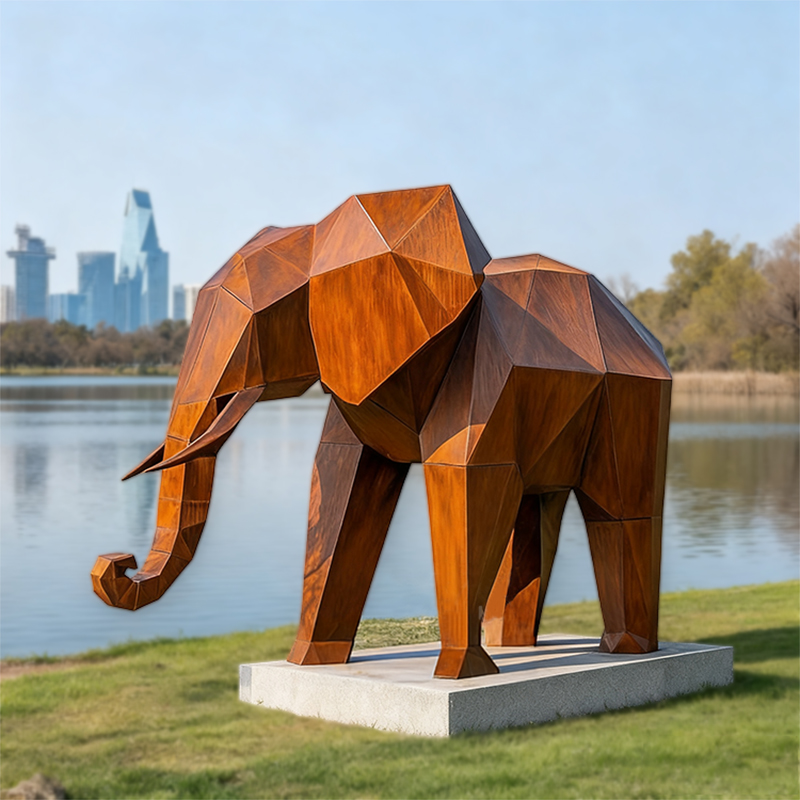 Weathering Steel Faceted Geometric Elephant Animal Sculpture
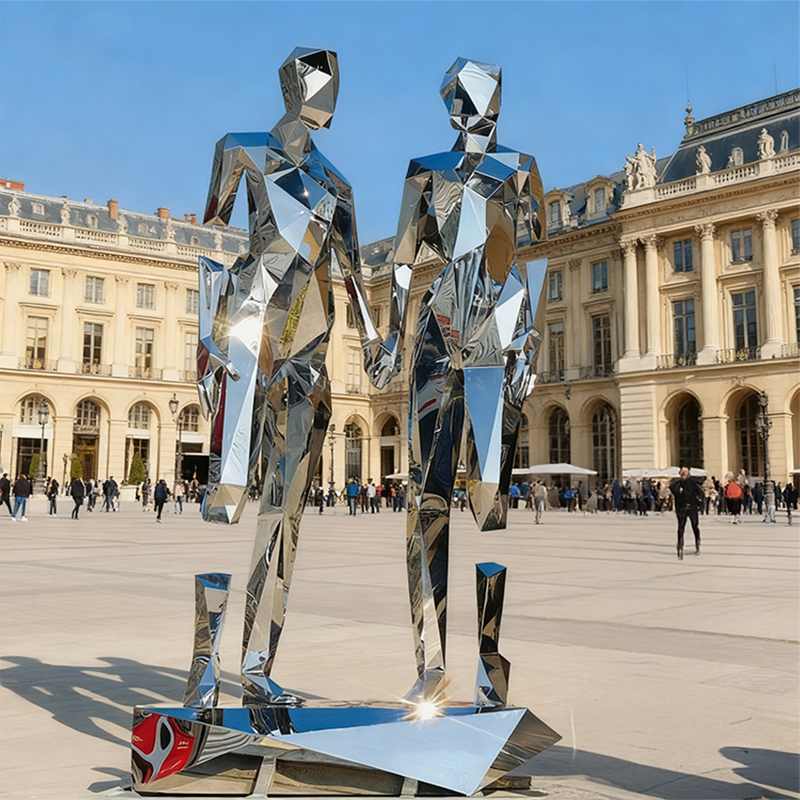 Geometric Faceted Mirror Stainless Steel Double Figure Sculpture
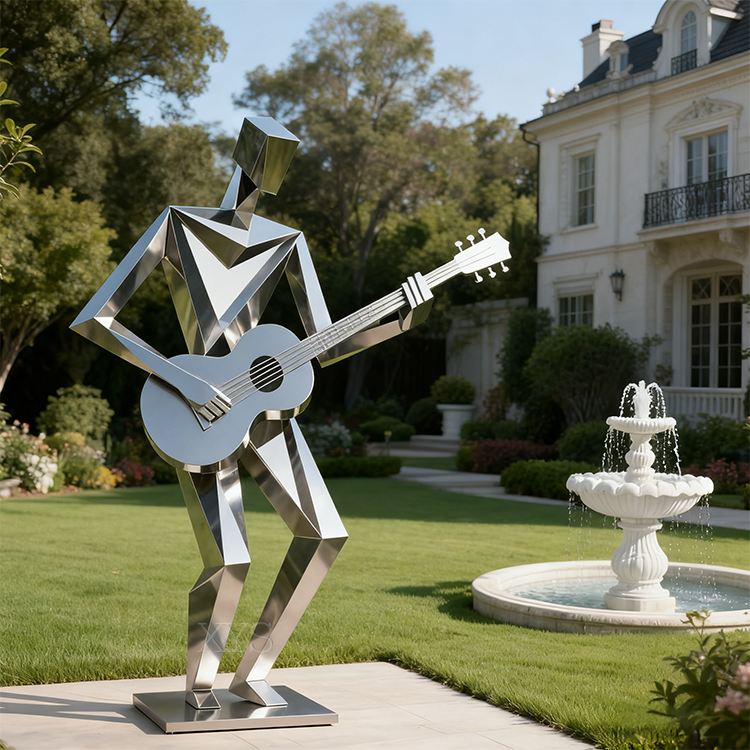 Geometric Faceted Stainless Steel Guitarist Sculpture
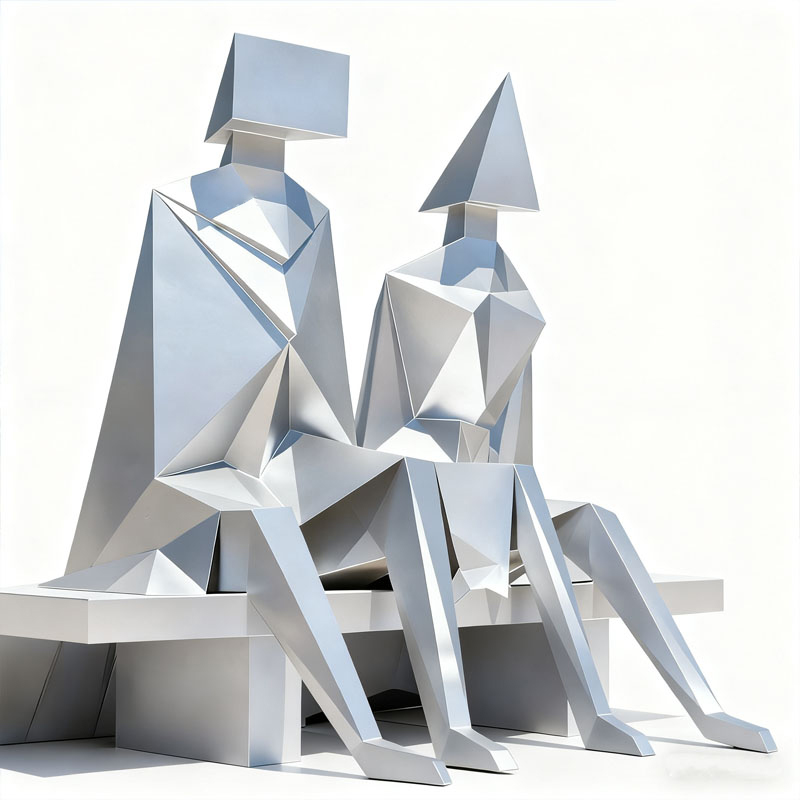 Geometric Stainless Steel Human Figure Sculpture
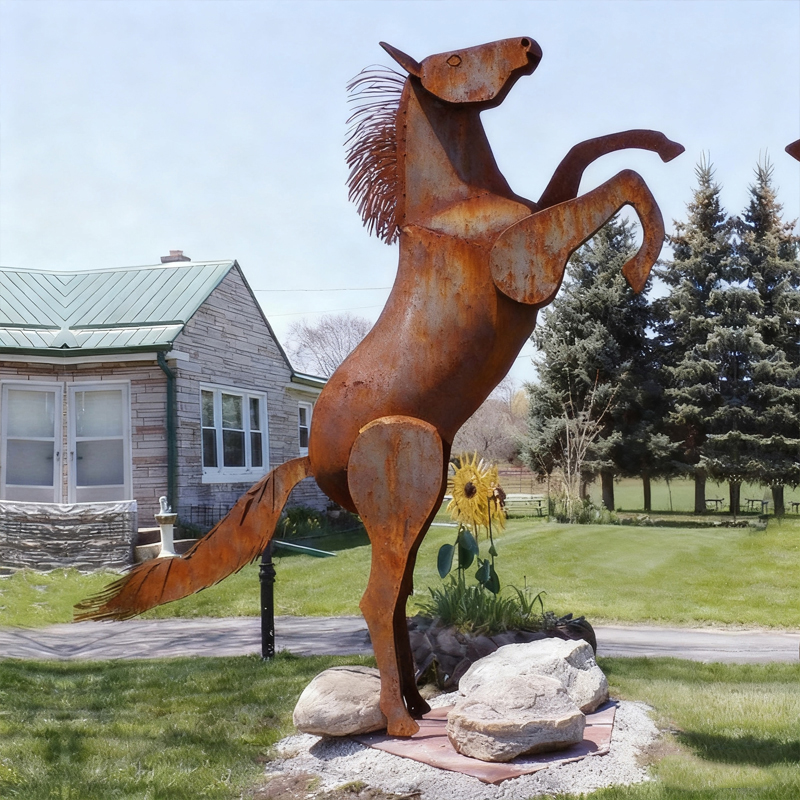 Weathering Steel Galloping Horse Animal Sculpture
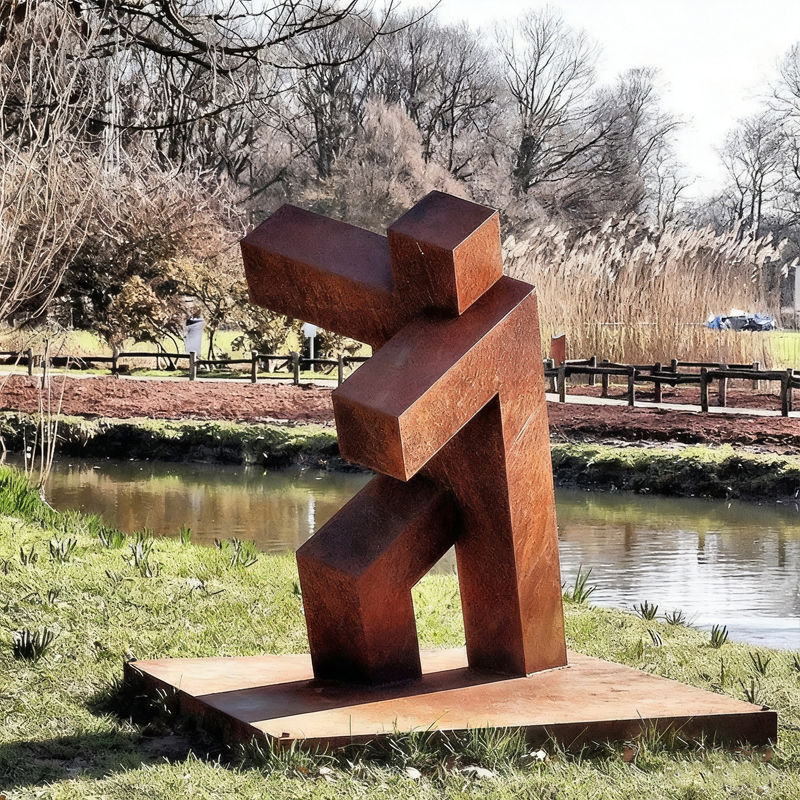 Abstract Weathering Steel Decorative Sculpture



Daniel H.

Amanda R.

Robert B.

Jennifer S.

James W.

Barry G.

Michael T.

Emily K.

David L.

Sarah M.


Mikey XV

Jagxue

 English
 Español
 عربى
عربى Français
 italiano
 Deutsch