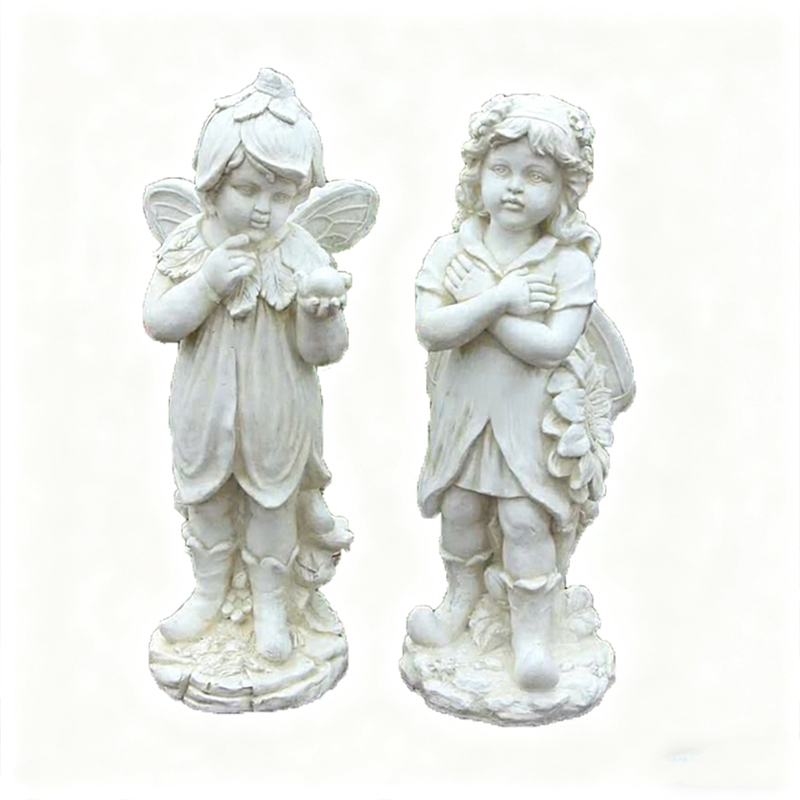
Fiberglass Human Sculpture of a Little Angel
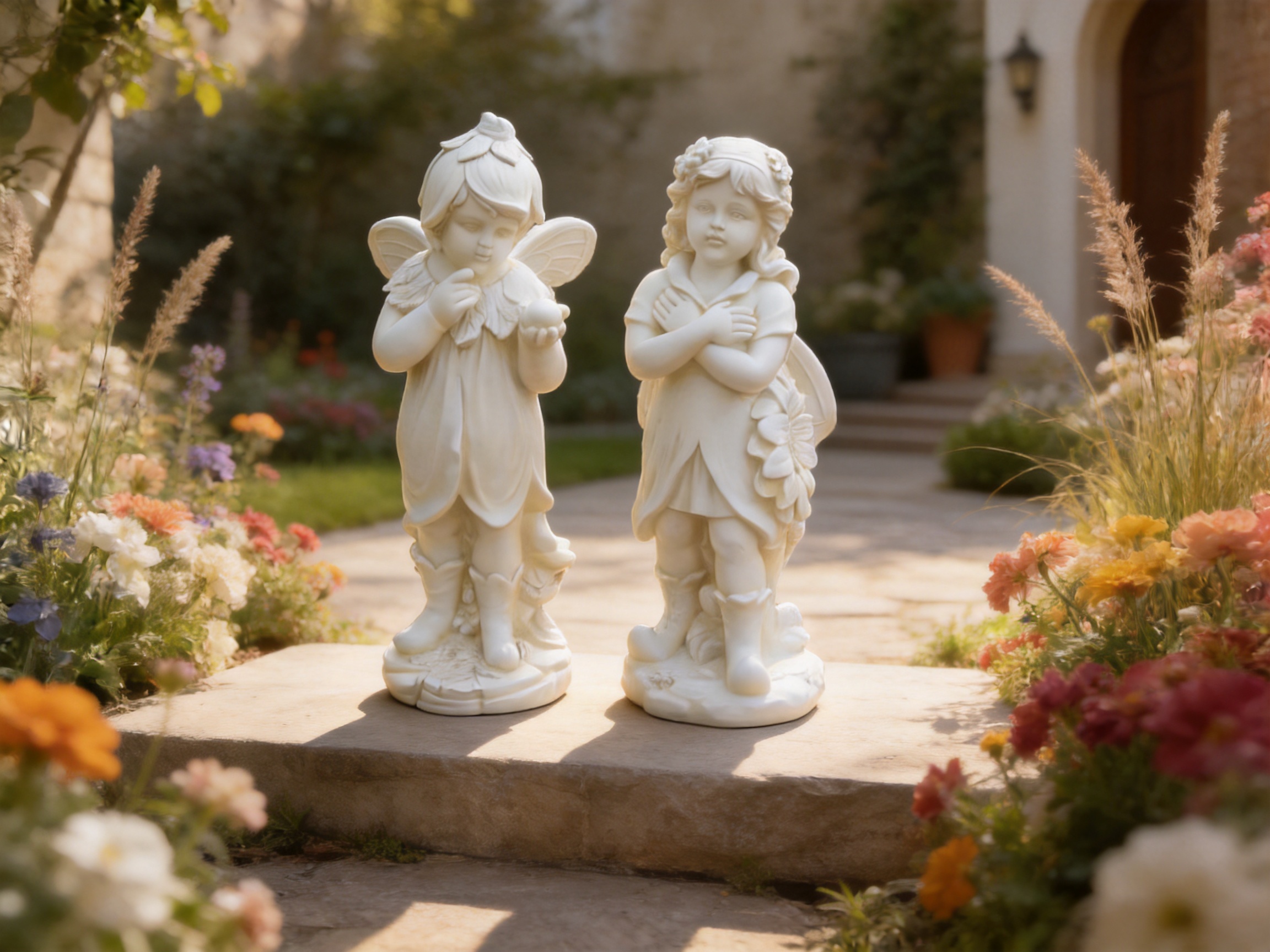
Small-scale decorative sculpture can transform an ordinary corner into a place with character, warmth, and emotional appeal. The Fiberglass Human Sculpture of a Little Angel is designed for exactly this purpose. Presented as a pair of childlike angel figures, the sculptures combine soft, adorable forms with lively wings and a compact scale that fits naturally into gardens, balconies, patios, entryways, living rooms, bedrooms, cafés, boutique hotels, and other welcoming environments.
Unlike heavy stone or metal statues that may require permanent foundations, specialized handling, or considerable installation work, this fiberglass angel pair offers a practical alternative for decorators, homeowners, landscape designers, hospitality businesses, and commercial display professionals. The material is relatively lightweight, the dimensions are manageable, and the sculptures can be moved or rearranged as a space evolves. At the same time, fiberglass provides useful resistance to ordinary outdoor exposure, including sunlight and rain, making the pieces suitable for both interior and exterior applications.
The design is especially effective where the atmosphere is intended to feel pastoral, fairytale-inspired, gentle, or emotionally comforting. The fluffy folds, youthful proportions, and expressive wings create a friendly visual presence rather than a formal or imposing one. Used together, the two angels can form a small narrative scene. Used separately, each figure can add a decorative focal point to a shelf, flowerbed, balcony, reception area, or quiet indoor corner.
This article examines the product’s design value, fiberglass advantages, applications, maintenance requirements, customization potential, and the manufacturing strengths associated with professional sculpture production. It also explains why a compact fiberglass sculpture may be more versatile than comparable bronze, stainless steel, marble, or lower-quality decorative alternatives.
Content
The Fiberglass Human Sculpture of a Little Angel belongs to the category of fiberglass human sculptures. It is presented as a pair of angel sculptures with a height of approximately 40 centimeters. Each piece has a width of approximately 20 to 25 centimeters and a diameter of approximately 15 to 20 centimeters. The listed price for the product is $639.13.
| Product Attribute | Specification |
|---|---|
| Product name | Fiberglass Human Sculpture of a Little Angel |
| Product category | Fiberglass Human Sculptures |
| Configuration | Pair of little angel sculptures |
| Height | Approximately 40 cm |
| Width | Approximately 20–25 cm |
| Diameter | Approximately 15–20 cm |
| Material | Fiberglass |
| Recommended settings | Gardens, balconies, interiors, patios, hospitality areas, themed spaces |
| Listed price | $639.13 |
The compact proportions are one of the product’s main advantages. At 40 centimeters high, the sculptures are large enough to attract attention but small enough to integrate into existing décor. They can be placed on a low platform, beside a planter, near an entrance, beneath a window, or within a decorative arrangement without overwhelming surrounding furniture and plants.
The paired configuration adds design flexibility. A decorator can place both angels together to emphasize balance and interaction, or separate them across two related areas. For example, one sculpture may be positioned beside a garden path while the other appears near an entrance. In a hotel or restaurant, one figure can be used at reception and the second can be placed in a dining or lounge area to maintain a consistent visual theme.
Many commercial sculptures are created to express power, grandeur, historical importance, or abstract sophistication. This angel sculpture follows a different design direction. Its purpose is to create a welcoming emotional response. The youthful body language, soft folds, and wing details produce an image associated with innocence, protection, imagination, and comfort.
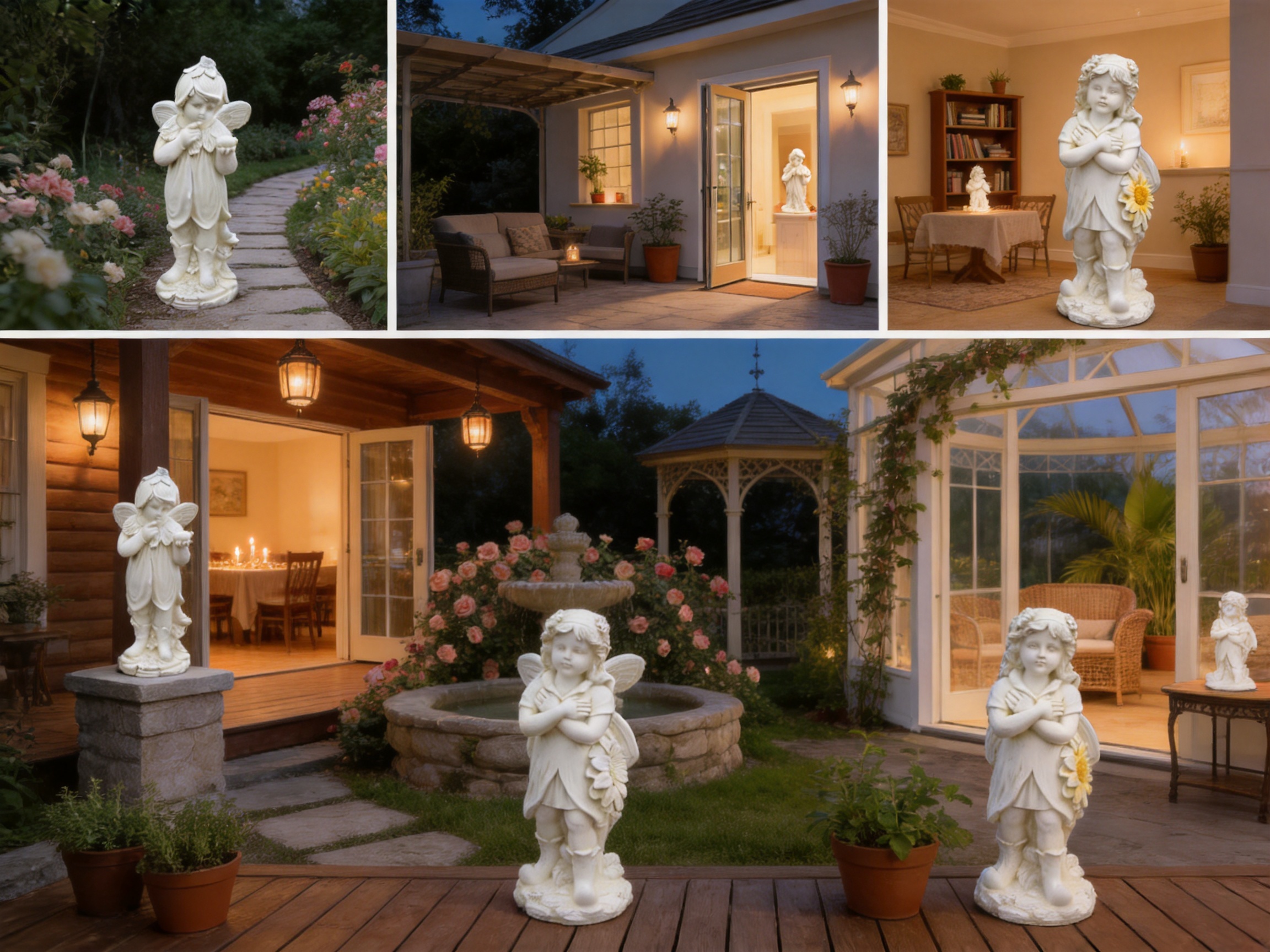
The design is particularly suitable for spaces where visitors should feel relaxed. A garden styled around flowers, natural textures, and gentle colors can benefit from a figure that appears to belong in a storybook landscape. A child’s room, reading area, boutique shop, or creative studio can use the sculpture to introduce a playful focal point. In hospitality settings, the angel pair can help soften hard architectural lines and make an entrance or waiting area feel more personal.
Visual softness is also useful when a space contains many angular materials. Concrete, glass, tile, steel, and modern furniture can sometimes create a cold or highly structured environment. A small human-form sculpture with curved wings and rounded folds introduces contrast. It adds an organic, expressive element without requiring a major redesign of the room.
The angel theme has broad cultural and decorative recognition. It can support Christmas displays, wedding décor, children’s events, memorial gardens, fairytale installations, seasonal retail concepts, and year-round pastoral interiors. Because the design is not restricted to a single holiday, it can remain useful after a temporary event has ended.
A pair of sculptures creates more visual possibilities than a single isolated object. The figures can face each other, stand side by side, be arranged at slightly different heights, or be placed within a larger landscape composition. This makes the product suitable for both symmetrical and informal layouts.
Symmetrical placement works well at doorways, along staircases, beside a fountain, or on either side of a garden feature. An informal arrangement may be more appropriate for a flowerbed, woodland-style garden, children’s play space, or themed display. The pair can also be integrated with benches, lanterns, artificial rocks, potted plants, and decorative fencing.
From a merchandising perspective, a paired product can communicate a stronger sense of completeness than a single small figure. The buyer receives the opportunity to create a scene rather than simply place an object. This scene-building quality can be valuable for interior designers and retail display professionals who need decorative pieces that contribute to a broader visual story.
Fiberglass is widely used for decorative forms because it can combine shape-making flexibility with relatively low weight. Compared with solid marble, cast bronze, or thick metal construction, fiberglass can be easier to transport, handle, position, and reposition. These practical benefits are especially important for a sculpture measuring approximately 40 centimeters high, because the piece may be moved several times during installation, cleaning, seasonal decoration, or interior refurbishment.
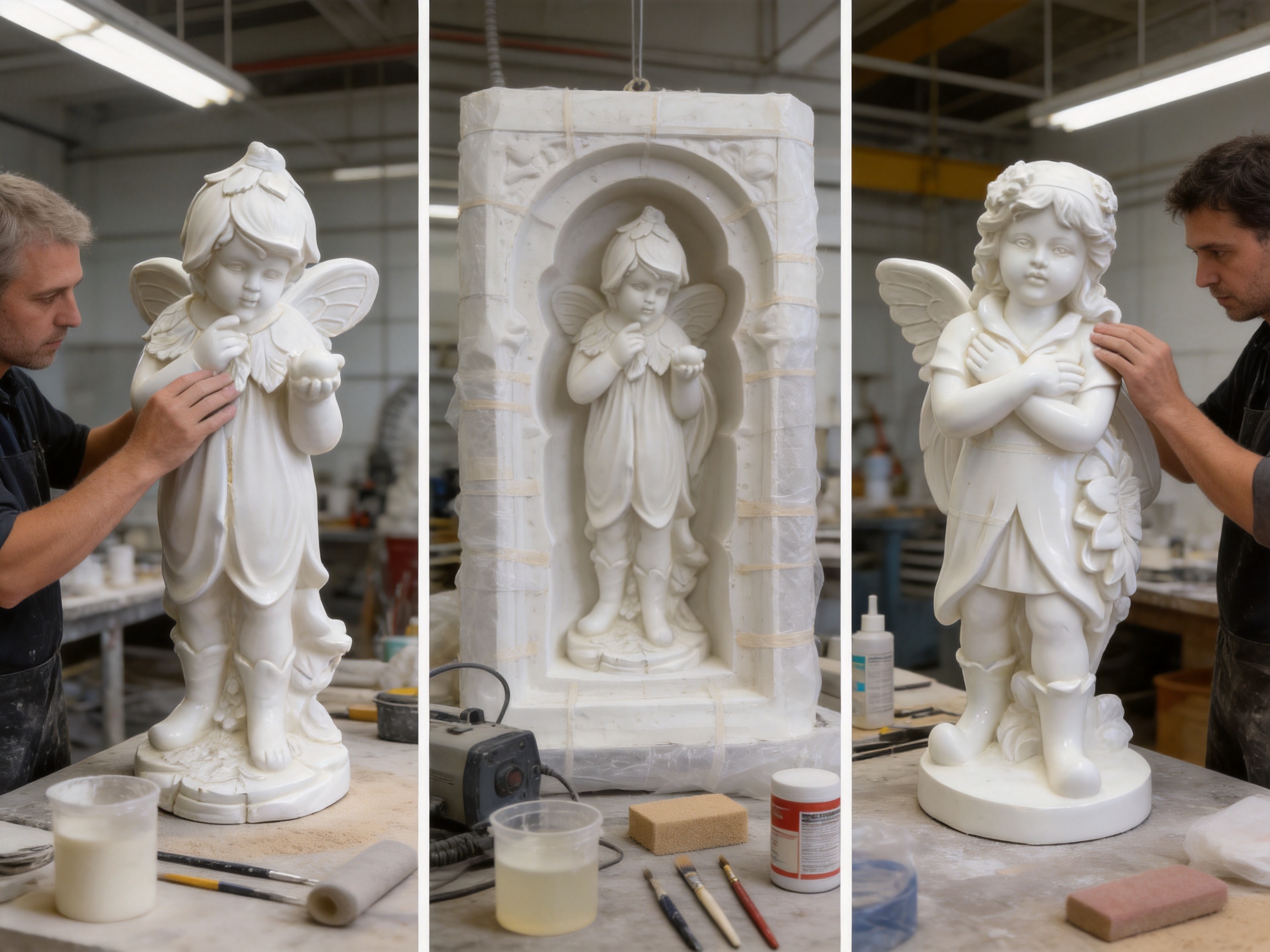
Fiberglass also supports detailed surfaces and varied silhouettes. Angel wings, fabric folds, rounded limbs, and other sculptural features require a material and manufacturing method capable of reproducing contours accurately. Professional fiberglass production generally begins with a model or mold, followed by the application of fiberglass reinforcement and resin. Once cured, the surface can be prepared, finished, colored, and protected according to the intended appearance.
For outdoor use, fiberglass offers useful resistance to normal sunlight and rain exposure when it is properly manufactured and finished. This makes it more versatile than many delicate indoor-only decorative materials. A fiberglass sculpture can be used in an outdoor garden during warmer months and then moved indoors during seasonal redecoration. The same product can therefore serve multiple roles over its usable life.
Bronze is respected for its traditional appearance, substantial weight, and long history in public art. However, bronze sculptures are often heavier and more expensive to move. Their weight can make installation more demanding, particularly in balconies, upper-level terraces, temporary exhibits, or locations where the supporting surface has limited load capacity.
The fiberglass angel pair offers a more approachable alternative for buyers who want decorative character without the visual or logistical heaviness of bronze. It can be positioned by fewer people, transported more easily, and adjusted as a garden or room changes. The childlike design also benefits from fiberglass because the material allows a friendly, colorful, or softly finished appearance that may not be the primary strength of traditional bronze.
Stainless steel sculptures are often selected for modern architectural settings because of their reflective surfaces and contemporary character. They can be excellent for large outdoor installations, corporate plazas, and minimalist landscapes. However, their metallic appearance may not suit pastoral, fairytale, nursery, or emotionally gentle environments.
The fiberglass angel sculpture is better aligned with spaces that require softness and warmth. It does not compete with the environment through reflection or industrial visual weight. Instead, it can blend with plants, painted walls, wood, fabric, and decorative lighting. Its surface can also be finished in a way that supports a more approachable and storybook-inspired atmosphere.
Marble provides natural veining, classical prestige, and an unmistakable stone presence. At the same time, marble is heavy, potentially fragile at thin projecting elements, and difficult to move once installed. It may also demand a more formal architectural context.
Fiberglass is a practical choice for buyers who want figurative decoration in a smaller residential or commercial space. The material makes it easier to create a pair of figures with extended wings and detailed folds without requiring the same structural support as solid stone. This is an important advantage for balconies, indoor corners, temporary installations, and landscaped areas where permanent foundations are not desired.
Not every fiberglass sculpture offers the same level of durability or finish. Low-quality products may show uneven surfaces, weak seams, poorly aligned components, thin areas, inconsistent paint, or insufficient protective coating. These issues can affect both appearance and service life.
A professionally produced sculpture should be evaluated according to mold accuracy, structural consistency, surface preparation, reinforcement, coating quality, and final inspection. The advantage of sourcing from an experienced sculpture manufacturer is the possibility of combining artistic modeling with repeatable production controls. This is especially valuable when a buyer needs several matching pairs or plans to request a custom variation.
The finished angel figures may appear simple and charming, but successful production requires coordination between design, mold-making, fiberglass forming, surface treatment, painting, and quality control. A professional sculpture manufacturer must manage both artistic interpretation and technical consistency.
The manufacturer associated with this product is Jiangsu Xinyesheng Sculpture Co., Ltd., located in Jiangyin City, Jiangsu Province, China. Its stated business scope includes sculpture manufacturing and custom design services across several material categories, including bronze, stainless steel, marble, fiberglass, and weathering steel. This multi-material background is relevant because it suggests familiarity with different structural, finishing, and installation requirements.
Working across several sculpture materials can strengthen a manufacturer’s ability to advise customers about the most appropriate medium for a particular project. A design originally imagined in metal may need adjustments when produced in fiberglass. Likewise, a customer seeking a stone-like appearance may benefit from a lightweight fiberglass construction with a carefully developed surface finish.
Production begins with the form. The master model establishes the overall posture, proportions, wing shape, folds, facial expression, and relationship between the two figures. At this stage, the manufacturer must preserve the visual charm of the original concept while ensuring that the sculpture can be reproduced successfully.
Human-form sculptures require attention to anatomy even when the design is intentionally stylized. A childlike figure must appear balanced, stable, and natural enough to communicate warmth. Wings should be expressive but not visually disconnected from the body. Folds should create a sense of fabric without becoming too fragile or difficult to finish. These decisions influence the mold and the final product.
For a paired sculpture, consistency is especially important. The two angels should appear related in scale, style, surface quality, and finish. At the same time, slight differences in pose or orientation may be used to create a sense of interaction. A professional production process can preserve the relationship between the two figures while maintaining the visual identity of each piece.
Once a master model is approved, a mold can be prepared for reproduction. Mold construction is a key manufacturing step because it influences dimensional accuracy, surface detail, seam placement, and production efficiency. A well-designed mold helps reproduce delicate features such as wing edges, rounded folds, and facial contours with greater consistency.
Repeatability is one of the main benefits of professional mold-based fiberglass production. When buyers require multiple sets for a hotel, residential development, retail chain, garden project, or event installation, the manufacturer can work from an established form rather than recreating every sculpture from the beginning. This improves consistency across an order and supports more predictable project planning.
For custom work, mold development may also allow a basic design to be adapted. Changes can include proportions, pose, wing configuration, surface texture, color scheme, base design, or the number of figures. The feasibility of any change depends on the desired result and production requirements, but experienced manufacturers can assess how a concept should be translated into a manufacturable fiberglass form.
Fiberglass sculptures are typically produced by combining reinforcing glass fibers with resin. The reinforcement contributes structural stability, while the resin binds the material into a shaped shell or composite body. The specific construction method can vary according to the sculpture’s dimensions, internal geometry, desired weight, and intended use.
For a compact angel figure, the manufacturer must balance strength and weight. The sculpture should be light enough to handle conveniently but sufficiently robust for normal display and movement. Projecting features such as wings need particular attention because they may be more vulnerable to impact than the central body. Reinforcement design, resin distribution, curing, and edge treatment all contribute to the final result.
Consistent forming also helps reduce defects. Excess material may add unnecessary weight, while insufficient reinforcement may reduce durability. Professional production therefore depends on controlled application, careful curing, and inspection of the finished shell. These processes are part of the manufacturing value behind a product that must look refined while remaining practical to handle.
After the fiberglass body has cured, the surface may require trimming, seam treatment, filling, sanding, and preparation for the final finish. This stage is essential for decorative quality. Even a well-formed sculpture can appear unfinished if seams are visible, edges are rough, or the surface is inconsistent.
Angel figures rely on soft contours and delicate transitions. Surface preparation should preserve the rounded appearance of the folds and the clean outline of the wings. A smooth, carefully prepared surface can make the sculpture appear more refined and can improve the evenness of subsequent coatings or paint.
Finishing may be selected to complement the customer’s environment. Possible directions include a gentle painted appearance, a stone-inspired finish, a bright fairytale palette, a muted garden tone, or a custom color arrangement. The most suitable finish depends on whether the figures will be used indoors, outdoors, in a themed retail display, or as part of a landscape project.
Outdoor sculptures must be prepared for changing environmental conditions. Sunlight, rain, humidity, dust, and temperature variation can influence the appearance of decorative surfaces over time. A suitable protective finish helps support color stability and surface performance, although no outdoor material is completely maintenance-free.
The product description emphasizes that the fiberglass angels are lightweight, highly weather-resistant, and suitable for exposure to sun and rain. It also indicates that they are not prone to fading or deformation under ordinary outdoor conditions. These qualities give the sculptures an advantage over fragile decorative objects intended exclusively for indoor use.
Proper placement remains important. The sculptures should be installed on a stable, level surface, and locations exposed to severe impact, flooding, or unusually strong wind should be evaluated carefully. If a project requires permanent outdoor installation in a harsh climate, the buyer should discuss anchoring, coating, and maintenance specifications with the manufacturer before ordering.
Interior designers often need decorative objects that can establish a theme without taking over the room. The 40-centimeter height of this angel pair is useful in that context. The figures can serve as accent pieces rather than dominant architectural elements, allowing furniture, lighting, plants, and wall treatments to remain visible.
Because the sculptures are relatively easy to move, designers can experiment with placement during the staging process. A pair may be tested beside a console, near a window, within a reading nook, or against a textured wall. If the final arrangement changes, the figures can be repositioned without the costly labor associated with moving a stone or metal installation.
Landscape professionals can use the angels to introduce a narrative element into planting schemes. They may be placed among low flowers, beside a pathway, near a small pond, or within a sheltered courtyard. The contrast between fiberglass and natural greenery can help the figures remain visible while preserving a gentle, integrated appearance.
The product is also useful for themed environments. Garden centers, wedding venues, family restaurants, children’s activity centers, boutique accommodations, and photography studios may benefit from a recognizable decorative character. The figures can become part of a visual identity, especially when arranged with seasonal plants, soft lighting, or complementary props.
In a private home, the angel pair can be used in many ways. A garden owner may place the figures among flowers to create a fairytale corner. A homeowner with a balcony or terrace may use one figure near a planter and the second near a seating area. Indoors, the sculptures can decorate a foyer, staircase landing, sunroom, nursery, study, or living room.
Their compact size makes them suitable for homes where floor space is limited. They can be displayed on a dedicated plinth, a broad shelf, a low cabinet, or a protected outdoor surface. When used near children’s spaces, the placement should be selected carefully so that the figures cannot be easily knocked over or climbed on.
The angel theme may also carry personal meaning. Some buyers choose angel figures to represent protection, hope, remembrance, family affection, or spiritual comfort. The product’s friendly rather than monumental character makes it appropriate for personal spaces that call for a gentle symbolic object.
Businesses often use sculpture to make their spaces more memorable. A well-placed decorative figure can help define an entrance, create a photo opportunity, or support a particular atmosphere. The angel pair is especially appropriate for businesses that want a warm, imaginative, or family-friendly identity.
Hotels and guesthouses may place the figures in landscaped courtyards, reception areas, children’s rooms, or garden paths. Restaurants and cafés can use them to soften outdoor seating zones or create a recognizable corner for photographs. Retailers may include them in seasonal campaigns, nursery displays, gift shops, home décor departments, or wedding merchandise presentations.
For commercial buyers, the fiberglass material offers practical advantages during installation and maintenance. The sculptures can be moved during cleaning, renovations, seasonal changes, or promotional events. Their relatively small footprint also allows businesses to add decorative interest without sacrificing too much usable floor or planting space.
One of the strengths of working with a sculpture manufacturer rather than purchasing only from a general décor retailer is the possibility of discussing customization. The basic little angel concept can potentially be adapted to suit a specific project. Custom requirements may involve color, finish, base style, pose, scale, wing shape, surface texture, or the relationship between the two figures.
For example, a garden project may require a muted stone effect so that the sculptures harmonize with paths and planters. A children’s venue may prefer brighter colors and a more playful finish. A hotel may request a restrained palette that matches its interior design. A wedding venue may seek a pale, elegant appearance suitable for photographs.
Customization should be evaluated at the beginning of the project because changes can affect modeling, mold preparation, production time, packaging, and cost. Buyers should provide measurements, reference images, color requirements, installation conditions, and expected quantities. Clear communication helps the manufacturer recommend a practical solution rather than applying an unsuitable finish after production is complete.
For larger orders, repeatability becomes a significant consideration. A manufacturer with experience in fiberglass and other sculptural materials can establish a production standard for the first approved sample and then use that standard for subsequent units. This is useful for property developments, hospitality groups, landscape projects, and coordinated retail displays.
The product’s relatively lightweight construction makes installation simpler than that of many solid stone or metal sculptures, but stability should still be considered. A level, firm surface is recommended. Indoor pieces may be placed on a stable platform or floor area away from high-traffic routes. Outdoor pieces should be positioned where water drains properly and where they are protected from accidental impact.
When used in windy locations, buyers should evaluate whether additional securing is appropriate. A sheltered garden corner, covered balcony, or protected courtyard may require less intervention than an exposed rooftop or open coastal site. The manufacturer can advise on suitable bases, anchoring methods, or installation details for a particular project.
Placement also influences visual impact. The angels should be visible from the main approach but not crowded by surrounding objects. Low plants can frame the figures without hiding them. Soft lighting can emphasize wings and folds after sunset. Indoors, a neutral background can make the silhouette more noticeable, while a colorful wall may create a more playful composition.
Fiberglass is comparatively easy to maintain, which is another advantage for busy homes and commercial spaces. Routine care usually involves removing dust, leaves, and surface dirt with a soft cloth, gentle brush, or clean water. Abrasive tools and harsh chemicals should be avoided because they may scratch or affect the protective finish.
Outdoor sculptures should be inspected periodically for dirt accumulation, impact marks, coating wear, or small cracks. Early attention to minor surface damage can help preserve the appearance of the piece. If repainting or refinishing becomes necessary after extended exposure, the appropriate materials should be confirmed with the manufacturer or a qualified finishing professional.
Although the product is described as weather-resistant, sheltered placement can further extend its visual life. Protection from continuous standing water, severe impacts, and extreme environmental exposure is beneficial. In regions with harsh winters or unusual weather, seasonal relocation to a covered area may be considered, especially if the installation site is vulnerable to freezing water, heavy snow, or strong winds.
Small sculptures still require careful packaging because wings, decorative edges, and projecting forms can be vulnerable during transport. A professional manufacturer should consider internal cushioning, surface protection, separation between paired pieces, and a carton or crate appropriate to the shipment route.
Buyers should inspect packaging upon arrival and document any visible damage before unpacking completely. The figures should be lifted from their strongest body areas rather than by the wings or other delicate projections. If the sculptures are being delivered to a commercial project, the receiving team should prepare a clean, safe area for inspection and temporary storage.
Because fiberglass is lighter than many competing sculpture materials, transport and handling may be more manageable. This can reduce the practical complexity of moving the pair from a loading area to its final location. It also supports more flexible project planning when the installation must occur in stages.
Product value is not determined only by material price. It also includes design flexibility, handling requirements, installation difficulty, maintenance, visual effect, and the expected number of uses. The little angel pair performs well across these categories because it combines a distinctive human-form design with a compact, adaptable construction.
| Evaluation Factor | Fiberglass Little Angel Pair | Typical Heavy Stone or Metal Alternative |
|---|---|---|
| Handling | Relatively easy to move and reposition | Often requires more labor or equipment |
| Visual character | Soft, playful, pastoral, and fairytale-inspired | May appear more formal, monumental, or industrial |
| Outdoor suitability | Suitable for ordinary sun and rain exposure when properly finished | Depends on metal treatment or stone characteristics |
| Placement flexibility | Suitable for interiors, gardens, balconies, and temporary displays | May require stronger support or permanent installation |
| Design adaptability | Can support painted finishes and custom decorative treatments | Customization may involve more complex fabrication |
| Maintenance | Routine cleaning and periodic surface inspection | May require specialized metal or stone care |
| Composition | Pair supports interaction and multiple arrangements | Often sold as individual monumental pieces |
This comparison does not mean that fiberglass replaces every other sculpture material. Bronze, stainless steel, and marble each have their own strengths. Instead, fiberglass is particularly competitive when the buyer prioritizes manageable weight, broad placement options, expressive shapes, and a friendly decorative atmosphere.
When selecting a supplier for a fiberglass sculpture, buyers should look beyond photographs. Important questions include how the master model is prepared, how the mold is made, what reinforcement method is used, how seams are treated, which coatings are applied, and how the finished product is inspected.
It is also useful to clarify whether the price applies to one sculpture or the complete pair, what packaging is included, whether custom colors are available, and how outdoor use is supported. For professional projects, buyers should provide the intended installation environment and ask whether additional anchoring or a custom base is recommended.
A manufacturer with capabilities in multiple materials can offer broader project support. Jiangsu Xinyesheng Sculpture Co., Ltd. lists bronze sculptures, stainless steel sculptures, marble sculptures, fiberglass sculptures, and weathering steel sculptures among its product categories. This range may be useful for buyers developing a complete site with several sculpture types or comparing materials for different areas of the same project.
The company’s listed contact information includes two telephone numbers and an email address for inquiries. Buyers should confirm product details, current pricing, lead time, shipping terms, customization options, and installation recommendations directly before placing an order, since these matters can vary according to quantity and project requirements.
Material selection should always be considered in relation to a product’s intended service life and use. A lightweight sculpture may require fewer handling resources during delivery and installation than a much heavier alternative. Its ability to move between indoor and outdoor settings may also extend its usefulness across different seasons, properties, or decorative programs.
Fiberglass production still requires responsible manufacturing and end-of-life planning. Buyers should discuss durability, repairability, protective finishes, and expected maintenance rather than focusing only on initial appearance. A sculpture that remains attractive and functional for many years can provide better practical value than a fragile decorative product that must be replaced frequently.
For commercial users, reusability is especially important. The angel pair can be integrated into seasonal events, moved between branches, or reused in different display concepts. This adaptability may reduce the need to purchase separate decorative pieces for every occasion.
In a pastoral garden, place the two figures among flowering plants, ornamental grasses, and low shrubs. A natural stone path or wooden bench can reinforce the gentle countryside atmosphere. The angels should remain visible but appear integrated into the planting rather than isolated on a bare surface.
For a balcony or terrace, use one angel beside a tall planter and the second near a small seating area. Soft-colored containers, string lights, and climbing plants can create a storybook effect. Because balconies have limited load capacity, the relatively manageable weight of fiberglass can be an important practical consideration, although the surface and overall structural capacity should still be checked.
At an entryway, the pair can be arranged symmetrically on stable plinths or low platforms. This placement creates a clear visual welcome and works well for hotels, restaurants, event venues, and private residences. The figures should not obstruct doors, walkways, or emergency routes.
Indoors, an angel can be placed near a bookcase, armchair, window, or collection of plants. The second figure may be positioned nearby but at a different angle to avoid a rigid arrangement. Warm lighting can emphasize the contours of the wings and folds while maintaining the product’s calm, comforting character.
The friendly design is suitable for family restaurants, children’s activity spaces, nurseries, creative studios, and photography locations. Bright surrounding colors can make the figures playful, while softer neutral tones can give the area a calmer appearance. In all cases, the sculptures should be placed where children cannot climb on them or pull on projecting elements.
The most important advantage of the Fiberglass Human Sculpture of a Little Angel is its balance of emotional design and practical construction. The product is not merely a decorative object; it is a flexible visual tool for creating a particular mood.
Its main benefits include a charming paired composition, compact dimensions, relatively low handling demands, suitability for indoor and outdoor environments, resistance to ordinary sun and rain exposure, ease of relocation, and compatibility with pastoral or fairytale themes.
Compared with heavy sculptures, the pair is easier to incorporate into changing spaces. Compared with generic decorative objects, it offers a stronger sense of identity and narrative. Compared with fragile indoor-only pieces, it provides broader placement possibilities. Compared with poorly finished fiberglass products, professionally controlled modeling and finishing can provide a more consistent appearance and a more dependable result.
The product description presents two fiberglass angel sculptures as a paired design. Buyers should confirm the exact quantity included in the listed price before ordering, especially if the product will be used for a commercial project.
The listed dimensions are approximately 40 centimeters in height, 20 to 25 centimeters in width, and 15 to 20 centimeters in diameter.
Yes. The product is described as lightweight and highly weather-resistant, with suitability for ordinary exposure to sunlight and rain. Outdoor placement should still include a stable surface and appropriate protection from severe impact, flooding, or extreme weather.
The product description states that the sculptures are not prone to fading or deformation under ordinary outdoor conditions. Actual performance depends on climate, exposure, coating, and maintenance. Buyers with demanding outdoor conditions should request detailed finishing and care recommendations.
Generally, fiberglass is significantly easier to handle than solid marble or bronze because it is relatively lightweight. This makes the angel pair more suitable for balconies, interiors, temporary events, seasonal displays, and locations where heavy lifting equipment is not available.
Yes. The paired design allows the sculptures to be displayed together or used individually in different areas. They may also be arranged at different angles or distances to create a sense of interaction.
The figures are particularly suitable for pastoral, fairytale, family-friendly, garden, romantic, and soft decorative themes. They can also be used as contrasting accents in modern interiors that need a warmer or more expressive element.
Customization should be discussed with the manufacturer. Potential options may include color, surface finish, scale, pose, wing details, base design, or project-specific variations. The feasibility, cost, and production schedule will depend on the requested changes.
Use a soft cloth, gentle brush, or clean water to remove dust and ordinary dirt. Avoid abrasive cleaners, rough tools, and aggressive chemicals that could damage the surface finish.
Anchoring depends on the installation environment. Indoor pieces placed on stable surfaces may not need additional securing, while outdoor installations in windy or high-traffic areas may benefit from a suitable base or anchoring method. The manufacturer can provide project-specific guidance.
The supplied product information lists the price as $639.13. Buyers should verify the current price, quantity, shipping, packaging, customization, taxes, and other order conditions before purchase.
The product information identifies Jiangsu Xinyesheng Sculpture Co., Ltd. as the manufacturer. The company is located in Jiangyin City, Jiangsu Province, China, and lists capabilities across fiberglass and several other sculpture materials.
The Fiberglass Human Sculpture of a Little Angel is a versatile decorative solution for buyers seeking warmth, charm, and practical usability in one product. Its paired angel design brings a sense of interaction and emotional comfort, while the compact dimensions make it suitable for gardens, balconies, indoor corners, entrances, hospitality areas, and themed displays.
Fiberglass gives the sculptures important advantages over heavier competitors. It supports easier transportation, simpler repositioning, broader installation possibilities, and useful resistance to ordinary outdoor exposure. The material also accommodates the soft folds, lively wings, and rounded forms that define the product’s visual appeal.
Professional manufacturing adds further value through controlled modeling, mold development, fiberglass reinforcement, surface preparation, protective finishing, and quality inspection. A manufacturer experienced in fiberglass as well as bronze, stainless steel, marble, and weathering steel can provide a broader understanding of sculpture production and material selection.
For homeowners, designers, landscape professionals, retailers, and hospitality operators, the angel pair offers more than a static ornament. It can become a welcoming symbol, a garden focal point, a fairytale accent, a seasonal display element, or a repeatable design feature across multiple spaces. With appropriate placement and routine care, it provides a practical and visually distinctive way to make an environment feel more inviting.
1. Product specification supplied for the Fiberglass Human Sculpture of a Little Angel, including dimensions, material, intended applications, and listed price.
2. Manufacturer information supplied for Jiangsu Xinyesheng Sculpture Co., Ltd., including sculpture material categories and contact details.
3. General principles of fiberglass-reinforced composite forming, mold-based sculpture production, surface preparation, and protective finishing.
4. General interior and landscape design principles concerning focal points, paired composition, thematic styling, and decorative scale.
5. General maintenance considerations for painted fiberglass objects used in indoor and ordinary outdoor environments.
Fiberglass Human Sculpture of a Little Angel
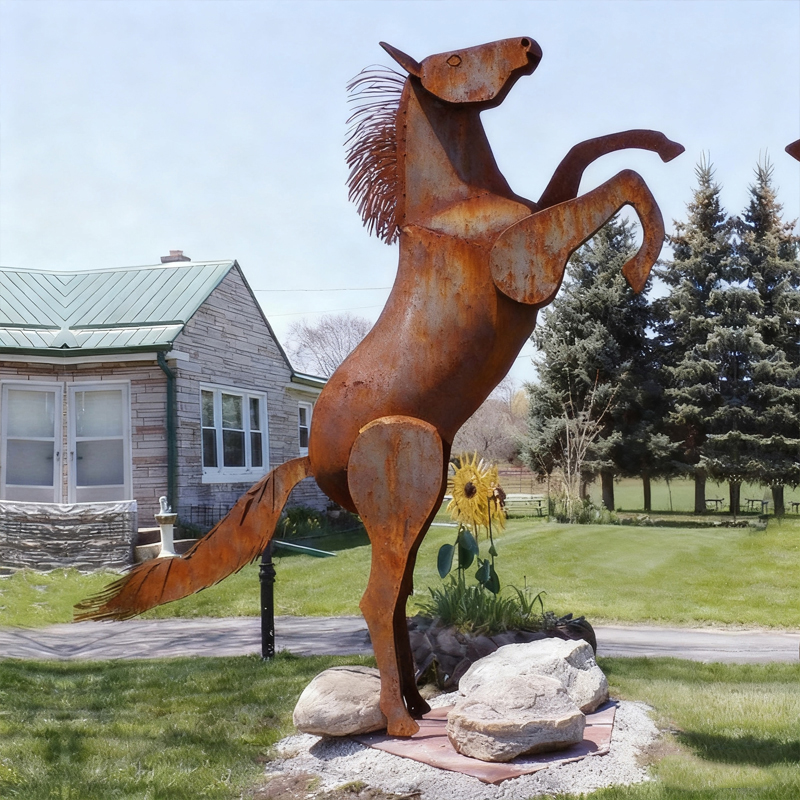 Weathering Steel Galloping Horse Animal Sculpture
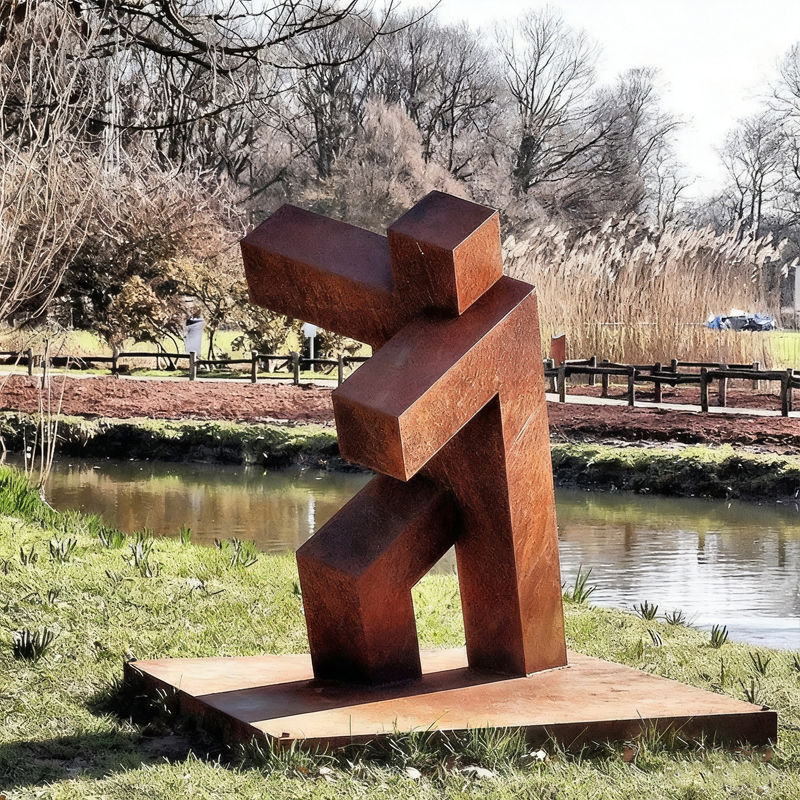 Abstract Weathering Steel Decorative Sculpture
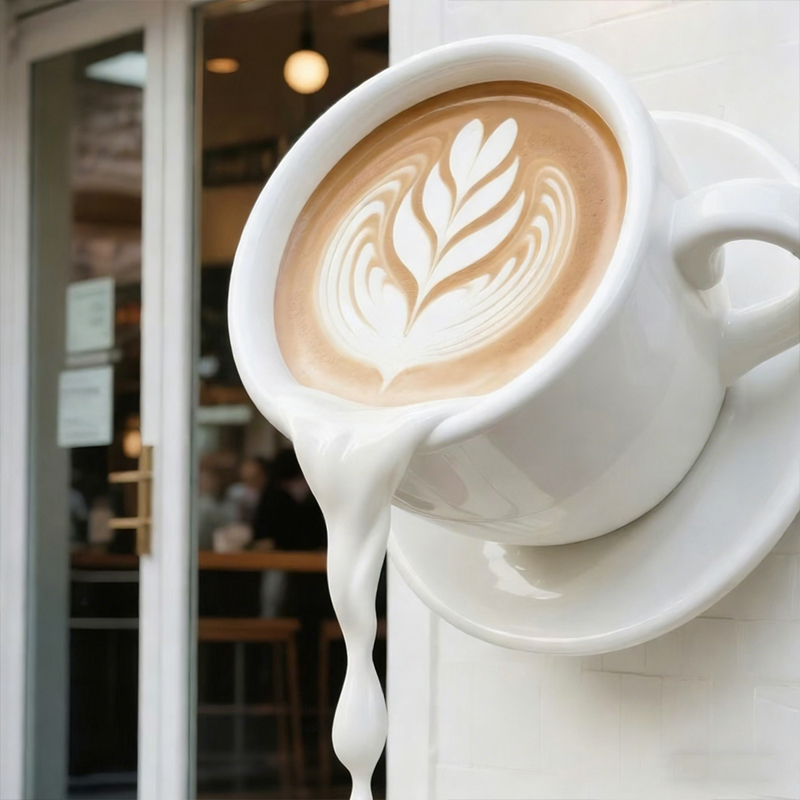 Fiberglass Floating Coffee Cup Decorative Sculpture
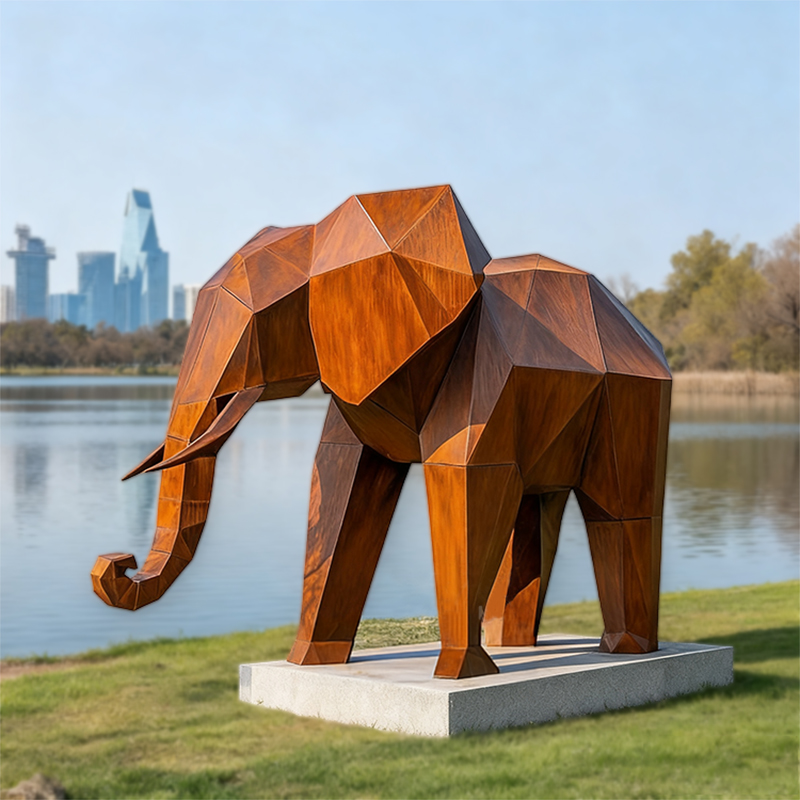 Weathering Steel Faceted Geometric Elephant Animal Sculpture
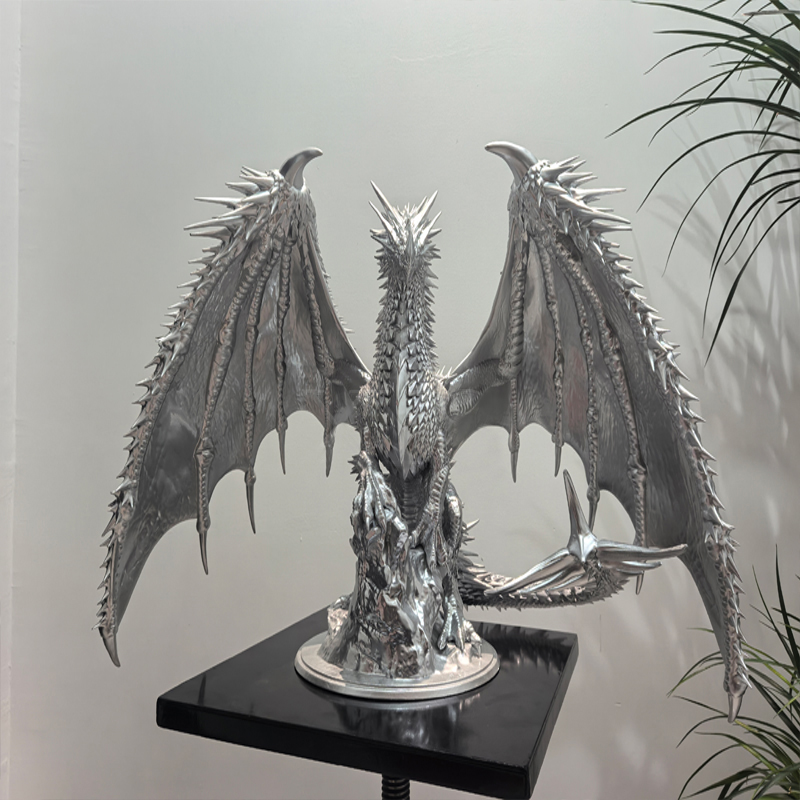 Fiberglass Human Sculpture in a Gargoyle Style



Daniel H.

Amanda R.

Robert B.

Jennifer S.

James W.

Barry G.

Michael T.

Emily K.

David L.

Sarah M.


Mikey XV

Jagxue

 English
 Español
 عربى
عربى Français
 italiano
 Deutsch