
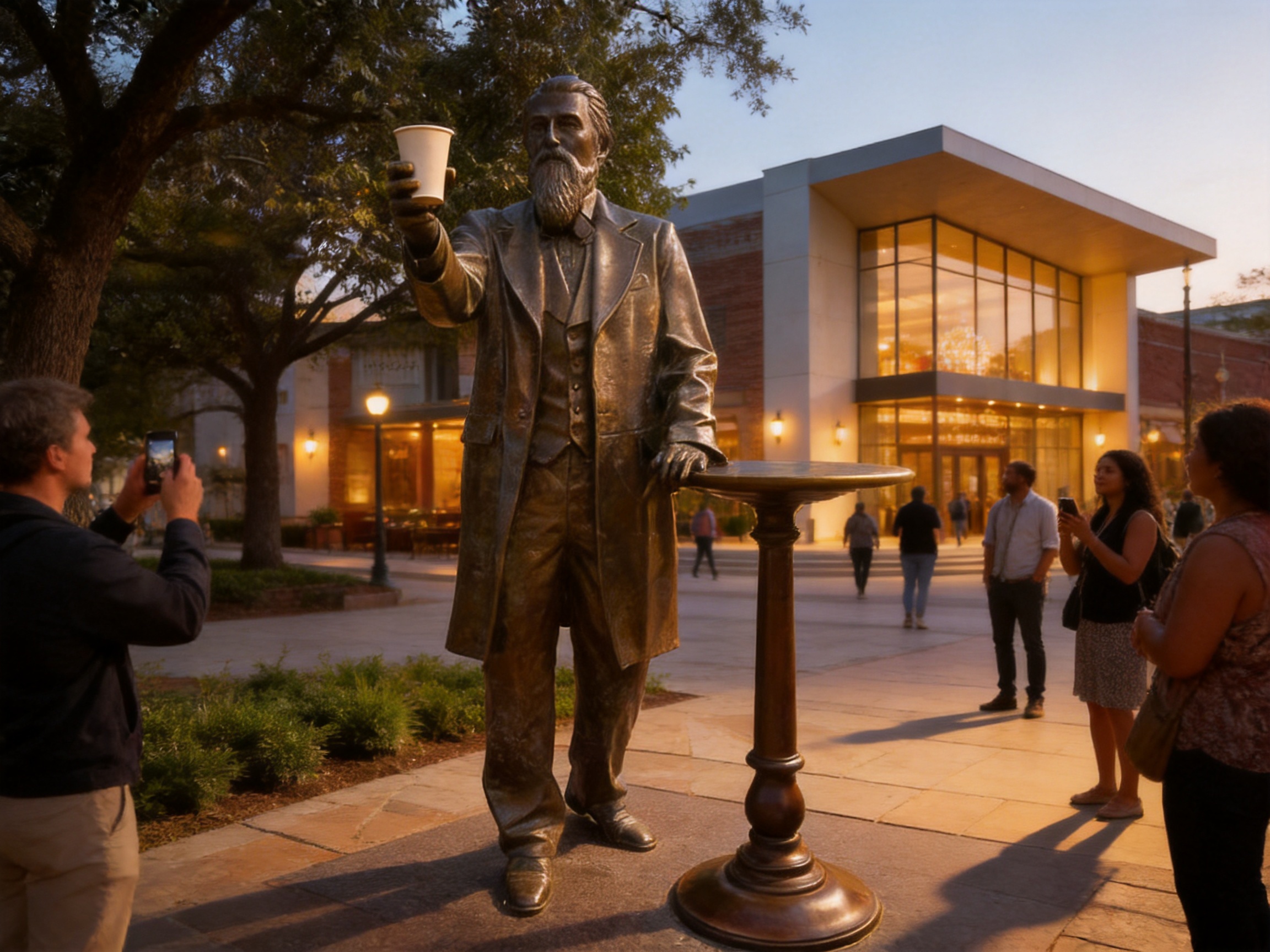
Public art has the power to turn a familiar story into a memorable physical experience. A well-designed commemorative sculpture does more than represent an individual. It creates a setting in which visitors can pause, take photographs, learn about history, and associate a location with a distinctive visual identity. The Bronze John Pemberton Commemorative Sculpture is designed for precisely this purpose. Standing 1.8 meters high, the work presents John Pemberton, the inventor associated with Coca-Cola, in a recognizable nineteenth-century appearance. He is shown wearing a long coat and holding a paper cup, while a vintage high-top round table stands beside him.
The sculpture combines historical storytelling, figurative realism, and durable outdoor metalwork. Its antique-aged bronze finish gives the surface a deep historical character, helping the work appear established rather than newly manufactured. This quality is especially valuable for museums, cultural tourism projects, themed parks, restaurants, commercial landscapes, enterprise campuses, and other locations that require a strong centerpiece.
Manufactured by Jiangsu Xinyesheng Sculpture Co., Ltd., the sculpture is presented as a finished commemorative artwork as well as a model for custom European-style and figurative metal sculpture production. Its value lies not only in the subject matter but also in the way the composition is organized: the standing figure, the paper cup, the coat, and the neighboring table create a complete scene rather than an isolated portrait. Visitors can understand the story quickly, recognize the historical period, and interact with the work through photography and observation.
Content
The Bronze John Pemberton Commemorative Sculpture is a life-size-style bronze human figure work intended for prominent public and commercial placement. Its height of 1.8 meters gives the figure a natural visual relationship with adult visitors. The scale is large enough to function as a landmark while remaining approachable enough to invite close viewing.
| Product Attribute | Product Information |
|---|---|
| Product name | Bronze John Pemberton Commemorative Sculpture |
| Category | Bronze Human Figure Sculpture |
| Primary material | Bronze |
| Height | 1.8 meters |
| Subject | John Pemberton, inventor associated with Coca-Cola |
| Composition | Standing figure with a paper cup and vintage high-top round table |
| Surface treatment | Antique-aged bronze finish |
| Listed price | ¥41,000 |
| Recommended applications | Museums, themed parks, restaurants, commercial landscapes, enterprise campuses, and cultural tourism sites |
One of the most important features is the inclusion of contextual objects. A portrait bust can communicate identity, but a full figure with a cup and table can communicate a moment, profession, and atmosphere. These secondary elements help transform the sculpture into a scene. They also make it easier for visitors to understand how the work relates to the history of beverage culture and commercial innovation.
The antique-aged finish reinforces the historical subject. Instead of appearing like a newly polished decorative object, the surface is intended to suggest age, continuity, and cultural memory. Variations in color and texture can emphasize the folds of the coat, the structure of the table, and the figure’s facial features. In an outdoor or semi-outdoor environment, this finish can also complement brick, stone, wood, glass, and contemporary architectural materials.
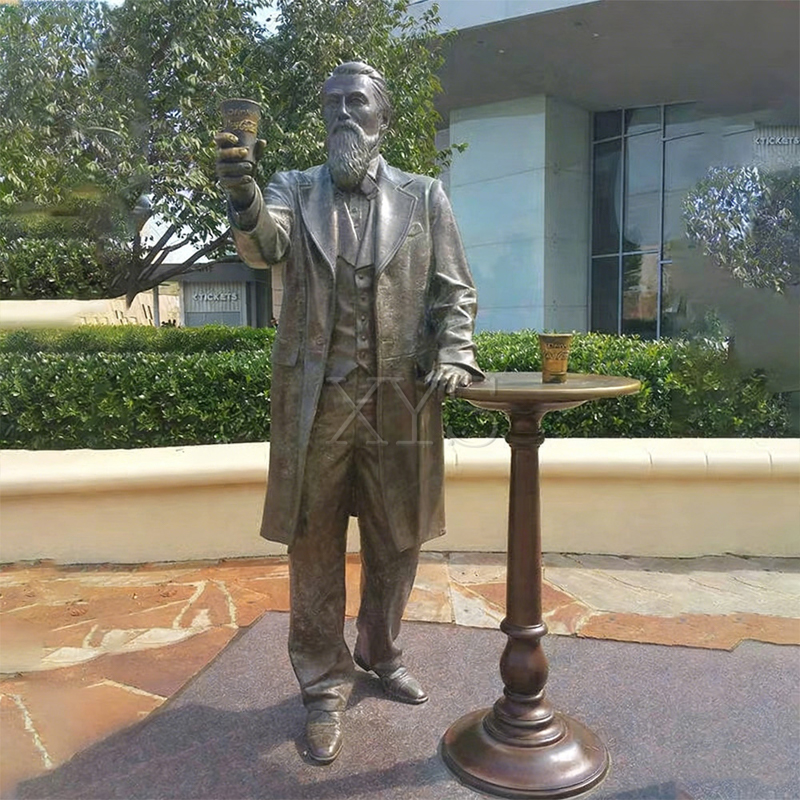
Bronze John Pemberton Commemorative Sculpture
Commemorative sculpture is most effective when the viewer can understand its narrative without reading a long explanation. The figure of John Pemberton offers an immediately recognizable historical theme connected with invention, entrepreneurship, pharmacy, beverage culture, and global commercial development. Presenting him with a paper cup and a vintage table gives the viewer visual clues that help establish the setting.
The long coat is particularly important to the composition. Clothing is one of the fastest ways to establish historical period in figurative art. A nineteenth-century coat gives the figure a formal, distinctive silhouette and separates the sculpture from an ordinary modern statue. It also provides broad planes and deep folds for the sculptor to model. When finished in aged bronze, these folds can produce naturally varied highlights and shadows.
The paper cup introduces a human-scale detail. It suggests an act of presentation, service, tasting, or conversation. Such a small prop can make the statue feel less abstract and more like a captured moment. It also creates a visual connection between the historical figure and the product culture associated with his legacy. The neighboring high-top round table completes the setting and gives visitors a clear reference point for photographs.
This storytelling approach provides an advantage over generic decorative statues. A purely ornamental figure may add volume or color to a space, but it may not create a strong reason for visitors to stop. A commemorative sculpture with an identifiable subject can become a meeting point, a photo opportunity, an educational feature, and a part of the destination’s identity.
For museums, the sculpture can support exhibitions about invention, industrial history, branding, medicine, food and beverage development, or local commercial culture. For themed parks, it can help establish an immersive historical environment. For restaurants, it can provide a conversation piece near an entrance, waiting area, private dining room, or outdoor terrace.
Bronze has been used for public monuments and figurative sculpture for centuries because it combines visual richness with structural durability. The material is capable of expressing subtle facial details, clothing folds, hand positions, and small accessories. It can also be treated with patinas and protective finishes that create different visual effects.
For a historical figure, bronze is especially appropriate because it conveys permanence. The material has a traditional association with civic monuments, memorials, cultural institutions, and public art. A bronze sculpture therefore communicates importance before a visitor has read the accompanying text.
The material also supports an effective balance between detail and strength. The figure’s coat can be modeled with layered folds, while the hands, paper cup, facial features, and table can be given individual definition. The sculpture can appear refined when viewed from a short distance and authoritative when viewed from across a plaza or landscape.
An antique-aged finish can add further depth. Darker tones may remain in recessed details, while raised edges and prominent surfaces can retain warmer highlights. This contrast improves legibility in changing light conditions. Morning sunlight, overcast skies, evening lighting, and warm architectural illumination can each reveal different qualities in the surface.
Bronze also works well with varied landscape materials. It can stand against pale stone, dark paving, planted greenery, red brick, concrete, timber, or glass. This adaptability makes the sculpture suitable for both heritage-style environments and contemporary commercial projects.
The first competitive advantage of this product is narrative specificity. It is not an anonymous standing figure or a purely abstract form. It represents a named historical personality and incorporates recognizable props. This gives the sculpture a clear purpose and makes it easier for a buyer to connect the artwork with a specific location or theme.
The second advantage is the complete scene composition. The figure and table are designed to be viewed together, allowing the work to occupy space in a more meaningful way. The table provides horizontal balance beside the vertical figure. It also helps prevent the statue from appearing visually isolated when installed in a broad plaza, restaurant entrance, or museum hall.
The third advantage is photographic engagement. Visitors often interact with public art through photographs. A standing figure at a natural human scale allows people to stand beside it, imitate its pose, or frame the table and cup within the image. This can increase the sculpture’s visibility through visitor-generated content without requiring additional digital equipment.
The fourth advantage is historical atmosphere. The antique bronze treatment is more suitable for heritage storytelling than a bright, uniform metallic finish. It can help the sculpture appear integrated with a museum or themed environment, while still retaining enough surface variation to function as a centerpiece in a modern commercial setting.
The fifth advantage is flexibility of application. Many decorative statues are designed for only one environment. This product can be considered for cultural tourism, food and beverage venues, themed hospitality spaces, museum courtyards, corporate campuses, and commercial landscape projects. Its subject creates a direct connection with hospitality and beverage-related locations, but its craftsmanship and historical form also allow use in broader cultural contexts.
The sixth advantage is scale. At 1.8 meters, the figure is substantial without overwhelming the surrounding architecture. It can fit near a doorway, along a pedestrian route, beside a reception area, or within a landscaped courtyard. Buyers who need a larger landmark can also use the work as a reference for a scaled custom project.
Compared with fiberglass statues, bronze generally offers a more substantial tactile and visual impression. Fiberglass can be useful where low weight or economical large-scale production is the priority, but bronze is often selected when buyers want a traditional monument character and a long-term material presence. Compared with painted metal, aged bronze does not rely solely on surface paint to establish its identity. Compared with stone, bronze can provide more expressive clothing folds and a lighter visual profile while retaining a dignified appearance.
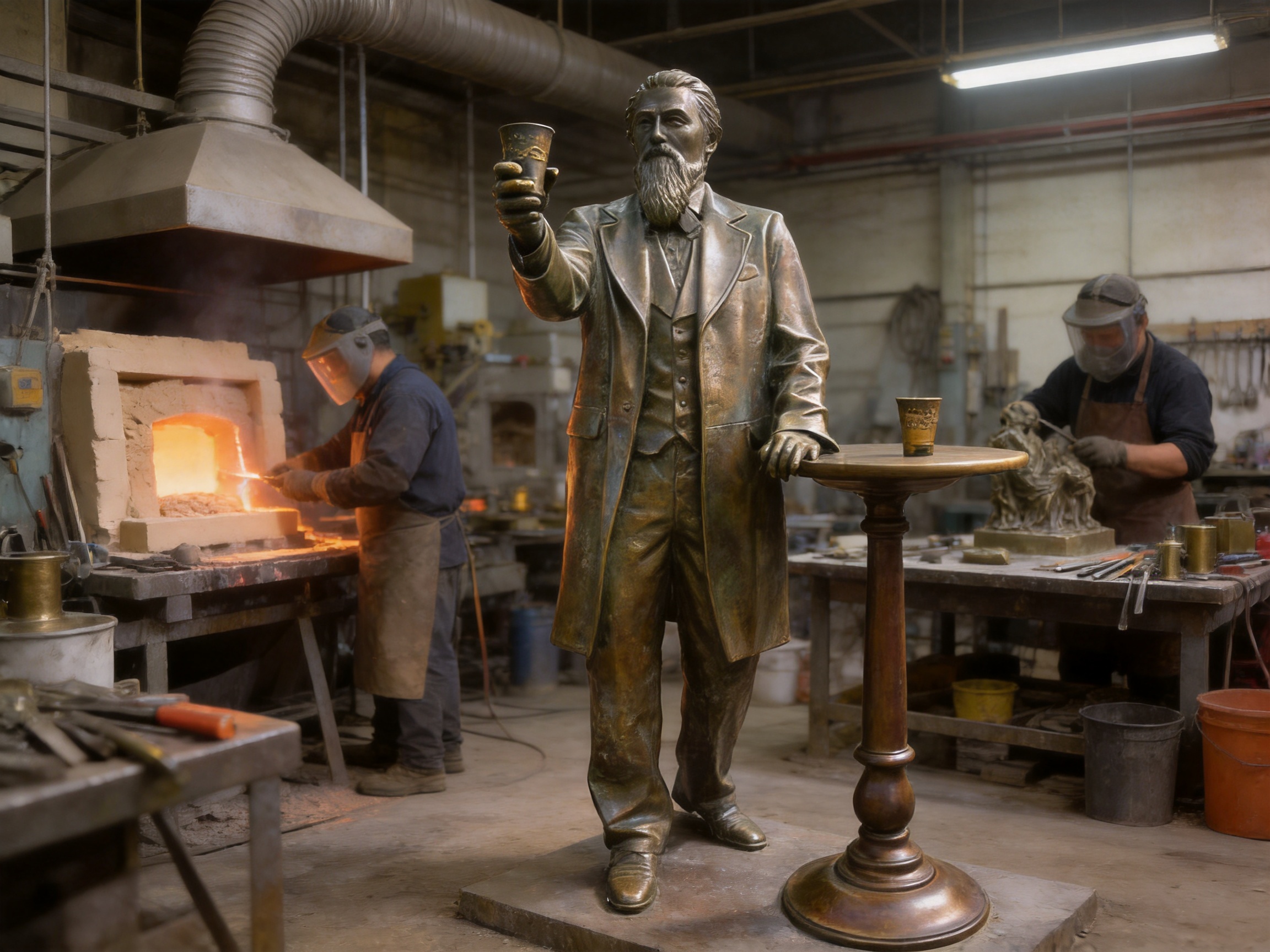
The production of a successful bronze figure requires more than simply forming a metal shell. It involves artistic development, proportion control, mold preparation, metal casting, surface refinement, assembly, patination, and final inspection. The manufacturer’s role is to coordinate these stages so that the finished sculpture remains faithful to the intended subject and suitable for practical installation.
The process begins with a clear understanding of the subject, pose, clothing, props, and installation environment. For a commemorative figure, proportion planning is essential because the viewer must recognize the person and understand the posture from multiple angles. The figure should look natural from the front, sides, and three-quarter views.
The 1.8-meter height creates a useful reference for planning. The sculptor can establish the relationship between the head, torso, arms, coat, legs, cup, and table before the model proceeds to the next stage. Attention to proportion is especially important in the hands and face, where small errors can affect the entire expression.
The table must also be proportionate to the figure. If it is too small, it may appear incidental; if it is too large, it may compete with the main subject. Its height, circular top, base, and placement beside the figure should support the composition rather than obstruct the viewer’s understanding.
A sculptural model is developed to establish the volume and detail of the figure. During this stage, the long coat can be shaped to create a convincing historical silhouette. The collar, sleeves, lapels, buttons, cuffs, and lower coat structure can be refined according to the chosen reference material.
The face requires careful treatment because it is the primary area of recognition. The sculptor must balance likeness with the limitations of viewing distance and casting. Features that are too shallow may disappear after finishing, while features that are too exaggerated may reduce realism. The intended expression should remain calm, dignified, and appropriate for a commemorative work.
The paper cup is a small but important element. It should be sufficiently defined to remain visible after casting and patination. Its placement should also look natural within the hand. The hand, fingers, wrist, and cup must be modeled as a coherent group rather than as unrelated objects.
Once the model has been approved, a mold-making stage allows the form to be reproduced in bronze. Complex figurative sculptures are commonly divided into practical sections to support accurate casting and later assembly. The division strategy must consider the figure’s pose, the coat structure, the arms, the table, the base, and any areas that require hidden seams.
Proper mold preparation is one of the most important parts of the manufacturing workflow. A carefully prepared mold captures facial details, clothing texture, prop edges, and surface transitions. It also helps reduce unwanted distortion and makes it easier to produce consistent sections.
Bronze casting requires controlled handling of molten metal, suitable gating and venting, and careful attention to the thickness and structural requirements of each section. These technical decisions influence the clarity of detail, the strength of the sculpture, and the quality of later finishing work.
After casting, the separate bronze sections are cleaned, fitted, and assembled. Welded or joined areas are refined so that the complete sculpture reads as one continuous work. The quality of this stage can be seen in the transitions between the arms, body, coat, table, and base.
Grinding and chasing are used to remove casting irregularities and restore details that may require refinement after assembly. The artist or finishing team can sharpen selected folds, clarify facial planes, improve the edges of the cup, and correct small surface inconsistencies. This work is particularly important in close-view installations where visitors may stand only a few feet from the sculpture.
Professional refinement should preserve the character of the hand-modeled surface. The goal is not to make every area unnaturally uniform. Instead, the finish should maintain intentional artistic variation while eliminating accidental defects that could distract from the subject.
The antique-aged bronze finish is a defining characteristic of the product. Patination changes the visual temperature and depth of the metal surface. Recessed areas can be made darker, while raised areas can retain lighter bronze tones. This creates a readable relationship between light and shadow.
Surface finishing should be considered in relation to the final location. A sculpture placed outdoors may require a protective treatment appropriate for exposure to moisture, temperature changes, sunlight, and airborne pollutants. A sculpture placed indoors may be finished with different priorities, such as softer highlights and greater emphasis on close-range detail.
Because the precise environmental conditions of each project vary, buyers should discuss installation location, expected exposure, cleaning routines, and protective maintenance with the manufacturer before final production. This helps ensure that the selected finish is appropriate for the actual site.
Before delivery, the sculpture should be reviewed for proportion, surface continuity, stability, finish consistency, and the condition of accessories. The base and anchoring method should be evaluated according to the installation surface. Packaging must protect protruding details such as the hands, paper cup, table edges, and coat features.
For commercial and public projects, delivery planning is part of the manufacturing service. The buyer should confirm access routes, doorway dimensions, lifting equipment, foundation preparation, and the final placement area. A well-made sculpture can still be difficult to install if logistical conditions are not reviewed early.
Jiangsu Xinyesheng Sculpture Co., Ltd. presents itself as a China-based sculpture manufacturer and supplier of custom metal statues, including European-style sculpture. Its product categories include bronze sculptures, stainless steel sculptures, marble sculptures, fiberglass sculptures, and weathering steel sculptures. This range indicates an ability to work across several material families and visual styles.
For buyers, a broad material offering can simplify project development. A public art program may require a bronze historical figure, a stainless steel abstract centerpiece, a weathering steel landscape feature, and fiberglass decorative elements. Working with a manufacturer that handles multiple sculpture materials can support consistency in communication, quotation, design adaptation, and production coordination.
The company’s stated focus on custom design is also important. Not every project needs the exact same figure, scale, finish, or setting. A museum may request a more historically detailed version. A themed restaurant may need a compact indoor edition. A commercial campus may require a larger, more visible composition. Custom manufacturing allows the general concept to be adapted to the project’s architecture and visitor flow.
Advanced manufacturing should be understood as the integration of artistic skill and controlled production rather than as a single machine or isolated technique. In this type of work, strong results depend on accurate modeling, careful mold preparation, competent casting, precise assembly, disciplined finishing, and appropriate packaging. The manufacturer’s strength is demonstrated by its ability to coordinate the complete workflow from concept through finished sculpture.
For international buyers, clear specifications are essential. Height, material, finish, installation environment, delivery destination, packaging requirements, and optional customization should be discussed before an order is finalized. The listed price of ¥41,000 provides a reference for the presented sculpture, while customized dimensions, additional details, special bases, shipping, installation, and site engineering may affect the final project cost.
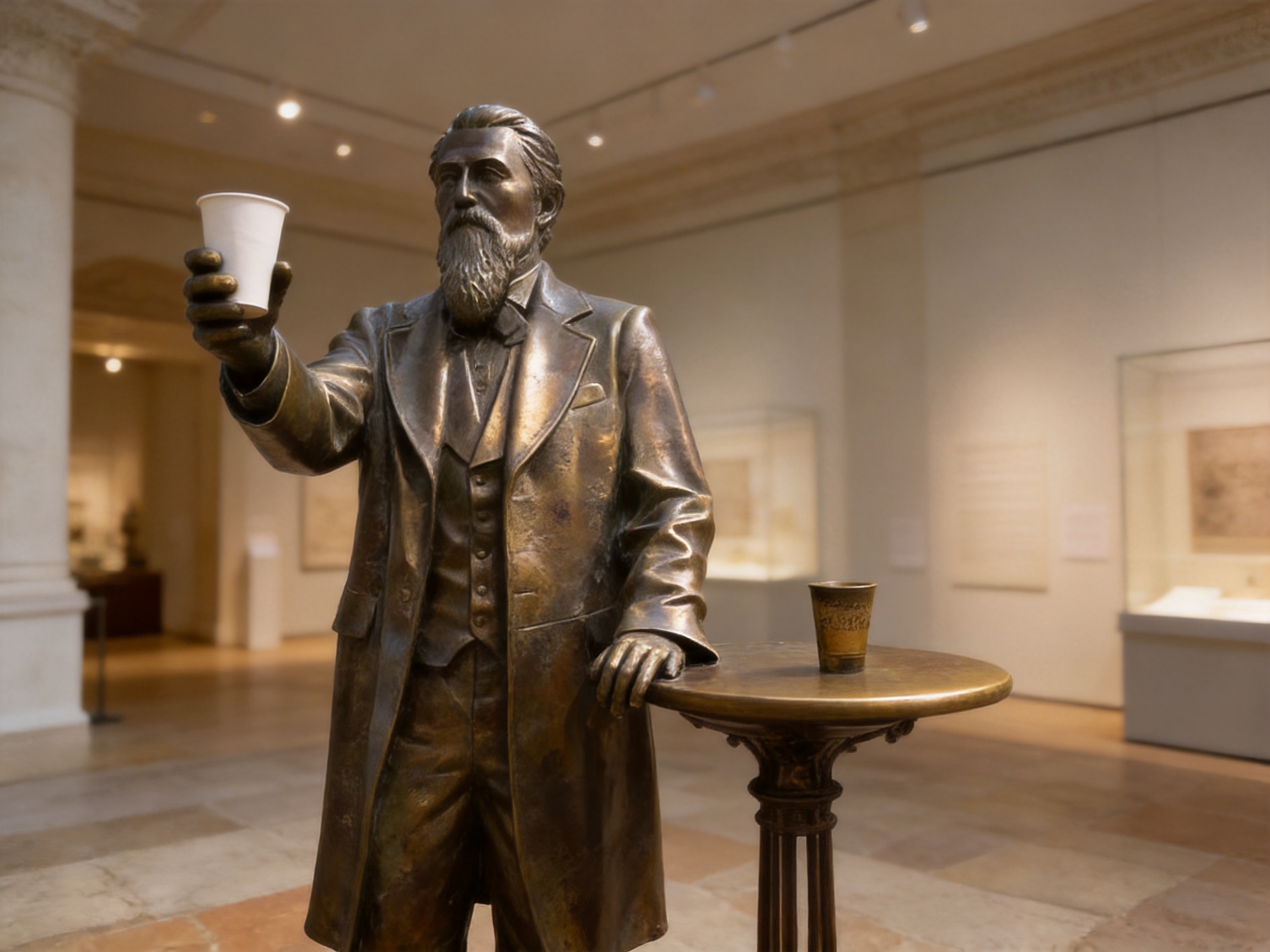
A museum or cultural exhibition can use the sculpture as a three-dimensional introduction to the historical figure. It may be placed near an entrance, within a timeline display, beside archival materials, or in an area designed for visitor photographs. The figure’s pose and props provide a visual bridge between historical documents and the visitor’s physical experience.
Interpretive signage can explain the subject’s background, the period represented by the clothing, and the relevance of the cup and table. Lighting can be directed toward the face and hands while allowing the coat and table to retain softer shadows. The sculpture can therefore function as both an artwork and an orientation device.
The sculpture can serve as a recognizable stop along a themed route. Its human scale allows visitors to approach it naturally, while the bronze finish provides a durable landmark quality. In a cultural tourism setting, it may be positioned in a plaza, garden, heritage-style street, or entrance area.
To maximize its impact, the surrounding space should allow visitors to view the figure from several angles. A modest open area in front of the sculpture can support photography, while the table and figure should remain visually clear from the main pedestrian direction.
Restaurants often use art to create an atmosphere before guests reach their tables. This sculpture can be placed near an entrance, reception counter, bar, lounge, or outdoor dining area. Its historical beverage connection can support a themed interior without requiring extensive architectural renovation.
In hospitality environments, safety and circulation are especially important. The sculpture should not narrow a fire exit, obstruct service paths, or create a collision hazard. If installed outdoors, the base should be securely anchored and the finish should be selected for local weather conditions.
Corporate campuses frequently use sculpture to communicate history, innovation, hospitality, and cultural confidence. A commemorative figure can add human meaning to a large landscape that might otherwise consist mainly of paving, planting, and architecture.
The sculpture can be placed near a visitor center, innovation hall, product exhibition space, employee plaza, or reception garden. Its subject can support a company narrative involving invention, entrepreneurship, or the development of a widely recognized product category.
The installation site should be evaluated before production. Buyers should consider pedestrian flow, viewing distance, sunlight, rain exposure, drainage, lighting, security, and maintenance access. A sculpture that looks powerful in a catalog image may need a different orientation or base treatment to work effectively in a real environment.
The ground must be capable of supporting the sculpture and any base system. Outdoor installations may require a reinforced foundation or engineered anchoring solution, depending on local requirements and site conditions. The manufacturer can provide general product information, but the buyer’s local contractor or engineer should confirm compliance with applicable building and safety regulations.
Lighting can greatly influence the appearance of antique bronze. Warm light can emphasize the historical character of the finish, while directional lighting can bring out the face, coat folds, cup, and table. Excessively flat illumination may reduce the contrast that makes the surface attractive.
Viewing distance should also guide placement. From far away, the silhouette and overall posture should remain clear. From close range, visitors should be able to appreciate facial modeling, clothing details, and the texture of the bronze. A location that supports both types of viewing will produce the strongest visitor experience.
Where photography is expected, the background should be considered carefully. Open sky, planted greenery, masonry, or a restrained architectural surface can help the bronze figure stand out. Cluttered signage, heavy mechanical equipment, or competing visual elements may weaken the sculpture’s presence.
Bronze is durable, but no outdoor material is maintenance-free. Dust, pollution, bird deposits, moisture, and handling can gradually affect the surface. A regular inspection schedule helps preserve the intended appearance and identify problems before they become serious.
Routine cleaning should follow the manufacturer’s recommendations. In many cases, gentle removal of surface dirt with suitable non-abrasive methods is preferable to aggressive polishing. Abrasive tools or harsh chemicals may remove patina, create uneven brightness, or damage protective coatings.
Site managers should inspect the base, anchors, seams, drainage areas, and exposed accessories. The paper cup and table may be touched frequently by visitors, particularly in a themed venue. Clear visitor guidance can reduce climbing, leaning, or unauthorized handling.
Changes in color over time are not necessarily defects. Bronze surfaces can develop gradual tonal variation as they respond to their environment. The objective of maintenance is to preserve the artistic finish and structural condition, not necessarily to keep the sculpture looking exactly as it did on the day of installation.
For projects in coastal, industrial, or highly humid environments, buyers should discuss enhanced protective measures and a suitable maintenance plan. Local exposure conditions can influence the choice of coating, cleaning frequency, and inspection requirements.
Buyers considering this sculpture should begin by defining the role it will play in the site. Is it intended to be a museum object, a landmark, a restaurant centerpiece, a brand-related attraction, or an enterprise campus feature? The answer will affect the preferred size, base, finish, lighting, and amount of interpretive information.
The standard listed height is 1.8 meters. This size is suitable for many pedestrian environments, but a buyer may wish to discuss alternative dimensions. A larger version could function as a stronger landmark in an outdoor plaza, while a smaller version could fit a lobby or compact themed dining space.
Customization may also involve the table design, base style, surface tone, plaque arrangement, and installation orientation. Buyers should request drawings or visual confirmations when changes are significant. The more detailed the approval process, the lower the risk of misunderstanding between the concept and the final production.
Material selection is another important consideration. Bronze is suitable when permanence, traditional monument character, and historical atmosphere are priorities. Stainless steel may be preferred for a contemporary reflective appearance. Marble can provide a classical architectural presence, while fiberglass may support lightweight decorative installations. Weathering steel can suit industrial or landscape-focused environments.
The manufacturer’s ability to work with multiple materials provides a useful basis for broader public art projects. Even when bronze is selected for the central figure, other materials may be incorporated into the surrounding landscape or companion works.
Cost evaluation should include more than the sculpture itself. Buyers should clarify whether the listed price includes the base, packaging, export preparation, shipping, insurance, installation hardware, taxes, customs charges, and on-site assembly. These items can vary according to destination and project scope.
The listed height is 1.8 meters. This scale creates a strong presence while remaining suitable for pedestrian-level interaction in museums, themed parks, restaurants, commercial landscapes, and enterprise campuses.
The sculpture is made from bronze and receives an antique-aged surface treatment. Bronze is appropriate for commemorative work because it supports detailed figurative modeling, durable construction, and a traditional monument-like appearance.
It depicts John Pemberton, the inventor associated with Coca-Cola. He is shown in a nineteenth-century long coat, holding a paper cup, with a vintage high-top round table beside him.
The cup and table provide visual context and make the work more narrative. Rather than presenting only a portrait, the sculpture suggests a historical moment connected with beverage culture, hospitality, and invention.
It is intended for applications that may include outdoor cultural tourism sites, themed parks, commercial landscapes, and enterprise campuses. However, the final finish, foundation, anchoring, protective treatment, and maintenance plan should be reviewed according to the actual climate and site conditions.
The manufacturer presents custom design metal statue production as part of its capabilities. Buyers can discuss adjustments to scale, finish, base, surrounding elements, and related design requirements before production.
Its main distinctions are the named historical subject, the recognizable nineteenth-century costume, the paper cup, the adjacent vintage table, and the antique-aged finish. These elements create a complete commemorative scene rather than a general decorative figure.
Potential users include museums, cultural tourism operators, themed parks, restaurants, hospitality venues, beverage-related attractions, commercial developers, and companies seeking a distinctive campus or reception landmark.
The listed price is ¥41,000. Final project pricing may vary if the buyer requests customization or if additional costs apply for packaging, delivery, installation, taxes, insurance, or site preparation.
Maintenance should generally include regular visual inspection, gentle cleaning using manufacturer-approved methods, checking the base and anchoring system, and monitoring the patina or protective finish. Abrasive cleaning and harsh chemicals should be avoided unless specifically approved.
The composition can serve as a reference for related custom projects featuring historical personalities, founders, inventors, or cultural figures. The pose, props, clothing, and surrounding objects can be adapted to support another narrative while maintaining a similar human-scale commemorative approach.
Buyers should confirm dimensions, material, finish, base design, installation environment, delivery terms, packaging, production schedule, customization requirements, maintenance recommendations, and whether local engineering or installation services are needed.
The Bronze John Pemberton Commemorative Sculpture offers a combination of historical storytelling, figurative realism, durable bronze construction, and practical commercial appeal. Its 1.8-meter scale gives it a natural relationship with visitors, while the long coat, paper cup, vintage table, and antique-aged finish create a complete visual narrative.
Its strongest advantage over generic decorative statues is its ability to communicate a recognizable story. It can serve as a landmark, educational object, photo setting, themed decoration, or corporate landscape centerpiece. Bronze gives the work a permanent and traditional character, while the aged finish helps it harmonize with both heritage environments and modern commercial spaces.
The manufacturing value lies in the coordination of design development, proportion planning, mold preparation, casting, assembly, surface refinement, patination, inspection, and delivery preparation. Jiangsu Xinyesheng Sculpture Co., Ltd.’s stated experience with bronze, stainless steel, marble, fiberglass, weathering steel, and custom metal statue production provides a foundation for buyers seeking a broader sculpture supplier rather than a single standardized product.
For the best result, the sculpture should be selected as part of a complete site plan. Its location, lighting, foundation, visitor circulation, protective finish, and maintenance program should all be considered before installation. With appropriate planning, this bronze figure can become more than a decorative object. It can become a durable cultural marker that gives a museum, themed park, restaurant, commercial landscape, or enterprise campus a memorable human story.
American Foundry Society. Foundry Fundamentals and Metal Casting Practices.
Bronze Sculpture Conservation Guidelines. Principles of Patina Preservation and Surface Care.
International Council of Museums. Approaches to Museum Interpretation and Visitor Engagement.
Public Art Network. Planning Considerations for Public Sculpture and Civic Spaces.
Smithsonian Institution. General Principles of Caring for Outdoor Sculpture.
Visual Resources for Historical Costume and Nineteenth-Century Social Dress.
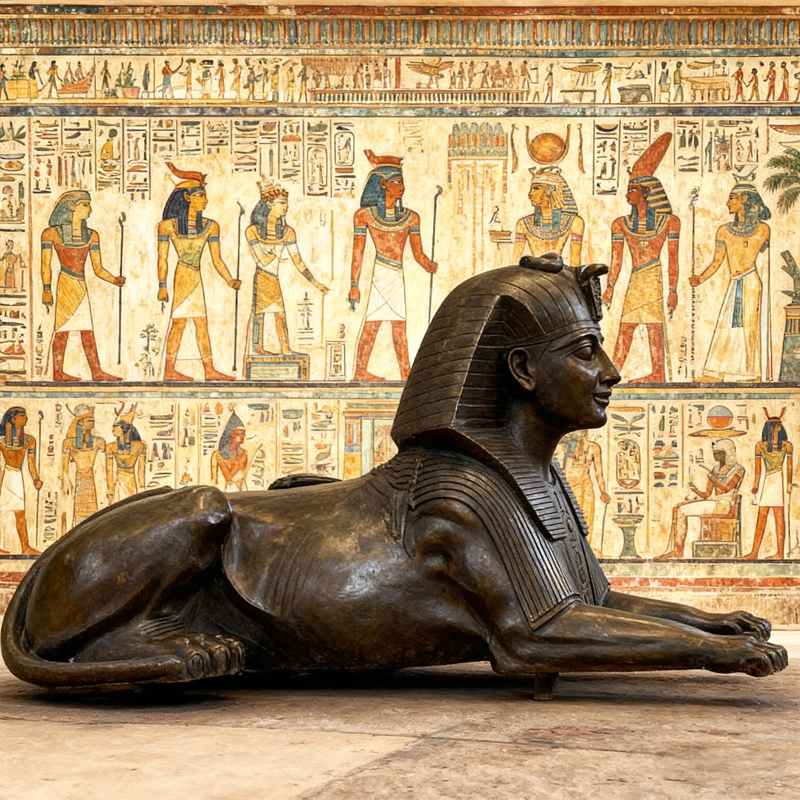 Bronze Large Sphinx Sculpture – Ancient Egyptian Mythology
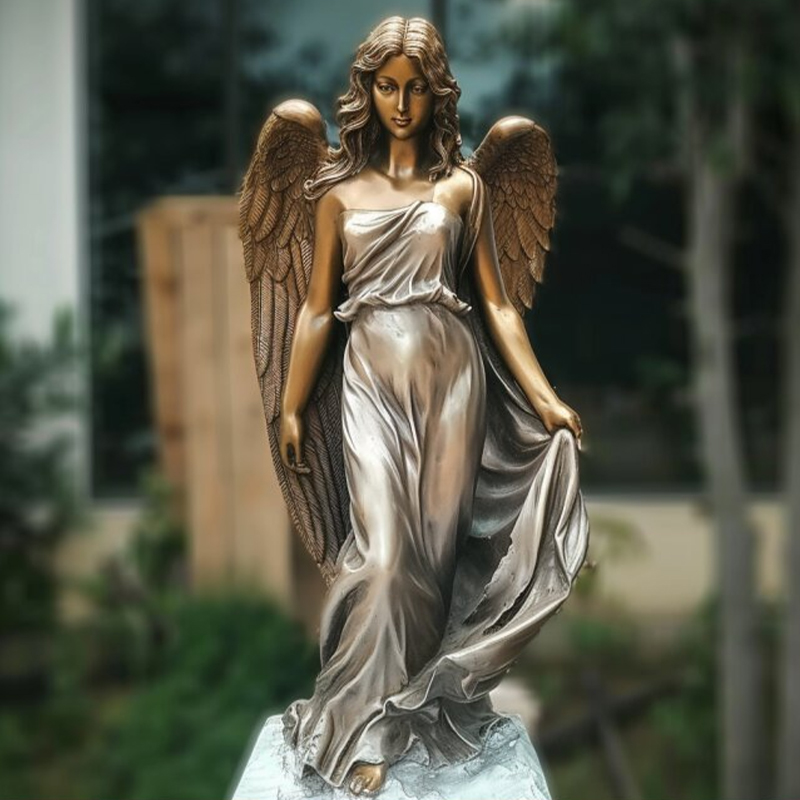 Bronze Angel Sculpture
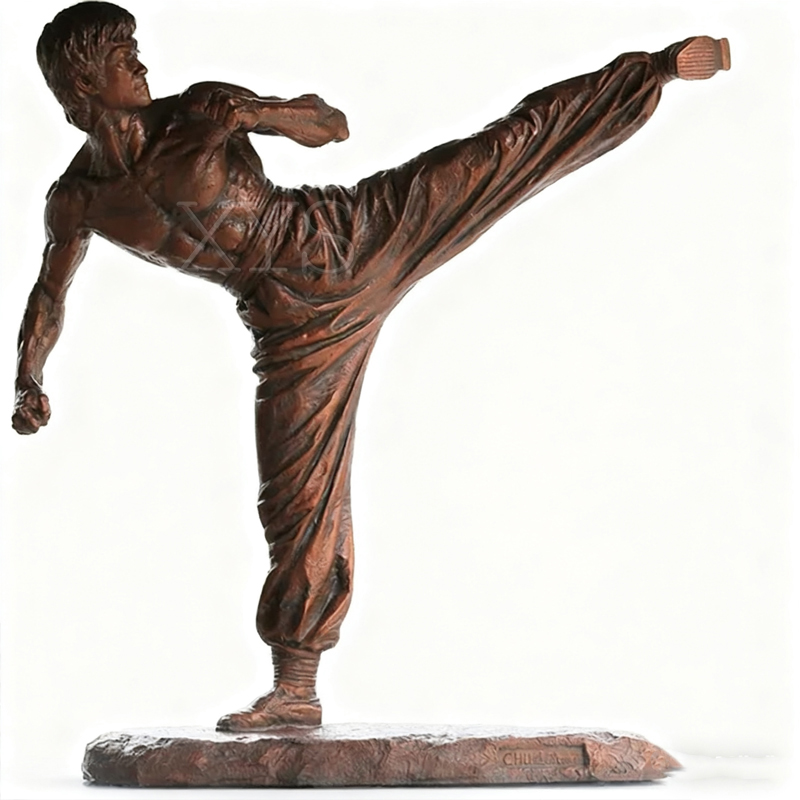 Bronze Life-Size Bruce Lee Martial Arts Sculpture – Outdoor Display
 Bronze Parent-Child Reading Sculpture – Modern Artistic Design
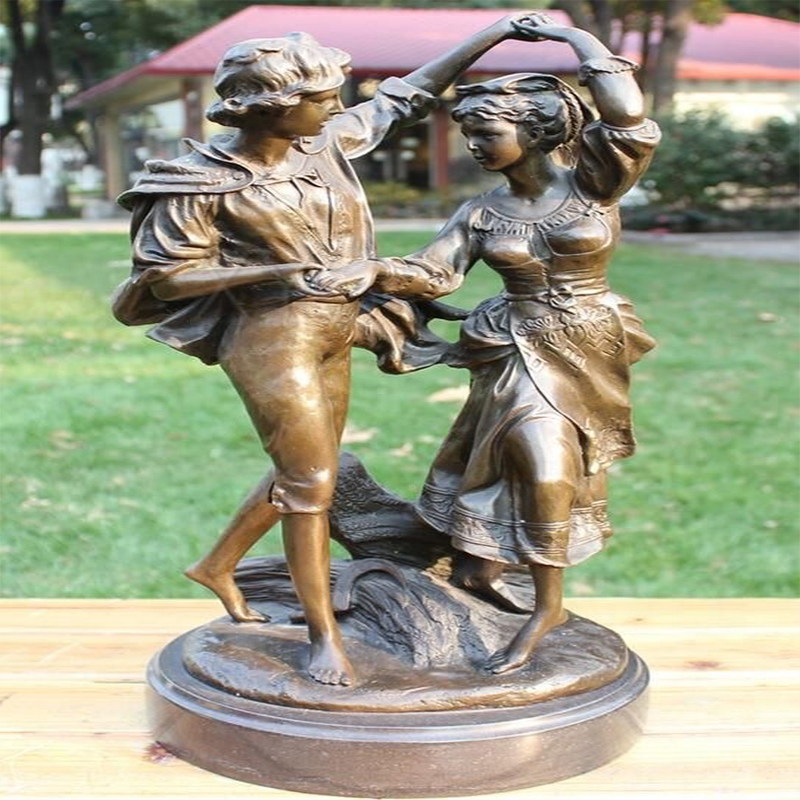 Bronze Life-Size Dancing Couple Sculpture – Heart Figure for Park Decoration
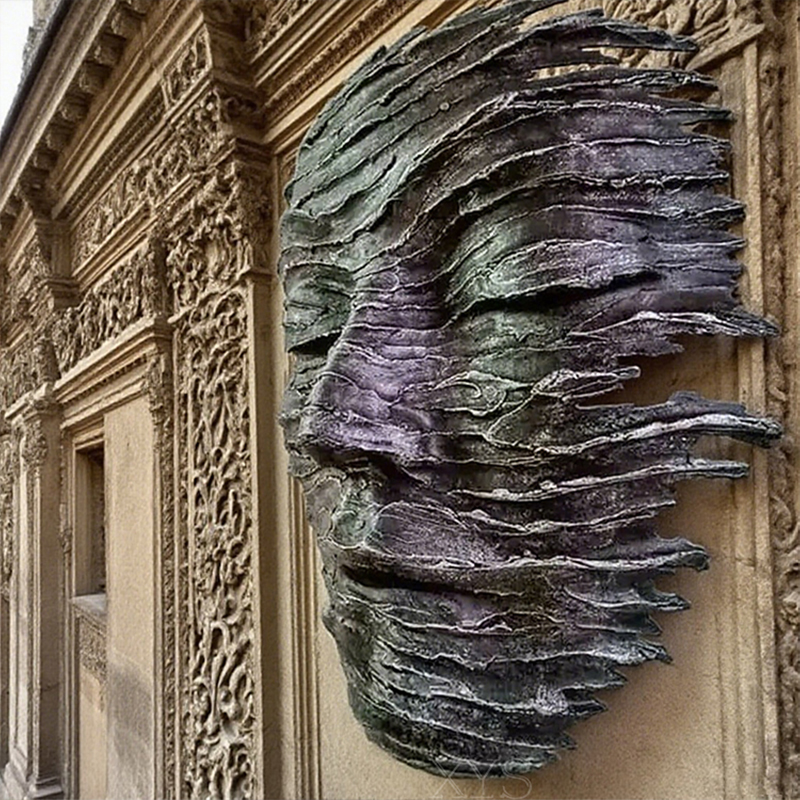 Bronze Abstract Stacked Face Sculpture – Modern Wall Art



Daniel H.

Amanda R.

Robert B.

Jennifer S.

James W.

Barry G.

Michael T.

Emily K.

David L.

Sarah M.


Mikey XV

Jagxue

 English
 Español
 عربى
عربى Français
 italiano
 Deutsch