
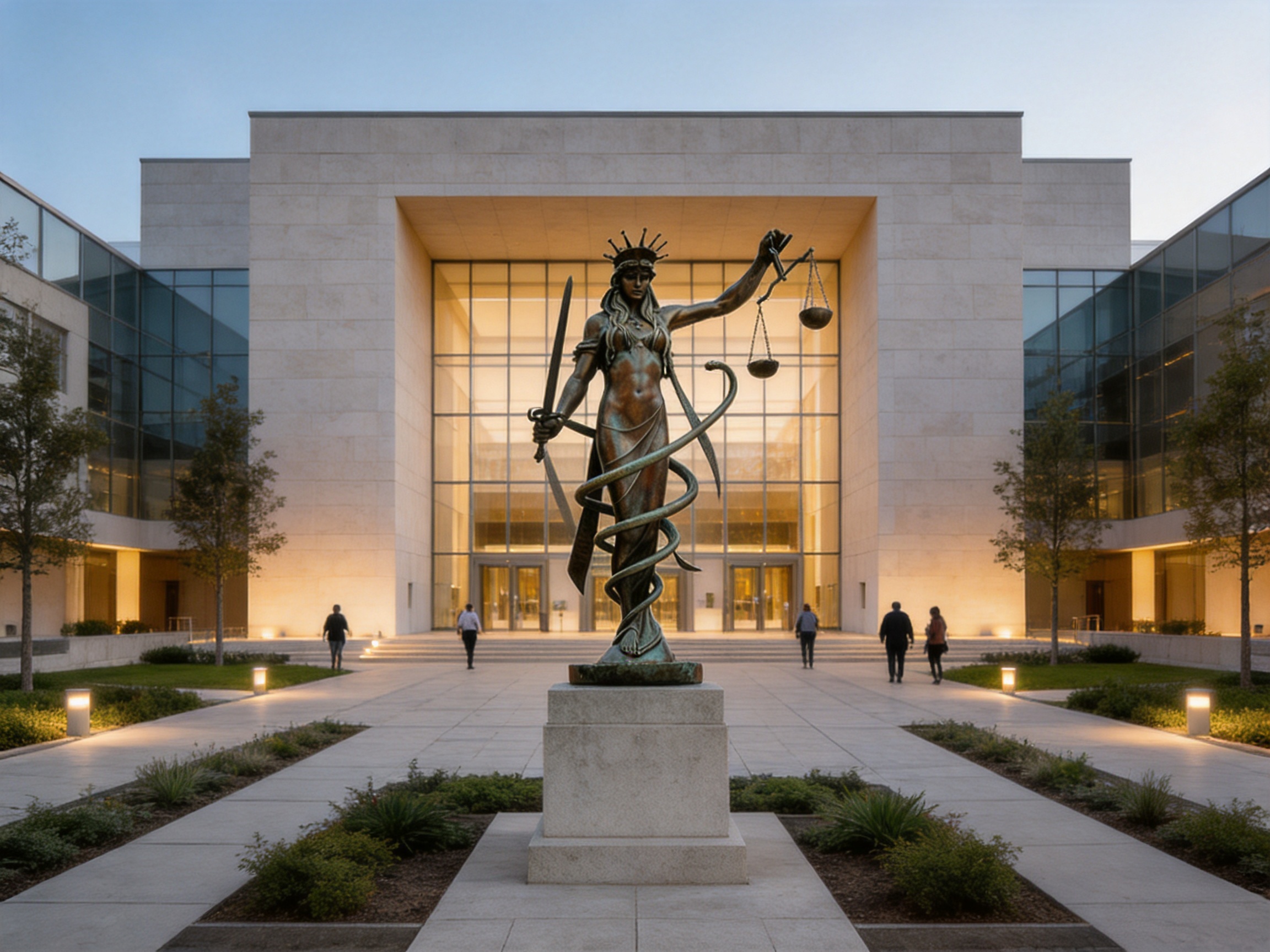
The Bronze Libra Lady Justice Sculpture is a monumental metal artwork designed to express fairness, legal authority, and the enduring pursuit of balance. Combining the recognizable figure of Lady Justice with the visual language of classical European sculpture, this work is suitable for courthouses, law offices, civic plazas, universities, cultural institutions, corporate headquarters, and other spaces where public trust and rational judgment are important.
Standing approximately 200–250 centimeters tall, including its base, the sculpture has a substantial architectural presence without becoming impractical for most indoor atriums, entrance halls, landscaped courtyards, or semi-public environments. Its bronze construction provides a warm, dignified surface, while the figure’s scales and sword create an immediate symbolic message that can be understood across cultures.
More than a decorative statue, this work functions as a visual statement about law and ethics. The balanced scales represent impartial judgment, the sword signifies the authority to enforce justice, and the upright female figure suggests dignity, responsibility, and moral strength. Together, these elements create a sculpture that can serve as both an artistic centerpiece and a meaningful institutional landmark.
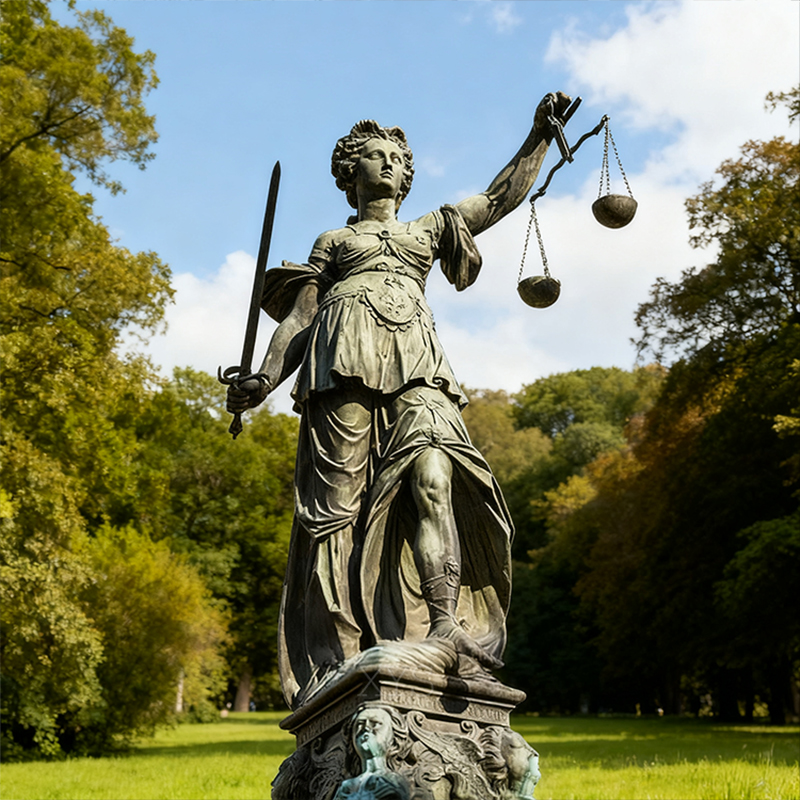
Bronze Libra Lady Justice Sculpture – Metal Model
Content
Lady Justice is one of the most enduring personifications of law in Western visual culture. Her image has appeared in sculpture, architecture, painting, manuscripts, public monuments, and official seals for centuries. Although artistic interpretations vary, the central attributes remain consistent: a woman representing justice, a pair of scales representing balance, and a sword representing lawful authority.
The Bronze Libra Lady Justice Sculpture builds on this established visual tradition while presenting it in a three-dimensional form suitable for contemporary public and private spaces. The use of the word “Libra” reinforces the connection with balance. In the sculpture, balance is not merely a decorative idea. It is the central principle that gives the artwork its intellectual and emotional force.
The scales can be interpreted as a reminder that evidence, arguments, rights, and responsibilities must be considered fairly. They also communicate the importance of proportion and careful judgment. In a courthouse, the scales may reflect the formal responsibilities of the legal system. In a law firm, they can represent professional integrity and advocacy. In a university or cultural venue, they may invite visitors to think about ethics, civic responsibility, and the relationship between law and society.
The sword adds a contrasting visual quality. While the scales are associated with deliberation and balance, the sword expresses decisiveness. Justice requires thought, but it also requires the authority to reach and uphold a decision. This combination gives the sculpture a strong compositional structure: one hand communicates measured evaluation, while the other conveys firmness and action.
The female figure provides a human dimension. Instead of presenting justice as an abstract geometric symbol, the sculpture gives the concept a dignified and approachable form. Her posture, clothing, gesture, and expression can create a sense of solemnity without appearing aggressive. This makes the work appropriate for locations that seek authority and seriousness while still welcoming visitors, employees, students, and members of the public.
Bronze has been used for important sculpture and architectural decoration for thousands of years. Its popularity comes from a combination of strength, workability, expressive surface quality, and long-term visual appeal. For a symbolic figure such as Lady Justice, bronze offers advantages that are particularly relevant to institutional and public installations.
Bronze is a strong metal capable of supporting complex sculptural forms when properly designed, cast, assembled, and finished. It is well suited to large-scale figures with extended elements such as a sword, scales, drapery, and ornamental details. When the sculpture is manufactured and installed correctly, bronze can remain an enduring part of a site for many years.
The product information identifies the material as naturally weather resistant and corrosion protective. This makes the sculpture suitable for both indoor and outdoor applications, subject to appropriate site conditions, foundation preparation, drainage, installation, and maintenance. Outdoor exposure varies widely, so project-specific advice should be obtained for coastal locations, areas with heavy pollution, regions with freeze-thaw cycles, or places where deicing salts are used.
Bronze is valued not only for strength but also for its surface. Depending on the selected finish, the metal can appear warm, dark, aged, polished, or subtly varied. A patinated surface may emphasize recessed details while allowing raised forms to catch natural or artificial light. This is especially useful for a robed figure, because folds, contours, and symbolic objects can become visually legible from a distance.
Unlike many painted outdoor materials, bronze can develop a mature appearance over time. The surface may gradually acquire additional character as it responds to its environment. With an appropriate protective treatment and routine care, the sculpture can maintain a dignified appearance while developing the visual depth associated with traditional monumental bronze.
Lady Justice depends on recognizable details. The scales must read clearly as scales, the sword must maintain a convincing profile, and the clothing must communicate classical dignity. Bronze permits the production of both broad structural masses and finely modeled details. This balance is important because a sculpture that is too simplified may lose its symbolic identity, while one with excessive detail may become difficult to understand at architectural scale.
The bronze medium also allows the artist and manufacturer to create a convincing transition between human anatomy, fabric, metal objects, and the base. These transitions contribute to the sculpture’s overall sense of unity. The result can be more visually substantial than a lightweight decorative model made from materials that lack the same mass and tonal richness.
The listed height of the sculpture is approximately 200–250 centimeters, including the base. This range makes the work large enough to function as a central installation while remaining suitable for many buildings and landscaped settings. Before ordering, buyers should evaluate ceiling clearance, doorway dimensions, elevator capacity, loading access, foundation depth, viewing distance, and local safety requirements.
| Item | Product Information | Planning Consideration |
|---|---|---|
| Artwork | Bronze Libra Lady Justice Sculpture | Suitable for legal, civic, cultural, educational, and corporate environments |
| Primary material | Bronze | Offers a durable metal structure and a traditional sculptural appearance |
| Approximate height | 200–250 centimeters including base | Confirm entrance, ceiling, transport, and installation clearances |
| Key symbols | Scales and sword | Communicate balance, authority, judgment, and law |
| Potential placement | Indoor or outdoor | Assess drainage, anchoring, weather exposure, and access control |
| Listed price range | USD 9,710.32–11,896.66 | Final cost may depend on size, finish, packing, shipping, installation, and customization |
The stated price range provides an initial reference for budget planning. A final quotation should be requested for the selected height, surface finish, base design, packaging method, shipping destination, and installation requirements. International buyers should also consider customs charges, import taxes, unloading equipment, local foundations, insurance, and professional installation.
A sculpture of this scale should be treated as an architectural object rather than an ordinary decorative purchase. Its placement affects circulation, sightlines, lighting, security, and the overall identity of the site. A well-prepared project brief should include photographs or drawings of the proposed location, the desired viewing distance, preferred finish, installation surface, environmental conditions, and any branding or architectural restrictions.
Bronze is not the only material suitable for a Lady Justice sculpture. Stainless steel, marble, fiberglass, and weathering steel can all produce compelling results. However, each material creates a different visual and functional experience. The bronze model has several competitive strengths, particularly when the buyer wants classical symbolism, sculptural depth, and a long-term institutional presence.
Stainless steel often produces a clean, contemporary, and reflective appearance. It can be highly effective in modern plazas, transportation hubs, and minimalist architectural settings. Its reflective surface may also make a sculpture appear lighter and more dynamic. However, stainless steel generally communicates modern technology more readily than historical continuity.
Bronze offers a warmer and more traditional visual language. For a figure associated with ancient concepts of law and civic order, this can be a major advantage. Bronze also tends to reveal modeling through tonal variation rather than reflection. Visitors can often read the form more comfortably under changing light because the surface does not depend on mirror-like reflections to create interest.
For courthouses and law offices that want to communicate stability, precedent, and institutional memory, bronze may feel more appropriate than a highly polished steel figure. It can also harmonize with stone, brick, wood, classical columns, landscaped greenery, and traditional architectural materials.
Marble is associated with classical sculpture and has an unmistakable sense of permanence. A marble Lady Justice can look elegant and monumental, particularly in a carefully controlled interior. However, marble is a natural stone with directional veining and inherent brittleness. Thin projecting elements, sharp edges, and delicate accessories may require careful structural planning.
Bronze can provide greater flexibility for extended components such as a sword or scales. It is also easier to produce in a range of patinated tones. The darker color of bronze can create stronger contrast in outdoor environments, while recessed details may remain visually clear in conditions where white stone can appear flat or overexposed.
Marble may require particular attention to staining, water penetration, surface erosion, and accidental impact. Bronze also needs care, but its metal construction and protective finishing system can be advantageous for an outdoor sculpture exposed to varied weather.
Fiberglass is often selected for its relatively low weight, flexibility in production, and potentially lower initial cost. It can be useful for temporary displays, commercial themes, exhibition props, and installations where transport weight is a major concern. Fiberglass can also accept painted finishes in a wide range of colors.
The bronze Lady Justice Sculpture offers a more substantial tactile and visual experience. Its metal construction communicates permanence and importance. In a legal or civic setting, this physical presence can support the meaning of the artwork. Bronze is also less dependent on a painted surface to create its identity. The material itself contributes to the appearance.
Fiberglass may require careful protection from impact, ultraviolet exposure, surface cracking, and finish deterioration. Bronze is not maintenance-free, but it is widely recognized as a traditional material for durable public sculpture and may be perceived as a stronger long-term investment for a permanent landmark.
Weathering steel develops a rust-colored protective layer and is frequently used in contemporary landscape architecture. Its earthy color can blend effectively with gardens, industrial environments, and modern public art. It is especially appropriate for abstract forms and architectural planes.
Bronze provides more refined modeling for a figurative work. The nuanced surface can distinguish facial features, drapery, hands, scales, and other details that are central to the identity of Lady Justice. Weathering steel may be visually powerful, but its industrial character can compete with the humanistic and classical associations of the figure.
The choice ultimately depends on the site, budget, architectural style, maintenance plan, and desired message. For buyers seeking a balanced combination of tradition, durability, symbolic clarity, and artistic dignity, bronze is a particularly strong option.
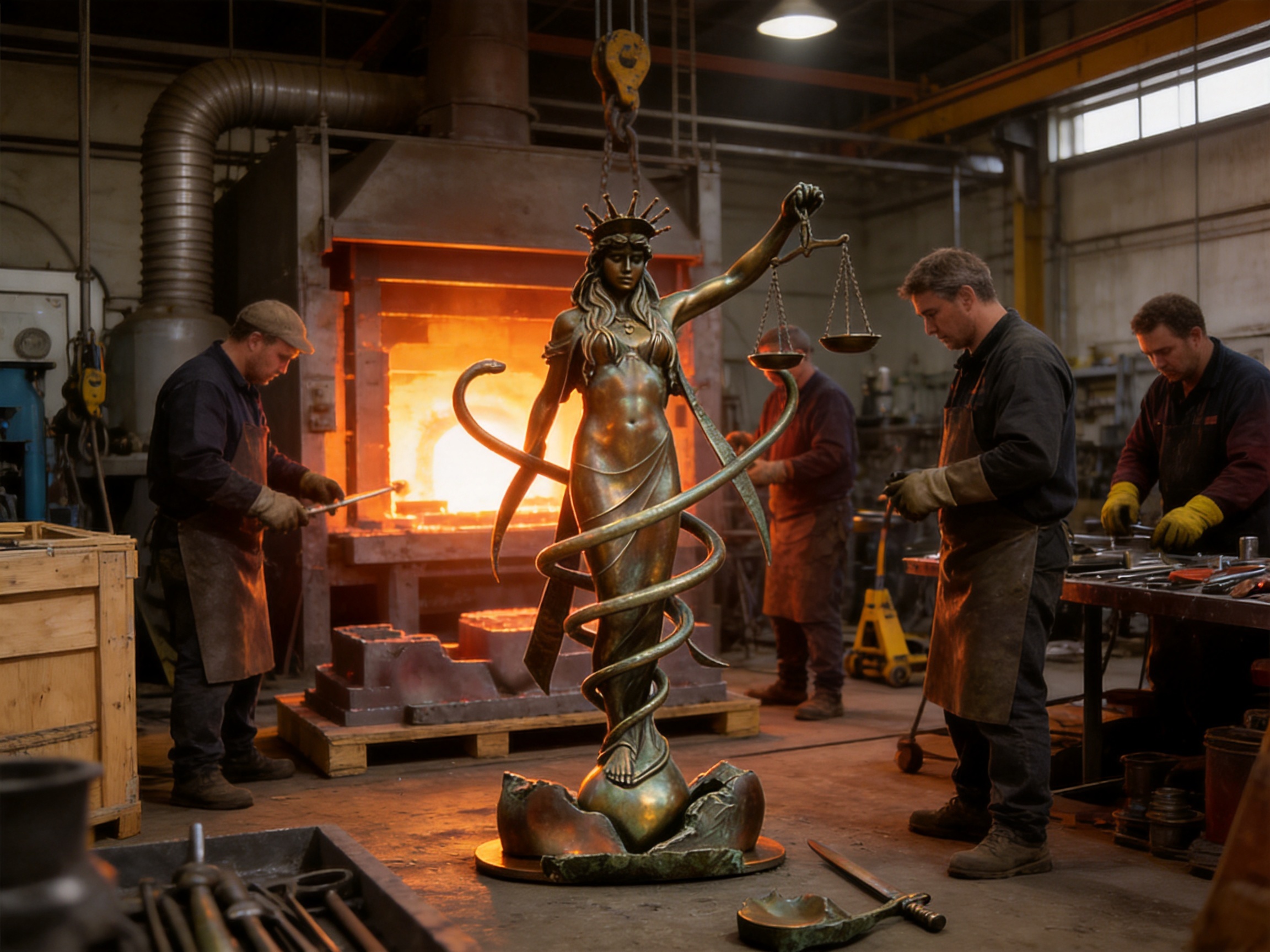
The manufacture of a high-quality bronze sculpture involves more than simply shaping metal. It requires the coordination of artistic modeling, dimensional planning, mold preparation, metal production, surface finishing, quality inspection, and delivery logistics. Jiangsu Xinyesheng Sculpture Co., Ltd. is presented as a China-based sculpture manufacturer and supplier specializing in custom metal statues and European-style sculpture. Its product range includes bronze, stainless steel, marble, fiberglass, and weathering steel sculptures.
This multi-material scope is an important manufacturing strength because it allows the supplier to compare materials according to project requirements rather than forcing every design into one production method. A customer choosing the Bronze Libra Lady Justice Sculpture can discuss finish, size, base treatment, outdoor suitability, and related fabrication considerations within a broader sculpture-production environment.
The first stage of a professional sculpture project is to translate an artistic concept into a manufacturable form. For Lady Justice, this includes determining the figure’s posture, the angle of the sword, the position and proportion of the scales, the arrangement of clothing, the shape of the base, and the visual relationship between the figure and its intended location.
At monumental scale, small changes can have a significant effect. A hand that appears natural at studio size may look too small after enlargement. A sword that is proportionally accurate in a drawing may need additional structural consideration when manufactured in metal. The base must support the visual composition as well as the physical load. These issues make technical preparation essential.
A capable manufacturer should review reference images, drawings, dimensions, and customer expectations before production. If customization is requested, the buyer should confirm whether the revised design affects price, production time, structural reinforcement, packaging, or installation.
Figurative bronze sculpture commonly begins with a physical model or a digitally prepared form. The model is carefully developed to preserve anatomy, gesture, facial expression, clothing folds, symbolic objects, and the intended artistic style. When the work is produced at a larger size, the enlargement process must preserve visual proportions and surface character.
Mold development is a critical stage because it determines how successfully the final metal reproduces the model. Complex figures require attention to undercuts, hollow sections, joins, thickness, and the separation of mold components. A well-planned mold can capture subtle texture while also allowing the metal sections to be removed, assembled, and finished efficiently.
For a Lady Justice sculpture, special attention should be given to the scales, sword, fingers, fabric edges, and areas where separate parts meet. These elements must be both visually accurate and sufficiently robust for handling, transport, and installation.
Bronze sculptures are often produced as hollow cast sections rather than as one solid block. Hollow construction can reduce unnecessary weight while retaining the visual mass of the finished work. Individual sections may be cast separately and then joined, chased, ground, and refined.
The assembly process requires careful alignment. A poorly aligned shoulder, arm, sword, or base connection can affect the entire composition. Professional fabrication therefore includes the inspection of seams, the refinement of transitions, and the correction of surface irregularities before patination.
Structural considerations are especially important for outdoor installations. Wind exposure, the length of projecting elements, the connection between the sculpture and base, and the anchoring system should be evaluated according to local conditions. The supplier and the project engineer may need to coordinate on foundation design and attachment details.
After casting and assembly, the surface is refined to restore the intended modeling. This work may include removing casting marks, smoothing or sharpening transitions, correcting small imperfections, and clarifying details that need to remain visible at a distance.
Chasing is particularly important in figurative sculpture because the viewer’s attention naturally moves across the face, hands, clothing, and symbolic attributes. Subtle corrections can make the difference between a generic figure and a convincing representation of Lady Justice. The finishing team must preserve the artist’s intended texture while ensuring that the overall surface appears unified.
Bronze patination uses controlled chemical and thermal processes to create a selected color and tonal effect. A dark brown, medium bronze, greenish, or varied antique appearance may be considered depending on the architectural setting. The final choice should be evaluated under the actual lighting conditions of the intended site.
Protective coatings can help reduce the effects of moisture, pollutants, fingerprints, and handling. Outdoor sculptures may require periodic renewal of protective wax or another appropriate maintenance treatment. The exact system should be discussed with the manufacturer because climate, exposure, local air quality, and cleaning practices affect long-term performance.
A strong manufacturing process treats finishing as part of the sculpture’s design rather than as a final cosmetic step. The patina influences how the figure is read, how the scales and sword stand out, and how the sculpture relates to stone, glass, concrete, vegetation, and other surrounding materials.
Jiangsu Xinyesheng Sculpture Co., Ltd. is identified in the supplied material as a sculpture manufacturer located in Jiangsu Province, China. The company’s product coverage includes multiple sculpture categories and materials, including bronze human figure sculptures. This breadth suggests an ability to support different design languages, from classical figurative work to contemporary metal installations.
For international buyers, a supplier with experience across several sculpture materials can be valuable. The customer may begin with a bronze concept and later compare it with stainless steel, marble, fiberglass, or weathering steel alternatives. This makes it easier to assess appearance, durability, weight, maintenance, and budget within the same general product-development conversation.
The company also presents custom design metal statues and European-style sculpture as part of its market focus. The Bronze Libra Lady Justice Sculpture fits this direction because it combines a classical European-derived figure with the practical requirements of a modern architectural installation.
Custom manufacturing may involve adjustments to height, base shape, surface finish, hand position, sword orientation, scale proportions, inscription panels, or surrounding decorative elements. Any such change should be agreed in writing before production. Buyers should request drawings, approved renderings, material specifications, finish samples, and packing information as appropriate for the project.
The company’s location in Jiangsu places it within an established Chinese manufacturing region with access to metalworking, fabrication, transportation, and export logistics. That regional industrial environment can support coordinated production and shipment of large sculpture projects. Nevertheless, every buyer should independently confirm production schedules, inspection procedures, export documents, packaging standards, and delivery responsibilities before placing an order.
A courthouse is the most direct setting for a Lady Justice sculpture. The artwork can be placed in an entrance atrium, public lobby, ceremonial staircase, landscaped forecourt, or central courtyard. Its symbolism immediately connects the building with fairness, evidence, law, and institutional responsibility.
Placement should support the dignity of the site without obstructing public movement or creating security concerns. A broad viewing distance may call for a strong silhouette and clear separation between the figure, scales, and sword. Lighting should reveal the face and hands while creating enough contrast to preserve the sculpture’s dimensionality.
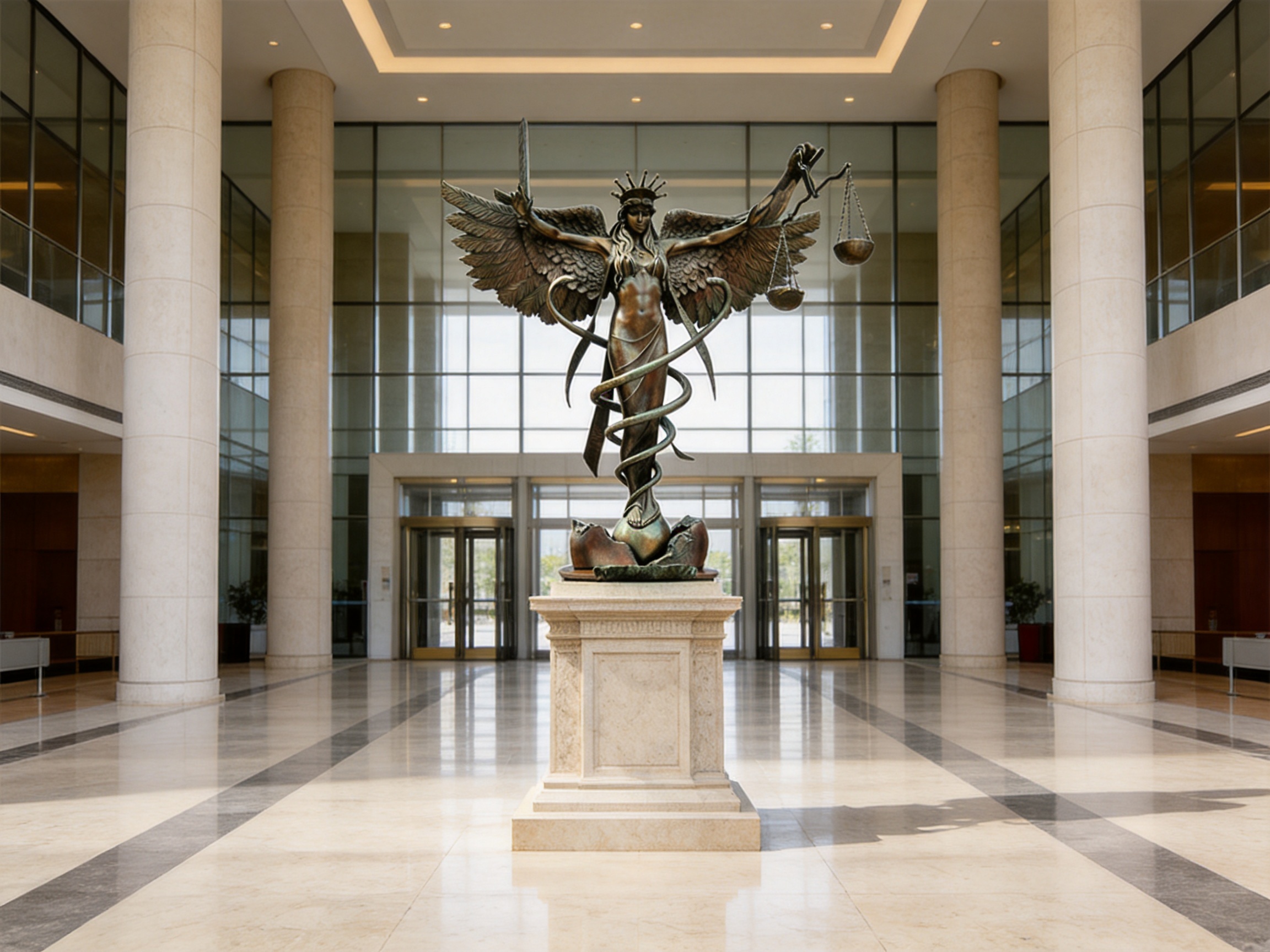
Law firms may use the sculpture in a reception area, conference center, private garden, or client-facing lobby. In this context, Lady Justice can express professional ethics, advocacy, diligence, and respect for the legal process. The bronze finish can complement wood paneling, stone floors, neutral walls, and modern glass architecture.
For a smaller interior or a more intimate reception area, the customer may request a reduced height within the available range or discuss a custom version. The sculpture should be large enough to command attention but proportionate to the room, furniture, and visitor circulation.
Public authorities may install a Lady Justice sculpture in a civic plaza, administrative complex, municipal garden, or public-service center. Outdoor placement gives the work a landmark function. It can help define a gathering space, mark an entrance, or create a symbolic focal point for ceremonies and public events.
In an outdoor setting, the site plan should account for water drainage, ground settlement, snow or rainfall, wind, pedestrian access, vandalism risk, and nighttime lighting. A properly engineered foundation and secure anchoring system are essential for a large metal figure.
Law schools, universities, libraries, and research institutions can use the sculpture to connect legal education with broader themes of citizenship and public responsibility. The work may be installed near a law faculty, library entrance, lecture hall, or academic courtyard.
In an educational context, an accompanying plaque may explain the symbolism of the scales and sword. Such interpretation can make the sculpture more engaging for students and visitors. The bronze figure can become a recognizable meeting point and a visual expression of the institution’s commitment to knowledge, reason, and ethical practice.
Museums, galleries, heritage centers, and cultural parks may select the work as part of an exhibition on law, mythology, civic ideals, or European artistic traditions. The sculpture’s classical subject allows it to interact with historical architecture while remaining understandable to contemporary audiences.
Installation should be planned before the sculpture leaves the factory. The buyer should confirm the finished dimensions, total shipping weight, crate size, center of gravity, lifting points, base configuration, and anchoring requirements. If the sculpture arrives in multiple sections, the assembly sequence should be documented clearly.
The foundation must be suitable for the ground conditions and the weight of the artwork. Outdoor installations may require a reinforced concrete footing with embedded anchors or a related engineered system. The exact design depends on local building regulations, soil conditions, wind exposure, seismic requirements, and the geometry of the sculpture.
Indoor installations also require care. The floor must support the load, doors and elevators must accommodate the shipment, and protective measures should be used during positioning. A professional rigging or installation team is recommended for a sculpture of this scale.
Routine maintenance is generally straightforward but should not be ignored. Dust and surface deposits can be removed with soft materials and suitable water-based cleaning methods. Abrasive pads, harsh acids, strong solvents, and unapproved pressure washing may damage the patina or protective coating.
Outdoor bronze should be inspected periodically for accumulated dirt, standing water, biological growth, coating wear, or signs of mechanical damage. Depending on the environment, a maintenance program may include gentle cleaning and the renewal of a protective wax or coating. Coastal and industrial locations may require more frequent inspections than clean indoor environments.
Any repair should be documented. Changes to the surface can affect the uniformity of the patina, so restoration work should be carried out by personnel familiar with bronze sculpture. The objective is to preserve the artistic finish rather than make the sculpture appear artificially new.
Buyers comparing bronze sculpture suppliers should evaluate more than a single product photograph. The quality of the final work depends on modeling, proportions, casting, assembly, finishing, packing, communication, and installation support. A low price may not represent good value if the sculpture has weak details, unstable components, poor packaging, or inadequate after-sales assistance.
Request clear images of the actual sculpture or a closely related production sample. Examine the face, hands, clothing folds, scales, sword, base, seams, and surface finish. Ask whether the displayed image represents the exact model, a customized variation, or a general reference.
Confirm the material. “Bronze” should be discussed in relation to the intended construction, finish, and any supporting components. Buyers should ask about the bronze alloy or material specification when relevant to the project, as well as the protective treatment and expected maintenance.
Review the dimensions carefully. The listed height includes the base, but the buyer should also confirm width, depth, approximate weight, and the dimensions of any detachable parts. These details affect shipping, installation, foundation design, and placement.
Ask for production milestones. A typical project may include design confirmation, model approval, mold preparation, casting, assembly, surface refinement, patination, final inspection, packing, and shipment. The exact sequence can vary, but written confirmation helps reduce misunderstandings.
Discuss quality inspection before shipment. Depending on the project, the buyer may request photographs, video inspection, dimensional checks, finish approval, or third-party inspection. Large institutional purchases benefit from a documented acceptance process.
Packaging is another important competitive factor. Bronze sculpture sections should be protected from impact, movement, moisture, and abrasion during transit. The crate should be appropriate for the size and fragility of the parts. Buyers should clarify whether export packing, insurance, and delivery to the final site are included in the quotation.
The sculpture’s symbolic clarity depends partly on its surroundings. A crowded background may make the sword and scales difficult to read, while a carefully planned setting can emphasize the figure’s silhouette. Behind the sculpture, use a background with enough tonal contrast to reveal the bronze surface.
Lighting should be layered rather than excessively bright. A combination of soft frontal light and subtle side illumination can reveal facial features, fabric folds, and the contours of the symbolic objects. Outdoor lighting should avoid harsh glare that makes the bronze appear flat or causes visitors to look directly into the light source.
The viewing distance should influence the level of detail and base design. From a distance, the overall outline and gesture matter most. At closer range, the viewer will notice the face, hands, scales, sword, and surface texture. The base should provide a stable visual transition between the figure and the architecture or landscape.
Color relationships also matter. Bronze can complement neutral stone, warm brick, dark wood, concrete, glass, and green planting. A darker patina may stand out against light walls, while a lighter bronze finish may work well against darker architectural backgrounds. Finish selection should be based on real samples whenever possible.
The listed price of USD 9,710.32–11,896.66 places the sculpture in a range appropriate for a substantial custom decorative and symbolic installation. A buyer should evaluate the total project value rather than comparing the initial price alone.
A long-lasting bronze sculpture can provide decades of visual service when properly installed and maintained. It may become an identifiable feature of a building, support institutional branding without using commercial signage, and contribute to the character of the surrounding property. For a courthouse or law firm, the sculpture can communicate values that would be difficult to express through ordinary interior decoration.
Bronze also offers adaptability. The same work can be placed in an interior atrium, a covered entrance, a garden, or a civic plaza. Its classical design can work with historic architecture and contemporary construction. This flexibility may reduce the risk that the artwork becomes visually outdated after a renovation or change in interior style.
Buyers should still budget responsibly. The complete project may include customization, sample approval, crating, inland transport, international freight, customs clearance, taxes, insurance, unloading, foundation work, lifting equipment, assembly, lighting, and ongoing maintenance. Requesting a detailed quotation helps establish a realistic total cost.
The sculpture symbolizes fairness, balance, legal authority, ethical judgment, and the responsibility to uphold justice. The scales represent impartial evaluation, while the sword represents the power to make and enforce decisions according to law.
It can be used in courthouses, law firms, government buildings, civic plazas, universities, libraries, museums, cultural venues, corporate headquarters, entrance halls, courtyards, gardens, and other locations that require a dignified symbolic focal point.
The supplied product information describes the bronze as weather resistant and corrosion protective, making it suitable for indoor and outdoor environments. Outdoor suitability also depends on the finish, local climate, foundation, drainage, anchoring, and maintenance plan. These conditions should be confirmed for each project.
The listed height is approximately 200–250 centimeters, including the base. Buyers should confirm the exact height, width, depth, weight, and detachable components before ordering.
Custom design is part of the supplier’s stated market focus. Potential adjustments may include size, base style, finish, posture, decorative details, or other project-specific requirements. Customization should be approved through drawings or renderings before production.
Stainless steel generally creates a more modern and reflective appearance. Bronze offers a warmer, more traditional, and more historically connected visual language. For Lady Justice, bronze may better support themes of continuity, law, civic tradition, and institutional dignity.
Marble has a classical appearance but may be more vulnerable to chipping and damage in projecting or delicate components. Bronze provides strong sculptural flexibility, a range of patinated finishes, and a durable metal structure suitable for complex details such as scales and swords.
A quotation should ideally identify the sculpture size, material, finish, base, customization, packaging, production time, shipping terms, insurance, installation responsibilities, and any taxes or additional charges. Buyers should request clarification if any of these items are not specified.
Use gentle cleaning methods and avoid abrasive materials, harsh chemicals, and unapproved pressure washing. Outdoor sculptures should be inspected periodically, and protective wax or coating may need renewal according to the environment and manufacturer’s recommendations.
The supplied product category lists bronze, stainless steel, marble, fiberglass, and weathering steel sculptures. This range allows buyers to compare different materials and select a solution based on appearance, durability, weight, maintenance, and site requirements.
The listed price range is USD 9,710.32–11,896.66. The final price may change according to size, finish, customization, packing, transportation, installation, and destination-related costs.
The Bronze Libra Lady Justice Sculpture combines a widely recognized symbol with the enduring qualities of bronze. Its scales and sword communicate balance and authority, while the dignified female figure creates a human and memorable representation of justice. With an approximate height of 200–250 centimeters including the base, it is substantial enough for institutional use while remaining adaptable to many architectural and landscape settings.
Compared with stainless steel, marble, fiberglass, and weathering steel, bronze offers a particularly effective combination of classical character, surface depth, structural strength, and long-term symbolic value. Its warm patina can complement both traditional and contemporary environments, and its material identity reinforces the seriousness of the subject.
Jiangsu Xinyesheng Sculpture Co., Ltd. presents this product within a broader manufacturing range that includes several sculpture materials and custom European-style metal statues. The supplier’s multi-material focus, China-based manufacturing location, and stated custom design capability can support buyers seeking a tailored artwork for a legal, civic, cultural, educational, or corporate project.
The strongest results will come from careful planning. Buyers should confirm the design, dimensions, finish, materials, structural requirements, quotation, packaging, delivery terms, installation method, and maintenance expectations before production begins. When these details are coordinated effectively, the sculpture can become more than an ornament. It can serve as a durable public statement about fairness, responsibility, reason, and trust.
1. Encyclopaedia Britannica. “Lady Justice and the Historical Development of Justice Personifications.” General reference on the symbolism of scales, swords, and legal imagery.
2. American Foundry Society. General technical references on metal casting principles, foundry practice, and quality considerations.
3. National Park Service. Guidelines for the care and maintenance of outdoor sculpture and historic metal artworks.
4. International Council of Museums. Conservation principles for outdoor cultural objects and public artworks.
5. Product information supplied for the Bronze Libra Lady Justice Sculpture, including dimensions, price range, material, applications, and manufacturer details.
Bronze Libra Lady Justice Sculpture – Metal Model
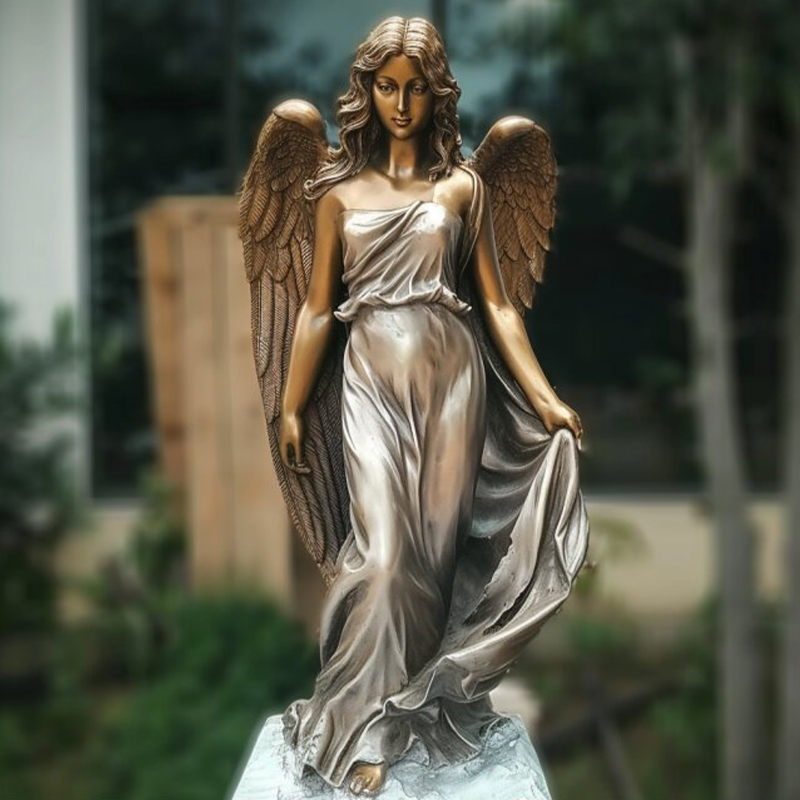 Bronze Angel Sculpture
 Bronze Parent-Child Reading Sculpture – Modern Artistic Design
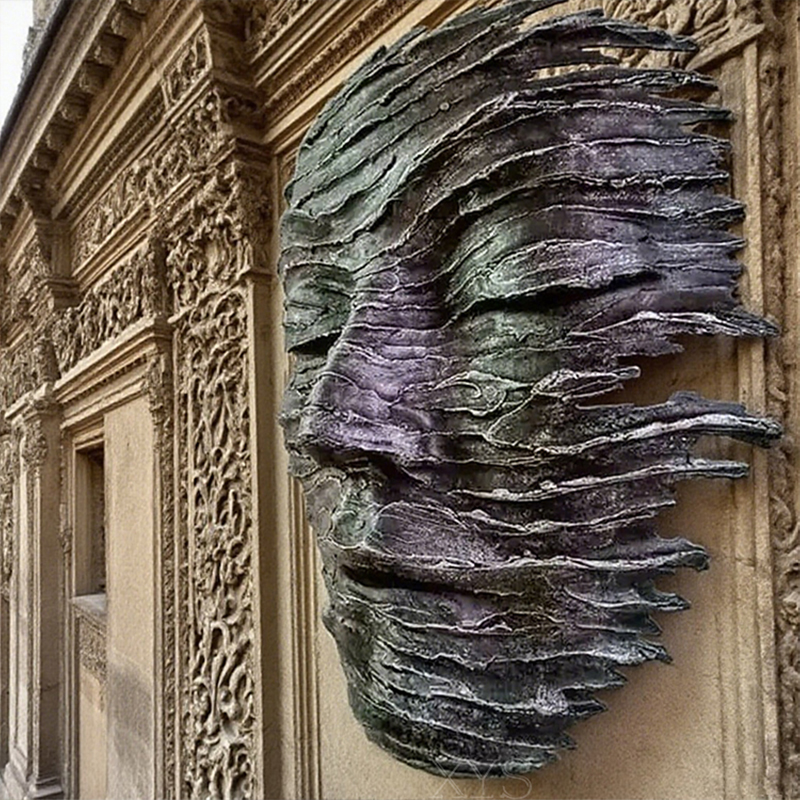 Bronze Abstract Stacked Face Sculpture – Modern Wall Art
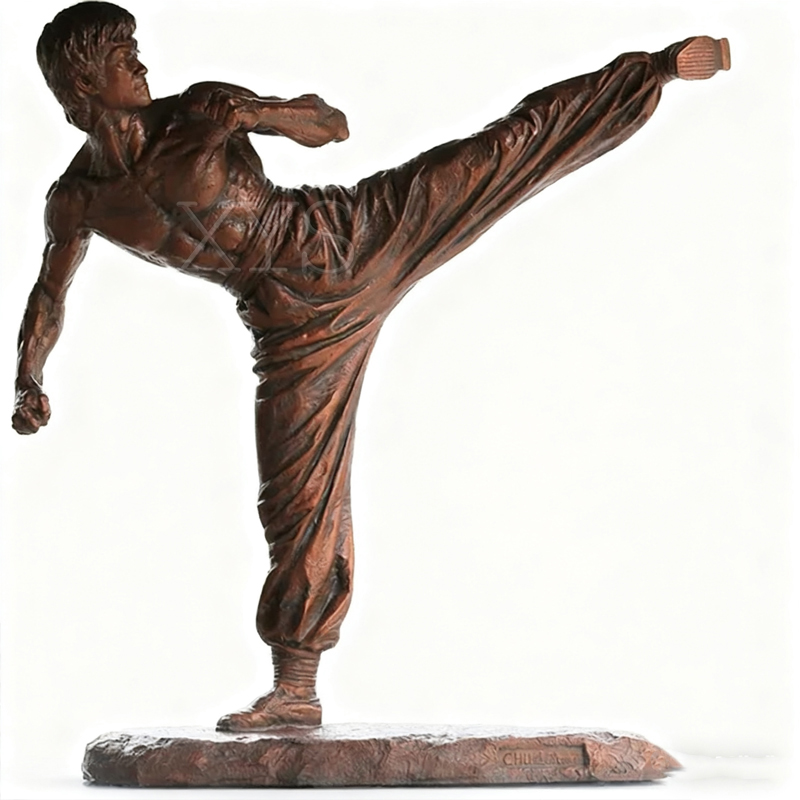 Bronze Life-Size Bruce Lee Martial Arts Sculpture – Outdoor Display
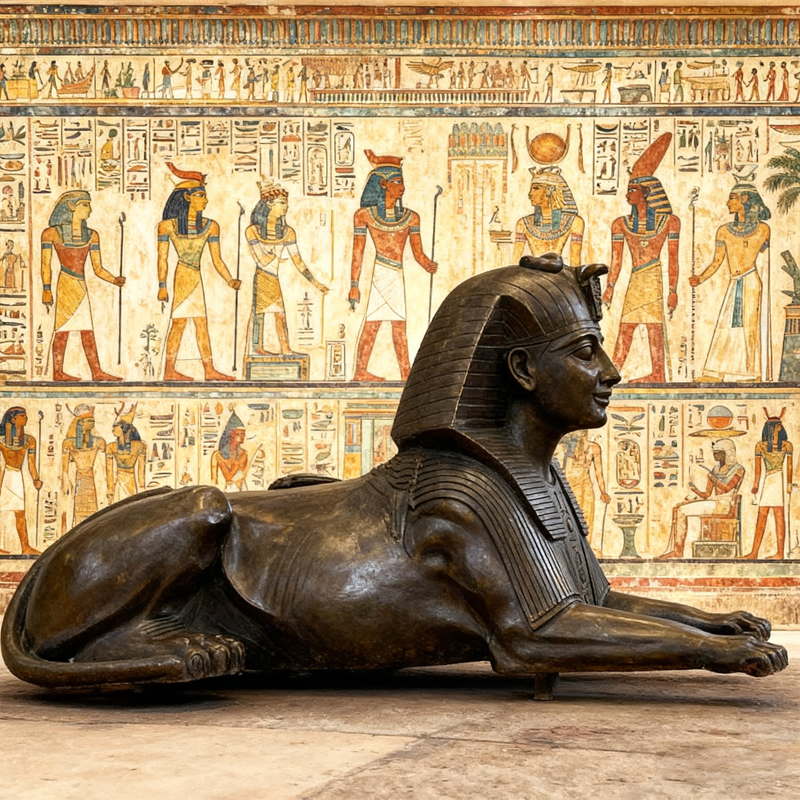 Bronze Large Sphinx Sculpture – Ancient Egyptian Mythology



Daniel H.

Amanda R.

Robert B.

Jennifer S.

James W.

Barry G.

Michael T.

Emily K.

David L.

Sarah M.


Mikey XV

Jagxue

 English
 Español
 عربى
 Français
 italiano
 Deutsch