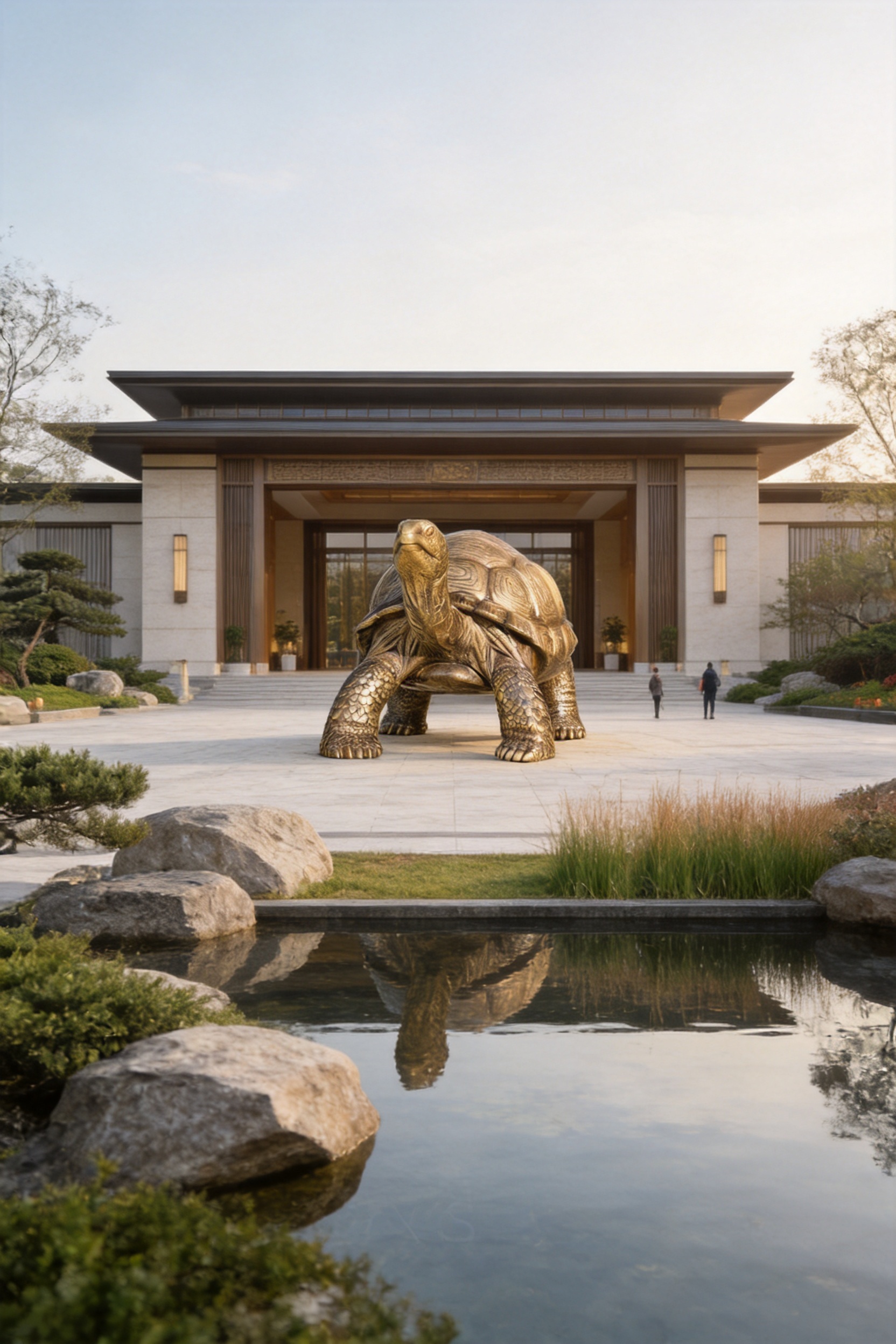
A lifelike bronze turtle sculpture can transform an ordinary setting into a place filled with character, cultural meaning, and visual permanence. The Bronze Lifelike Turtle, also known as the Longevity Tortoise Sculpture, is designed as a realistic 1:1 representation of a land tortoise. Its carefully developed shell texture, natural skin folds, strong limbs, and substantial body create the impression of a living animal resting in a moment of quiet movement.
More than a decorative object, this sculpture combines realistic animal art, traditional symbolism, architectural landscape design, and long-term outdoor durability. It can serve as a focal point in a private garden, a welcoming feature at a commercial entrance, an auspicious installation in a public plaza, or a meaningful gift for a housewarming, opening ceremony, birthday, or milestone celebration.
Manufactured by Jiangsu Xinyesheng Sculpture Co., Ltd., the piece is produced through the lost-wax casting method, a process widely respected for its ability to reproduce fine sculptural details. The technique supports the accurate rendering of the tortoise’s irregular shell, layered scales, soft skin transitions, and organic contours. These details distinguish the sculpture from simplified animal ornaments or mass-produced decorations that often lack anatomical character and surface depth.
With a length of approximately 1.5 meters and a listed price of ¥49,000, this bronze tortoise is positioned as a substantial art object rather than a small decorative figurine. Its scale gives it a strong presence while remaining adaptable to gardens, parks, courtyards, cultural tourism projects, hospitality developments, and residential landscapes.
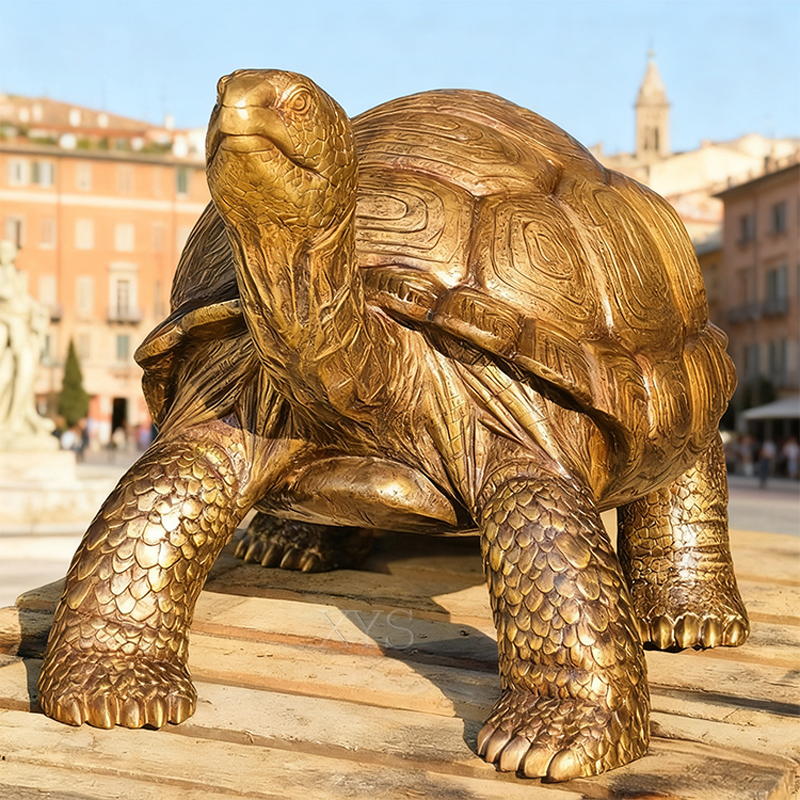
Bronze Lifelike Turtle (Longevity Tortoise) Sculpture
Content
The tortoise has been admired across many cultures for its calm movement, protective shell, long life, and association with endurance. In traditional Chinese culture, the tortoise is commonly connected with longevity, stability, wisdom, good fortune, and protection. These associations make it especially suitable for spaces intended to communicate prosperity, continuity, peace, and positive energy.
This sculpture presents the tortoise in a naturalistic form rather than an exaggerated fantasy style. Its 1:1 realistic ratio allows viewers to recognize the animal immediately and appreciate its authentic proportions. The design does not rely solely on symbolic decoration. Instead, it allows meaning to emerge from the recognizable physical qualities of the tortoise: a solid shell, grounded stance, resilient limbs, and a composed posture.
The visual effect is especially powerful when the sculpture is installed in a landscape where people can approach it from different directions. From the front, the head and facial structure create a sense of awareness. From the side, the shell profile and low body convey strength and age. From above, the shell becomes the dominant sculptural feature, revealing the pattern and relief of the casting. This changing appearance gives the work a richer presence than a flat image or two-dimensional sign.
A realistic animal sculpture also has the advantage of being accessible to a wide audience. Visitors do not need specialized knowledge of contemporary art or traditional symbolism to understand the subject. The tortoise is immediately recognizable, while its cultural meaning can be explained through signage, landscape interpretation, or the surrounding architectural concept.
The strongest feature of the Bronze Lifelike Turtle is its attention to surface detail. A tortoise’s visual identity depends heavily on the relationship between its shell, skin, claws, head, and limbs. If these features are simplified too aggressively, the sculpture may appear generic. In this work, the surface is developed to preserve the irregularity and tactile character associated with a real land tortoise.
The shell is not treated as a perfectly smooth dome. Instead, the shell texture gives the upper body visual rhythm and depth. The individual sections, transitions, ridges, and natural irregularities help the sculpture catch daylight from multiple angles. In outdoor conditions, these differences in relief create changing highlights and shadows as the sun moves across the sky.
The skin folds contribute another layer of realism. Around the neck, legs, and joints, natural folds communicate the flexibility of the animal’s body. These transitions prevent the sculpture from appearing mechanically assembled. They also give the limbs a sense of weight and movement, even when the tortoise is presented in a stationary pose.
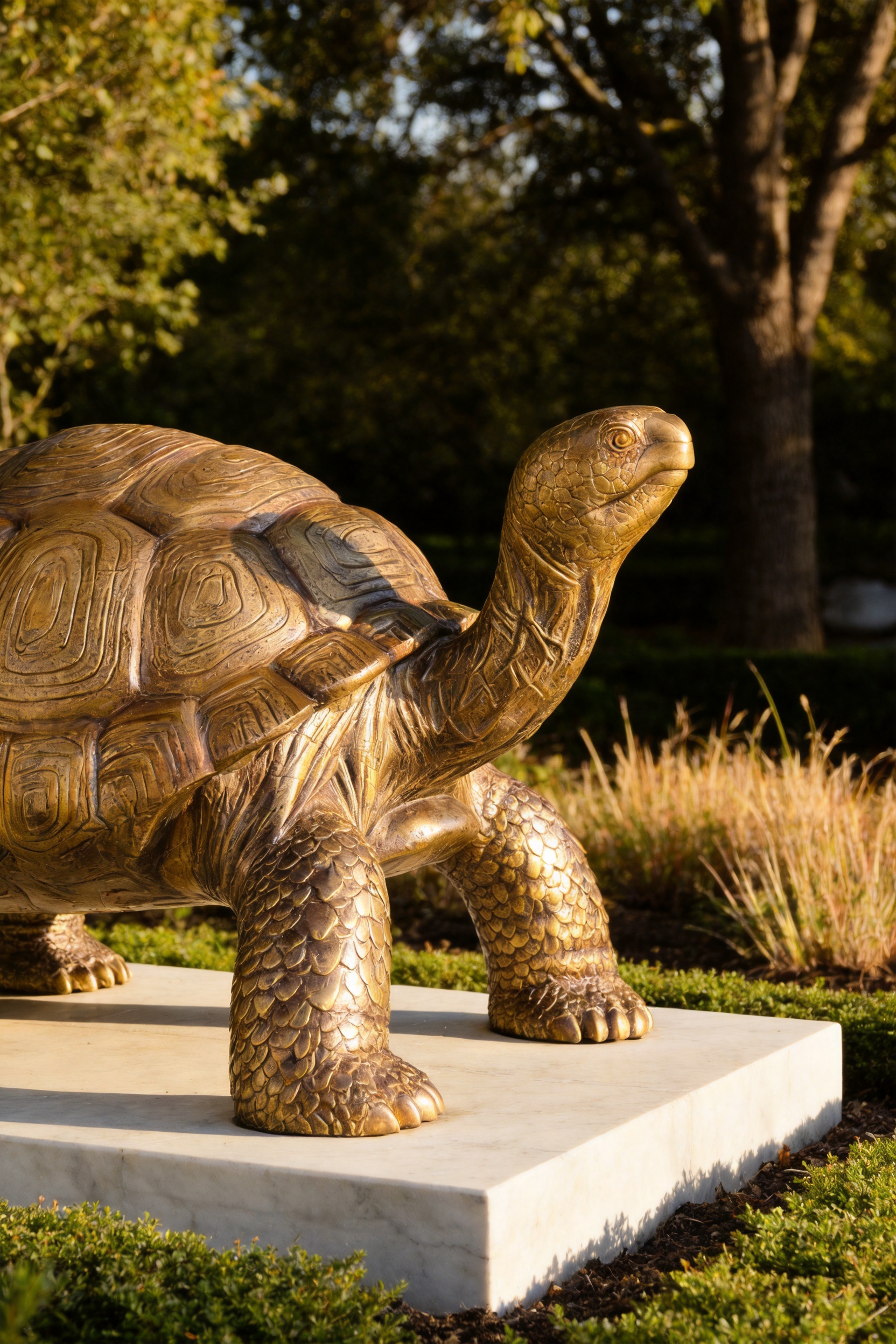
The limb scale details are equally important. A realistic tortoise must appear capable of supporting its heavy shell. The legs therefore need sufficient visual strength, correct placement, and convincing contact with the ground. The sculpture’s grounded stance helps it appear stable and believable, making it appropriate for prominent outdoor installation.
These details are valuable not only from an artistic perspective but also from a commercial one. Buyers selecting a large bronze animal sculpture often compare the quality of modeling, casting, finishing, and overall realism. A sculpture that remains convincing at close range has greater value for locations where visitors will walk around it, photograph it, and observe it from only a few feet away.
Bronze has been used for sculpture for centuries because it combines artistic flexibility with structural strength. It can be cast into complex forms, preserve intricate details, and develop a distinctive surface finish. For an animal sculpture with a richly textured shell and multiple organic transitions, these properties are especially beneficial.
Compared with many lightweight decorative materials, bronze offers a more substantial and permanent impression. Its weight supports visual stability and helps the sculpture feel like a genuine public artwork rather than a temporary prop. This quality is important for entrances, plazas, parks, institutional grounds, and other spaces where the sculpture is expected to remain a long-term feature.
Bronze also responds beautifully to changing light. In direct sunlight, raised surfaces can appear warm and bright while recessed areas remain deeper and more subdued. Under cloudy conditions, the sculpture can take on a softer, more atmospheric appearance. At night, carefully positioned landscape lighting can emphasize the shell relief, head, limbs, and silhouette.
The material’s natural compatibility with patination and surface finishing gives buyers room to select an appearance suited to their project. A darker finish may create a dignified and traditional atmosphere. A warmer brown tone can make the sculpture feel welcoming in a garden or hospitality environment. Subtle tonal variation can also emphasize the shell structure and improve visual depth.
Properly designed and finished bronze sculpture is well suited to outdoor environments. As with all outdoor metal artworks, placement, drainage, foundation design, cleaning, and maintenance should be considered during installation. When these factors are handled correctly, bronze can provide a durable and visually rewarding solution for many years.
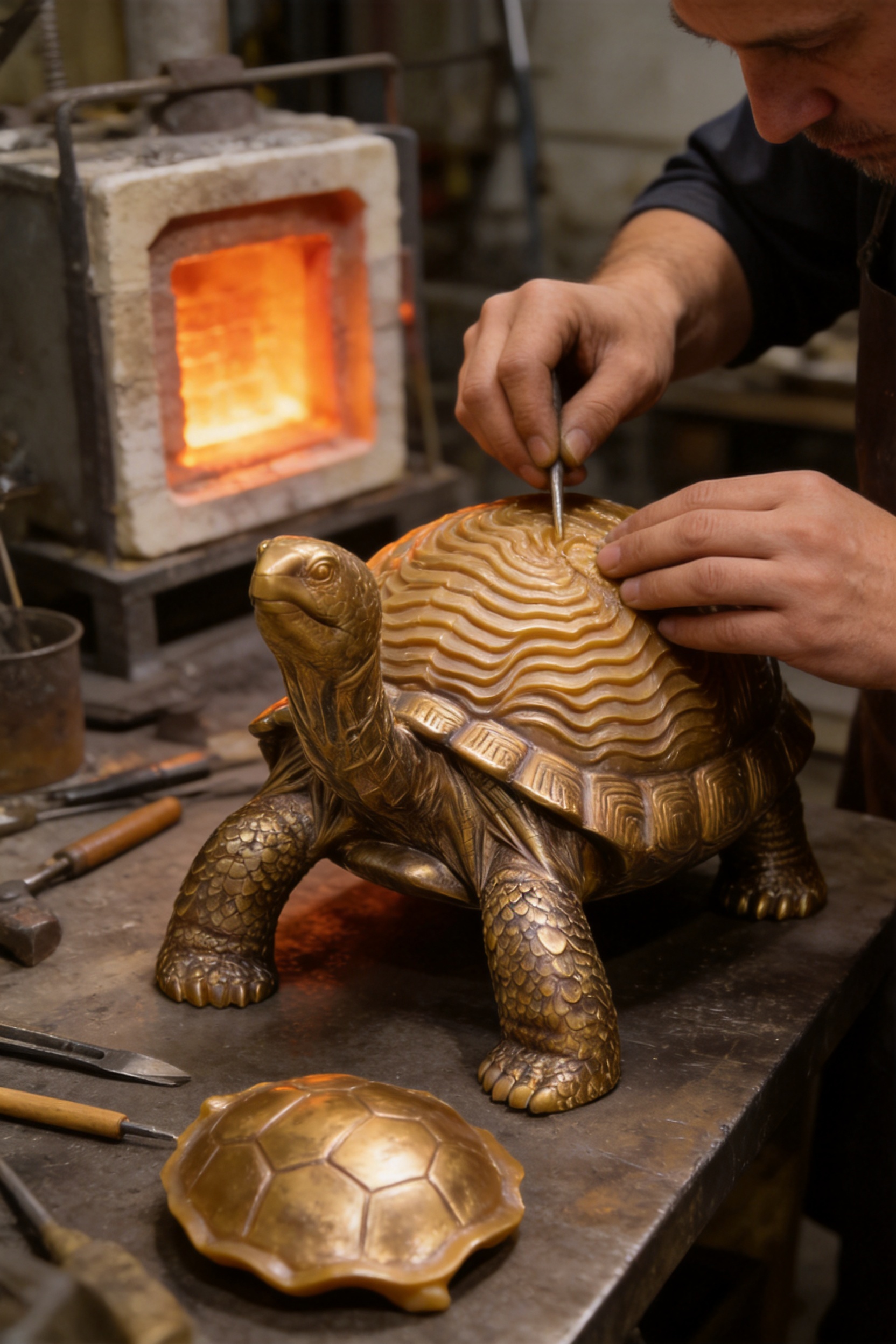
The sculpture is made using the lost-wax method, also known as investment casting. This process is particularly effective for realistic sculpture because it can reproduce fine details from a carefully prepared original model. Rather than reducing the design to a basic industrial shape, lost-wax casting allows the maker to preserve subtle transitions and complex surface information.
The process begins with the creation and refinement of the sculptural model. At this stage, the overall anatomy, proportions, posture, shell pattern, facial structure, and surface texture are developed. For a lifelike tortoise, the sculptor must balance scientific observation with artistic composition. The animal must look anatomically credible while also presenting a clear silhouette and attractive viewing angles.
A wax version is then prepared from the model. Wax is useful because it can capture delicate relief and can be adjusted before casting. Fine shell lines, skin folds, limb contours, and other details can be refined during this phase. The wax model becomes the positive pattern from which the mold is made.
The wax pattern is enclosed in a heat-resistant investment material. Once the mold has hardened, the wax is heated and removed. This creates a negative cavity in the exact shape of the sculpture. Molten bronze is then poured into the prepared mold, filling the space left by the wax.
After cooling, the investment material is removed and the cast bronze sections are cleaned. Larger sculptures may be cast in several components, which are then carefully joined and refined. Welded areas are blended, casting marks are removed, and the surface is inspected to preserve the continuity of the tortoise’s form.
The final stages include chasing, grinding, texture refinement, surface treatment, and finishing. Chasing is particularly important because it restores or clarifies details that may require attention after casting. A high-quality finish should not obscure the original modeling. Instead, it should support the shell texture, skin folds, and anatomical structure.
The lost-wax process provides a major advantage over simpler manufacturing approaches: it is capable of translating a detailed artistic model into a durable metal sculpture while retaining the character of the original design. This is one reason bronze remains a preferred material for museum works, commemorative statues, public art, and high-end landscape sculpture.
Jiangsu Xinyesheng Sculpture Co., Ltd. operates as a sculpture manufacturer and supplier serving custom design and architectural art requirements. The company’s product range includes bronze sculptures, stainless steel sculptures, marble sculptures, fiberglass sculptures, and weathering steel sculptures. This material diversity indicates an ability to approach projects according to the artistic style, environment, budget, and structural needs of each application.
For the Bronze Lifelike Turtle, the manufacturing strength is reflected first in the choice of process. Lost-wax casting is not simply a way to form metal; it is a production system that requires control over modeling, mold preparation, casting, finishing, and surface treatment. Each stage influences the final appearance of the sculpture.
The company’s focus on custom design is also valuable for buyers who need more than a standard catalog product. A tortoise sculpture may need adjustments in scale, posture, finish, base arrangement, or installation configuration to suit a specific project. For example, a resort may prefer a more relaxed natural pose, while a civic plaza may require a stronger frontal presentation. A private collector may request a different patina or a custom plinth.
Having experience across several sculpture materials can also support integrated landscape projects. A development may use bronze animals as symbolic focal points, stainless steel forms as contemporary accents, marble elements near an entrance, fiberglass pieces for lightweight interior applications, and weathering steel structures in a modern garden. A manufacturer familiar with these categories can help maintain consistency across a broader art program.
The production of a large realistic sculpture also requires attention to practical factors. The work must be proportionally convincing, structurally stable, visually balanced, and suitable for transportation and installation. The manufacturer’s role extends beyond creating an attractive model. It includes translating the design into a finished object that can be handled, delivered, positioned, and maintained in a real environment.
Because no unverified certifications or specific factory equipment are provided in the available product information, buyers should request project-specific details directly when needed. These may include material specifications, bronze alloy information, thickness, internal reinforcement, finish samples, packing methods, installation drawings, and maintenance recommendations. Such documentation can help ensure that the sculpture meets the technical requirements of a particular site.
The market includes many animal ornaments made from resin, plastic, cement, fiberglass, or thin metal sheets. These materials can be useful for temporary displays or cost-sensitive projects, but they may not provide the same combination of tactile quality, permanence, symbolic value, and long-range visual impact as a carefully cast bronze sculpture.
One advantage of the Bronze Lifelike Turtle is its realistic modeling. Simplified alternatives often use generalized shell patterns and minimal facial details. The result may be recognizable from a distance but unconvincing up close. The lifelike sculpture is designed for closer observation, allowing viewers to see the relationship between the shell texture, body structure, skin folds, and limbs.
A second advantage is material presence. Bronze communicates seriousness and permanence. It is associated with fine art, monuments, cultural heritage, and public sculpture. This makes it especially appropriate for projects where the artwork must represent quality, tradition, or long-term investment.
A third advantage is its cultural versatility. The sculpture can function as an animal artwork, a feng shui-inspired auspicious object, a landscape landmark, or a ceremonial gift. A decorative figure with no symbolic depth may serve one purpose only. The tortoise, by contrast, can be integrated into different narratives depending on the location and audience.
A fourth advantage is photographic appeal. Large bronze sculptures often become visual landmarks for visitors. The tortoise’s recognizable form and detailed shell create strong images from multiple angles. This can benefit hotels, resorts, cultural tourism destinations, commercial developments, and public attractions that value memorable visitor experiences.
Finally, bronze offers a more refined aging process than many synthetic materials. Surface character can develop over time, and maintenance or refinishing can be used to preserve the intended appearance. Instead of becoming visually obsolete, a well-placed bronze sculpture can gain an established, mature presence as its surroundings develop.
The 1.5-meter length makes this sculpture large enough to command attention while remaining adaptable to a variety of spaces. It does not require the monumental scale of a civic statue to become meaningful. Its strength comes from the combination of recognizable form, rich detail, and symbolic content.
In a park, the tortoise can be positioned beside a walking path, near a pond, within a botanical garden, or at a quiet rest area. Its calm character suits natural surroundings. Planting materials such as low grasses, evergreen shrubs, moss, or carefully arranged stones can frame the sculpture without concealing its body and shell.
In a public garden, the sculpture may also support educational interpretation. Information panels can introduce the cultural symbolism of the tortoise, explain bronze casting, or discuss the characteristics of land tortoises. This turns a decorative object into an interactive cultural and artistic feature.
At a plaza or commercial entrance, the sculpture can create a memorable identity. It may be placed on a low platform, within a circular planting bed, or on a paved area that allows visitors to walk around it. The tortoise’s symbolism of stability and longevity can be particularly appropriate for financial institutions, property developments, wellness centers, and long-established businesses.
Entrance placement should consider circulation and sight lines. The sculpture should be visible from approaching roads or pathways without obstructing safety routes. A balanced amount of open space around the work allows visitors to appreciate its full profile and take photographs.
Cultural tourism projects often benefit from artworks that connect visual appeal with local stories and traditional values. A longevity tortoise can become part of a themed route, garden, courtyard, or symbolic landscape. Its presence can reinforce narratives about health, age, protection, prosperity, and respect for nature.
When used in a tourism destination, the sculpture can serve as a meeting point or landmark. Visitors may associate the tortoise with wishes for longevity and good fortune, giving the object an emotional role beyond simple decoration.
Hospitality spaces often require artworks that communicate calmness and quality. A bronze tortoise near a spa entrance, garden pavilion, or resort pathway can support an atmosphere of relaxation. Its slow, steady character aligns naturally with concepts such as mindfulness, balance, health, and long life.
In these settings, lighting and landscaping are particularly important. Soft illumination can reveal the shell’s relief at night while keeping the installation welcoming rather than dramatic. Water features, natural stone, and mature planting can further connect the sculpture to a tranquil environment.
For a private residence, the sculpture can become a distinctive focal point in a courtyard, entrance garden, terrace, or landscaped lawn. It may be selected as a housewarming gift or as a symbolic addition to a family property. The tortoise’s associations with longevity and protection make it suitable for a home intended to represent continuity across generations.
Residential placement should account for scale. Because the sculpture is approximately 1.5 meters long, it should be given sufficient visual space. Crowding it with too many ornaments can reduce its impact. A restrained setting with carefully chosen plants or stones will usually allow the bronze form to remain dominant.
Although the sculpture is well suited to outdoor landscapes, it can also be installed in spacious interior or semi-outdoor environments. A large entrance hall, museum lobby, luxury retail space, corporate reception, or covered courtyard may provide an appropriate setting if the floor can support its weight and the sculpture can be viewed safely from multiple angles.
In an interior, the Bronze Lifelike Turtle can create a contrast between traditional symbolism and contemporary architecture. Clean concrete, glass, wood, or stone surfaces can emphasize the organic character of the animal. In a more classical setting, the bronze finish can complement carved architectural details and warm decorative materials.
Semi-outdoor locations require particular attention to moisture, drainage, ventilation, and cleaning. A covered walkway or courtyard may protect the work from some weather exposure while still allowing natural light to reveal its details. Buyers should confirm the recommended finish and maintenance plan according to the intended environment.
The tortoise is a meaningful choice when an artwork needs to communicate more than beauty. For a housewarming, it can represent a stable and prosperous home. For an opening ceremony, it can express wishes for a business or institution to grow steadily and endure. For a birthday, especially a milestone birthday, it can symbolize health, longevity, and continued vitality.
As a gift, the sculpture is more enduring than many conventional presents. It can become part of a garden, courtyard, office, or family property, allowing the recipient to encounter its meaning repeatedly over time. Its substantial scale also gives the presentation a sense of importance suitable for institutional or corporate gifting.
Personalization may be considered through the selection of a suitable finish, base, location, or commemorative plaque. Any customization should preserve the natural dignity of the tortoise. A restrained presentation is generally more compatible with the sculpture’s realistic design and traditional symbolism.
Successful installation begins with site planning. Before placing the sculpture, buyers should evaluate ground conditions, pedestrian movement, drainage, visibility, lighting, landscaping, and access for delivery equipment. A sculpture of this scale should not be treated as a small ornament that can simply be moved into position after all other work is complete.
The foundation or mounting method should be determined according to the sculpture’s construction, weight, location, and local conditions. Some installations may use a concealed reinforced base, while others may place the sculpture on a stone or architectural platform. The correct approach depends on the project design and should be confirmed with the manufacturer or a qualified installation professional.
The sculpture should be positioned so that its strongest viewing angles are visible. A location that only allows a narrow side view may not showcase the shell and body effectively. Ideally, visitors should be able to move around the work while maintaining a safe distance and a clear route.
Lighting can extend the sculpture’s presence into the evening. Low-angle lighting can emphasize shell relief and skin folds, while broader illumination can reveal the entire silhouette. Excessively harsh lighting may flatten the surface or create glare, so a lighting designer should consider color temperature, beam angle, and shadow behavior.
Landscaping should frame rather than overwhelm the artwork. Plants that grow too quickly or become too tall may conceal the tortoise’s head and limbs. Low planting, natural gravel, stone edging, or a simple paved surround can provide an effective setting while keeping maintenance manageable.
Bronze is durable, but regular care helps preserve its appearance and prevents avoidable problems. Dust, pollen, bird deposits, leaves, and other contaminants should be removed periodically, especially from recessed shell areas. Cleaning should use methods appropriate for the specific finish and should avoid harsh chemicals or abrasive tools unless recommended by a professional.
Water should not be allowed to remain trapped in concealed areas or around the base. Good drainage reduces the risk of staining and helps protect adjacent paving. After severe weather, site personnel can inspect the sculpture for debris, movement, damage, or changes in the surrounding ground.
Patina is part of the character of bronze, but the desired appearance should be defined in advance. Some owners prefer a stable, maintained finish, while others appreciate gradual natural change. A maintenance schedule can be developed to match the artistic intention, environmental exposure, and importance of the site.
For a high-value sculpture, professional inspection may be appropriate at regular intervals. This is especially true in public areas, coastal locations, high-traffic sites, or regions with extreme weather. Maintenance should also include checking any anchoring, joints, base connections, and nearby lighting or irrigation systems.
| Item | Specification |
|---|---|
| Product name | Bronze Lifelike Turtle, also known as the Longevity Tortoise Sculpture |
| Category | Bronze Animal Sculptures |
| Material | Bronze |
| Form | Realistic land tortoise |
| Scale | Approximately 1:1 realistic ratio |
| Length | Approximately 1.5 meters |
| Manufacturing method | Lost-wax casting |
| Key details | Shell texture, skin folds, limb scale details, naturalistic anatomy |
| Primary symbolism | Longevity, good luck, protection, stability, and endurance |
| Recommended applications | Parks, plazas, gardens, cultural tourism sites, hospitality spaces, residences, and ceremonial gifts |
| Listed price | ¥49,000 |
Landscape designers can use the tortoise as a visual anchor in a composition based on natural balance. Its low horizontal profile can contrast with vertical trees, architectural columns, entrance towers, or tall grasses. The rounded shell can also soften hard paving and geometric building forms.
In a traditional design concept, the sculpture may be combined with stone, water, bamboo, evergreen plants, or auspicious landscape arrangements. In a contemporary concept, it can stand alone against a clean architectural background. The realism of the tortoise allows it to operate successfully in both settings.
The sculpture can also support a narrative sequence. A cultural park might include several animal sculptures representing different virtues, while a wellness resort could use the tortoise as a symbol of slow living and long-term health. In a corporate setting, it may represent reliable development and enduring relationships.
Because the tortoise is not tied to a single architectural style, it can be integrated into classical, modern, natural, or mixed-style environments. The selected base, finish, lighting, and landscaping will determine whether the final impression is formal, rustic, elegant, spiritual, or contemporary.
Buyers should begin by clarifying the intended use. A sculpture for a private garden may have different requirements from one intended for a public plaza. The expected audience, viewing distance, climate, security conditions, and installation surface should all be considered before ordering.
It is also useful to confirm the final dimensions, approximate weight, finish, delivery packaging, installation requirements, and maintenance recommendations. If the project requires a specific patina or custom size, these points should be discussed before production begins.
For international orders, buyers should request information about export packing, shipping arrangements, customs documentation, and delivery access. A 1.5-meter bronze sculpture requires careful handling, and the receiving site should be prepared for unloading and placement.
Requesting photographs or samples of previous work can help buyers assess modeling quality and finishing consistency. For a realistic animal sculpture, close-up images of the shell, head, limbs, and surface treatment are especially useful. Buyers may also wish to review drawings or digital previews if the sculpture will be customized.
Price should be evaluated together with craftsmanship, material, scale, production method, finishing, packaging, and service. A lower-cost alternative may not provide equivalent detail, structural quality, longevity, or symbolic impact. The listed price of ¥49,000 should therefore be considered within the context of a substantial, custom-capable bronze artwork produced through lost-wax casting.
It symbolizes longevity, good luck, stability, endurance, protection, and the ability to withstand the passage of time. In traditional cultural contexts, the tortoise is also associated with wisdom and auspicious energy.
Yes. Bronze is a strong material for outdoor sculpture, and the tortoise is specifically suitable for parks, gardens, plazas, cultural tourism destinations, and other landscape settings. Proper foundation design, drainage, cleaning, and finish maintenance are recommended.
The sculpture uses a 1:1 realistic ratio and includes detailed shell texture, natural skin folds, and limb scale details. These features help create a convincing representation of a land tortoise rather than a simplified decorative animal.
It is produced using the lost-wax casting method. This process allows a detailed model to be transferred into bronze while preserving complex organic surfaces and fine sculptural relief.
The manufacturer provides custom design metal statue services, so buyers may discuss possible adjustments such as size, posture, finish, base, or installation arrangement. Custom requirements should be confirmed before production.
Potential locations include public parks, plazas, cultural tourism destinations, hotels, resorts, wellness properties, commercial entrances, private gardens, courtyards, corporate grounds, and spacious interior halls.
Yes. Its symbolism makes it suitable for housewarming celebrations, opening ceremonies, birthdays, milestone events, corporate gifts, and occasions where the recipient is being wished health, success, stability, and long life.
The listed length is approximately 1.5 meters. Buyers should confirm final production dimensions and installation requirements, especially if the work is being placed in a restricted interior or transported through narrow access points.
Buyers should evaluate the foundation, drainage, access for delivery, viewing angles, pedestrian safety, lighting, landscaping, and long-term maintenance. A qualified installer can help determine the appropriate mounting and site preparation method.
Regularly remove dust, leaves, pollen, and other contaminants using gentle methods suitable for the selected finish. Avoid abrasive cleaning and harsh chemicals unless approved by a professional. Inspect the base, joints, drainage, and surrounding ground periodically.
Bronze generally provides greater material presence, stronger associations with fine art and permanence, and a more substantial appearance. It is also well suited to preserving detailed sculptural surfaces through lost-wax casting. Fiberglass and plastic may be useful in other circumstances, but they create a different visual and tactile experience.
Buyers should confirm material specifications, final dimensions, estimated weight, finish, production schedule, packaging, transportation, installation instructions, maintenance guidance, and any customization terms. International buyers should also discuss shipping and import requirements.
The Bronze Lifelike Turtle Sculpture brings together realistic animal modeling, traditional cultural meaning, durable bronze, and the refined possibilities of lost-wax casting. Its 1.5-meter length gives it enough presence to define a landscape while remaining practical for gardens, plazas, entrances, courtyards, and ceremonial spaces.
Its greatest advantage is the balance between beauty and meaning. The detailed shell, skin folds, and limbs reward close observation, while the tortoise’s association with longevity and protection gives the sculpture an emotional and cultural role. It can be appreciated as a work of art, used as a landscape landmark, selected as an auspicious feng shui-inspired object, or presented as a lasting gift.
Jiangsu Xinyesheng Sculpture Co., Ltd. supports this product with sculpture manufacturing experience across bronze and other materials, together with custom design capabilities for different architectural and landscape requirements. The lost-wax process provides a suitable foundation for preserving the lifelike qualities that distinguish this sculpture from simpler alternatives.
For buyers seeking a substantial outdoor artwork with long-term visual value, the Bronze Lifelike Turtle offers a compelling combination of craftsmanship, symbolism, adaptability, and material strength. With thoughtful placement and appropriate care, it can become a lasting focal point that communicates good fortune, resilience, and the enduring beauty of bronze sculpture.
1. Cooper, E. “Bronze Casting and the Lost-Wax Process in Sculpture.” Art Foundry and Conservation Studies.
2. Craddock, P. T. “Metalworking and the Development of Cast Sculpture.” Historical Metallurgy Research.
3. Farkas, A. “Animal Symbolism in Traditional East Asian Art.” Studies in Asian Art History.
4. Lazzari, M., and Schlesinger, S. “Patinas, Surface Treatments, and the Conservation of Outdoor Bronze.” Conservation Practice Review.
5. National Sculpture Society. “Principles of Sculpture Design, Scale, and Public Placement.” Sculpture Design Resources.
6. Project product information supplied for the Bronze Lifelike Turtle Sculpture, including dimensions, price, category, material, manufacturing method, and stated applications.
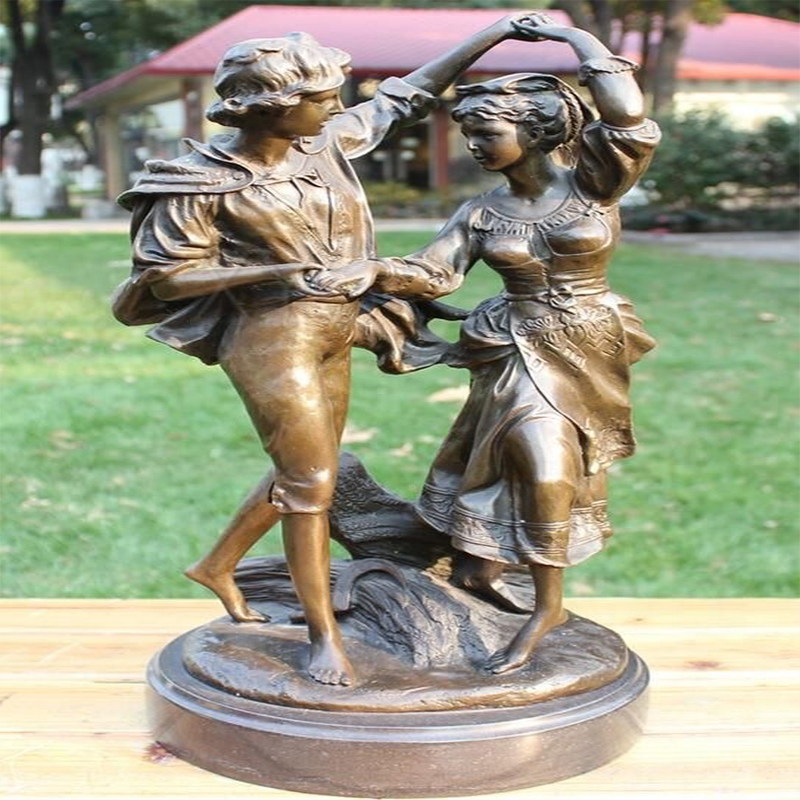 Bronze Life-Size Dancing Couple Sculpture – Heart Figure for Park Decoration
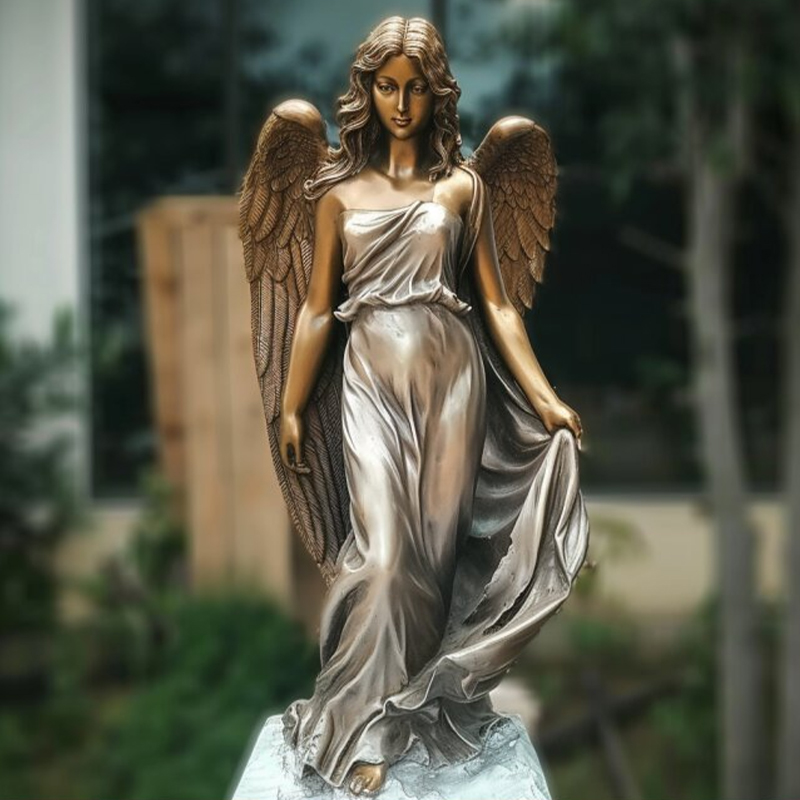 Bronze Angel Sculpture
 Bronze Parent-Child Reading Sculpture – Modern Artistic Design
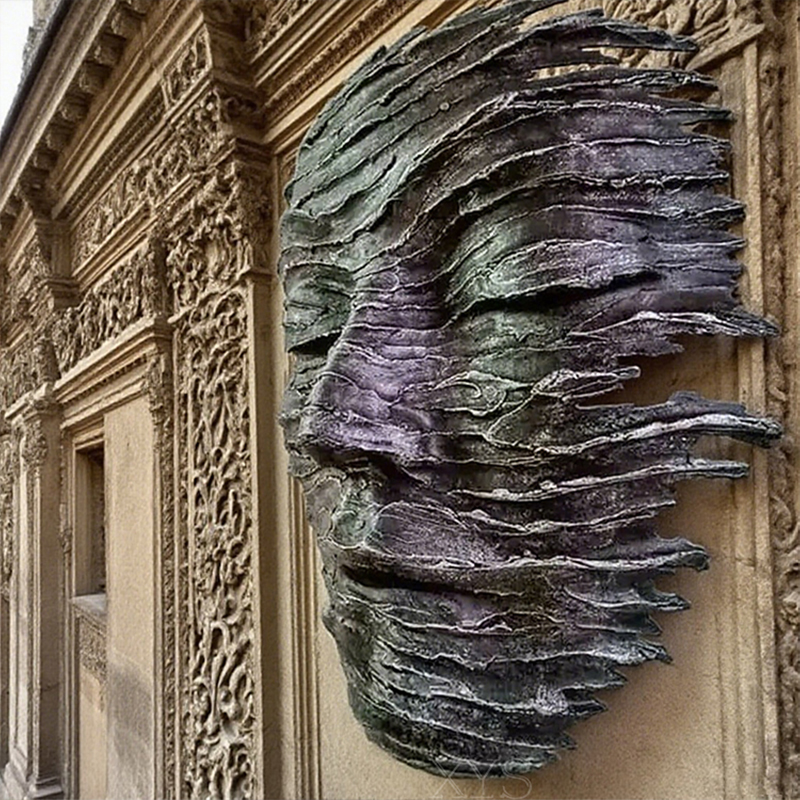 Bronze Abstract Stacked Face Sculpture – Modern Wall Art
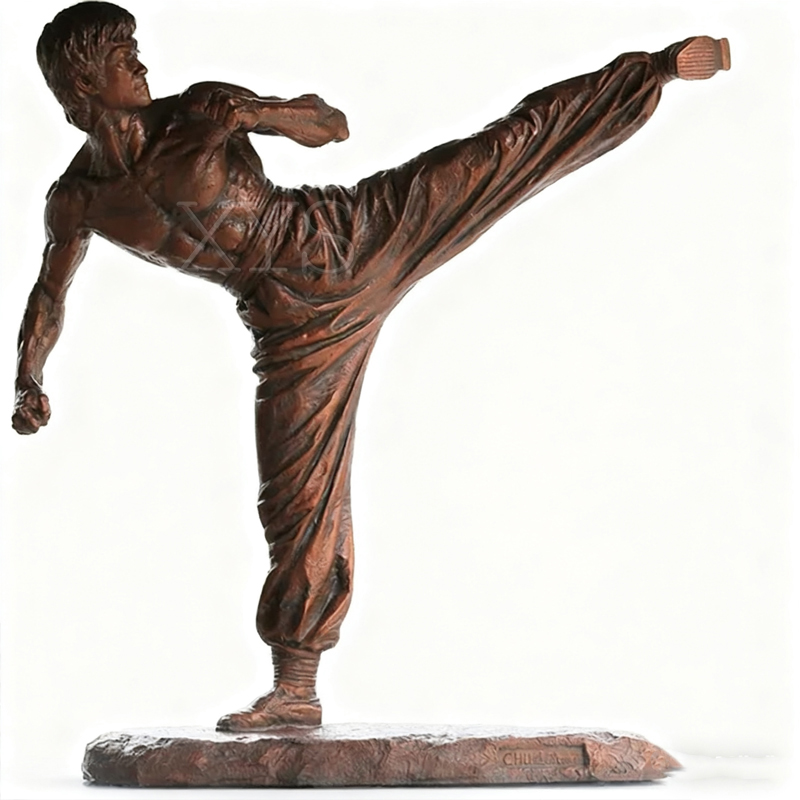 Bronze Life-Size Bruce Lee Martial Arts Sculpture – Outdoor Display
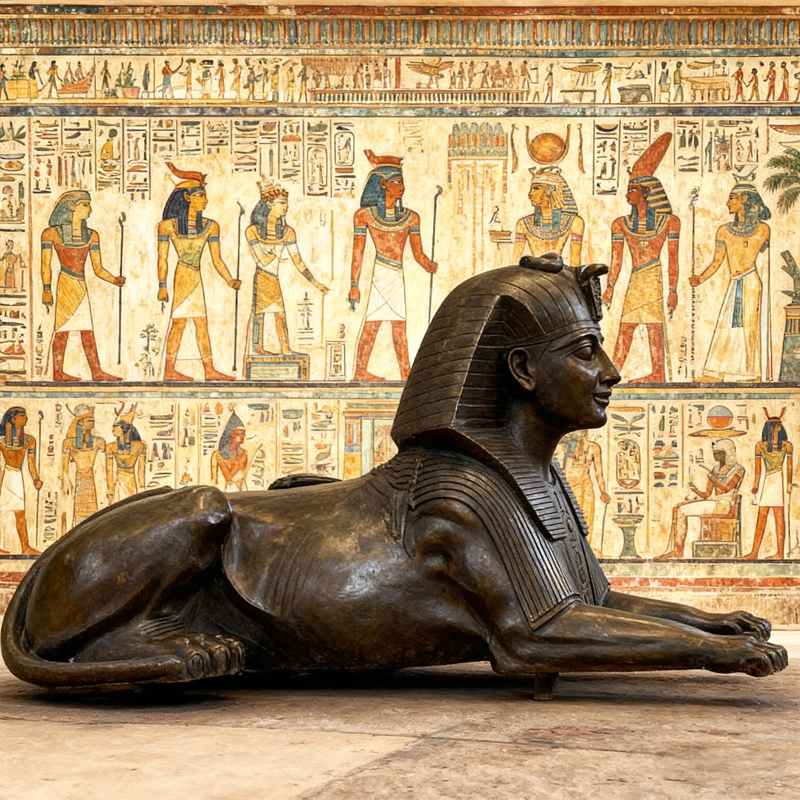 Bronze Large Sphinx Sculpture – Ancient Egyptian Mythology



Daniel H.

Amanda R.

Robert B.

Jennifer S.

James W.

Barry G.

Michael T.

Emily K.

David L.

Sarah M.


Mikey XV

Jagxue

 English
 Español
 عربى
عربى Français
 italiano
 Deutsch