Outdoor environments increasingly require more than practical infrastructure. Campsites, scenic destinations, resorts, parks, commercial plazas, and public gathering areas are expected to provide memorable visual experiences that encourage visitors to stay longer, take photographs, and share their impressions. A well-designed sculpture can help transform an ordinary outdoor setting into a recognizable destination. When sculpture is combined with carefully integrated illumination, it can remain visually effective during the day and become a luminous focal point after sunset.
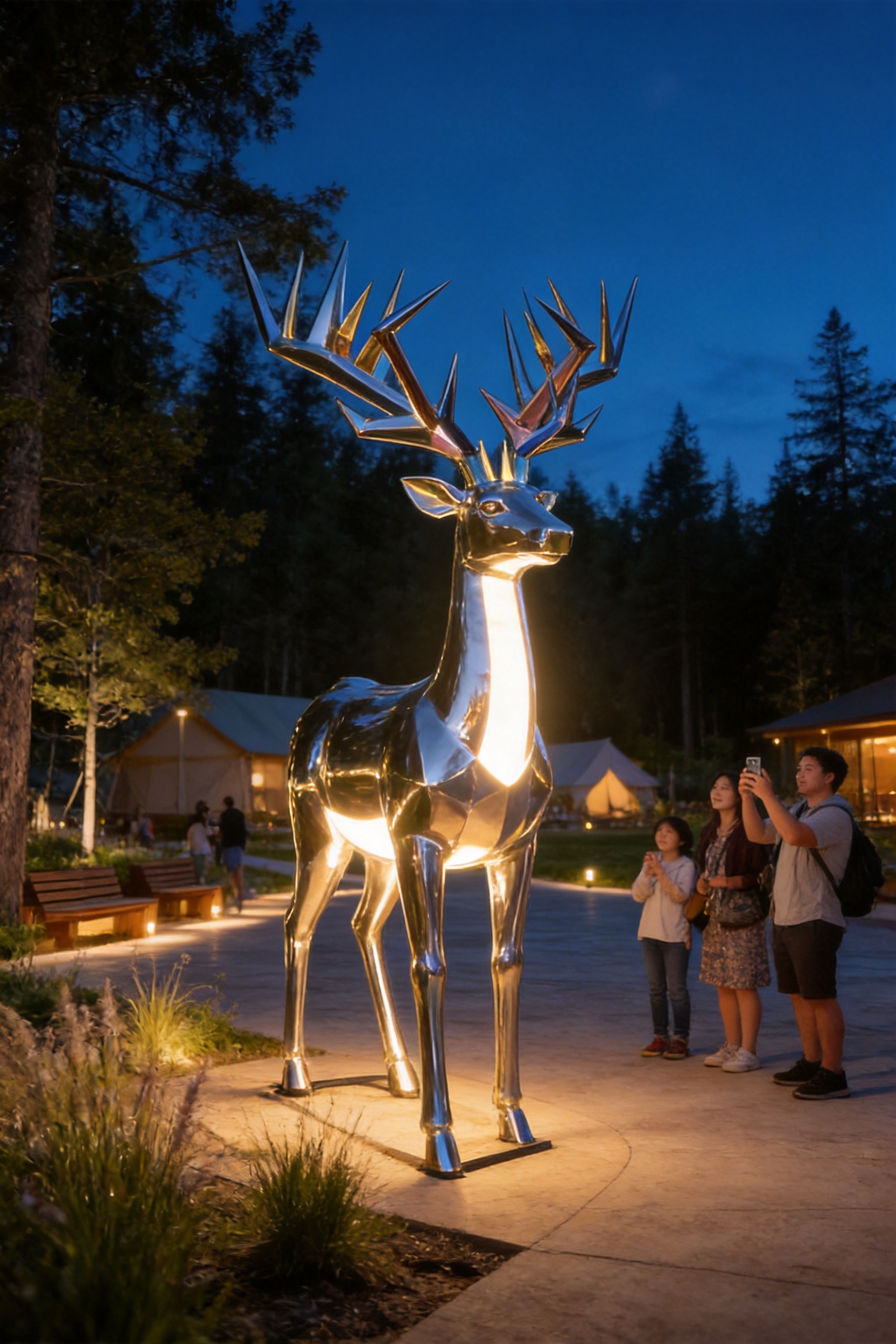
The Lighted Reindeer Sculpture is designed for this dual purpose. With its recognizable animal form, hollow metal construction, and integrated LED lighting system, it functions as both an art installation and an atmospheric landscape feature. The sculpture presents the graceful outline of a reindeer while allowing light to emerge through the structure, creating a changing relationship between solid metal, open space, shadow, and the surrounding night landscape.
Available in an approximate height range of 200 to 300 centimeters, the sculpture has enough presence to be noticed from a distance without overwhelming a campsite, scenic trail, garden, resort entrance, or outdoor event area. Its listed price range of approximately USD 2,045.16 to USD 3,408.58 provides a reference point for buyers planning a custom outdoor decoration project. Final pricing can vary according to size, lighting configuration, material details, finish, quantity, and customization requirements.
Content
Many outdoor sculptures are strongest in daylight but lose much of their visual impact after sunset. Conversely, some illuminated decorations are attractive only at night and appear unfinished or utilitarian during the day. The Lighted Reindeer Sculpture addresses both situations through an integrated form that remains expressive without illumination and becomes atmospheric when the LED system is activated.
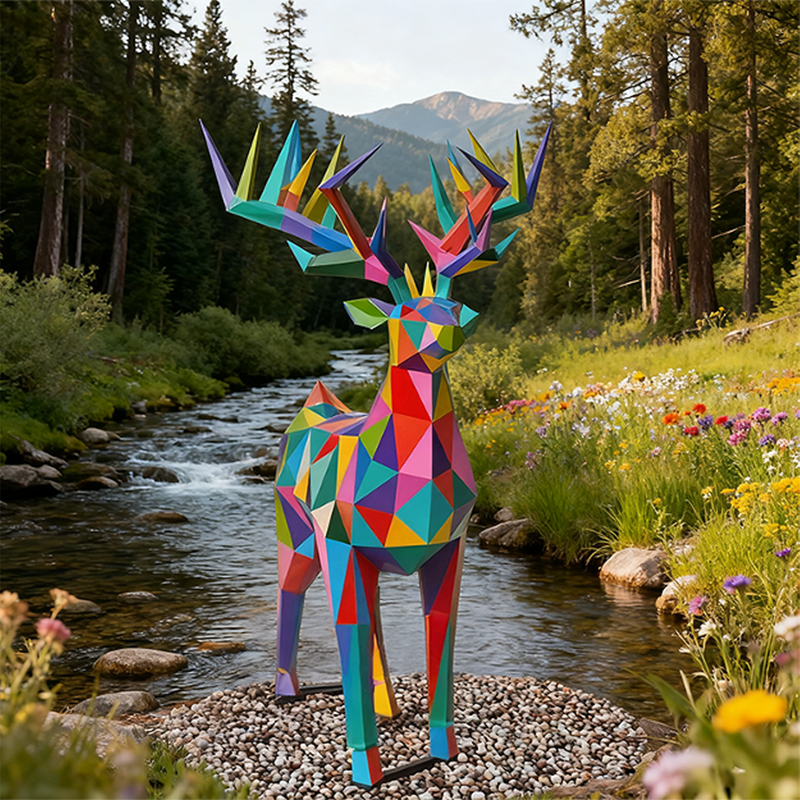
During daylight, visitors can appreciate the reindeer’s silhouette, proportions, posture, antlers, and carefully arranged hollow structure. The open construction gives the sculpture a lightweight visual character, even though the finished installation is intended to provide a strong and stable outdoor presence. Rather than appearing as a solid block, the form allows the background landscape to remain visible through portions of the sculpture.
At night, illumination passes through the hollow body and highlights the contours of the animal. The light does not simply decorate the exterior; it becomes part of the sculpture’s visual language. Depending on the selected lighting arrangement, the illuminated body can appear like a glowing outline or a luminous volume. This effect is especially suitable for locations where visitors move between dark natural surroundings and concentrated points of light.
The reindeer theme also carries broad visual appeal. Reindeer are associated with wilderness, seasonal landscapes, winter scenery, forests, travel, and nature-based recreation. The animal form can therefore support a wide range of landscape concepts without being limited to one specific architectural style. It can complement a modern campsite, a forest-themed resort, a family attraction, a winter event, or a scenic location that wants to introduce a recognizable photographic symbol.
A successful landscape sculpture usually performs several functions at the same time. It should contribute artistic value, establish a sense of place, remain visible from appropriate viewing distances, withstand outdoor conditions, and encourage interaction. The Lighted Reindeer Sculpture combines these requirements in a single installation.
The reindeer is an immediately recognizable subject. Visitors do not need an explanation to understand the basic form, which makes the sculpture accessible to children, families, tourists, and casual passersby. This immediate recognition is valuable in public environments because a clear silhouette can attract attention more effectively than an abstract shape that requires interpretation.
The antlers, body, legs, neck, and head create a distinctive profile. When placed against a dark background, the illuminated outline can remain visible from multiple angles. This makes the sculpture suitable for open lawns, entrance areas, trail junctions, waterfront promenades, and gathering spaces where visitors may approach from different directions.
Modern destinations often benefit from features that encourage visitors to stop and take photographs. A sculpture can become a natural meeting point, especially when it is visually attractive after sunset. The glowing reindeer offers a strong background or foreground element for personal photographs, group images, seasonal events, and social media content.
Its role as a photo opportunity does not require complicated interactive technology. The form itself creates a recognizable setting. By placing the sculpture near a campsite lounge, scenic overlook, entrance path, or event area, operators can establish a visual point that visitors remember and associate with the destination.
Outdoor decoration can become visually crowded when too many signs, lights, ornaments, and temporary structures compete for attention. A hollow illuminated animal sculpture provides atmosphere through a relatively clear and focused design. The result can feel more refined than a collection of unrelated decorative objects.
The minimalist character of the open metal structure is particularly useful in natural environments. It allows the sculpture to add a human-designed element while preserving visual connections with trees, sky, water, rocks, and surrounding vegetation. At night, the light produces atmosphere without requiring a large architectural enclosure or extensive decorative installation.
The product is presented as a stainless steel animal sculpture and is described as being made with weather-resistant metal materials. This combination is important for outdoor buyers who need a balance between appearance, durability, maintenance, and design flexibility.
Outdoor sculptures are exposed to rain, humidity, temperature fluctuations, wind, airborne pollutants, dust, and sunlight. A material intended for exterior use must be selected and finished with these conditions in mind. Stainless steel is widely used in outdoor art and architectural applications because it can provide strong corrosion resistance when the appropriate grade, fabrication method, surface treatment, and installation practices are selected.
The product description emphasizes outdoor waterproofing and rust resistance. These features are especially relevant to campsites and scenic areas, where the sculpture may be exposed to weather throughout the year. A properly designed housing for the lighting components can also help protect the internal electrical system from moisture and environmental contamination.
Although no outdoor material is completely maintenance-free, the weather-resistant construction can reduce the frequency of repainting and surface repair compared with ordinary untreated metal. This can help owners control long-term maintenance requirements, particularly when multiple sculptures are installed across a large property.
A sculpture installed outdoors must retain its shape and stability over time. The reindeer form includes slender visual elements such as legs, neck, antlers, and other articulated portions. These areas require careful attention during design and fabrication because artistic delicacy must be balanced with structural reliability.
The hollow construction reduces unnecessary material volume and overall weight while preserving the external form. This can make transportation and installation more manageable than a fully solid sculpture of the same apparent size. At the same time, internal supports, reinforced joints, and an appropriate base can be incorporated where required by the dimensions and installation environment.
For professional projects, the foundation and anchoring method should be reviewed according to local site conditions. Wind exposure, soil type, paving material, visitor access, drainage, and the sculpture’s final height should all be considered before installation. The product’s design flexibility allows buyers to discuss these requirements during the customization stage.
Stainless steel can support a clean and contemporary visual language. It is compatible with modern architecture, natural landscapes, hospitality projects, and public art environments. Depending on the selected surface treatment, the sculpture can have a polished, brushed, satin, or other suitable appearance. The final effect can be coordinated with nearby railings, signage, lighting poles, building façades, or landscape furniture.
The material’s visual neutrality is also an advantage. A stainless steel reindeer can become a luminous feature without depending on a highly specific color scheme. This gives designers greater freedom to use the sculpture in different seasons and alongside different landscape palettes.
Lighted Reindeer Sculpture
The hollow form is one of the defining characteristics of the Lighted Reindeer Sculpture. It influences the product’s appearance, weight, lighting behavior, and relationship with the environment. Instead of treating the sculpture as a solid mass, the design uses open space as an active part of the composition.
When LED light is placed inside or along the hollow structure, the illumination can spread through the body and emphasize the reindeer’s contours. Open areas allow light to pass outward, while metal surfaces create boundaries and shadows. This produces a layered effect that changes according to the viewer’s position.
From a distance, the sculpture may read as a clear glowing animal silhouette. From a closer position, visitors can observe the internal spatial arrangement and the interaction between illuminated sections and darker recesses. This variation encourages people to walk around the sculpture rather than viewing it from only one fixed angle.
The relationship between light and shadow can also change according to weather and surroundings. Mist, light snowfall, tree branches, nearby water, and textured paving may all reflect or diffuse the glow. The sculpture can therefore become part of a broader nighttime atmosphere rather than functioning as an isolated light source.
A solid metal animal several meters high could appear heavy and visually imposing. The hollow design avoids that effect. Open spaces within the reindeer allow the background to remain visible, giving the sculpture a lighter and more transparent presence.
This quality is useful in scenic areas where designers want to add a landmark without blocking important views. It can also help the sculpture fit into smaller spaces. A visually open object may be more appropriate near a pathway, campsite, or landscaped garden than a dense solid monument.
Hollow fabrication can provide an efficient relationship between material use and visual scale. The sculpture can achieve a substantial height and recognizable volume without being constructed as a solid block. Lower weight may simplify handling during delivery and positioning, although actual lifting and anchoring requirements must always be assessed for the final size and configuration.
Efficient material use does not mean that structural quality can be compromised. The joints, seams, internal reinforcement, base connection, and lighting access points must be planned carefully. The value of the hollow structure comes from combining visual openness with appropriate engineering and fabrication control.
The integrated LED lighting system is central to the sculpture’s identity. It changes the product from a conventional animal statue into a nighttime landscape installation. The lighting system is intended to provide stable illumination while supporting the sculpture’s artistic form.
LED technology is commonly selected for landscape lighting because it can provide strong illumination with relatively efficient energy consumption and a long service life compared with many traditional lighting technologies. Lower energy demand can be valuable for campsites, scenic areas, and hospitality properties that operate several illuminated features simultaneously.
Actual energy consumption will depend on the length and type of lighting elements, operating schedule, brightness setting, power supply, and final design. Buyers should request project-specific electrical information when planning a large installation or a group of sculptures.
The product description emphasizes stable lighting performance. Stability matters because inconsistent illumination can reduce the visual quality of a landmark and increase maintenance interruptions. A properly integrated system should be planned with suitable wiring routes, protected connections, accessible service points, and weather-appropriate components.
The metal body can be designed to conceal or organize much of the lighting system so that the viewer sees the intended glow rather than exposed cables or improvised fixtures. This contributes to a more finished appearance during both daytime and nighttime viewing.
Brightness customization allows the sculpture to be adapted to its surroundings. A campsite may require a softer glow to preserve a calm atmosphere, while an entrance plaza may need a stronger visual presence. Scenic destinations may also have lighting policies designed to reduce glare and protect the nighttime character of the environment.
The sculpture’s approximate height range of 200 to 300 centimeters provides a useful starting point for different locations. A smaller version may be suitable for a garden, restaurant terrace, or intimate hospitality space. A larger version may be more appropriate for a main entrance, public plaza, open lawn, or major photographic landmark.
Brightness and size should be considered together. Increasing the height may require adjustments to internal illumination, structural reinforcement, power supply, anchoring, and transportation planning. The ability to discuss these factors with the manufacturer is a practical advantage for buyers seeking a project-specific result rather than an inflexible standard decoration.
The Lighted Reindeer Sculpture is especially suited to campsites and glamping destinations because it reinforces the relationship between outdoor recreation and nature. Placed near a communal fire area, reception building, dining zone, or activity lawn, it can provide a memorable nighttime feature without conflicting with the surrounding landscape.
The sculpture can also help organize a large campsite visually. A glowing landmark gives visitors a point of orientation, particularly when pathways and facilities are spread across a broad property. It may be used near a central gathering area or positioned at a location where guests naturally pause after dark.
Tourist attractions benefit from recognizable landmarks. A reindeer sculpture can become part of a destination’s visual identity and provide a fixed location for visitors to meet or take photographs. If the site has a forest, mountain, winter, or wildlife theme, the sculpture can reinforce the existing narrative without requiring extensive explanatory signage.
For scenic areas that remain open after sunset, illumination can extend the sculpture’s usefulness beyond daytime visiting hours. It can help create a safe-feeling and visually organized public space when combined with appropriate site lighting, while still serving as an artistic feature rather than a purely functional lamp.
Hotels and resorts often use sculpture to create an impression of quality at entrances, courtyards, gardens, poolsides, and event areas. A lighted reindeer can offer seasonal charm without being restricted to a holiday display. Its natural form can remain relevant throughout the year, especially in properties associated with outdoor living, mountain travel, forest settings, or family recreation.
At a resort entrance, the sculpture can act as a welcoming landmark. In a garden or courtyard, it can create a quiet nighttime focal point. Near an event area, it can serve as a background for receptions and guest photographs. Its size and brightness can be adjusted to suit the character of the property.
Commercial locations require visual features that attract attention while remaining compatible with pedestrian movement and business operations. A lighted sculpture can increase the visual interest of an otherwise ordinary plaza. It may be placed near a central seating zone, a seasonal market, an outdoor restaurant, or a shopping center entrance.
Because the reindeer form is easily recognized, the sculpture can communicate a welcoming and family-friendly mood. It may also support temporary seasonal programming while remaining suitable as a permanent installation after an event ends.
In parks and gardens, the sculpture can provide contrast between natural materials and manufactured form. During the day, the stainless steel surface can reflect ambient light and surrounding colors. At night, the internal glow can create a calmer, more contemplative experience.
Public installations should be planned with particular attention to pedestrian circulation, accessibility, tamper resistance, electrical safety, and local regulations. The sculpture can be positioned where visitors can observe it from a comfortable distance while maintaining clear pathways around it.
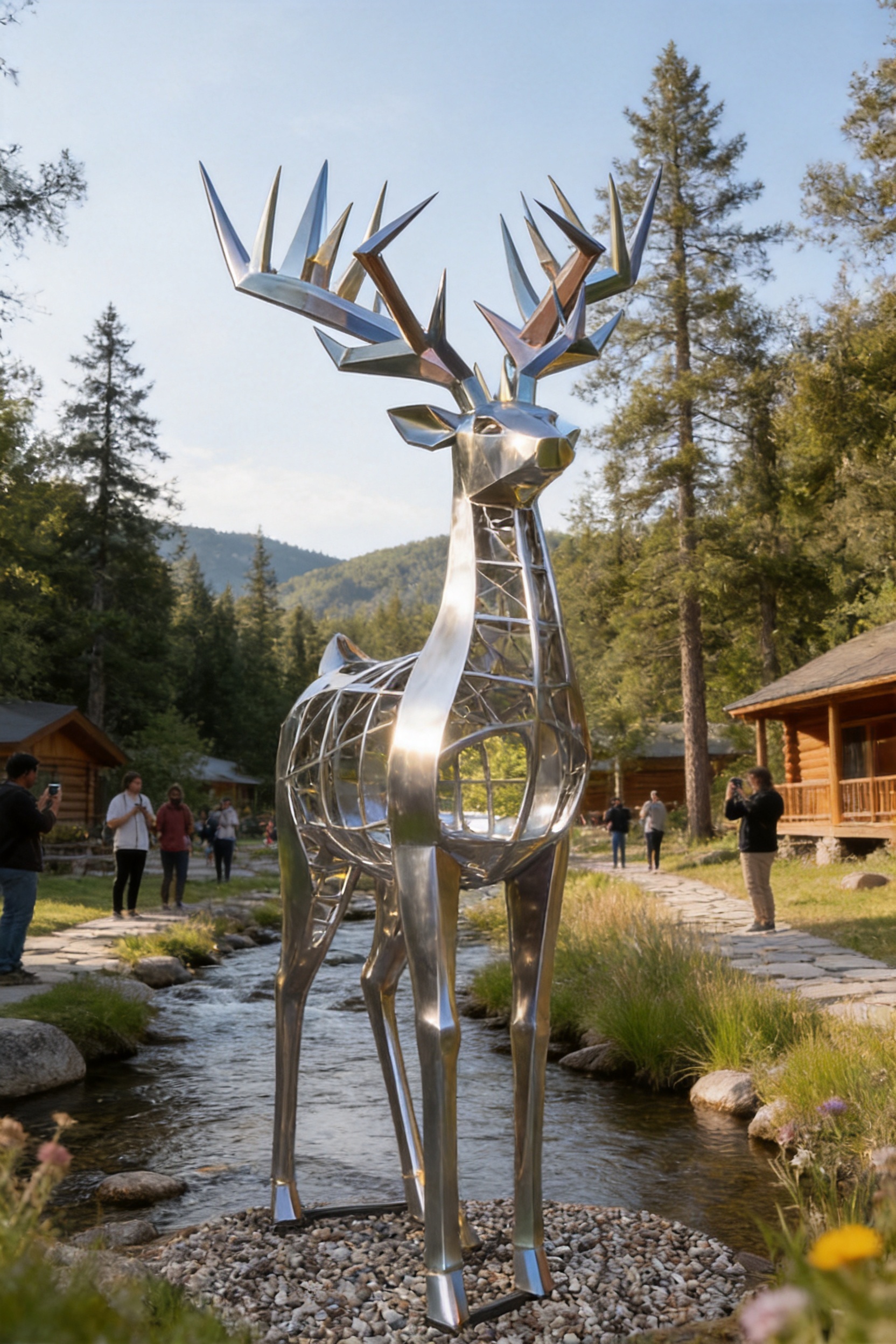
Buyers evaluating landscape features often compare illuminated sculptures with painted fiberglass figures, solid stone statues, temporary light displays, or ordinary decorative lamps. Each category has its own uses, but the Lighted Reindeer Sculpture offers a combination of artistic identity, material durability, and nighttime visibility that can be difficult to achieve with a single conventional product.
Fiberglass can be useful for lightweight decorative figures, but painted surfaces may require periodic refinishing when exposed to sunlight, rain, impact, and temperature changes. A stainless steel sculpture can offer a more architectural appearance and may better suit premium hospitality or public-art settings.
The hollow metal structure also creates a different visual effect. Instead of presenting a fully colored character, it emphasizes outline, volume, and light transmission. This gives the sculpture a more minimalist and contemporary identity.
Stone and concrete can provide permanence and mass, but they are heavy and may require more complex transportation, lifting, and foundation preparation. A hollow metal sculpture can achieve a considerable visual scale with less apparent mass. This may provide greater flexibility for locations where access, ground loading, or installation time is limited.
The illuminated design is another important distinction. A solid stone statue can be externally lit, but external floodlighting may create glare, visible shadows behind the statue, and a less integrated appearance. Lighting within a hollow structure becomes part of the sculpture itself.
String lights and seasonal decorations can create attractive short-term effects, but they may not provide a permanent landmark or a strong artistic identity. The Lighted Reindeer Sculpture is intended as a durable installation that can remain in place and function as part of the site’s long-term landscape design.
Its recognizable form can support branding and visitor memory without requiring a temporary theme. The sculpture can also be used throughout the year, reducing the need to remove and replace an entire decorative feature after a holiday period.
Ordinary lamps are mainly functional. They illuminate paths, entrances, or gathering areas, but they may not create a memorable visual symbol. The lighted reindeer combines illumination with sculpture, allowing one installation to contribute to both atmosphere and identity.
It should not replace required safety lighting, directional lighting, or code-compliant site illumination. Instead, it can work alongside those systems as an artistic focal point. This distinction is important: the product is a decorative landscape sculpture with integrated light, not a substitute for professionally planned general lighting.
The manufacturer is identified in the supplied product information as Jiangsu Xinyesheng Sculpture Co., Ltd., a China-based sculpture company offering metal sculpture production and custom design services. The available materials do not provide a complete factory profile or a detailed list of machinery. However, the product specifications and customization options indicate a manufacturing approach centered on metal forming, hollow sculpture fabrication, lighting integration, outdoor finishing, and project-specific adjustment.
A successful animal sculpture begins with proportion and silhouette. The reindeer must remain recognizable while also accommodating fabrication requirements. The head, neck, torso, legs, and antlers need to be arranged so that the animal appears balanced from multiple viewing angles.
For a lighted sculpture, design development must also consider how illumination will move through the form. Areas that are too dense may block light, while areas that are too open may weaken the silhouette. The manufacturer’s ability to adjust size and brightness suggests that the sculpture can be adapted to different visual and spatial requirements rather than produced as a single rigid configuration.
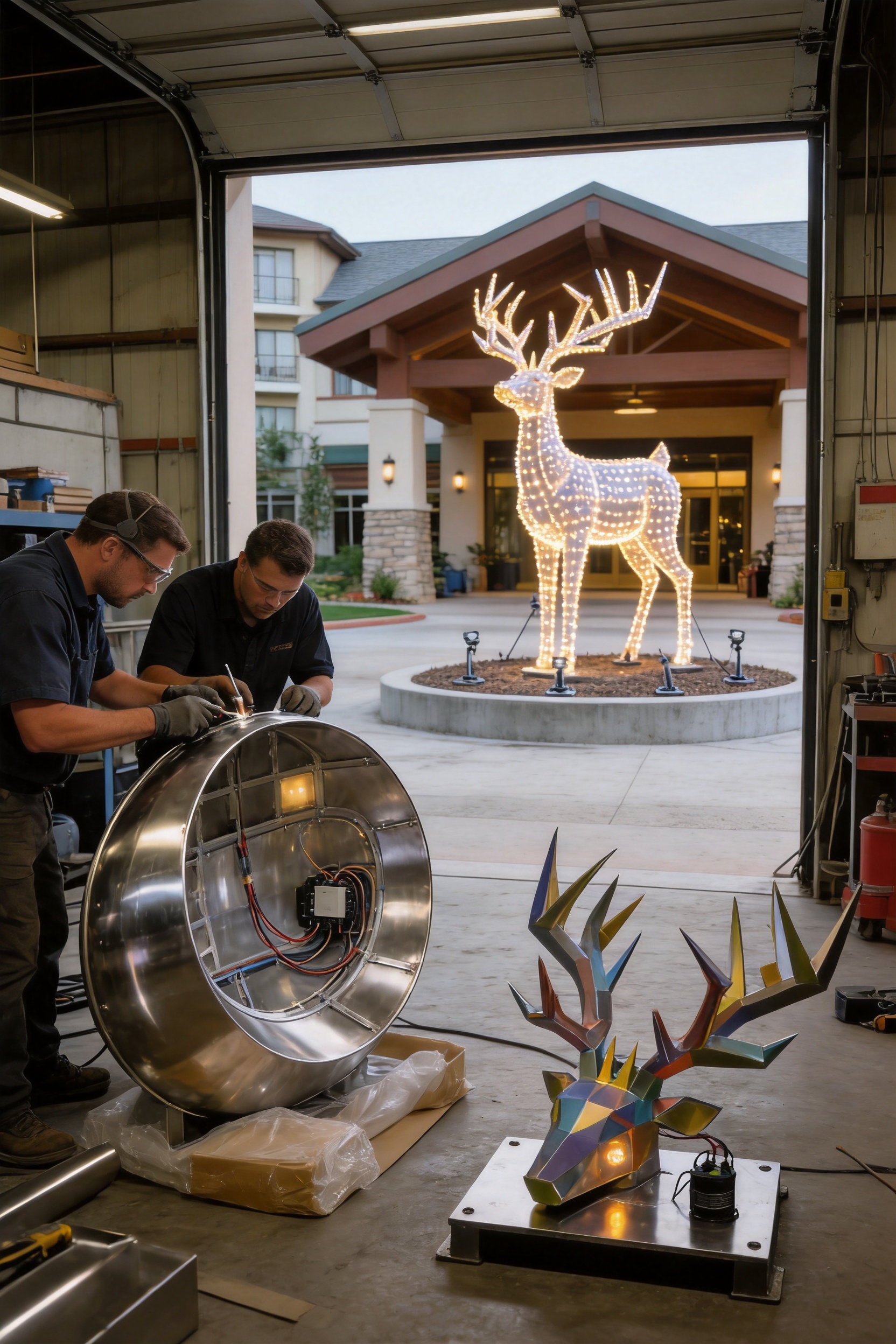
Hollow construction requires the external shell and internal supports to work together. Metal sections must be formed, cut, joined, and aligned so that the final surface follows the intended animal profile. Seams and transitions should be positioned in ways that preserve the visual continuity of the sculpture.
The hollow process can also create controlled internal space for LED components and wiring. This is more refined than attaching visible lights to the outside of a completed statue. When the lighting system is considered during fabrication, the result can be cleaner, more consistent, and easier to maintain.
Animal sculptures include multiple changes in direction and narrow components. Antlers and legs, in particular, require reliable connection points. Manufacturing quality depends on accurate alignment and strong joints that can withstand handling, wind, and repeated environmental exposure.
For large custom orders, buyers should discuss weld quality, reinforcement, base structure, anchoring points, access panels, and inspection procedures. These elements are not always visible in product photographs, but they have a major effect on service life and installation reliability.
The surface finish influences both appearance and weather resistance. Stainless steel can be treated to achieve different visual effects, from reflective and polished surfaces to more subdued brushed or satin finishes. The selected finish should be matched with the site’s architecture, desired level of reflectivity, and maintenance plan.
Outdoor finishing should also address areas around joints, openings, mounting points, and drainage paths. A professional fabrication process considers not only the broad surface appearance but also the details that affect moisture retention and long-term cleanliness.
Integrating LED lighting into a metal sculpture requires coordination between the artistic shell and the electrical system. The lighting elements must be positioned to produce an even and attractive glow while remaining protected from water and accidental contact.
The manufacturer describes the sculpture as equipped with an LED lighting system and suitable for outdoor waterproofing. Project buyers should confirm the exact protection rating of the electrical components, the power supply specifications, cable length, control method, brightness adjustment, replacement procedure, and local electrical compliance requirements before placing an order.
Customization is a major strength for landscape projects. The supplied information identifies adjustable brightness and sculpture size as available options. Other project details may also be discussed, such as surface finish, base treatment, lighting color, mounting arrangement, antler configuration, packaging, and installation guidance.
Custom production is especially valuable when the sculpture must fit a particular entrance width, landscape axis, viewing distance, or architectural style. A standard product may be attractive, but a project-specific version can achieve better proportional harmony and a more intentional relationship with the site.
Before ordering, buyers should prepare a clear project brief. This helps the manufacturer understand the intended environment and reduces the possibility of mismatched dimensions or lighting expectations.
| Planning Item | Recommended Questions | Why It Matters |
|---|---|---|
| Installation location | Will the sculpture stand on soil, concrete, stone, decking, or paving? | The base and anchoring approach depend on the site surface. |
| Overall height | Is a height near 200 cm, 250 cm, or 300 cm most appropriate? | Height affects visibility, transport, structure, and foundation needs. |
| Viewing distance | Will visitors approach closely or view the sculpture from a road or plaza? | Viewing distance influences detail, brightness, and silhouette design. |
| Lighting brightness | Should the glow be soft, moderate, or prominent? | Brightness determines atmosphere, visibility, and energy requirements. |
| Operating schedule | Will the LEDs run continuously, on a timer, or through a control system? | Operating hours affect energy use and maintenance planning. |
| Weather conditions | Is the site exposed to coastal air, heavy rain, snow, or strong wind? | Environmental exposure affects material, sealing, and anchoring decisions. |
| Electrical supply | What voltage, outlet location, and cable route are available? | Electrical compatibility should be confirmed before installation. |
| Visitor interaction | Can guests touch or walk around the sculpture? | Public access affects safety, base design, and service protection. |
| Maintenance access | How will the LED system and connections be inspected? | Accessible service points help reduce future downtime. |
The visual success of a sculpture depends partly on how it is installed. Even a well-fabricated object can appear poorly integrated if it is placed without considering scale, background, pedestrian movement, and nighttime visibility.
A suitable location should provide enough space for the sculpture, its foundation, visitor circulation, and service access. The reindeer should be visible from the main approach but should not obstruct emergency routes, accessible paths, vehicle movement, or important sight lines.
Background is particularly important at night. A dark tree line, open sky, textured wall, or carefully planted landscape can help the illuminated form stand out. Excessive nearby lighting may reduce the sculpture’s impact, while a completely unlit surrounding area may create safety concerns. The sculpture should therefore be coordinated with the complete site lighting plan.
Although the hollow construction can reduce overall weight, an outdoor sculpture still requires secure anchoring. The proper foundation will depend on total size, local wind conditions, soil, pavement, and applicable construction requirements. The final base should distribute loads effectively and keep the sculpture stable.
Anchoring hardware should be selected for exterior exposure and installed according to the manufacturer’s guidance and local professional requirements. On public or high-traffic sites, the base should also be designed to reduce trip hazards and protect connection points from accidental damage.
The LED system should be connected through suitable outdoor-rated equipment. Cables should be routed to prevent water accumulation, abrasion, accidental contact, and interference with pedestrian movement. Grounding, circuit protection, control equipment, and installation procedures should be reviewed by a qualified electrician where required.
Waterproofing is not limited to the visible lamp or LED strip. Connections, power supplies, control boxes, access panels, and cable entries all need appropriate protection. Buyers should request detailed electrical documentation for projects located in wet or demanding environments.
A durable sculpture should be evaluated not only by its purchase price but also by the ease of maintaining its appearance and performance. The Lighted Reindeer Sculpture is designed with weather-resistant metal, outdoor waterproofing, rust resistance, and stable LED performance in mind. Proper care can help preserve these advantages.
Dust, pollen, leaves, bird residue, and airborne pollution can gradually build up on outdoor surfaces. Periodic cleaning with methods appropriate for stainless steel can help preserve the finish and keep the illuminated form visually clear. Abrasive materials and unsuitable chemicals should be avoided because they may scratch or discolor the surface.
The cleaning schedule will depend on the environment. A sculpture near trees may require more frequent attention than one in an open plaza. Coastal or industrial locations may also require a more carefully planned cleaning routine because airborne contaminants can accelerate surface staining.
Owners should periodically check brightness consistency, cable condition, power supply operation, and visible signs of moisture. If one section becomes darker than another, the cause may involve a connection, LED component, controller, or power issue. Early inspection can prevent a minor problem from becoming a larger service interruption.
Service access should be considered during the original design stage. A lighting system that is technically effective but difficult to reach may increase future maintenance costs. Buyers should ask how LED components, drivers, and wiring can be inspected or replaced.
Annual or seasonal reviews can identify scratches, loose fasteners, corrosion at dissimilar-metal connections, damage caused by impact, or movement at the base. Early treatment is generally more effective than waiting until a small issue affects a larger area.
In locations with snow, ice, or strong wind, owners should also inspect areas where water may collect. Good drainage and intact seals help support the sculpture’s long-term performance.
A landscape sculpture is not only a physical object; it is part of a visitor journey. Its position, scale, lighting, and relationship with nearby activities can influence how guests move through a site and how they remember it.
At an entrance, the illuminated reindeer can create a welcoming transition between the outside world and the destination. Along a pathway, it can serve as a visual marker that gives the route a stronger identity. Near a gathering area, it can become a social focus where visitors naturally pause. At a scenic viewpoint, it can frame photographs without completely blocking the landscape.
The sculpture can also support seasonal programming. During winter, its reindeer form may complement holiday markets, snow activities, or festive lighting. During warmer seasons, the same installation can remain relevant as a nature-themed landmark. This year-round usability can provide better value than decorations designed for only a short annual period.
Because the lighting can be customized, operators may adjust the visual intensity for different uses. A softer setting may suit quiet evening hours, while a brighter setting may help the sculpture remain visible during a public event. Any changes should be made within the limits of the electrical system and local light-pollution policies.
Outdoor sculpture projects rarely have identical conditions. The ideal height for a forest campsite may not be suitable for a hotel courtyard. A sculpture placed near a road may require a stronger silhouette than one viewed from a short garden path. A public plaza may need more robust protection than a private resort landscape.
Custom manufacturing allows the sculpture to respond to these differences. Size can be adjusted to suit the site. Brightness can be tailored to the surrounding environment. The finish can be coordinated with architecture. The base can be considered in relation to the foundation. Lighting access can be planned according to maintenance expectations.
This project-oriented approach can also support multiple-unit installations. A destination may require a family of reindeer in different sizes, a larger central sculpture with smaller companion pieces, or a coordinated arrangement along a pathway. Consistent fabrication standards can help ensure that the units share a common visual language.
Customization should be documented clearly before production. The buyer and manufacturer should confirm drawings, dimensions, materials, finish, lighting color, power requirements, packaging, delivery terms, installation responsibilities, and acceptance standards. A detailed approval process is especially important for made-to-order metal sculpture.
Professional buyers should evaluate more than the product photograph. The following questions can help clarify whether the sculpture is suitable for a demanding outdoor project.
The first consideration is material confirmation. Buyers should ask which stainless steel grade is proposed, whether other weather-resistant metal materials are included, and what surface treatment will be applied. Environmental conditions such as coastal humidity may require a different specification from an inland garden.
The second consideration is structural documentation. The manufacturer should be asked about the internal frame, shell thickness, reinforcement, base plate, anchoring points, and recommended foundation. These details are particularly important for sculptures near public walkways or locations exposed to strong wind.
The third consideration is lighting documentation. Buyers should confirm LED type, color temperature or color options, brightness control, voltage, power consumption, ingress protection, cable routing, driver location, replacement method, and warranty provisions if applicable.
The fourth consideration is production inspection. A reliable process should include checks for dimensional accuracy, alignment, weld quality, surface consistency, electrical operation, waterproofing details, and packaging protection. The exact inspection system should be confirmed with the supplier because the available product information does not provide a full factory quality manual.
The fifth consideration is logistics. A hollow sculpture may be lighter than a solid equivalent, but antlers, legs, lighting components, and surface finishes still need protection during transport. Buyers should discuss whether the product ships fully assembled or in sections, how sections are labeled, and what tools or procedures are required for final assembly.
The stated price range of USD 2,045.16 to USD 3,408.58 provides an initial estimate for the Lighted Reindeer Sculpture. Because the product supports different heights and lighting adjustments, buyers should regard this as a starting range rather than a universal final price.
Total project cost may include customization, engineering review, packaging, inland transportation, international freight, import charges, foundation construction, electrical installation, lifting equipment, landscaping preparation, and ongoing maintenance. A complete budget should include these elements before approval.
Value should also be considered over the expected service period. A sculpture that serves as a landmark, photo opportunity, nighttime attraction, and decorative light may provide more functional value than a product that performs only one of these roles. If it increases visitor engagement or strengthens the identity of a destination, its contribution may extend beyond its physical appearance.
Durability is another part of value. Weather-resistant metal, suitable waterproofing, and integrated LED lighting can help reduce the frequency of replacement compared with temporary or less robust decorations. However, long-term performance depends on correct material selection, installation, electrical protection, cleaning, and inspection.
The sculpture should be treated as part of a complete composition. Planting, paving, benches, signs, architectural surfaces, and other lights all affect how the reindeer will be perceived. A thoughtful setting can make the installation appear intentional rather than simply placed on an empty platform.
Natural materials such as timber, stone, gravel, and planting can emphasize the reindeer’s connection with the outdoors. Modern materials such as concrete, glass, and architectural steel can create a more contemporary presentation. In either case, sufficient contrast should be maintained so that the silhouette remains visible.
Planting should not conceal important parts of the form. Low planting can soften the base, while taller vegetation may frame the sculpture from behind. Designers should consider how plants will grow over time and whether seasonal changes will affect visibility.
Nearby lighting should be aimed carefully. Strong floodlights directed toward the sculpture may flatten the internal glow or create uncomfortable glare. A balanced lighting plan can allow the reindeer to remain the primary visual feature while providing enough general illumination for safe movement.
It is designed as an illuminated outdoor landscape decoration and artistic landmark. It can attract visitors, create a nighttime focal point, provide a photo opportunity, and contribute to the identity of campsites, scenic destinations, resorts, gardens, plazas, and other outdoor spaces.
The product is categorized as a stainless steel animal sculpture and is described as being made with weather-resistant metal materials. Buyers should confirm the exact stainless steel grade and surface finish according to the project’s environment and maintenance requirements.
Yes. The product is described as suitable for outdoor use, with waterproofing, rust resistance, and stable LED lighting performance. The final installation should still use an appropriate foundation, anchoring system, outdoor-rated electrical equipment, and professional installation practices.
The listed approximate height is 200 to 300 centimeters. Custom sizing can be discussed, and the selected height should reflect the viewing distance, site dimensions, transportation plan, foundation, and desired visual prominence.
Yes. The product information indicates that light brightness can be customized. The appropriate brightness depends on the surrounding environment, operating hours, local regulations, visitor comfort, and the desired atmosphere.
The hollow structure reduces overall weight and allows light to pass through, but it must be supported by suitable internal reinforcement, joints, and anchoring. Buyers should request structural details for the final size and installation location.
Yes. Without relying on illumination, the stainless steel reindeer remains a sculptural object during daylight. Its animal silhouette, open construction, and metal finish can complement the surrounding landscape before the LED system is switched on at night.
No. It is primarily an artistic landscape feature with integrated decorative illumination. Path lighting, emergency lighting, exit lighting, and other required systems should be planned separately according to local standards.
Suitable locations include campsites, glamping areas, scenic spots, resort entrances, gardens, public parks, commercial plazas, event spaces, and nighttime tourist destinations. The location should provide appropriate visibility, safe circulation, electrical access, and a secure foundation.
Buyers should confirm dimensions, stainless steel grade, finish, lighting color, brightness, voltage, power consumption, waterproofing details, internal structure, anchoring method, packaging, shipping arrangement, installation requirements, and maintenance access.
A custom sculpture manufacturer can be asked to develop multiple units with consistent proportions and finishes. Different sizes or poses may be considered for pathways, gardens, entrance sequences, or larger landscape compositions.
Routine cleaning, inspection of the metal surface, review of joints and anchors, and testing of the LED system are recommended. Maintenance frequency should be increased in coastal, industrial, very wet, snowy, or high-traffic environments.
The Lighted Reindeer Sculpture combines recognizable animal art, weather-resistant metal construction, hollow structural design, and integrated LED illumination. This combination gives it advantages over ordinary statues, temporary decorations, and standard landscape lamps. It can remain attractive in daylight, become an atmospheric landmark at night, and encourage visitors to pause, gather, and take photographs.
Its most important practical strengths are the balance between visual scale and hollow construction, the ability to customize approximate height and brightness, and the suitability of its stainless steel form for outdoor landscape applications. The LED system gives the sculpture a clear nighttime identity, while the open body allows light and shadow to interact with the surrounding environment.
The manufacturing approach is centered on custom metal sculpture fabrication, hollow forming, joint control, surface finishing, and lighting integration. For a successful result, these capabilities should be matched with careful project planning, including site evaluation, foundation design, electrical protection, transportation, installation, and maintenance access.
For campsites, scenic destinations, resorts, parks, gardens, commercial plazas, and other outdoor environments, the sculpture can serve as more than decoration. It can become a permanent visual signature for the site: a glowing reindeer that connects nature, art, hospitality, and nighttime visitor experience in one durable installation.
1. Product specification information for the Lighted Reindeer Sculpture, including approximate height, price range, material category, lighting system, outdoor features, and customization options.
2. Stainless Steel Designers’ Manual, general guidance on stainless steel selection, fabrication, finishing, and outdoor architectural applications.
3. Outdoor Lighting Fundamentals, general principles for LED efficiency, lighting controls, glare management, electrical protection, and landscape integration.
4. Public Art and Landscape Design Practice, general considerations for scale, visitor circulation, visual landmarks, foundations, and maintenance planning.
5. Metal Sculpture Fabrication Principles, general guidance on hollow construction, structural reinforcement, joints, surface treatment, packaging, and installation preparation.



Daniel H.

Amanda R.

Robert B.

Jennifer S.

James W.

Barry G.

Michael T.

Emily K.

David L.

Sarah M.


Mikey XV

Jagxue

 English
 Español
 عربى
عربى Français
 italiano
 Deutsch