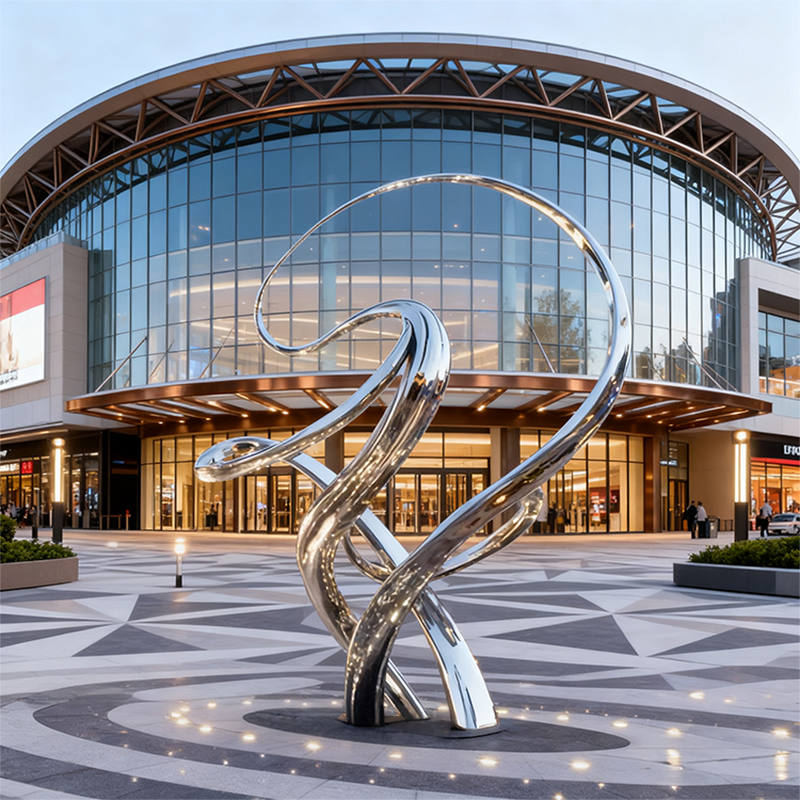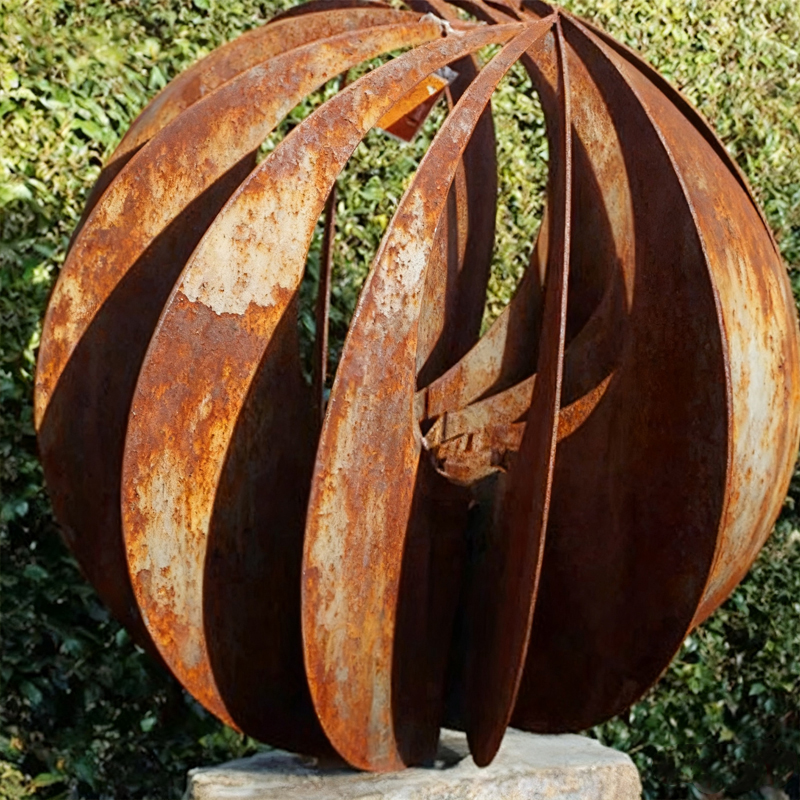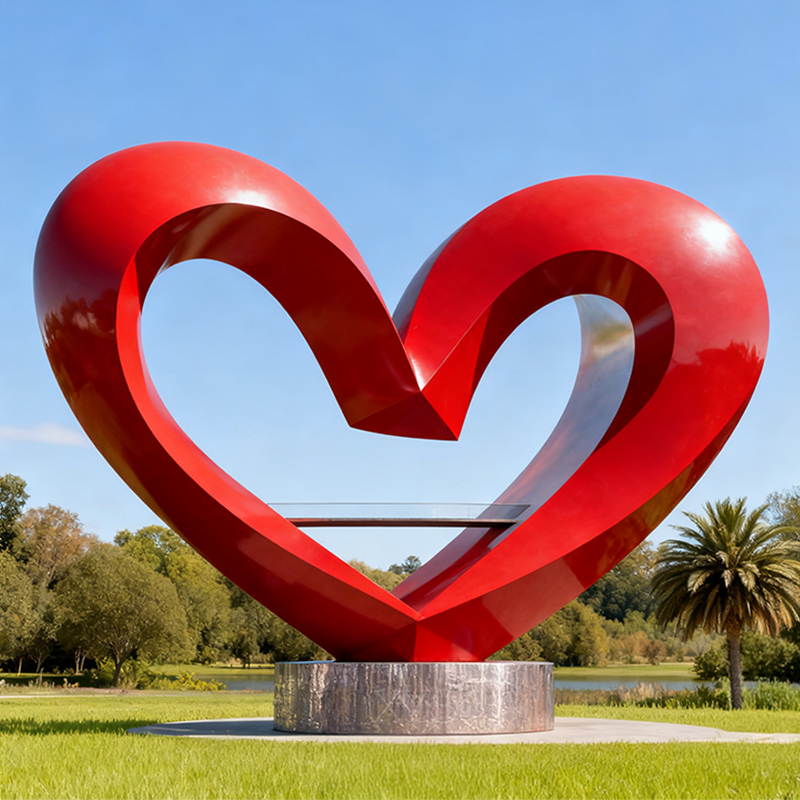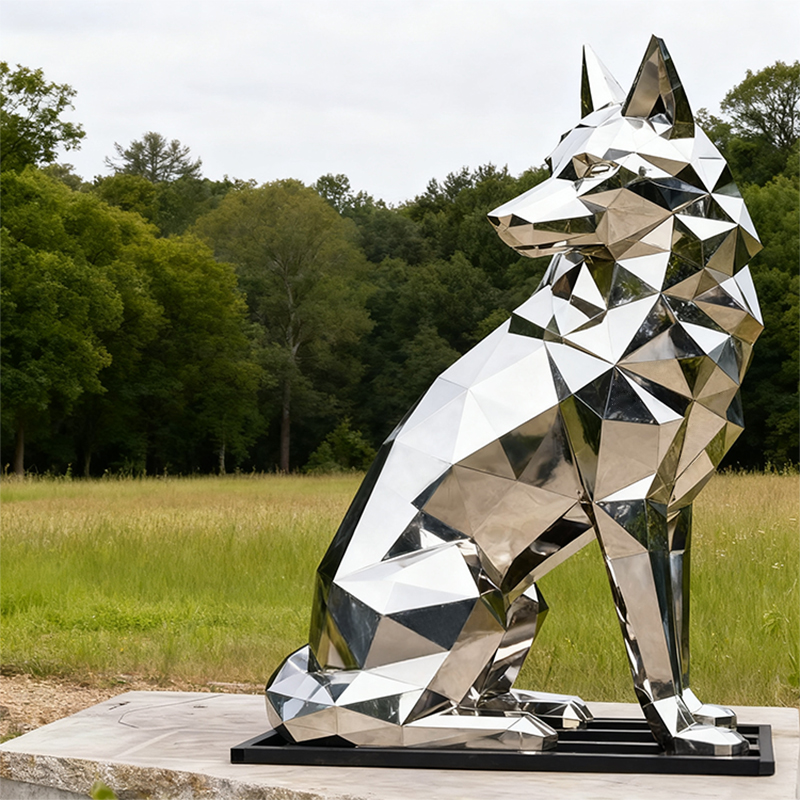
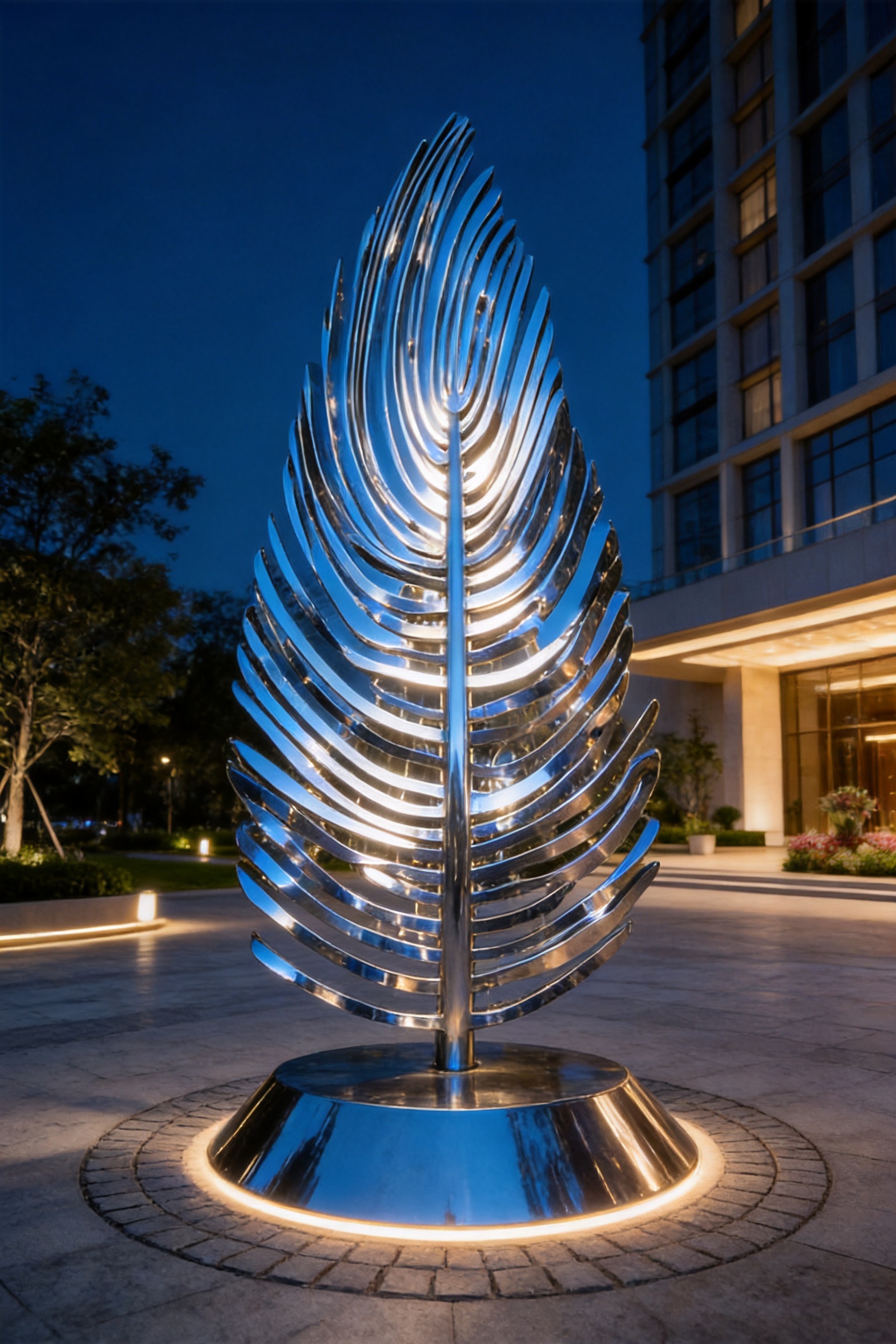
The Hollow-Out Streamlined Feather Stainless Steel Sculpture is an outdoor landmark artwork designed to combine natural inspiration, precision metal fabrication, architectural presence, and long-term environmental performance. Its form is based on the structure of a feather, but its construction is distinctly industrial: curved flat tubing is welded into progressively layered sections, creating an open framework rather than a solid metal surface. The result is a sculpture that appears weightless while offering the scale, durability, and visual authority required for public landscapes, commercial developments, parks, gardens, tourism destinations, and industrial campuses.
Available in total heights from 2 to 7.5 meters, the sculpture can serve as either a refined decorative accent or a highly visible outdoor landmark. The smaller versions are suitable for residential lawns, hotel entrances, courtyards, and garden compositions. Larger versions can establish a focal point in a city park, central lawn, cultural district, tourism site, or industrial-park landscape belt. Its upward movement suggests flight, growth, progress, and freedom, while the open construction allows the surrounding landscape to remain visible through the sculpture.
Manufactured by Jiangsu Xinyesheng Sculpture Co., Ltd., the piece demonstrates the company’s ability to translate an organic visual concept into a technically demanding stainless steel structure. The manufacturing process requires careful material selection, repeated tube bending, progressive radius control, accurate alignment, skilled welding, extensive polishing, and secure base fabrication. These processes distinguish the sculpture from simpler products made from a single laser-cut sheet, a solid cast form, or a basic welded silhouette.
The product is fabricated from corrosion-resistant 304 or 316 stainless steel and finished with a uniform 8K mirror polish. Its matching conical base is weighted for stability in moderately exposed outdoor locations. LED strips can also be installed along the base to create a glowing nighttime display, allowing the sculpture to function as both a daytime reflective artwork and an illuminated evening landmark.
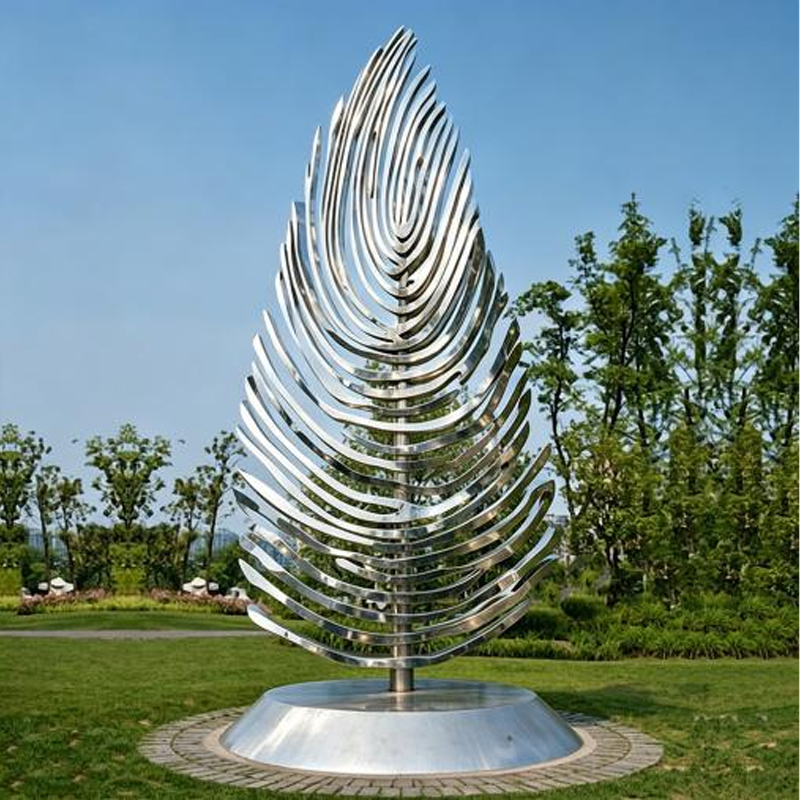
Hollow-Out Streamlined Feather Stainless Steel Sculpture
Content
Feathers are naturally complex structures. A central shaft supports many smaller barbs, and those barbs spread outward in a controlled, layered pattern. Although a feather is lightweight, its arrangement of lines and surfaces creates a strong visual identity. The Hollow-Out Streamlined Feather Stainless Steel Sculpture interprets this structure through curved flat tubing arranged in successive layers around a central spine.
The design avoids a literal, heavy representation. Instead of reproducing a feather as a solid silhouette, it emphasizes the spaces between the structural elements. These openings are essential to the appearance of the sculpture. They let light pass through the form, allow the viewer to see portions of the background, and reduce the visual mass of the artwork. From a distance, the sculpture reads as a soaring feather. At closer range, the viewer can study its layered construction, welded joints, reflective surfaces, and carefully controlled curves.
This approach gives the sculpture a dual character. It is organic in inspiration but architectural in execution. The feather reference makes it approachable and symbolic, while the polished stainless steel and precise geometry give it a contemporary, high-end appearance. It can therefore be integrated into modern public spaces without appearing overly literal or traditional.
The streamlined profile also supports a sense of upward movement. The form may be read as a feather rising on air, a symbol of aspiration, or a dynamic vertical gesture emerging from the ground. Such associations make it suitable for entrances, civic areas, educational campuses, tourism facilities, corporate landscapes, and locations seeking an artwork with a positive and memorable visual message.
A major advantage of the sculpture is its hollow, open construction. In a conventional solid sculpture, the visual mass of the material can dominate the surrounding environment. A solid feather form may appear heavy, block views, and require large quantities of metal or other material. By contrast, the layered tubing used in this design creates a framework that defines the feather without filling in every surface.
The open gaps between the curved sections allow wind, daylight, artificial light, and landscape views to move through the sculpture. This makes the piece visually lighter than its physical height might suggest. Even when installed at 7.5 meters, it can retain an airy appearance rather than becoming an oversized opaque object.
The hollow structure also produces changing visual effects. When viewed from one angle, the curved layers may appear closely connected and form a strong feather silhouette. From another angle, the spaces between the tubes become more prominent, revealing the depth of the structure. As viewers walk around the sculpture, its apparent shape changes continuously. This encourages movement and observation instead of presenting a single fixed image.
At sunrise and sunset, the open sections can frame the sky and surrounding vegetation. During the day, sunlight creates highlights on the polished metal and shadows within the layered construction. At night, LED lighting installed near the base can send illumination upward or across the lower structure, emphasizing the gaps and creating a luminous visual presence.
Compared with a solid-sheet competitor, this open design can offer a more refined relationship with its surroundings. It does not simply occupy space; it interacts with space. The background becomes part of the visual experience, and the sculpture can appear different under changing weather, lighting, and viewing conditions.
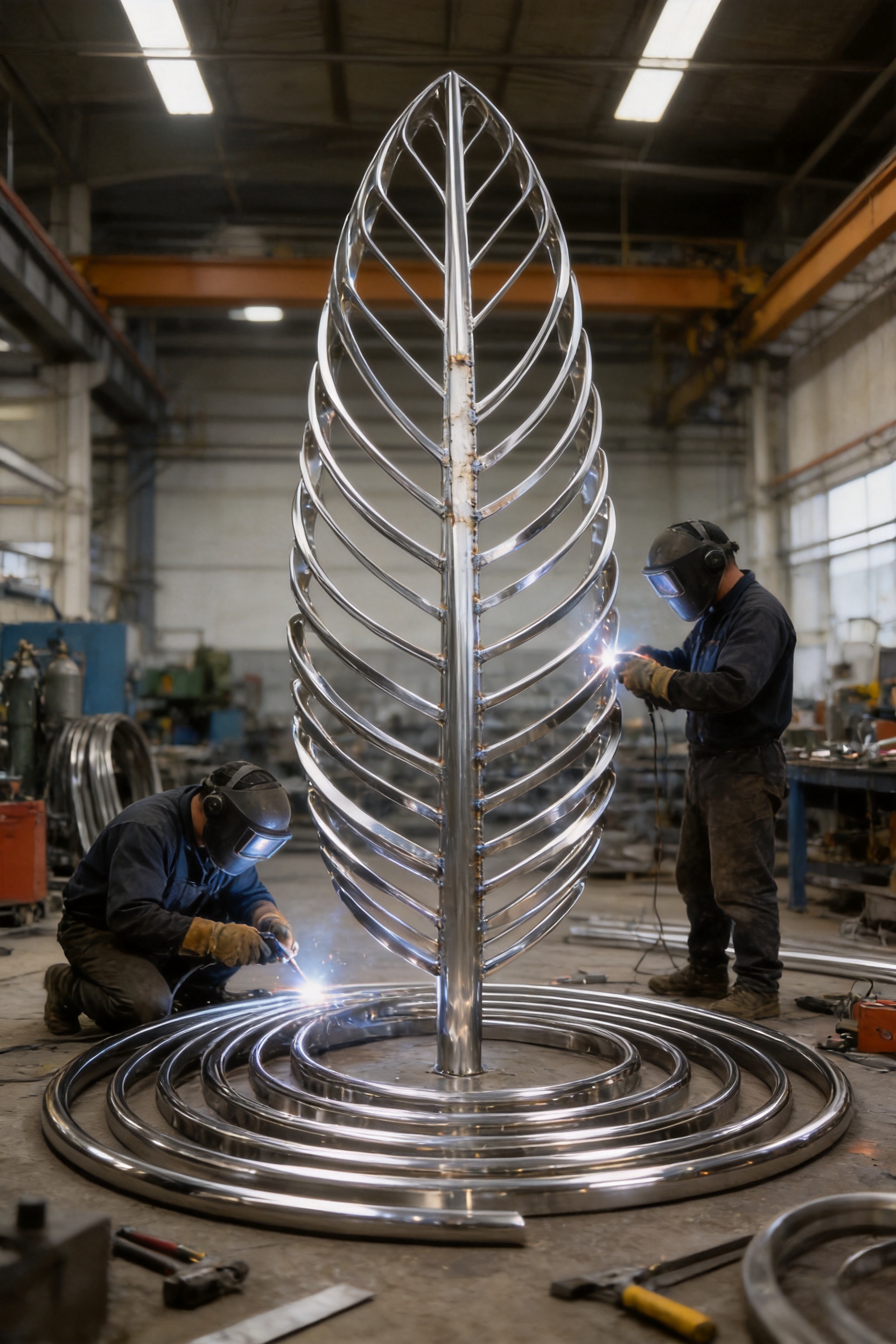
The most technically distinctive feature of the sculpture is the use of curved flat tubing in progressively layered sections. This process requires considerably more planning and control than producing a simple flat silhouette. Each tube must be shaped to follow its assigned position within the feather, and neighboring tubes must work together to create a coherent overall contour.
The individual sections are not bent to one identical radius. Instead, each curved tube is formed to a slightly different radius than the tubes around it. The radii gradually change as the layers move outward from the central spine. This controlled variation reproduces the natural way feather barbs spread from a shaft. It also prevents the sculpture from looking mechanically repetitive.
Tube bending is a demanding operation because excessive force, incorrect tooling, or inconsistent pressure can cause deformation, wrinkling, flattening, or unwanted springback. Stainless steel must be shaped while preserving the clean profile of the tubing. For a high-polish finish, surface defects are particularly important because scratches, dents, and distortion can become more visible after mirror polishing.
The fabrication team must therefore coordinate design dimensions, bending sequences, material thickness, welding allowances, and final assembly requirements. The curved components are typically reviewed progressively so that the overall feather profile remains balanced. If one layer extends too far, sits too close to its neighbor, or changes direction abruptly, the natural rhythm of the design can be weakened.
The progressive layering process is one of the product’s strongest advantages over basic decorative metal statues. A single-sheet sculpture may have a recognizable outline, but it usually cannot provide the same three-dimensional depth, changing transparency, or detailed structural rhythm. The layered-tube method requires more labor, but that additional work creates a more sophisticated result.
The central spine acts as the organizing element of the sculpture. It gives the feather its vertical direction and provides a reference for positioning the curved layers. The surrounding tubes must be aligned so that their spacing, angle, and outward movement appear intentional from multiple viewpoints.
Accurate alignment is especially important in a large outdoor sculpture. Small inconsistencies may be difficult to see in a workshop, yet become noticeable when the piece is enlarged and viewed from a distance. The use of a central structural reference helps maintain the balance between the upper feather form and the supporting conical base.
The assembly sequence must also account for welding access. Components need to be connected securely without allowing welds, heat distortion, or finishing work to interrupt the intended visual flow. This calls for a practical balance between structural strength and surface appearance.
Welding joins the individually formed components into a unified sculpture. Because the product is made from many layered sections, the welding process is not merely a basic assembly step. It must preserve the intended geometry while creating reliable connections suitable for outdoor installation.
Heat management is an important consideration when welding stainless steel. Excessive or uneven heat can result in distortion, discoloration, or changes in the appearance of the surface. Careful welding practice, controlled sequencing, and subsequent finishing help maintain both the structural integrity and the visual quality of the artwork.
After welding, the surface may require grinding, blending, and polishing so that joints become visually integrated into the overall form. This is particularly significant for an 8K mirror finish, because reflective surfaces reveal irregularities more readily than matte or textured finishes.
The sculpture is offered in 304 or 316 stainless steel, two widely used stainless grades for architectural, decorative, and outdoor fabrication. Both provide corrosion resistance and a clean modern appearance, making them suitable for a sculpture expected to remain outdoors for extended periods.
Grade 304 stainless steel is commonly selected for general outdoor environments, parks, gardens, commercial landscapes, and locations with moderate exposure. It offers a balance of durability, fabricability, appearance, and cost. Its surface can be polished to a bright mirror finish and maintained through routine cleaning.
Grade 316 stainless steel provides enhanced resistance in more demanding environments, particularly where salt, coastal air, chlorides, or other corrosive conditions may be present. Depending on the installation site, 316 may be considered for coastal projects, waterfront developments, exposed tourism locations, or areas where additional corrosion resistance is a priority.
The final material choice should be based on the specific environmental conditions, installation distance from the coast, local weather, pollution levels, maintenance expectations, and project budget. Offering both grades allows the manufacturer to adapt the product to different site requirements rather than applying one material specification to every project.
Stainless steel is also well suited to the sculpture’s design language. Its strength allows the creation of slender curved components, while its reflective surface emphasizes the layered geometry. Painted carbon steel or heavily coated alternatives may provide different visual effects, but they can require periodic recoating and may not deliver the same depth of reflection as polished stainless steel.
The uniform 8K mirror polish is a central part of the product’s appearance. Rather than using a rough brushed finish, the sculpture is processed to achieve a highly reflective surface across its curved layers and supporting elements. This creates bright highlights that move across the sculpture as the viewer changes position.
Because the individual tubes have different curves, the reflections are not identical from one section to the next. Some surfaces may reflect the sky, nearby trees, buildings, or sunlight, while others may appear darker depending on their orientation. The result is a dynamic skin of light that gives the sculpture visual movement even though the structure itself remains stationary.
The mirror finish also strengthens the contrast between the sculpture and its surroundings. In a green park, it can reflect foliage and open sky. In an urban plaza, it may echo nearby architecture. At a tourism site, it can become a recognizable visual marker that changes throughout the day and photographs differently under different weather conditions.
Achieving a consistent mirror surface on a welded, multi-layered sculpture is more demanding than polishing a flat plate. Curved tubing, edges, joints, and recessed areas each present different access and finishing challenges. The manufacturing process must therefore include careful surface preparation after fabrication. Inconsistent polishing can create dull patches or visible transitions that interrupt the intended premium appearance.
The 8K finish offers a strong competitive advantage over ordinary painted sculptures when the project calls for a bright, contemporary landmark. It also provides a different experience from weathering steel, whose appeal depends on a deliberately rusted surface. The mirror-polished stainless steel version is especially appropriate for projects seeking cleanliness, modernity, light reflection, and a sense of refinement.
The feather form is mounted on a matching conical base. The base performs both visual and structural functions. Visually, it creates a transition from the ground to the narrow central spine, allowing the feather to appear as though it is rising from a concentrated point. Structurally, the weighted base helps support the tall open framework and contributes to stability in moderately exposed outdoor locations.
The conical geometry complements the upward direction of the feather. A broad lower section provides a strong visual foundation, while the narrowing upper section supports the sculpture without competing with its layered form. This is important because an overly bulky base could undermine the product’s sense of lightness.
Installation planning remains essential for any outdoor sculpture, especially for versions approaching 7.5 meters in height. Site conditions, local wind exposure, foundation design, ground bearing capacity, drainage, access for delivery, and lifting equipment should be assessed before production or installation. The weighted base is designed to support stability, but project-specific engineering and anchoring requirements may vary according to the location.
The base can also serve as the location for LED strips. Placing lighting near the lower section allows the illumination to accent the upward lines of the sculpture. The lighting design can be subtle and continuous, or it can be configured to emphasize selected layers. Electrical components should be selected and installed for outdoor use, with suitable protection from moisture and routine maintenance access.
Compared with a sculpture that requires a separate, visually unrelated foundation, the matching conical base offers a more integrated presentation. The complete product arrives as a coordinated composition rather than as an artwork that must be visually adapted to a generic plinth.
Jiangsu Xinyesheng Sculpture Co., Ltd. specializes in metal sculpture production and offers a product portfolio that includes bronze sculptures, stainless steel sculptures, marble sculptures, fiberglass sculptures, and weathering steel sculptures. This range suggests experience working across different materials, fabrication methods, surface treatments, and sculptural styles.
For the Hollow-Out Streamlined Feather Stainless Steel Sculpture, the company’s strengths are most visible in the coordination of several specialized operations. These include interpretation of the organic design, stainless steel material preparation, tube bending, layered assembly, welding, surface correction, mirror polishing, base fabrication, and preparation for outdoor installation.
The product is not produced by relying on a single manufacturing technique. Its quality depends on the relationship between multiple stages. A precise design cannot compensate for poor bending. Accurate bending cannot compensate for weak assembly. Strong welding cannot compensate for inadequate polishing. The manufacturer must control the complete chain from component formation to final presentation.
The ability to offer total heights from 2 to 7.5 meters also indicates production flexibility. Different heights require adjustments to component proportions, structural requirements, transport planning, and installation procedures. A manufacturer experienced in producing multiple scales can help adapt the sculpture to a particular site rather than forcing every customer to select one fixed dimension.
The use of 304/316 stainless steel and an 8K mirror polish demonstrates attention to both performance and appearance. These specifications are valuable for buyers seeking an artwork that can withstand outdoor exposure while maintaining a bright, contemporary finish. The combination is particularly suitable for projects where the sculpture will be seen by many visitors and photographed regularly.
Although the supplied product has a defined feather concept, its construction method can support project-specific adjustments. Potential design discussions may include overall height, width, layer density, curvature, base proportions, material grade, surface finish, LED integration, and placement requirements.
Customization should be approached as a coordinated design and engineering process. Changes to height or curvature can affect the relationship between the tubes, the weight distribution, the base, transport dimensions, and wind behavior. A professional manufacturer can evaluate these factors together instead of treating each change as an isolated visual request.
For landscape architects, developers, municipal buyers, hotel groups, and public-art planners, this flexibility can help create a sculpture that fits a particular site identity. A smaller version may be appropriate for an entrance garden, while a taller version may be needed to establish visibility across a broad lawn or plaza.
Consistency is especially important when a sculpture contains many repeated but individually adjusted components. Each layer should contribute to a unified silhouette, and the left and right sides should maintain visual balance where the design requires it. Repeated checks during bending and assembly can help prevent cumulative errors.
The mirror-polished finish also benefits from consistent production control. Variations in surface preparation, polishing direction, or joint treatment may become apparent when multiple layers reflect light side by side. A coordinated process helps ensure that the finished sculpture reads as one complete artwork rather than a collection of unrelated parts.
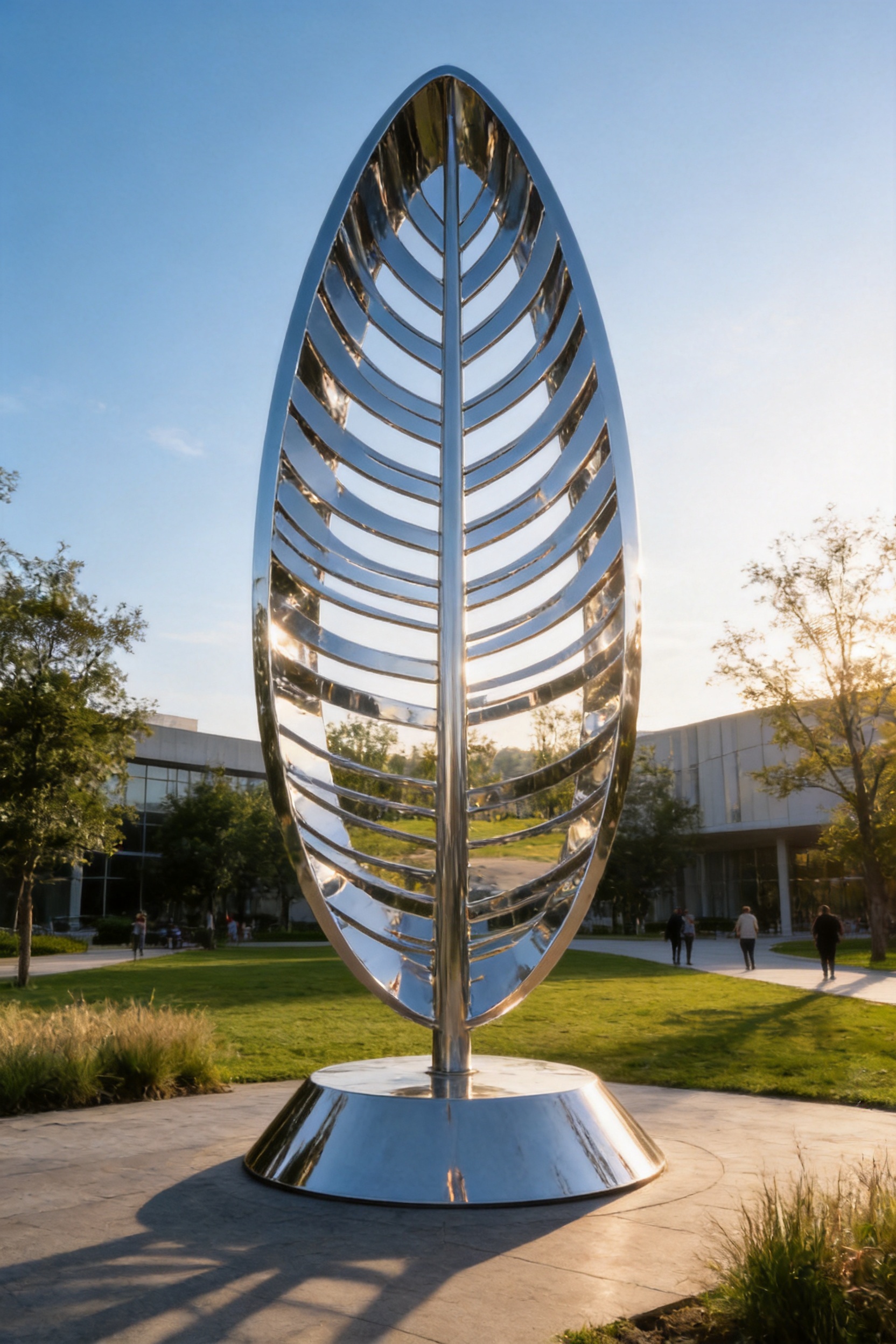
A solid metal feather sculpture can provide strong visual mass, but it may appear heavy and block the surrounding landscape. The hollow-out design offers a more breathable and transparent alternative. Its open layers retain the recognizable feather shape while reducing visual obstruction.
The layered construction also provides more depth than a flat solid panel. Viewers can see through the sculpture, observe the spacing between components, and experience changing silhouettes from different angles. This creates a more interactive relationship with the site.
Laser-cut sheet sculptures can reproduce feather patterns efficiently, but they generally present a two-dimensional surface. The Hollow-Out Streamlined Feather Sculpture uses multiple curved layers to create genuine three-dimensional depth. Its shadows, reflections, and transparency change as the viewer moves around it.
The tube-based design requires more fabrication effort, but that effort creates a more premium appearance. It is less dependent on printed or painted surface graphics and instead expresses its character through form, spacing, welding, and polishing.
Painted carbon steel can offer nearly unlimited color options, but the coating may eventually require inspection, repair, or recoating, especially in demanding outdoor environments. Stainless steel provides an intrinsic corrosion-resistant surface and does not depend entirely on a decorative paint layer for its appearance.
The 8K mirror polish also gives the sculpture a distinctive reflective quality that painted surfaces generally cannot reproduce. This makes it suitable for projects seeking a bright metallic landmark rather than a colored sculptural object.
Weathering steel is valued for its warm, rust-colored appearance and its relationship with natural or industrial settings. However, its visual language is earthy, matte, and intentionally oxidized. The polished stainless steel feather offers the opposite effect: cool, bright, clean, and reflective.
The choice between the two should depend on the intended atmosphere. A landscape seeking a futuristic or elegant focal point may benefit from mirror-polished stainless steel, while a project emphasizing industrial heritage or natural patina may prefer weathering steel. The availability of multiple sculpture materials within the manufacturer’s broader capabilities can support different design directions.
Cast bronze or other cast-metal sculptures can achieve complex solid forms, but they may require substantial molds, casting processes, and finishing work. The feather sculpture’s welded tube method is especially effective for an open, linear subject. It creates the desired lightness directly through assembly rather than attempting to hollow out a heavy cast mass.
This construction method can also make the product more adaptable in scale and geometry. The manufacturer can adjust individual curved components and assembly relationships as the design develops, making the process suitable for custom landmark projects.
In a city park, the sculpture can establish a recognizable vertical landmark without creating a completely opaque barrier. Its height makes it visible across lawns and pedestrian paths, while its open construction allows nearby trees, buildings, and sky to remain part of the view.
The feather symbolism can support themes of renewal, freedom, peace, progress, or environmental awareness. These associations make the piece appropriate for civic landscaping and public areas where the artwork should communicate an accessible, positive idea.
For residential developments, the sculpture can be positioned on a central lawn, at the end of an axis, or within a landscaped entrance. The smaller height options allow the product to remain proportionate to the surrounding buildings and planting.
The mirror surface can add a premium character to a residential project, particularly when paired with ornamental grasses, low shrubs, stone paving, water features, or architectural lighting. The open form avoids the visual heaviness that can sometimes make a large decorative object feel unsuitable for a landscaped community.
Tourism sites often require memorable visual markers that visitors can recognize, photograph, and associate with a location. The feather sculpture’s height, reflective finish, and changing appearance can support this role. LED lighting can extend its visibility into evening hours, when public spaces may host events, dining, or illuminated landscape tours.
The sculpture can also function as a background for photographs without completely hiding the landscape behind it. This is an advantage in scenic settings where the artwork should enhance rather than replace the natural or architectural environment.
In an industrial park or corporate landscape belt, the sculpture can soften large-scale infrastructure and introduce an artistic focal point. Stainless steel connects naturally with themes of technology, engineering, manufacturing, and progress. The feather form adds an organic counterpoint to roads, buildings, warehouses, and other hardscape elements.
Its relatively clean maintenance profile can be useful for commercial properties that need an attractive entrance feature without intensive seasonal care. Routine cleaning helps preserve the reflective finish, while the durable stainless steel construction supports long-term outdoor display.
Hotels, resorts, shopping centers, and mixed-use developments can use the sculpture to strengthen their entrance identity. Positioned near a driveway, lobby approach, plaza, or water feature, it can create a strong first impression and provide a recognizable focal point for visitors.
The possibility of integrated LED lighting makes it suitable for properties that remain active after dark. The base lighting can be coordinated with architectural illumination, landscape lighting, or a broader public-art program.
During daylight, the sculpture relies on its geometry and mirror finish. The curved layers catch direct and indirect light, producing highlights that move across the surfaces as the sun travels. On bright days, the sculpture may reflect the sky and surrounding landscape. Under overcast conditions, its silhouette and layered shadows become more prominent.
The open spaces also reduce the risk of the sculpture appearing visually static. Even when the metal surfaces are not strongly illuminated, the gaps create a changing pattern of light and shadow. Wind moving through nearby vegetation can further contrast with the sculpture’s fixed but airy form.
At night, LED strips along the base can give the piece a different identity. A controlled upward glow may outline the lower spine and reveal the edges of the feather layers. Lighting can be designed to remain elegant and restrained rather than overpowering the surrounding environment.
Nighttime lighting should consider glare, energy consumption, service access, weather protection, and nearby users. The product’s open design provides several opportunities for light to pass through the structure, but the final lighting plan should be developed with the installation site and local regulations in mind.
Stainless steel is often selected for outdoor sculpture because it combines durability with a relatively straightforward maintenance routine. The 8K mirror finish should be inspected periodically for dust, airborne pollutants, water marks, fingerprints, bird deposits, and other surface contamination.
Routine cleaning with appropriate methods can help preserve the bright appearance of the metal. The cleaning schedule will depend on the site. A sculpture near a busy road, industrial facility, or coast may require more frequent attention than one installed in a sheltered garden.
Cleaning should be performed using materials and procedures suitable for polished stainless steel. Abrasive tools or incompatible chemicals may scratch or dull the surface. Maintenance personnel should also inspect welded areas, base connections, drainage points, lighting components, and any accessible anchoring hardware.
Because the sculpture contains many open layers, cleaning access may differ from that of a flat panel. The spaces between the tubes should be included in maintenance planning. Proper access equipment may be needed for taller versions, and a site maintenance team should understand how to clean curved reflective surfaces without leaving uneven marks.
The manufacturer’s use of corrosion-resistant 304/316 stainless steel and a carefully finished surface helps support long-term appearance, but no outdoor material is entirely maintenance-free. Routine care is an important part of protecting the project’s investment and preserving the intended visual quality.
The sculpture is available in total heights ranging from 2 meters to 7.5 meters. This size range allows buyers to select a version according to viewing distance, available landscape area, surrounding architecture, local regulations, and desired landmark impact.
| Specification | Product Information |
|---|---|
| Product name | Hollow-Out Streamlined Feather Stainless Steel Sculpture |
| Category | Stainless Steel Decorative Sculptures |
| Primary material | 304 or 316 stainless steel |
| Surface finish | Uniform 8K mirror polish |
| Construction | Progressively layered curved flat tubing with welded assembly |
| Supporting structure | Matching weighted conical base |
| Available total height | 2 meters to 7.5 meters |
| Lighting option | LED strips along the base |
| Recommended environments | City parks, residential lawns, tourism sites, industrial parks, gardens, campuses, hotels, and commercial landscapes |
| Listed price range | US$2,060 to US$6,080 |
The listed price range is provided as a product reference and may vary according to material grade, total height, customization, lighting, packaging, shipping, installation requirements, foundation work, and project quantity. Buyers should confirm final specifications and commercial terms before placing an order.
For large outdoor projects, the purchasing process should include a review of drawings, finish samples when appropriate, delivery dimensions, installation instructions, foundation requirements, and site access. Early coordination can reduce unexpected changes during fabrication or installation.
The first step in planning an installation is to define the sculpture’s role. If it is intended to serve as a distant landmark, a taller version may be appropriate. If it is intended to complement a garden, entrance, or courtyard, a smaller version may create a more balanced relationship with nearby buildings and planting.
The viewing distance should be considered together with the sculpture’s height. A large open feather form may need sufficient space around it so that viewers can appreciate both its overall silhouette and its layered construction. Crowding the sculpture with dense planting, signage, or adjacent structures may reduce its visual impact.
Lighting should be considered at the design stage rather than added after installation. The location of LED strips, access for replacement, electrical routing, drainage, and control systems can affect the base and foundation arrangement. Early planning leads to a cleaner result and reduces the need for visible retrofits.
Site conditions should also be reviewed. Wind exposure, soil characteristics, drainage, snow or ice conditions where relevant, vehicle access, lifting equipment, and local construction requirements can affect the installation method. The weighted conical base contributes to stability, but the final foundation and anchoring approach should be determined for the specific site.
Finally, the surrounding landscape should support the sculpture’s reflective character. Contrasting backgrounds can make the silhouette easier to read, while trees, grasses, water, paving, and architectural walls can provide varied reflections. The best placement will allow the sculpture to be experienced from several directions rather than only from one front elevation.
The Hollow-Out Streamlined Feather Stainless Steel Sculpture succeeds because it combines a familiar natural symbol with a demanding modern fabrication method. Its feather form is immediately understandable, yet its layered tubes, changing radii, visible openness, and mirror-polished stainless steel give it a sophisticated architectural character.
Its main advantages are not limited to appearance. The open design reduces visual heaviness, the corrosion-resistant material supports outdoor use, the 8K finish produces changing reflections, the weighted conical base provides an integrated foundation element, and the optional LED lighting extends the sculpture’s presence into the evening.
From a manufacturing perspective, the product demonstrates the value of controlled fabrication. The individual curved tubes must be formed with different radii, arranged around a central spine, welded without compromising the intended profile, and polished to a consistent reflective standard. These requirements demand more skill than a basic flat metal decoration, but they also create a more distinctive and valuable finished artwork.
For buyers comparing suppliers, the relevant question is not only whether a manufacturer can produce a feather-shaped object. It is whether the manufacturer can coordinate material selection, three-dimensional shaping, structural assembly, finishing, scale adaptation, and outdoor presentation as one complete process. This product reflects that integrated approach.
The sculpture is fabricated from 304 or 316 stainless steel. Grade 304 is suitable for many general outdoor environments, while grade 316 may be preferred for coastal, waterfront, chloride-rich, or otherwise more demanding conditions.
It means the feather is formed from separated curved tubing layers rather than a solid metal sheet or filled body. The spaces between the layers allow light, wind, and views to pass through the sculpture.
Curved flat tubes are welded in progressively layered sections around a central spine. Each tube is bent to a slightly different radius so that the layers gradually open outward, echoing the barbs of a natural feather.
The sculpture is finished with a uniform 8K mirror polish. This highly reflective finish creates changing highlights and reflections as the viewing angle, sunlight, and surrounding environment change.
The listed total height range is from 2 meters to 7.5 meters. The appropriate size depends on the installation site, viewing distance, surrounding architecture, landscape scale, and intended landmark effect.
Yes. It is designed for outdoor use and is fabricated from corrosion-resistant stainless steel. Site-specific considerations such as local weather, wind exposure, foundation design, drainage, and maintenance access should still be reviewed before installation.
Neither grade is universally better for every project. Grade 304 is a practical choice for many ordinary outdoor settings. Grade 316 offers enhanced resistance in more aggressive environments, including many coastal or salt-exposed locations. The decision should be based on the site conditions and project budget.
Yes. LED strips can be fitted along the base to create a glowing nighttime display. The lighting system should be planned with suitable outdoor protection, electrical access, maintenance provisions, and local lighting requirements.
Yes. The feather form is mounted on a matching weighted conical base. The base supports the visual transition from the ground to the sculpture and contributes to stability in moderately exposed outdoor locations.
It requires routine cleaning to preserve the bright mirror finish. The required frequency depends on the environment. Locations exposed to coastal air, road dust, industrial pollution, or heavy public use may need more frequent cleaning than sheltered gardens.
A flat laser-cut sculpture is primarily two-dimensional. This product uses multiple curved layers to create three-dimensional depth, transparency, changing shadows, and reflections that vary as viewers move around it.
Customization may be discussed for factors such as height, curvature, layer density, stainless steel grade, surface finish, base proportions, and lighting integration. Any major design change should be reviewed for structural, transport, foundation, and installation implications.
It is suitable for city parks, residential central lawns, tourism-site green spaces, industrial-park landscape belts, hotels, resorts, corporate campuses, gardens, plazas, campuses, and commercial entrances.
The supplied price range is US$2,060 to US$6,080. The final price may vary according to height, material grade, customization, lighting, packaging, shipping, installation, and other project requirements.
The buyer should confirm the total height, stainless steel grade, finish, base design, lighting requirements, foundation and anchoring approach, delivery dimensions, installation method, maintenance expectations, shipping terms, and final commercial quotation.
The Hollow-Out Streamlined Feather Stainless Steel Sculpture is a strong example of how advanced metal fabrication can transform a natural form into a contemporary outdoor landmark. Its curved flat tubing, progressively varied radii, central spine, layered open construction, welded assembly, 304/316 stainless steel, 8K mirror polish, and weighted conical base work together as one coordinated design.
Its hollow structure gives it an unusual sense of lightness, while its height and polished surfaces provide the visibility expected of a major landscape feature. The sculpture can reflect the sky, vegetation, architecture, and artificial light around it, ensuring that its appearance changes throughout the day and across the seasons.
Compared with solid, flat, painted, or mechanically repetitive alternatives, it offers a more dynamic three-dimensional experience. It is visually open, technically distinctive, adaptable in scale, and suitable for a broad range of public and private environments. Supported by a manufacturing process that includes controlled tube bending, skilled welding, surface preparation, mirror polishing, and base fabrication, the product is positioned as a durable and refined choice for buyers seeking a custom-quality stainless steel landmark.
With available heights from 2 to 7.5 meters, a listed price range of US$2,060 to US$6,080, optional LED integration, and material choices suited to different outdoor conditions, the sculpture can be adapted to projects ranging from residential gardens to prominent civic landscapes. Its central message remains simple but powerful: a feather can be delicate in appearance while expressing strength, movement, and enduring structure through carefully engineered metal.
1. General technical literature on stainless steel grades 304 and 316, corrosion resistance, and architectural applications.
2. Reference materials on stainless steel welding, heat control, joint finishing, and distortion management.
3. Industrial design studies concerning tubular metal forming, progressive-radius bending, and three-dimensional welded assemblies.
4. Landscape architecture references on landmark sculpture placement, pedestrian viewing distance, public-space focal points, and urban visual identity.
5. Lighting design references concerning outdoor LED integration, glare control, landscape illumination, and maintenance access.
6. Product specifications and manufacturing information supplied for the Hollow-Out Streamlined Feather Stainless Steel Sculpture.



Daniel H.

Amanda R.

Robert B.

Jennifer S.

James W.

Barry G.

Michael T.

Emily K.

David L.

Sarah M.


Mikey XV

Jagxue

 English
 Español
 عربى
 Français
 italiano
 Deutsch