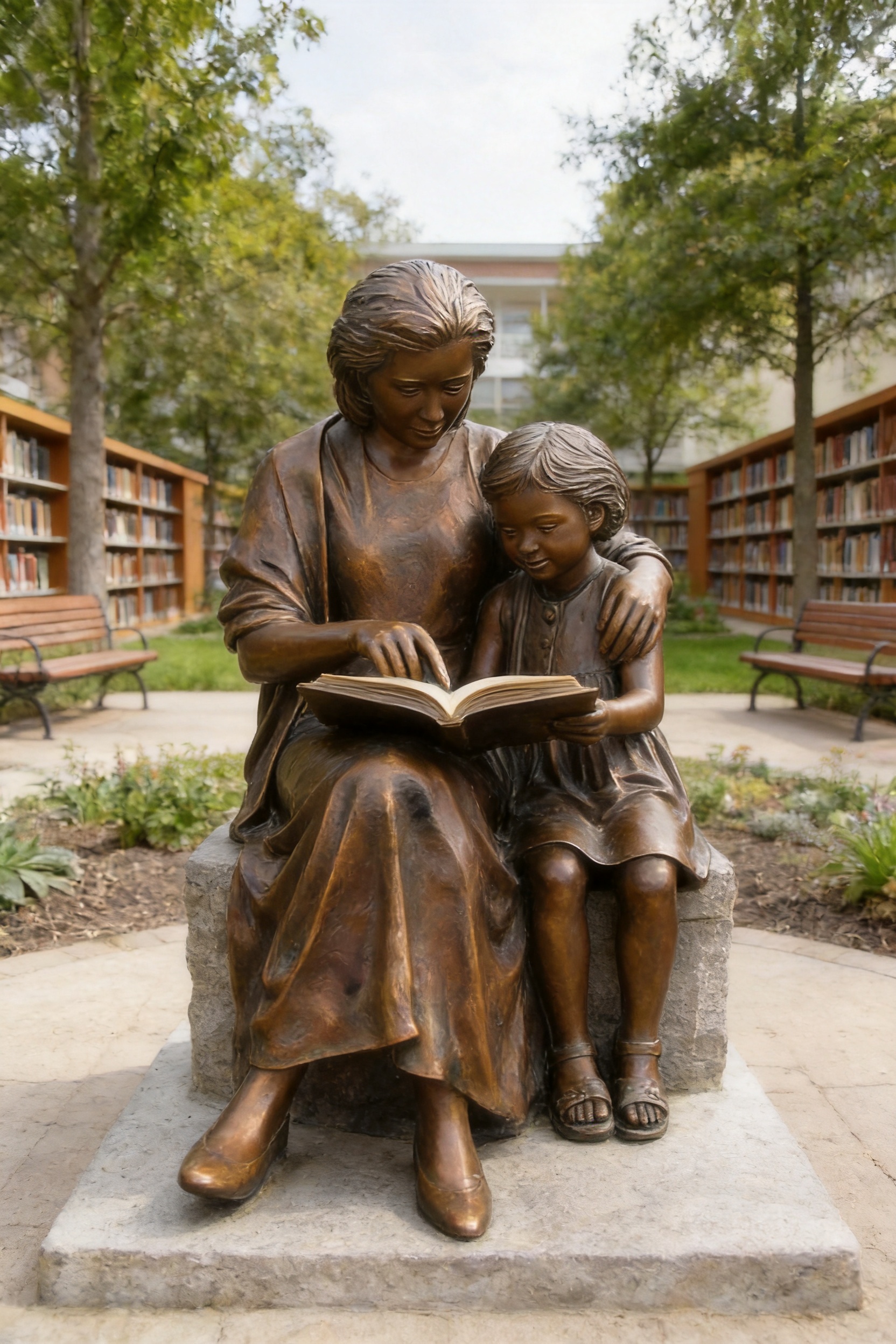
Public art is most successful when it communicates an emotion that people can understand immediately. The Bronze Parent-Child Reading Sculpture achieves that goal through a simple but powerful subject: an adult and child sharing a reading experience. Rather than presenting an isolated figure or an abstract form that requires extensive explanation, the sculpture creates an approachable scene of learning, care, and companionship. Its theme makes it suitable for educational environments, community areas, family-oriented commercial spaces, gardens, libraries, and cultural projects that seek to create a warm and welcoming atmosphere.
Made from bronze and designed in a modern artistic style, this parent-child sculpture combines emotional storytelling with the practical strengths expected from a professionally manufactured outdoor artwork. Bronze provides visual richness, structural durability, and a natural ability to develop character over time. Its warm metallic color can complement stone, brick, concrete, timber, planting, and contemporary architectural materials. The sculpture can therefore function as both a focal point and a harmonious part of a larger landscape or interior design scheme.
The work is approximately 100–120 centimeters high, including its base, and approximately 150–180 centimeters wide. These proportions provide a noticeable presence without overwhelming most pedestrian-scale locations. Its listed price range is approximately USD 8,136.32–12,658.66, with final pricing generally influenced by size, finish, base requirements, customization, packaging, and delivery conditions.
Manufactured by Jiangsu Xinyesheng Sculpture Co., Ltd., the work reflects the advantages of sourcing a custom metal sculpture from a specialized Chinese sculpture manufacturer. The company’s product positioning includes custom design metal statues, European-style sculpture, bronze sculpture, stainless steel sculpture, marble sculpture, fiberglass sculpture, and weathering steel sculpture. This broader material and design experience can be valuable to buyers who need one sculpture, a coordinated collection, or a complete public-art scheme using multiple materials.

Bronze Parent-Child Reading Sculpture – Modern Artistic Design
Content
The central strength of this sculpture is its narrative clarity. Reading is universally associated with curiosity, education, imagination, and personal development. When reading is shown as a shared activity between a parent and child, the subject gains additional layers of meaning. It suggests trust, attention, encouragement, and the passing of knowledge from one generation to another.
This emotional content makes the sculpture more than a decorative object. In a school library, it can represent the relationship between children and learning. In a public park, it can symbolize family time and community values. In a family restaurant, it can create an atmosphere of comfort and togetherness. In a residential development, it can help communicate a sense of belonging and a commitment to family-friendly living.
Many sculptures rely on dramatic gestures, heroic poses, or highly stylized forms to attract attention. The Parent-Child Reading Sculpture takes a different approach. Its strength comes from a quiet and familiar moment. Viewers can recognize the activity and may connect it with their own memories of being read to, helping a child with a book, or discovering a story together. This accessibility allows the sculpture to engage a broad audience, including children, parents, educators, older adults, and visitors who may not normally seek out contemporary art.
The reading theme also provides a positive message without appearing overly formal or institutional. Educational art can sometimes feel instructional, while family-themed decoration can become sentimental. A carefully modeled bronze scene can balance these extremes. It can communicate the importance of learning and family connection while retaining the dignity, permanence, and visual authority associated with traditional sculpture.
The scale and subject of the sculpture invite people to approach it. Unlike monumental works placed far above eye level, a piece approximately 100–120 centimeters high can be experienced comfortably by children and adults. Viewers can observe the figures from different angles, study the relationship between the parent and child, and appreciate the modeling of the clothing, posture, book, and facial expressions.
This approachable scale is particularly useful in spaces where visitors are expected to pause, gather, or take photographs. A library courtyard, school entrance, or park path can become more memorable when the artwork creates a recognizable destination. The sculpture may also support educational programming, reading campaigns, family events, and community photography projects.
The relationship between adult guidance and childhood learning is broadly meaningful across cultures. While specific family customs may differ, the act of reading together is widely understood as an expression of care and intellectual growth. This gives the sculpture a strong international market appeal. It can be used by schools, municipalities, developers, hospitality businesses, cultural institutions, and private collectors in different regions without depending on a narrowly local story.
The design can also be placed in a variety of architectural environments. Its bronze surface may harmonize with historic buildings and classical gardens, while the modern artistic treatment can complement contemporary schools, libraries, and commercial interiors. This flexibility is an advantage over sculptures that depend heavily on a single architectural style.
Bronze has been used for sculpture for centuries because it combines artistic versatility with long-term performance. It can be cast into complex forms, including interlocking figures, expressive hands, flowing clothing, and detailed accessories. These qualities are important for a parent-child composition, where the emotional relationship is communicated through gesture and proximity rather than through size alone.
For this sculpture, bronze offers a warm and substantial appearance. The metal can present subtle differences between light and shadow, helping the figures remain visually readable in outdoor daylight and indoor illumination. A carefully developed patina can further emphasize recesses, contours, facial features, and the edges of the book. Depending on the selected finish, the sculpture may appear traditional, refined, contemporary, or naturally aged.
Bronze is also valued for its resistance to weather-related deterioration when properly cast, finished, and maintained. It is suitable for outdoor or semi-open settings where the work may encounter rain, humidity, sunlight, and seasonal temperature changes. No outdoor metal sculpture is entirely maintenance-free, but bronze can provide a dependable service life when its surface protection, drainage, foundation, and installation are appropriately managed.
Painted steel can offer a wide range of colors, but exposed painted surfaces may eventually experience fading, scratching, peeling, or localized corrosion if the coating is damaged. Bronze develops a different type of visual character. Instead of depending entirely on a surface paint layer, it can use chemical patination and protective finishing to create a durable artistic appearance. Minor changes over time may contribute to the sculpture’s character rather than immediately making it look worn.
This difference is valuable for buyers seeking a dignified public artwork. A bronze sculpture can maintain a sense of material authenticity and permanence, whereas a low-cost painted metal product may require more visible refinishing to preserve its original appearance. Bronze may involve a higher initial investment, but its artistic presence and potential longevity can make it more economical over the full life of a public installation.
Fiberglass sculptures are often lightweight and flexible in terms of surface color and form. They can be useful for temporary displays, themed environments, and projects where transportation weight is a major concern. However, bronze generally provides greater tactile substance, visual gravitas, and resistance to the impression of being a lightweight decorative prop.
For a subject centered on family connection and educational value, the physical permanence of bronze strengthens the message. The sculpture can appear as a lasting part of a school, park, or civic setting rather than a temporary display. Bronze also tends to age in a way that is compatible with formal landscape design, memorial settings, and architecture intended to last for decades.
Marble and other stones offer natural beauty and a sense of tradition, but they can be vulnerable to chipping, staining, cracking, or damage along narrow projecting elements. Bronze allows a sculptor to model more complex gestures and undercuts while reducing some of the limitations associated with carving a fragile material. It also provides a warmer visual contrast against pale stone paving, masonry, and garden walls.
Bronze and marble can work especially well together. A bronze parent-child scene may be installed on a stone plinth or within a landscape that includes marble seating, paving, or architectural details. The combination can create a balanced composition in which the bronze figures provide warmth and movement while the stone contributes visual stability.
The product’s design is based on a human interaction rather than a single static figure. This creates a more dynamic composition. The relationship between the two figures gives the eye a path to follow, from the adult’s posture to the child’s attention and toward the shared book. Such a composition can remain interesting from multiple viewing positions.
A sculpture installed in a public area is rarely viewed from only one angle. People approach from different directions, walk around it, observe it while seated, and see it under changing weather and lighting conditions. A parent-child composition has the potential to offer different visual experiences from the front, side, and rear. The overlapping forms can create depth, while the open areas between the figures can prevent the work from appearing visually heavy.
The book is an especially important symbolic element. It gives the viewer an immediate explanation of the scene and reinforces the connection between affection and education. The book may also provide a visual point of focus, helping viewers understand the direction of the figures’ attention. In a library or school, this detail can connect the artwork directly to the purpose of the surrounding space.
The product is described as having a modern artistic design. In practical terms, a modern treatment can allow the sculpture to avoid excessive historical imitation while retaining the recognizable qualities of figurative art. The figures can be interpreted with simplified contours, carefully organized proportions, and selective detail. This approach supports placement in contemporary environments while preserving the emotional readability of the subject.
Modern figurative sculpture does not need to choose between realism and abstraction. It can use recognizable human forms while simplifying unnecessary details and emphasizing posture, rhythm, and silhouette. This balance is useful for commercial and public projects because the work can be appreciated quickly from a distance and examined more closely at close range.
The approximate height of 100–120 centimeters, including the base, positions the sculpture within a human-centered viewing range. It is sufficiently substantial to identify itself as a significant artwork, but it does not dominate a plaza or block sightlines in the way a monumental sculpture might. Its approximate width of 150–180 centimeters allows the parent-child relationship to unfold horizontally and gives the composition a stable footprint.
Before ordering, buyers should confirm the exact dimensions, base thickness, shipping measurements, and installation requirements. The listed dimensions are approximate, and custom changes may alter the size, weight, center of gravity, and foundation requirements. A professional supplier should be able to coordinate these details with the project’s architect, landscape designer, contractor, or installation team.
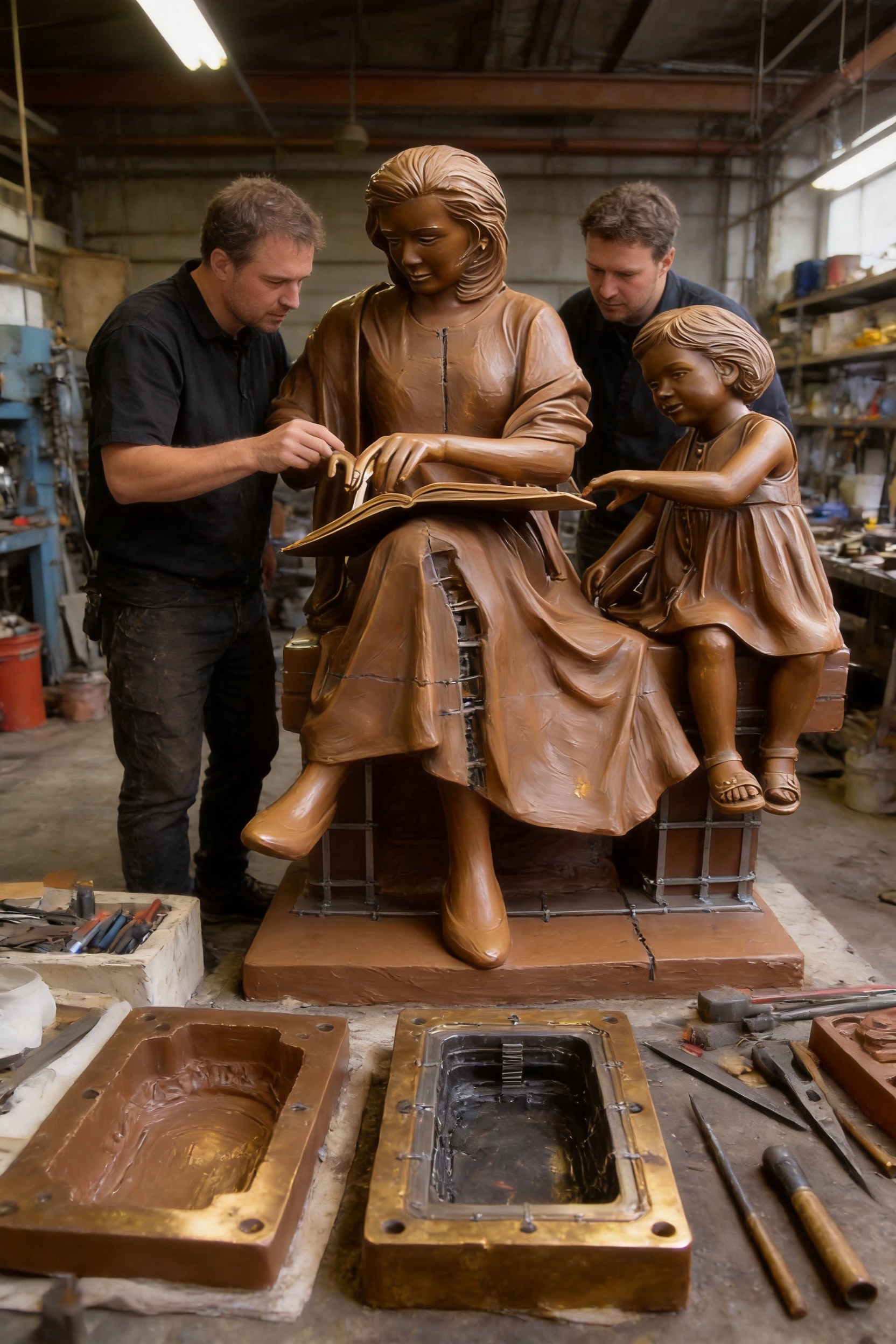
A successful bronze sculpture depends on more than the visible design. Its quality is influenced by artistic modeling, mold construction, casting accuracy, metal composition, welding or assembly, surface finishing, structural reinforcement, packaging, and installation preparation. A specialized sculpture manufacturer can coordinate these stages as one connected process, reducing the risks that arise when design, fabrication, and finishing are handled by unrelated vendors.
Jiangsu Xinyesheng Sculpture Co., Ltd. is presented as a China sculpture manufacturer and supplier of custom design metal statues and European-style sculpture. Its wider product range includes bronze, stainless steel, marble, fiberglass, and weathering steel sculptures. This range indicates a production orientation that can support different materials and design requirements rather than focusing on only one type of decorative item.
For international buyers, the value of a specialized manufacturer lies in the ability to communicate a design concept and receive coordinated support for material selection, size, finish, and application. This is especially relevant when an art consultant or project owner requires a sculpture that differs from a standard catalog model. A parent-child theme may need adjustments to posture, clothing, book position, base design, surface color, or overall dimensions to suit a specific site.
The first manufacturing strength is the ability to interpret a theme into a three-dimensional composition. A written concept such as “parent and child reading” contains an emotional intention, but production requires decisions about pose, balance, scale, facial direction, clothing, hand placement, and spatial rhythm. A capable sculpture manufacturer must translate the concept into a form that is visually clear and structurally practical.
For a custom project, the buyer may provide sketches, reference photographs, architectural drawings, written descriptions, or digital models. These materials can be used to establish the desired style and proportions. The manufacturer may then prepare a visual proposal or technical confirmation before fabrication begins. This review stage is important because relatively small changes in the relationship between the figures can significantly affect the sculpture’s emotional expression.
Bronze sculpture production commonly involves creating a detailed model, preparing a mold, forming a wax or equivalent casting pattern, and producing the metal casting in sections when the sculpture is too large or complex to cast as one piece. The sections are then assembled, refined, and finished. Each stage requires attention to detail because imperfections may become visible in the final surface.
For a parent-child composition, the casting process must accommodate areas where the figures are close together or where the book, arms, and clothing create narrow spaces. Good mold planning helps preserve important details while making it possible to remove the casting pattern without damaging the form. Section planning also affects seam placement, internal support, transportation, and final assembly.
A manufacturer experienced in multiple sculpture materials can bring useful practical judgment to these decisions. Bronze requires different approaches from stainless steel, fiberglass, marble, and weathering steel. Understanding those differences can help the production team recommend a suitable construction method rather than treating every project as a simple surface decoration.
Outdoor sculpture must be designed to remain stable under ordinary environmental conditions. The internal structure, weight distribution, base connection, and anchoring system all contribute to safety. A composition with two figures and a horizontal width of up to approximately 180 centimeters needs careful consideration of its center of gravity, especially if the figures extend outward from the base.
Depending on the final design and weight, the manufacturer may coordinate internal metal reinforcement, a strengthened bronze base, or concealed connection points. The installation surface may require anchor bolts or a prepared concrete foundation. These elements should be confirmed before shipment. Buyers should provide information about the installation location, ground condition, wind exposure, access route, and expected visitor interaction.
Structural planning is one of the areas where professional fabrication offers an advantage over low-cost decorative products. A sculpture may look attractive in a photograph but still be unsuitable for public use if it lacks appropriate reinforcement or installation provisions. A specialized manufacturer can address the relationship between artistic appearance and practical stability during the production stage.
The final surface has a major influence on how a bronze sculpture is perceived. Patination can create brown, reddish, golden, dark, green, or mixed tones. A protective coating can help protect the surface from moisture and handling while preserving the selected appearance. The finish should support the emotional character of the work and the visual conditions of the installation site.
A warm brown or medium bronze finish may emphasize the family-oriented theme and fit naturally into gardens, parks, and traditional landscapes. A darker finish may create stronger contrast against pale paving or light-colored walls. A more contemporary tone may suit a modern library, hotel, restaurant, or mixed-use development. The most appropriate choice depends on lighting, surrounding materials, climate, and maintenance preferences.
Surface quality is not only a matter of color. The finish should also reveal the sculpted forms. Recessed areas may be darker, while raised areas can catch highlights. This contrast helps the faces, hands, book, and clothing remain legible. A professional finishing process should therefore be understood as an artistic and technical stage rather than simply the application of a uniform coating.
Quality review should cover more than the general appearance of the sculpture. It should include dimensional confirmation, surface inspection, stability, assembly points, drainage considerations, finish consistency, packaging security, and compatibility with the agreed specifications. Photographs or inspection records may be useful for international buyers who cannot visit the workshop before shipment.
For a product with a quoted price ranging from approximately USD 8,136.32 to USD 12,658.66, clear communication is especially important. The buyer should confirm what is included in the price, such as the sculpture, base, finish, packaging, documentation, loading, and transportation arrangements. International freight, customs charges, site preparation, crane access, and installation may be priced separately.
| Production and Purchasing Factor | Why It Matters for This Sculpture | Recommended Confirmation |
|---|---|---|
| Material | Bronze provides durability, casting flexibility, and a warm artistic appearance. | Confirm bronze specification, construction method, and intended application. |
| Dimensions | The approximate 100–120 centimeter height and 150–180 centimeter width affect placement and shipping. | Confirm exact finished dimensions, weight, and package measurements. |
| Surface finish | Patina and protective treatment influence color, legibility, and maintenance needs. | Approve finish samples or reference images before final production. |
| Structural support | Two connected figures require reliable internal reinforcement and stable anchoring. | Request base and installation details suitable for the site. |
| Customization | Changes to pose, size, clothing, book, or base can affect cost and production time. | Confirm revised drawings, approval stages, and customization charges. |
| Packaging | Bronze surfaces and projecting details must be protected during long-distance transport. | Confirm protective materials, crate design, and inspection procedures. |
| Maintenance | Outdoor bronze benefits from periodic cleaning and finish review. | Obtain care recommendations for the local climate and exposure. |
The Parent-Child Reading Sculpture competes not only with other bronze sculptures but also with products made from stainless steel, fiberglass, marble, painted steel, resin, and cast stone. Its strongest advantage is the combination of an emotionally universal theme, a durable material, a manageable scale, and the possibility of custom production.
Abstract sculpture can be visually sophisticated, but it may not immediately communicate a specific message. A family-oriented project may need an artwork that visitors understand quickly and remember easily. The parent-child reading scene provides that clarity. It communicates learning, care, and connection without requiring a long explanation or interpretive sign.
This does not mean the sculpture lacks artistic depth. Figurative art can be examined through posture, proportion, material, surface, and composition. However, the initial emotional connection is direct. That directness is particularly valuable in public spaces used by children and families, where the artwork should feel welcoming rather than distant or intimidating.
Low-cost resin or fiberglass figures may be suitable for short-term campaigns, seasonal decoration, or lightweight installations. For a school, library, park, or civic project intended to remain in place for many years, bronze offers a stronger sense of permanence. Its substantial weight and metal character can communicate institutional commitment and long-term value.
The reading theme further benefits from permanence. Education and family support are not temporary ideas. Installing a bronze sculpture gives those values a lasting physical presence. It can become part of the identity of a location, recognized by generations of students, residents, and visitors.
Stainless steel is known for its clean lines, reflective surfaces, and modern appearance. It can be highly effective in contemporary plazas and commercial architecture. However, a mirror-like or strongly industrial surface may feel less intimate than bronze for a scene centered on parental affection and shared reading.
Bronze has a visual warmth that can make the figures feel more approachable. Its surface absorbs and reflects light in a softer way, and its patina can introduce subtle variation. This makes it well suited to garden settings, libraries, schools, and hospitality spaces where atmosphere matters as much as visual impact.
Stone sculpture can be beautiful and enduring, but the material’s weight and structural limitations may restrict certain gestures. Bronze allows more freedom in the modeling of hands, pages, clothing, and connections between figures. It can also support a wider variety of surface finishes and can be produced in sections for easier transportation and installation.
For buyers who want a recognizable narrative composition with a moderate footprint, bronze may therefore provide a better balance between detail, weight, durability, and creative freedom than a large carved stone work.
A supplier experienced in bronze, stainless steel, marble, fiberglass, and weathering steel can be useful when a project includes more than one type of artwork. For example, a developer may want bronze figurative sculptures near a library, stainless steel signs or abstract forms in a plaza, and weathering steel landscape features along a pathway. Working with one experienced manufacturer can simplify communication about design language, scale, delivery, and project scheduling.
This multi-material capability can also help buyers compare options honestly. Instead of being limited to the supplier’s preferred material, the client can discuss which material best matches the site, budget, climate, maintenance plan, and artistic objective. The final decision may still favor bronze, but it is supported by a broader understanding of available production methods.
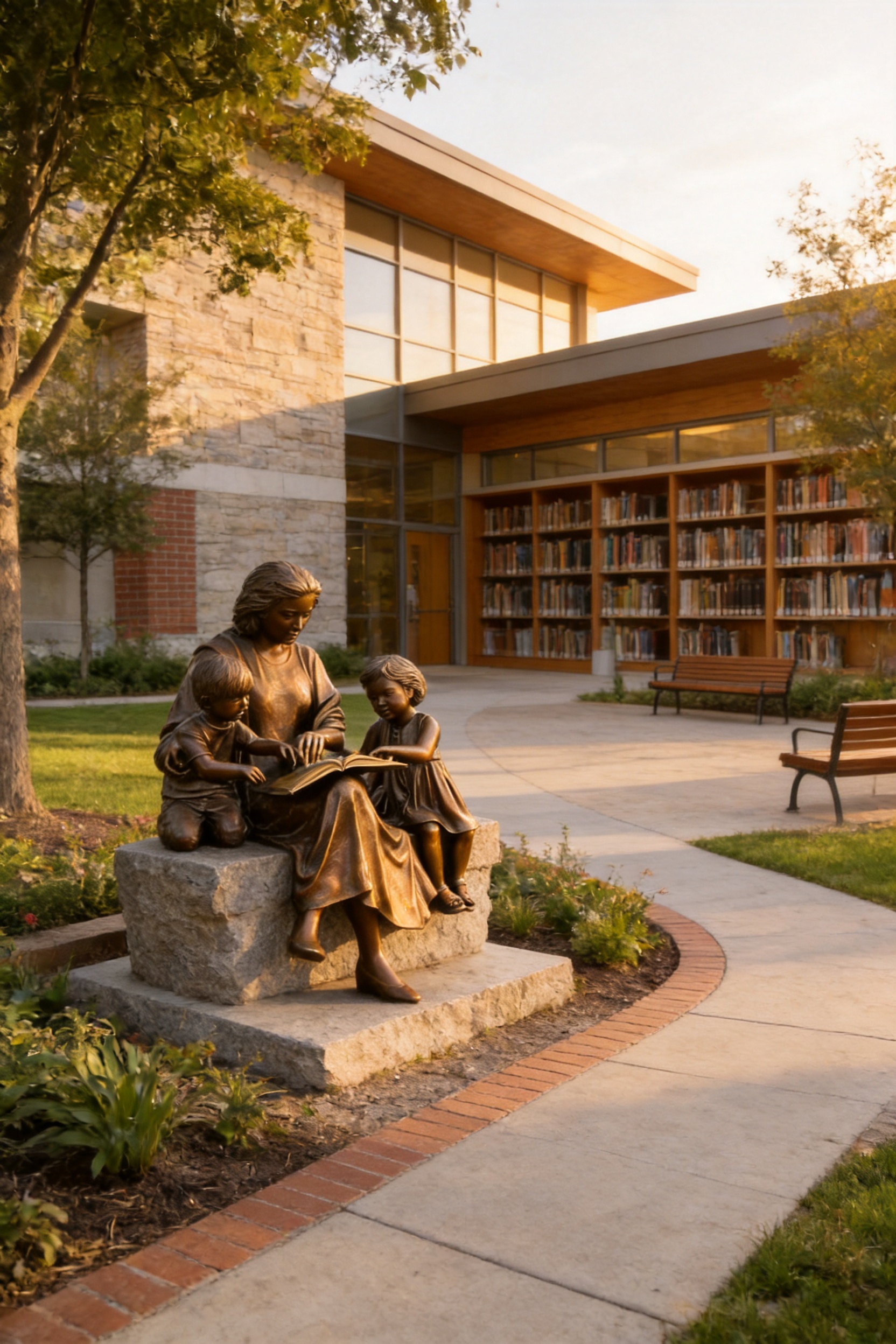
Community parks are natural locations for a parent-child sculpture. The theme reflects family recreation, social interaction, and lifelong learning. The work can be placed near a reading garden, children’s play area, walking route, shaded seating, or community activity zone. Trees, low planting, and benches can create a comfortable setting that encourages visitors to spend time near the sculpture.
In a park, the base and surrounding paving should be designed to prevent water from collecting around the sculpture. The work should be visible but should not obstruct pedestrian circulation. If children are likely to touch or climb on the sculpture, the site designer should consider edge conditions, nearby furniture, and the robustness of projecting elements.
The sculpture is particularly appropriate for a school library entrance, reading courtyard, campus garden, or early-learning facility. It can reinforce the institution’s educational mission while providing a welcoming landmark for students and families. A school may also use the sculpture as part of a literacy campaign or annual reading program.
In educational settings, scale is important. A work that can be viewed by children without appearing intimidating may have greater daily impact than a monumental sculpture placed beyond their visual range. The parent-child relationship also allows students to connect the work with their own experiences at home and in the classroom.
Restaurants, hotels, resorts, and family-oriented commercial spaces can use the sculpture to communicate warmth and hospitality. It may be installed in an entrance garden, lobby, courtyard, waiting area, or landscaped terrace. The bronze finish can complement wood, stone, warm lighting, and natural planting.
Because the scene is quiet and refined, it can enhance a venue without competing with signage, seating, or architectural features. The work can become a memorable visual identity element, especially when visitors photograph it or associate it with family gatherings.
Residential communities increasingly use public art to create a distinctive sense of place. A parent-child reading sculpture can support a development positioned around family life, education, wellness, or community interaction. It may be installed near a clubhouse, shared garden, pedestrian plaza, or children’s activity area.
Cultural centers, museums, libraries, and civic buildings can also use the work as a supporting artwork. Its message is sufficiently clear for a public audience while retaining enough artistic character to participate in a curated environment.
Although the listed sculpture has a defined theme and approximate size, custom production can allow the buyer to adapt the work to a specific project. Customization should be discussed before production because even modest changes may affect the model, mold, weight, finish, packaging, and installation.
The sculpture can potentially be scaled to suit a smaller interior space, a larger public plaza, or a particular relationship with surrounding architecture. Increasing the height or width may improve visibility in a large landscape, while reducing the scale may make it more appropriate for a library lobby or private garden.
Scaling should not be treated as a simple enlargement or reduction. The proportions of hands, facial features, book pages, base, and internal reinforcement may need to be reviewed. The final size should be chosen according to viewing distance, pedestrian circulation, budget, shipping limitations, and foundation requirements.
Bronze patina can be selected to match the project’s visual identity. Buyers may prefer a traditional dark brown, a warmer reddish tone, a lighter golden bronze, or a controlled greenish appearance. The selected finish should be evaluated under the actual lighting conditions whenever possible.
Interior projects may allow a wider range of finishing choices because the sculpture is protected from direct weather. Outdoor projects should prioritize compatibility between the artistic finish and the local climate. A protective treatment and maintenance schedule should be confirmed as part of the order.
The base may be treated as a discreet support or as an integrated part of the composition. A simple bronze base can create a unified appearance, while stone can provide contrast and visual stability. The base may also be adapted to suit paving levels, accessibility requirements, and anchoring conditions.
For a public installation, the connection between the base and foundation should be carefully coordinated. The buyer should know whether the sculpture is supplied with anchor points, bolts, templates, or installation drawings. These details can prevent delays when the artwork arrives at the site.
Depending on the project, the figures’ clothing, book style, posture, or surrounding elements may be adjusted. A school might request a more contemporary educational appearance, while a historic cultural site might prefer a more traditional treatment. Such changes should preserve the clarity of the parent-child relationship and the central reading theme.
International buyers should approach the purchase as a coordinated art and construction project. The artwork itself is only one part of the process. Delivery access, foundation preparation, lifting equipment, surface protection, and final placement all influence the success of the installation.
Before confirming an order, the buyer should request a complete commercial quotation. The quotation should identify the sculpture’s material, dimensions, finish, base, estimated weight, packaging, production schedule, payment terms, and delivery terms. It should also state whether transportation, export documentation, insurance, customs clearance, and local installation are included or excluded.
The project team should confirm the exact location and measure the access route. Doorways, elevators, corridors, gates, bridges, and loading areas may limit the maximum package size. A sculpture that fits the final site may still require special planning if it is shipped in a large wooden crate or assembled from multiple sections.
The foundation should be appropriate for the sculpture’s final weight, dimensions, and exposure. A stable, level surface is essential. Outdoor locations may require a reinforced concrete base with embedded or drilled anchor points. The exact solution depends on the sculpture’s construction and the local ground conditions.
The manufacturer should provide installation guidance where available, but the final foundation should be reviewed by a qualified local contractor or engineer when required by the site. Wind exposure, public access, soil conditions, drainage, and local building regulations should be taken into account.
Bronze is durable, but its appearance can change under the influence of moisture, pollution, salt, dust, and repeated handling. A maintenance plan may include gentle cleaning, inspection of the protective coating, removal of deposits, and periodic professional reapplication of surface protection.
Coastal environments, industrial areas, and regions with severe winter conditions may require more frequent inspection. De-icing salts and standing water should be kept away from the base where possible. Plants should not be allowed to trap persistent moisture against the sculpture. Any maintenance method should be compatible with the selected patina and protective finish.
The purchase price should be considered alongside the expected service life, emotional value, public visibility, and maintenance requirements. A cheaper product may appear attractive initially, but replacement, repainting, or repair costs can reduce its value over time. Bronze can be a strong investment for buyers who want a permanent artwork with a meaningful subject and a material capable of aging gracefully.
Jiangsu Xinyesheng Sculpture Co., Ltd. presents itself as a manufacturer and supplier serving custom sculpture requirements. The available product information identifies capabilities across several categories, including bronze human figure sculptures and other metal and nonmetal sculpture types. This positioning is relevant to buyers who require more than a standard decorative object.
A manufacturer’s value is measured by how well it connects design intention with production reality. For the Parent-Child Reading Sculpture, this includes interpreting the emotional theme, maintaining visual balance, selecting an appropriate bronze construction method, achieving a consistent finish, preparing the piece for transport, and supporting installation planning.
The company’s stated focus on custom design metal statues and European-style sculpture may appeal to buyers seeking a work that combines recognizable figurative composition with a refined decorative character. European-style influence can support classical proportion, expressive modeling, and formal presentation, while a modern treatment keeps the sculpture suitable for contemporary sites.
The company’s broader material range is another practical strength. Bronze may be the best choice for the parent-child reading theme, but a complete project may require other materials. Stainless steel may suit a modern entrance, marble may complement a formal garden, fiberglass may serve a lightweight themed installation, and weathering steel may be appropriate for a landscape feature. A supplier familiar with all of these categories can help maintain consistency across a mixed-material project.
Buyers should still request project-specific evidence, including finish samples, drawings, production photographs, dimensional confirmation, quality inspection images, and installation information. These documents help transform general manufacturing claims into clear expectations for the individual order.
The Bronze Parent-Child Reading Sculpture succeeds because its artistic message and practical qualities support one another. The parent-child relationship provides emotional warmth. The reading activity provides an educational and cultural meaning. Bronze provides permanence, richness, and structural potential. The moderate scale supports human interaction. Custom manufacturing allows the work to be adapted to different sites and project requirements.
Compared with a purely decorative object, the sculpture gives a location a recognizable story. Compared with a temporary figure, it offers greater permanence. Compared with a highly industrial material, bronze provides warmth and intimacy. Compared with a fragile carved form, it offers greater flexibility for complex figurative modeling. These advantages make it suitable for buyers who want an artwork that performs both aesthetically and symbolically.
Its versatility is also a major benefit. The sculpture can be placed in an outdoor garden, a semi-open courtyard, a covered entrance, a library interior, or a family-oriented commercial venue. It can stand alone as a focal point or form part of a broader public-art program. Its theme is easy to understand, but the quality of the modeling and finish can support deeper appreciation over time.
The sculpture depicts a parent and child engaged in a shared reading activity. Its main themes are family connection, education, care, learning, and intergenerational communication.
The product is made from bronze. Bronze is suitable for figurative sculpture because it can capture detailed forms and provides a durable, substantial appearance for indoor, semi-open, and outdoor applications.
The listed height is approximately 100–120 centimeters, including the base, and the listed width is approximately 150–180 centimeters. Exact dimensions should be confirmed before production, especially if the buyer requests customization.
The listed price range is approximately USD 8,136.32–12,658.66. The final price may vary according to size, finish, base design, customization, packaging, shipping, and installation requirements.
Yes. Bronze is suitable for outdoor use when it is properly cast, finished, installed, and maintained. The site should provide a stable foundation and appropriate drainage, and the buyer should follow care recommendations for the local climate.
Custom sculpture manufacturing may allow changes to dimensions, finish, base, pose, clothing, and contextual details. Buyers should confirm the available options with the manufacturer before production begins because changes can affect cost, schedule, weight, and installation requirements.
Stainless steel often creates a cleaner, more reflective, and more industrial appearance. Bronze generally offers a warmer, softer, and more traditional visual character. For a family and education theme, bronze may create a more intimate atmosphere.
Fiberglass is generally lighter and may be useful where weight or temporary installation is important. Bronze provides greater substance, permanence, and material authenticity, making it well suited to long-term public art and institutional projects.
Recommended locations include community parks, school libraries, educational campuses, family-friendly restaurants, hotels, cultural centers, residential developments, gardens, courtyards, and semi-open public spaces.
The buyer should confirm exact dimensions, material specifications, finish, weight, base construction, anchor points, packaging, production schedule, payment terms, shipping terms, maintenance requirements, and whether installation support is included.
Yes. The manufacturer’s listed product categories include bronze, stainless steel, marble, fiberglass, and weathering steel sculptures. This may support coordinated projects that use several materials or multiple artworks with related themes.
Maintenance generally includes gentle cleaning, periodic inspection, checking the protective surface, preventing standing water around the base, and arranging professional refinishing when necessary. The exact maintenance schedule depends on the finish and environmental conditions.
The Bronze Parent-Child Reading Sculpture is a meaningful and adaptable artwork for spaces that value family, education, and community. Its composition is immediately understandable, yet its figurative modeling, material, patina, and spatial relationship can reward closer observation. The theme is warm without being excessively sentimental, educational without appearing purely instructional, and traditional enough for formal settings while remaining suitable for modern environments.
Bronze gives the sculpture a strong competitive position. It offers a combination of durability, casting flexibility, visual warmth, and long-term presence that many low-cost decorative materials cannot match. Its approximate human-centered scale makes it approachable, while its width allows the parent-child interaction to form a clear and memorable composition.
The manufacturing advantages are equally important. A specialized supplier with experience in custom metal statues and multiple sculpture materials can assist with design adaptation, construction planning, surface finishing, packaging, and project coordination. For buyers seeking a custom European-style or modern figurative sculpture, these capabilities can reduce production uncertainty and help connect the artwork to the requirements of the final site.
Whether installed in a park, school library, family restaurant, cultural center, hotel, or residential development, the sculpture can become more than a visual accent. It can serve as a lasting reminder that reading is not only an individual activity but also a way of sharing attention, imagination, and affection. That combination of emotional meaning and practical durability makes the Bronze Parent-Child Reading Sculpture a strong candidate for long-term public and private art projects.
1. Product specification materials for the Bronze Parent-Child Reading Sculpture, including theme, dimensions, price range, category, and application guidance.
2. General principles of bronze sculpture casting, assembly, patination, protective finishing, and outdoor installation.
3. Standard considerations for public-art procurement, including site planning, foundation preparation, transportation, inspection, and maintenance.
4. Comparative material guidance concerning bronze, stainless steel, marble, fiberglass, painted steel, and weathering steel sculpture.
5. General landscape-design principles for integrating figurative sculpture into parks, educational campuses, hospitality environments, and community spaces.
Bronze Parent-Child Reading Sculpture – Modern Artistic Design
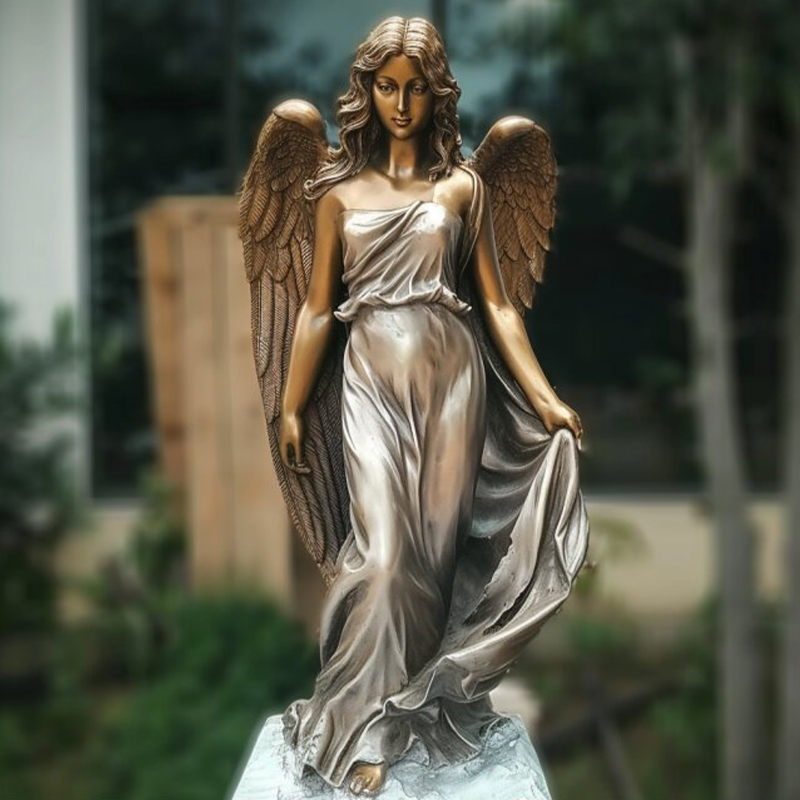 Bronze Angel Sculpture
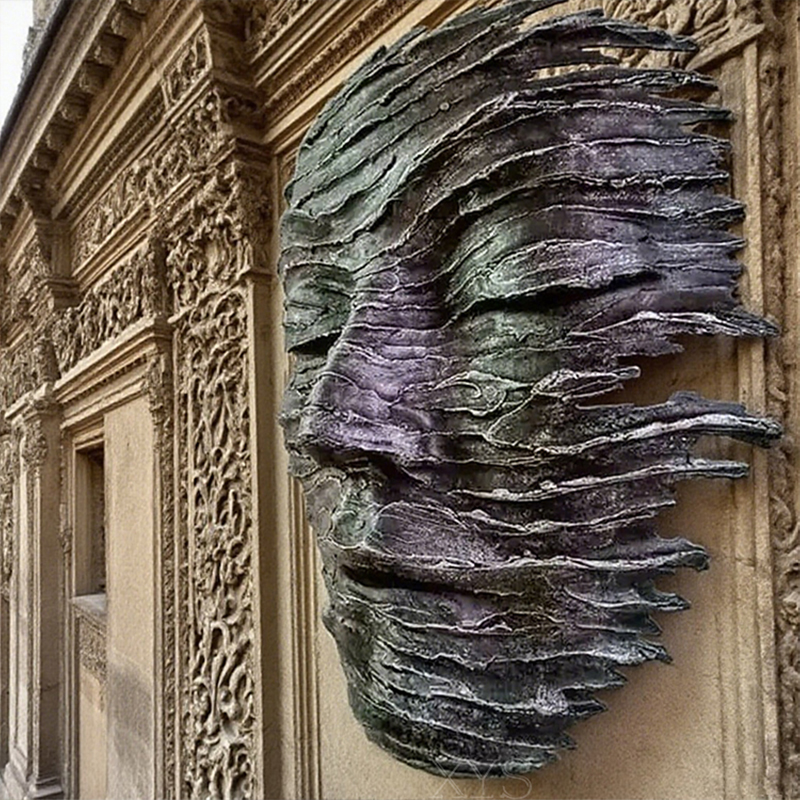 Bronze Abstract Stacked Face Sculpture – Modern Wall Art
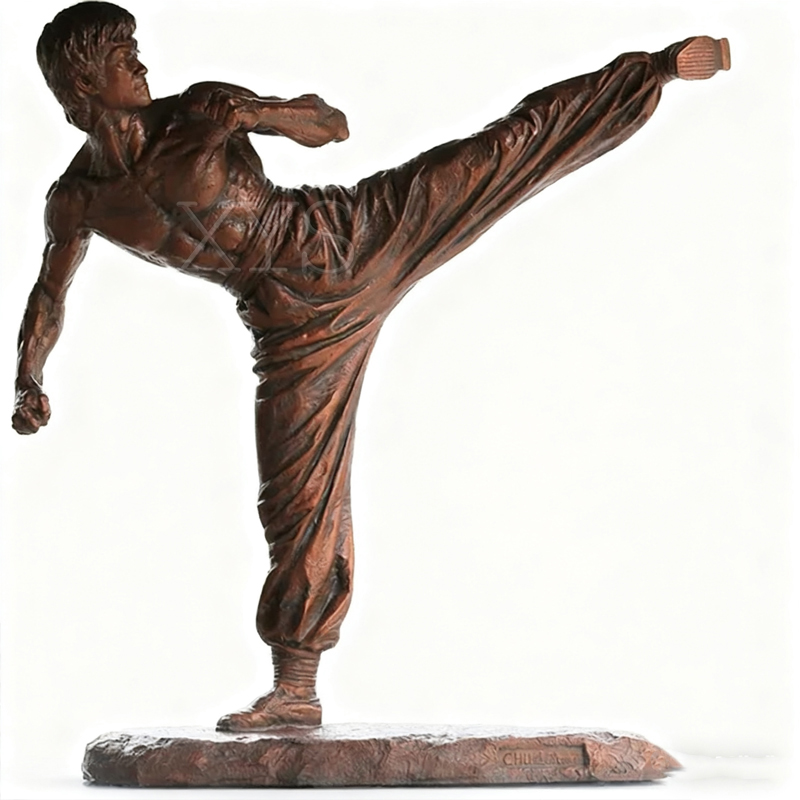 Bronze Life-Size Bruce Lee Martial Arts Sculpture – Outdoor Display
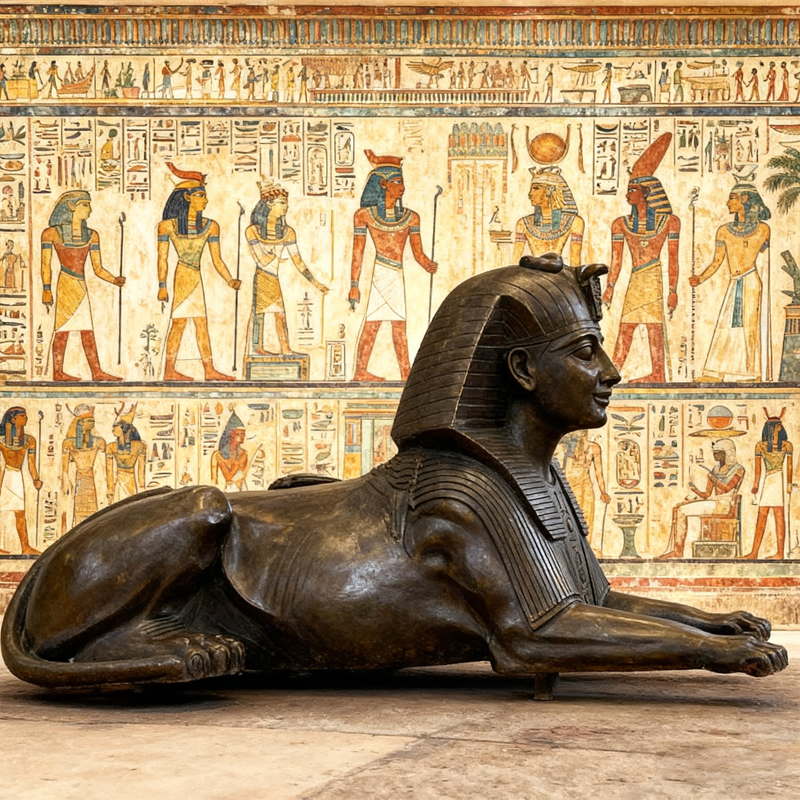 Bronze Large Sphinx Sculpture – Ancient Egyptian Mythology
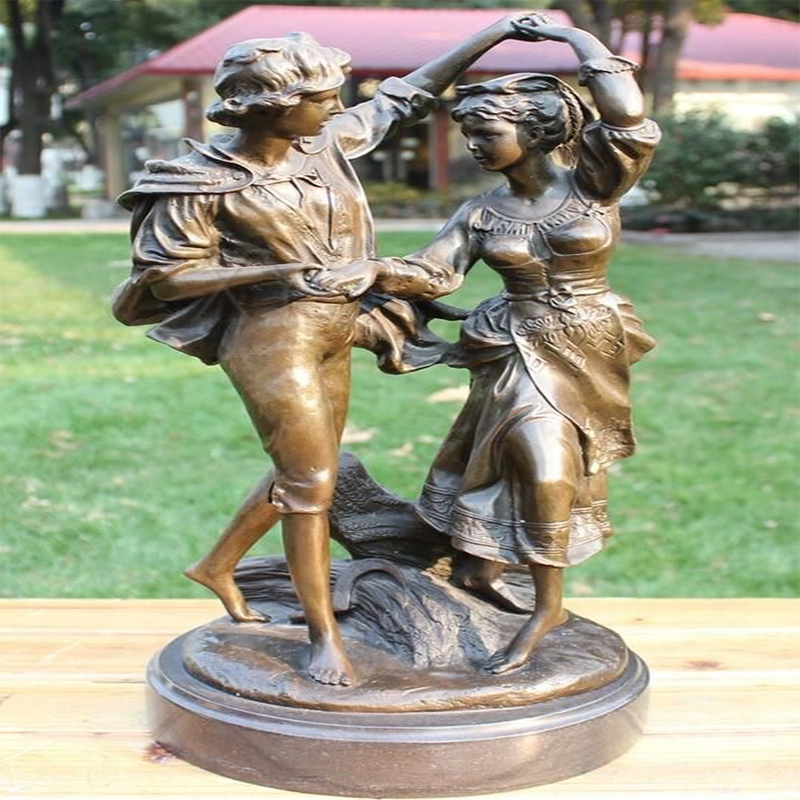 Bronze Life-Size Dancing Couple Sculpture – Heart Figure for Park Decoration



Daniel H.

Amanda R.

Robert B.

Jennifer S.

James W.

Barry G.

Michael T.

Emily K.

David L.

Sarah M.


Mikey XV

Jagxue

 English
 Español
 عربى
 Français
 italiano
 Deutsch