
Outdoor sculpture has evolved far beyond the role of a purely decorative object. In contemporary parks, tourism destinations, commercial plazas, resorts, industrial campuses, and cultural landscapes, large-scale sculpture is increasingly expected to create atmosphere, define space, guide movement, and provide practical value. The Multi-Tree Cluster Metal Umbrella Pergola Sculpture responds to this broader requirement by combining sculptural expression with genuine outdoor shelter. It is not simply a group of ornamental tree forms placed side by side. It is a coordinated architectural installation in which multiple stainless steel tree pergolas work together as one visual and functional environment.
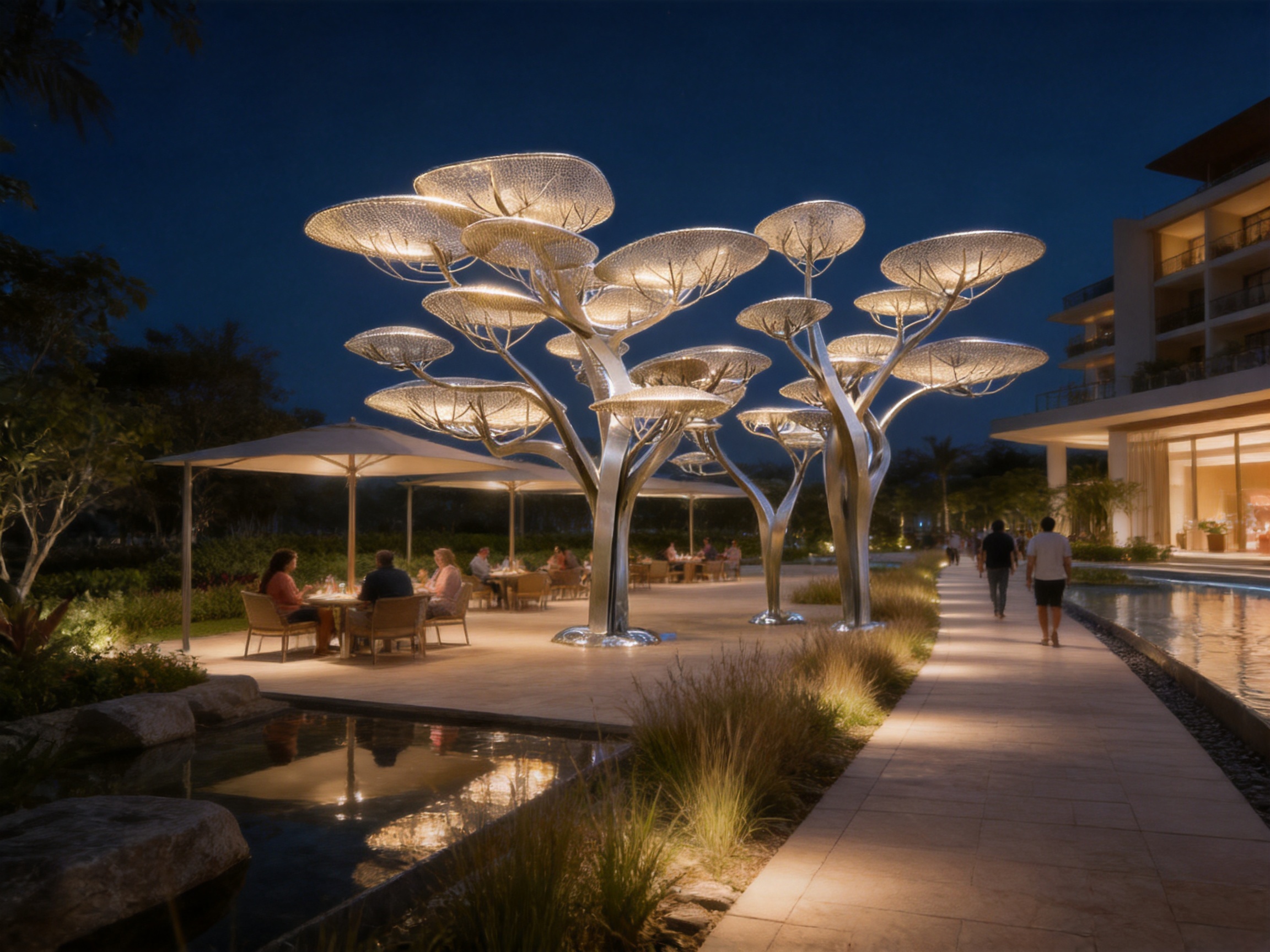
Each unit is designed as an abstract tree with a polished or brushed trunk and a layered, fine-mesh canopy formed in an umbrella-like silhouette. When several units are arranged as a cluster, their varied heights and carefully planned spacing create the impression of a small metallic grove. The installation can provide a substantial area of shade while also establishing a memorable landmark within the surrounding landscape. During the day, sunlight passes through the perforated and mesh-textured canopy, producing shifting patterns of light and shadow. At night, discreet integrated lighting can transform the canopy layers into a softly glowing destination feature.
This combination of artistic identity, functional shelter, adaptable scale, and outdoor durability gives the sculpture a clear advantage over many conventional shade structures and repeated decorative installations. A standard pergola may provide cover but often lacks a strong visual identity. A traditional sculpture may create visual interest but does not contribute meaningfully to the comfort or usability of a public space. A single umbrella-shaped sculpture can be attractive, but its covered area may be limited. The multi-tree cluster addresses all three challenges through one coordinated design strategy.
Manufactured in 304 or 316 stainless steel, the installation is suitable for demanding outdoor environments when the correct material grade, surface finish, structural engineering, drainage, anchoring, and maintenance plan are selected for the site. The product is available in unit heights from approximately 4 to 11 meters, with the number of trees, canopy arrangement, and overall footprint capable of being customized for a particular project. This flexibility enables landscape architects, developers, resort operators, municipal planners, and public-art buyers to create an installation proportioned to the site rather than forcing the site to accommodate a fixed object.

Multi-Tree Cluster Metal Umbrella Pergola Sculpture
Content
The Multi-Tree Cluster Metal Umbrella Pergola Sculpture belongs to a category of large-scale environmental sculpture in which art, landscape architecture, and public infrastructure overlap. Its visual language is based on the familiar image of a tree, but the construction deliberately replaces organic bark and leaves with stainless steel, hollow-cut patterns, layered mesh, and carefully controlled geometry. The result is recognizable without being literal. Viewers can perceive the outline of trees and umbrellas while also experiencing the installation as a contemporary architectural canopy.
The individual units are intended to be read both separately and collectively. At close range, visitors can observe the trunk proportions, canopy layers, mesh texture, surface reflections, joints, and lighting details. From a distance, the separate elements merge into a larger silhouette that resembles a grove or a sculptural forest. This dual reading is important because it gives the installation visual interest at several scales. A visitor standing beneath one unit experiences a sheltered space, while a person approaching from a road, plaza, promenade, or hotel entrance sees a recognizable landmark.
The cluster format also avoids the visual monotony that can occur when identical shade structures are repeated in a straight line. The design can use a combination of taller and shorter units, different canopy elevations, and carefully varied spacing. These variations make the composition feel more natural and dynamic. Rather than appearing like a row of standardized products, the installation can suggest a living stand of trees shaped by growth, light, and open space.
At the same time, the cluster remains deliberately coordinated. A successful composition does not depend on random placement. Trunk positions, circulation paths, canopy overlaps, sightlines, structural loads, and shaded areas must be studied together. The manufacturer’s role is therefore not limited to fabricating individual steel objects. It includes translating a broad design intention into a repeatable group of engineered units that work visually and physically as one installation.
Many large outdoor sculptures are designed primarily for visual impact. They may establish a landmark, but they do not necessarily improve the usability of the surrounding space. Visitors may admire them briefly and then move on because there is no reason to remain nearby. The multi-tree cluster introduces a practical reason for people to gather. Its canopies provide shade and create a more comfortable environment for resting, meeting, walking, waiting, dining, or participating in public events.
This functional quality can increase the value of a sculpture within a master plan. It can support longer visitor dwell times in tourism destinations, create shaded gathering areas in parks, and make a large plaza more hospitable during warm seasons. The installation remains an artistic object, but it also becomes part of the site’s daily use pattern.
A single umbrella tree can be effective as a focal point, entrance marker, or small seating canopy. However, its covered area may not be sufficient for a substantial plaza, resort terrace, or public gathering space. Grouping multiple units allows the client to scale the shelter according to the actual program of the site. A cluster may contain only a few trees for a compact courtyard or a larger number for a broad grassland tourism destination.
The units can be positioned to create overlapping or adjacent shaded zones. This arrangement supports a continuous experience without requiring one enormous unsupported canopy. Dividing the total structure into multiple tree-like elements can also produce a more visually permeable environment. Visitors retain views across the site, while the separate canopies provide shade without creating the heavy, enclosed feeling associated with some large roof structures.
Conventional metal pergolas are often based on rectilinear frames, repetitive beams, fabric roofs, or simple slatted structures. These solutions may be efficient, but they can appear generic and may not contribute significantly to a site’s identity. The umbrella-shaped tree pergola has a more distinctive symbolic character. It can communicate ideas of nature, shelter, growth, sustainability, and community while remaining firmly contemporary.
The recognizable tree motif is especially useful in locations that want to connect architecture with landscape. Eco-leisure resorts can use the forms to reinforce a nature-oriented brand environment. Urban parks can introduce a sculptural grove without planting mature trees that require decades to reach the desired scale. Industrial parks can soften hard architectural surroundings with a landmark that references natural forms. Tourism sites can use the cluster as a memorable meeting point and photographic destination.
Many prefabricated shade systems are available only in a narrow range of standard dimensions. They may not respond well to irregular property boundaries, existing trees, underground services, pedestrian routes, or special views. The multi-tree concept is more adaptable because the final composition can be planned through the number of units, height variation, trunk spacing, canopy orientation, and overall footprint.
The stated unit height range of approximately 4 to 11 meters provides substantial flexibility. Lower units can be used near seating areas or pedestrian zones where a more intimate scale is appropriate. Taller units can mark an entrance, define a central axis, or create a visible landmark from a distance. A mixture of scales can help a large installation transition between nearby human-scale spaces and distant urban or landscape views.
Material selection is one of the most important advantages of this sculpture. Stainless steel provides a strong balance between structural performance, modern appearance, and outdoor durability. The use of 304 or 316 stainless steel allows the specification to be adapted to environmental conditions. Grade 304 is widely used for many outdoor applications, while grade 316 offers increased resistance in more aggressive environments, particularly where salt, moisture, or industrial exposure may be significant.
Compared with ordinary painted carbon steel, stainless steel reduces dependence on a decorative paint film as the primary barrier against corrosion. Compared with some coated materials, it can maintain a clean metallic appearance without frequent repainting when appropriately fabricated and maintained. The brushed-polished finish also helps the surface interact with changing daylight, weather, and surrounding landscape.
No outdoor material is maintenance-free, and material performance depends on correct design and site conditions. Nevertheless, a properly specified stainless steel structure offers a strong foundation for long-term outdoor service. This is especially valuable for large installations where repeated repainting, extensive access equipment, or frequent surface repair would be costly and disruptive.
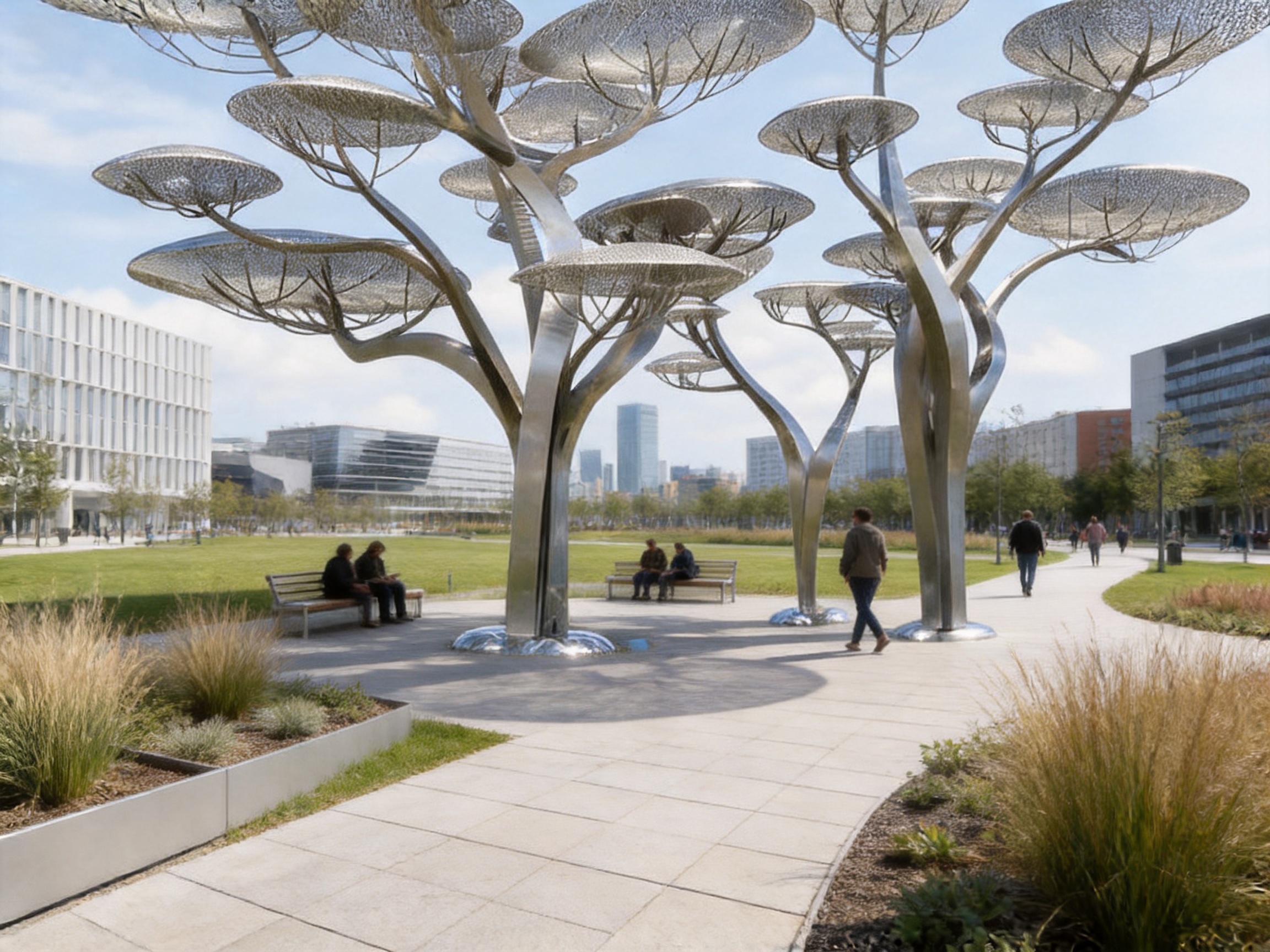
The number of trees should be determined by the functional program, available land, desired visual density, and project budget. A smaller cluster may contain enough units to frame a plaza or create an entrance feature. A larger group can function as a central gathering environment with several shaded zones, circulation paths, and visual layers.
Tree count should not be treated as a simple quantity decision. Each additional unit affects the relationship between canopies, shadows, foundations, pedestrian movement, lighting, and long-distance visibility. A professional layout should consider how the sculpture will be seen from the primary approach, from within the site, from surrounding buildings, and from vehicles passing nearby.
Clusters can be organized in several ways. A loose grove creates an open and naturalistic composition. A denser group produces stronger shade coverage and a more concentrated landmark. A curved arrangement can follow a promenade or plaza edge. A radial arrangement can focus attention on a central gathering zone. A staggered composition can provide varied views and reduce the formal appearance of a repeated row.
Height variation is essential to the visual success of a multi-unit installation. If every canopy is placed at exactly the same level, the group may look mechanically repetitive. Combining lower, medium, and taller units creates depth and movement. The highest elements can establish the dominant skyline, while shorter units help connect the sculpture to people on the ground.
Height must also be coordinated with structural requirements and site safety. Canopy edges should provide sufficient clearance for pedestrian movement, maintenance access, and nearby vehicles where applicable. The design team should review the relationship between canopy height and wind exposure, especially for installations in open fields, coastal areas, or high-rise urban settings where wind behavior may be complex.
The height range of 4 to 11 meters allows the composition to respond to different contexts. A 4-meter unit may feel approachable and intimate in a garden or courtyard. A taller unit can rise above surrounding planting, low buildings, or plaza furniture. The combination gives the designer a broad palette for creating a varied yet unified silhouette.
The canopy is one of the product’s most distinctive features. Its umbrella-like profile is formed through layered, fine-mesh, hollow-cut elements rather than a solid opaque roof. This construction creates a visually lightweight appearance while still producing shade. The layers can be read as stylized branches, overlapping leaves, or abstract architectural ribs.
The hollow-cut and mesh-textured surfaces allow light to pass through in controlled patterns. The resulting shadow is not static. As the sun moves, the ground receives changing patterns that bring the installation to life. Wind can create subtle shifts in the perception of the mesh and surrounding shadows. This dynamic quality gives the sculpture a stronger environmental relationship than a solid canopy with an unchanging underside.
Layering also increases visual depth. A single flat panel can appear thin and graphic, while several overlapping layers create volume and complexity. The canopy becomes attractive from below, from the side, and from distant viewpoints. When integrated lighting is added, the spaces between layers can produce a soft glow rather than a harsh point of light.
The brushed-polished stainless steel finish is intended to balance reflection and refinement. A highly mirror-polished surface can create dramatic reflections but may show fingerprints, glare, and environmental marks more readily. A brushed surface offers a controlled linear texture that reduces visual harshness while retaining the inherent brightness of stainless steel. Combining brushed and polished effects can emphasize selected structural areas or create contrast between trunk and canopy components.
Surface treatment should be selected in relation to the surrounding environment. In a modern city plaza, a brighter finish may reinforce nearby glass and steel architecture. In a resort or ecological landscape, a softer brushed finish may blend more naturally with stone, timber, planting, and water. The finish can also influence how lighting appears at night, especially when light is directed across textured metal rather than straight toward the viewer.
The quality of a large stainless steel sculpture depends on the connection between artistic design and disciplined manufacturing. Complex appearance alone does not guarantee a successful outdoor installation. The structure must be fabricated with control over dimensions, weld quality, surface consistency, drainage, assembly, and transportation. The manufacturer’s experience with custom metal sculpture is therefore a major part of the product’s value.
Production begins with a clear understanding of the intended site and composition. The manufacturer can translate a general concept into a series of coordinated units, identifying the required tree count, approximate height, canopy relationship, foundation positions, and access requirements. This stage is where visual ambition is balanced with manufacturing feasibility and installation logistics.
For a multi-tree cluster, planning must address the entire group rather than treating each tree as an isolated object. The trunk centers, canopy overlaps, elevation differences, and visual rhythm should be developed together. A technical planning process can also identify whether certain units require different reinforcement, whether canopy sections should be divided for transport, and how the final assembly will be sequenced on site.
The use of 304 and 316 stainless steel provides flexibility for project specification. Grade 304 is a common choice for many architectural and outdoor environments because it offers good corrosion resistance, strength, and workability. Grade 316 is often considered where exposure to chlorides, marine air, deicing salts, or certain industrial pollutants makes additional corrosion resistance desirable.
The correct grade should be selected according to the actual site conditions, not simply by default. The manufacturer can help align material selection with project expectations, environmental exposure, visual requirements, and budget. In either case, fabrication details remain important. Improper contamination, poor drainage, unsuitable fasteners, or incompatible adjacent metals can compromise the performance of even a high-quality stainless steel structure.
The fine-mesh and hollow-cut canopy requires accurate fabrication because small deviations can become visible when many layers are placed together. Cutting methods must produce clean edges and consistent openings while preserving the intended pattern. Forming operations then give the components their curved, umbrella-like geometry.
Accurate forming is particularly important for a cluster installation. If canopy sections differ unexpectedly in curvature, thickness, or alignment, the group may lose its visual coherence. Controlled fabrication helps ensure that the individual units share the same design language even when their heights and positions vary. It also supports easier assembly and reduces the need for excessive adjustment during installation.
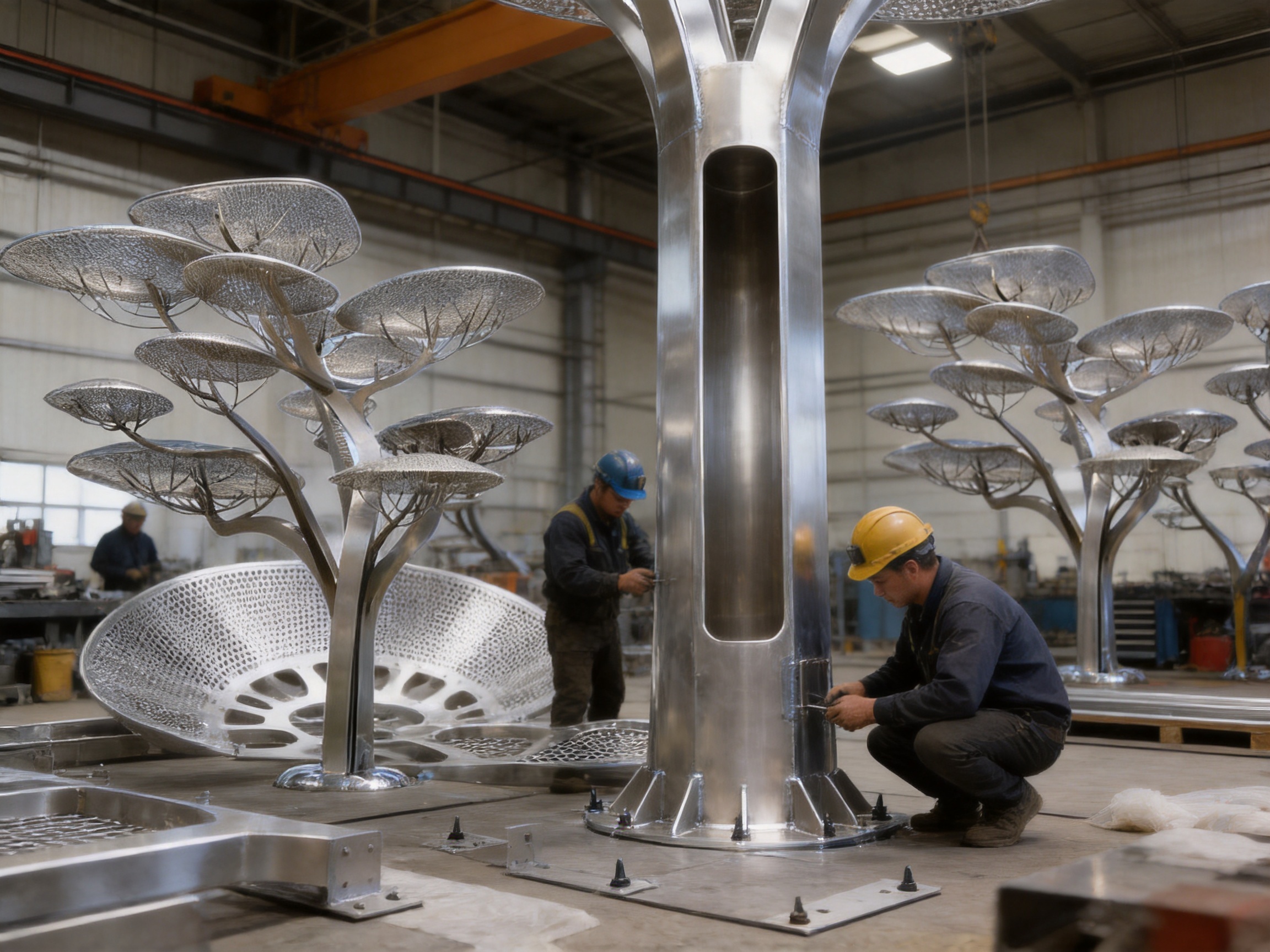
The trunk is both a visual support and a primary structural element. It must carry the canopy weight, resist wind forces, transfer loads to the foundation, and maintain the intended silhouette. A polished or brushed trunk can appear simple from the outside, but its internal construction and connection details require careful engineering.
Large tree forms may use fabricated stainless steel sections, internal reinforcement, base plates, concealed stiffening components, and engineered connection points. The exact solution depends on the unit height, canopy size, wind conditions, seismic requirements, and foundation design. The manufacturer’s strength lies in integrating these practical needs without allowing them to dominate the visible sculpture.
Connections between trunk and canopy should be designed to support fabrication, transportation, assembly, inspection, and future maintenance. Dividing large components into manageable sections can simplify shipping and site installation, while properly designed joints help maintain structural continuity after assembly. The visible appearance should remain clean even when the underlying engineering is substantial.
Welding is central to stainless steel sculpture fabrication. Consistent weld preparation, controlled heat input, appropriate filler selection, and skilled finishing help reduce distortion and improve the appearance of exposed surfaces. After welding, areas may require grinding, blending, polishing, or brushing so that the joint transitions naturally into the surrounding metal.
Surface refinement is especially significant for reflective sculpture. Uneven grinding marks, heat discoloration, inconsistent brushing, or visible repairs can affect the way sunlight moves across the object. A professional finishing process seeks to produce a consistent visual language across trunks, canopy layers, edges, and connection areas.
Because the product is manufactured in multiple units, finish consistency across the entire group is also important. A cluster should not contain obvious differences in color, texture, or reflectivity unless those differences are intentionally specified. Consistent quality control helps the individual pieces read as one coordinated artwork.
Quality control for a large outdoor sculpture should include dimensional checks, visual inspection, weld review, component identification, surface evaluation, and assembly verification. Canopy sections should be checked against the intended geometry. Trunks should be reviewed for alignment and base connection accuracy. Fabricated components should be labeled or documented so that installation teams can understand their correct positions.
Where the project requires it, the manufacturing documentation can be coordinated with structural calculations, foundation drawings, installation instructions, and maintenance recommendations. Such documentation is valuable for architects, contractors, landscape teams, and facility managers because the installation may remain in service for many years and could require future inspection or relocation.
A cluster of large sculptures must be designed with transportation in mind from the beginning. Oversized units can create loading, road, container, and lifting challenges. Dividing the canopy and trunk into practical sections can make transport more efficient while preserving the intended appearance after assembly.
Protective packaging should prevent scratching, impact damage, contamination, and deformation during handling. Stainless steel surfaces require particular care because contact with carbon steel particles or unsuitable packing materials can create later staining or surface problems. Assembly procedures should identify lifting points, temporary supports, connection sequences, and finishing touch-up requirements.
On-site installation typically requires coordination between the sculpture manufacturer, foundation contractor, lifting team, electrical contractor, and landscape contractor. The final result depends not only on the quality of the factory work but also on accurate foundation placement and correct assembly. A manufacturer experienced in custom sculpture can provide valuable guidance throughout this process.
The most important practical feature of the installation is that each canopy provides genuine shade. The layered mesh does not create the same dense darkness as a solid roof, but it filters sunlight into a softer environment. This is often desirable in parks, resorts, and public plazas because visitors retain a sense of openness while receiving relief from direct sun.
The dappled shadow pattern is a major experiential advantage. Instead of placing people beneath a visually blank ceiling, the canopy creates a changing overhead field of texture. The shadows may move across paving, planting, seating, and pathways as the sun changes position. This movement reinforces the impression that visitors are beneath a grove of trees, even though the structure is made from stainless steel.
The quality of shade depends on canopy geometry, orientation, local solar conditions, unit spacing, and the time of day. During design development, the project team should consider seasonal sun angles and the intended periods of use. Units can be arranged to provide stronger coverage in gathering zones while maintaining open edges for views, circulation, and ventilation.
Because the installation is composed of multiple canopies, it can support different activity zones. One area may contain seating, another may accommodate informal meetings, and a third may serve as a photo point or event backdrop. The sculpture therefore becomes a flexible landscape framework rather than a single-purpose object.
Discreet lighting can be integrated beneath selected canopy layers. The lighting strategy should support the sculptural form rather than overwhelm it. Concealed or carefully positioned fixtures can emphasize the underside of the canopy, reveal the fine mesh, and produce a gentle glow visible from a distance.
At night, the multi-tree cluster can become a landmark even when surrounding landscape features disappear into darkness. The separate units may read as glowing umbrellas, illuminated trees, or a constellation of architectural forms. This is particularly valuable in resorts, tourism destinations, entertainment areas, and public spaces with evening activity.
Lighting can be uniform across the cluster or selectively applied to create hierarchy. For example, taller units may receive subtle illumination to establish the skyline, while lower units provide localized light around seating areas. The final approach should consider glare control, energy use, access for maintenance, weather protection, and coordination with the site’s broader lighting system.
When lighting is incorporated during fabrication, the electrical pathways and fixture locations can be planned more neatly than when lighting is added later. Concealed conduits, access panels, drainage provisions, and service points should be coordinated with the structural design. This integrated approach helps preserve the clean appearance of the sculpture.
Open tourism landscapes often need recognizable destinations that can be seen across broad distances. A multi-tree cluster can provide a visual anchor in a grassland environment without competing with the openness of the horizon. The tree form introduces a symbolic connection to nature while the stainless steel construction creates a contemporary contrast with the surrounding terrain.
The shaded area can support visitor rest, orientation, photography, informal dining, or small performances. Taller units can be visible from approach routes, helping visitors identify the center of an attraction or a transition between activity zones.
Urban parks frequently contain hard-paved areas that become uncomfortable during sunny weather. The sculpture can add shade without producing the institutional appearance of a conventional roof. Its open canopy preserves visual permeability, allowing park users to see surrounding paths, planting, and nearby architecture.
The installation can also serve as a meeting point. In a large park, visitors often need a clear landmark for navigation. The distinctive outline of the umbrella tree cluster can make it easier to communicate directions and establish a recognizable civic feature.
Industrial and technology parks often feature large buildings, paved plazas, and formal circulation areas. A stainless steel tree cluster can soften these environments while maintaining a modern, durable character. The material relates naturally to contemporary architecture, while the tree motif introduces a more welcoming human and environmental dimension.
Shaded seating beneath the canopies can improve employee amenities, support outdoor meetings, and make entrance plazas more attractive. The installation may also strengthen the identity of a corporate or industrial campus without relying on a conventional logo-based monument.
Resorts that emphasize nature, wellness, and outdoor experiences can use the sculpture as a transition between buildings and landscape. The canopy provides shelter while the tree imagery reinforces the resort’s environmental theme. Integrated night lighting can extend the usefulness of the area after sunset and create a memorable backdrop for evening guests.
The cluster can be positioned near pools, restaurants, event lawns, pedestrian promenades, reception areas, or viewpoints. Its adaptable configuration makes it suitable for both intimate resort courtyards and expansive destination properties.
Customization should begin with a site survey and a clearly defined project brief. The brief should identify the available footprint, desired number of units, preferred height range, target shaded area, expected visitor capacity, surrounding architecture, environmental exposure, and lighting objectives.
It is also important to determine whether the sculpture will be viewed primarily from a distance or experienced from beneath the canopies. A landmark visible from highways or large open areas may require taller units and a more vertical composition. A courtyard installation may benefit from lower canopies and closer trunk spacing. A public plaza may require clear circulation corridors and accessible seating areas.
Foundation locations should be coordinated with underground utilities, drainage, paving patterns, planting beds, and existing structures. The foundation design itself should be developed by qualified professionals according to local building requirements and site loads. The sculpture manufacturer can provide relevant base dimensions, anchor arrangements, reaction information, and installation guidance for coordination.
Maintenance access should be included in the initial design. Even durable stainless steel requires periodic cleaning and inspection, particularly in polluted, coastal, or industrial environments. Lighting fixtures, electrical components, drainage points, and concealed connections should be reachable without damaging the sculpture or disrupting public use.
| Feature | Specification or Option | Project Benefit |
|---|---|---|
| Product type | Multi-tree cluster metal umbrella pergola sculpture | Combines public art, shade, landmark identity, and gathering space |
| Primary material | 304 or 316 stainless steel | Supports long-term outdoor use and a refined contemporary appearance |
| Surface treatment | Brushed-polished finish | Creates controlled reflection, texture, and visual consistency |
| Canopy design | Layered, fine-mesh, hollow-cut umbrella forms | Filters daylight and produces shifting dappled shadows |
| Unit height | Approximately 4 to 11 meters | Allows intimate, medium-scale, or landmark-size configurations |
| Cluster arrangement | Customizable tree count, spacing, and height variation | Adapts to different footprints, programs, and visual objectives |
| Lighting option | Discreet lighting beneath selected canopy layers | Extends visual impact and usability into the evening |
| Typical applications | Parks, tourism sites, resorts, plazas, and industrial campuses | Provides broad suitability across public and commercial landscapes |
| Indicative price range | Approximately $2,860 to $7,430 | Provides a starting point for preliminary project budgeting |
A product of this scale cannot be evaluated solely by its final silhouette. The long-term value depends on whether the manufacturing process can repeat the intended geometry, maintain surface quality, manage structural complexity, and support installation in a real site environment. This is where an experienced custom sculpture manufacturer provides an advantage over a general metal fabricator or a supplier focused only on standard shade products.
Custom sculpture manufacturing requires sensitivity to proportion and visual detail. The canopy layers must look balanced from several viewpoints. The trunk must feel stable but not unnecessarily heavy. Connections should be durable while remaining visually discreet. Surface transitions should be refined enough for close viewing. These requirements demand both artistic understanding and technical discipline.
The manufacturer’s experience with stainless steel also affects material handling and finishing. Stainless steel requires appropriate fabrication procedures to preserve corrosion resistance and appearance. Separation from carbon steel contamination, careful grinding, controlled polishing, suitable storage, and correct cleaning practices all contribute to the final result.
For a multi-unit installation, production organization becomes equally important. Components must be tracked, matched, finished consistently, packaged correctly, and delivered in an order that supports efficient assembly. A coordinated manufacturing process reduces the risk of mismatched parts and helps the complete group achieve a unified appearance.
The company associated with this product operates as a China-based sculpture manufacturer and supplier specializing in custom design metal statues and European-style sculpture. Its product categories include bronze sculptures, stainless steel sculptures, marble sculptures, fiberglass sculptures, and weathering steel sculptures. This broader material experience can be useful when a project requires comparison between different sculpture media or a coordinated collection of artworks across one development.
Stainless steel is selected for durability, but regular care remains advisable. Dust, airborne pollutants, salt deposits, bird residue, and construction particles can accumulate on exposed surfaces. Periodic washing with clean water and appropriate non-abrasive cleaning materials helps preserve the finish and reduce the risk of localized staining.
Cleaning methods should respect the specified surface treatment. Aggressive abrasives, chloride-containing products, and unsuitable steel tools may damage the finish or introduce contaminants. Brushed surfaces may require cleaning in the direction of the existing grain to avoid visible cross-scratching.
Inspection should include the canopy edges, welded areas, trunk-to-canopy connections, base plates, anchor zones, drainage openings, and lighting equipment. Facilities teams should watch for unusual movement, loose components, impact damage, blocked drainage, or changes in surface appearance. Any structural concern should be reviewed by qualified professionals rather than corrected through improvised field modifications.
Where integrated lighting is installed, electrical maintenance should follow the equipment manufacturer’s recommendations and local safety requirements. Access panels should be kept serviceable, and replacement fixtures should be compatible with the original design. A documented maintenance schedule can help protect both the sculpture and the investment made in the surrounding landscape.
It is a large-scale outdoor installation made from multiple stainless steel tree-shaped pergola units. Each unit has a trunk-like support and a layered, fine-mesh, umbrella-shaped canopy. Together, the units form a coordinated sculptural grove that provides shade and creates a landmark for public or commercial outdoor spaces.
Yes. Each canopy is designed to provide genuine shade. Because the canopy uses layered mesh and hollow-cut surfaces, the shade is filtered rather than completely opaque. This creates a dappled pattern of light and shadow while reducing direct sunlight beneath the installation.
The tree count is customizable. The appropriate number depends on the available footprint, desired shade coverage, circulation requirements, visual composition, and project budget. A smaller cluster can serve as a focal feature, while a larger group can cover a substantial gathering area.
Individual units are offered in heights ranging from approximately 4 to 11 meters. Different heights can be combined within one cluster to create a more naturalistic silhouette and adapt the installation to both human-scale and long-distance views.
Grade 304 is suitable for many outdoor applications, while grade 316 may be preferred for coastal, highly humid, salt-exposed, or more aggressive industrial environments. The final selection should be based on a professional assessment of the site conditions, appearance requirements, and project budget.
The standard description identifies a brushed-polished stainless steel finish. Specific combinations of brushing, polishing, and visual contrast can be discussed during design development, subject to the project’s aesthetic and fabrication requirements.
Yes. Discreet lighting can be integrated beneath selected canopy layers. Lighting can be used to create a soft nighttime glow, emphasize taller units, illuminate gathering areas, or turn the cluster into an evening landmark.
Typical applications include grassland tourism sites, central city parks, industrial-park plazas, eco-leisure resorts, hotel grounds, public promenades, commercial developments, cultural destinations, and large entrance areas. It is most effective where the project benefits from both shade and a strong visual identity.
Installation generally involves prepared foundations, base connections, lifting equipment, assembly of trunk and canopy sections, electrical coordination where lighting is included, and final surface inspection. Foundation and anchoring design should be coordinated with qualified local engineers and the manufacturer’s technical information.
No outdoor sculpture is entirely maintenance-free. Stainless steel reduces the maintenance burden compared with many painted materials, but periodic cleaning, inspection, drainage checks, and lighting maintenance are still recommended. Site conditions such as salt, pollution, dust, and industrial exposure influence the required schedule.
A conventional pergola usually emphasizes a roof frame and functional shelter. This product combines shelter with a strong sculptural tree motif, varied canopy heights, fine-mesh shadow effects, stainless steel craftsmanship, and landmark potential. It is intended to function as both outdoor infrastructure and public art.
A single umbrella sculpture can be attractive but provides a more limited covered area. The multi-tree cluster can shelter a larger footprint and create a richer composition with multiple viewpoints, varied heights, and several gathering zones.
Useful information includes the site location, environmental conditions, intended footprint, approximate tree count, preferred unit heights, desired shade coverage, lighting requirements, delivery destination, foundation conditions, and any available drawings or site photographs. These details help the manufacturer develop a more accurate proposal.
The Multi-Tree Cluster Metal Umbrella Pergola Sculpture offers a compelling solution for projects that require more than a decorative object. Its stainless steel tree forms create a recognizable landmark, while the layered canopies provide genuine shade and a constantly changing pattern of light. Its clustered arrangement produces greater functional coverage than a single sculptural unit and a more distinctive identity than a standard modular pergola.
The product’s strongest advantages come from the integration of design flexibility, material durability, custom scale, fine-mesh canopy construction, height variation, and optional lighting. With individual units ranging from approximately 4 to 11 meters, the composition can be adapted to compact courtyards, broad public plazas, resort landscapes, tourism sites, and industrial campuses. The number of trees and their arrangement can be selected according to the footprint and purpose of the project.
Its success, however, depends on more than visual concept. Accurate planning, suitable stainless steel selection, disciplined cutting and forming, skilled welding, consistent finishing, structural coordination, careful packaging, and professional installation all contribute to the final result. A manufacturer with experience in custom metal sculpture can connect these requirements into one coherent production process.
For landscape architects, developers, municipal planners, tourism operators, and public-art purchasers, the installation represents an opportunity to create a place that is useful during the day, memorable after dark, and visually meaningful throughout the year. It provides shelter without sacrificing openness, technology without losing the reference to nature, and sculpture without separating art from everyday public life.
1. General architectural guidance on stainless steel selection for outdoor environments.
2. General principles of landscape architecture and public-space design.
3. General fabrication practices for stainless steel architectural structures.
4. General recommendations for outdoor sculpture maintenance and surface cleaning.
5. General considerations for canopy design, shade planning, and pedestrian comfort.
6. General principles of architectural lighting integration for outdoor public art.
7. Product specifications and project information supplied for the Multi-Tree Cluster Metal Umbrella Pergola Sculpture.
 Contemporary Life-Size Bronze Nude Female Sculpture
 Bronze Life-Size Bruce Lee Martial Arts Sculpture – Outdoor Display
 Abstract Weathering Steel Decorative Sculpture
 Bronze Large Sphinx Sculpture – Ancient Egyptian Mythology
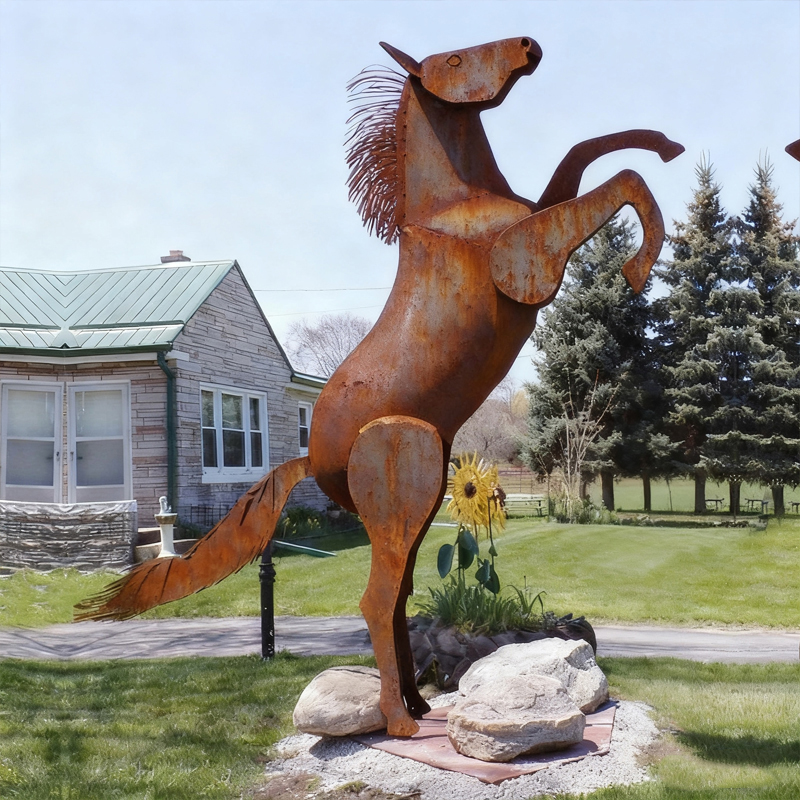 Weathering Steel Galloping Horse Animal Sculpture
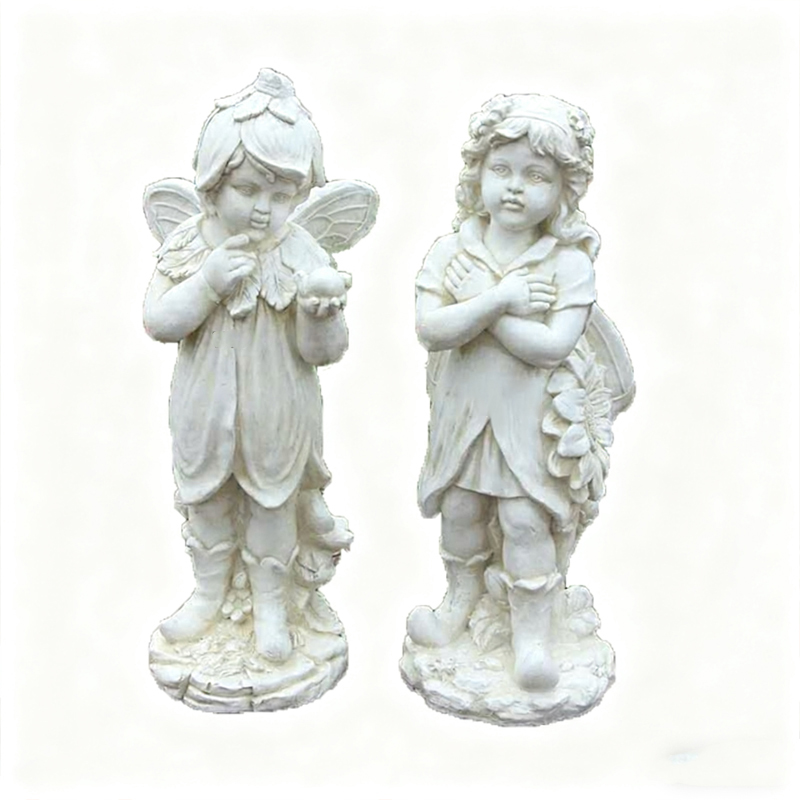 Fiberglass Human Sculpture of a Little Angel




Daniel H.

Amanda R.

Robert B.

Jennifer S.

James W.

Barry G.

Michael T.

Emily K.

David L.

Sarah M.


Mikey XV

Jagxue

 English
 Español
 عربى
 Français
 italiano
 Deutsch