Public art is increasingly expected to do more than occupy space. A successful outdoor sculpture must attract attention, communicate emotion, withstand changing weather, fit the identity of its surroundings, and remain practical to transport and install. The Fiberglass Human Sculpture in the “Skirt in the Wind” Pose brings these requirements together through a combination of expressive movement, durable materials, manageable weight, and flexible customization.
Designed as a life-size female figure with a skirt and hair appearing to move in the wind, this sculpture creates a strong sense of rhythm and vitality. The flowing contours give the work a soft and elegant character, while the extended folds and dynamic posture provide visual tension. From a distance, the piece functions as a recognizable landmark. At closer range, its surface details and carefully shaped movement invite viewers to examine the craftsmanship.
Fiberglass is especially suitable for this artistic concept. Compared with stone, fiberglass can reproduce complex, thin, and flowing forms without creating excessive structural weight. Compared with many metal sculptures, it can be easier to handle, transport, position, and install. These qualities make the sculpture suitable for streets, alleys, cultural tourism districts, commercial developments, parks, plazas, hotels, resorts, and other public environments.
Manufactured by Jiangsu Xinyesheng Sculpture Co., Ltd., the sculpture represents a product category in which design flexibility and practical outdoor performance are equally important. The company provides custom sculpture production and works with fiberglass, bronze, stainless steel, marble, and weathering steel. This broad material capability gives buyers access to different artistic solutions while allowing the fiberglass “Skirt in the Wind” design to remain a focused option for projects that require movement, lightness, and efficient deployment.
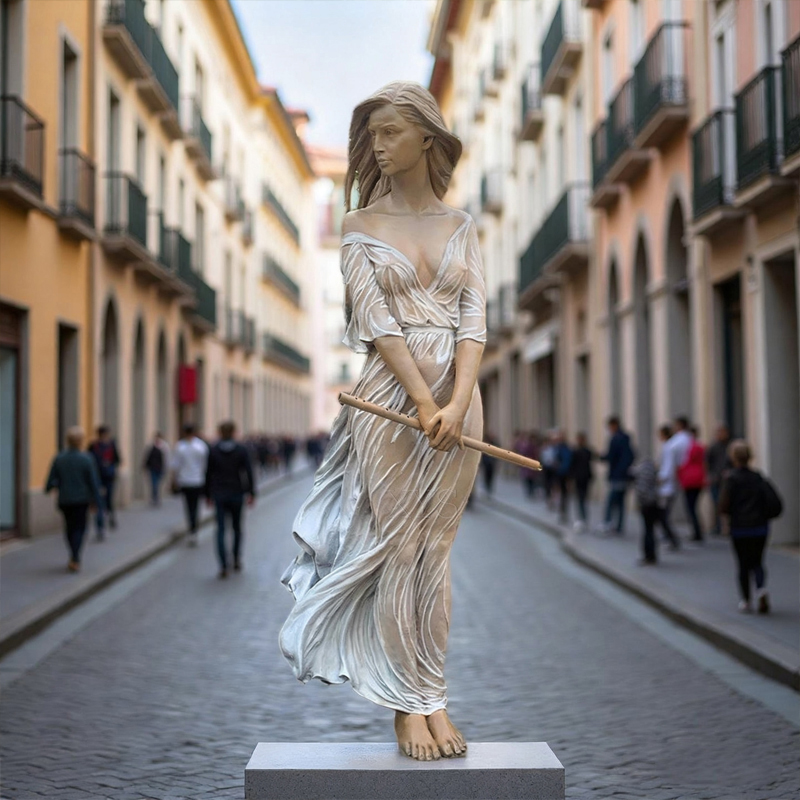
Fiberglass Human Sculpture in the “Skirt in the Wind” Pose
Content
The central idea of the sculpture is the visual impression of a woman standing or moving while her skirt is lifted by the wind. This concept transforms a static human figure into a moment of suspended motion. The skirt does not simply serve as clothing; it becomes a major structural and visual element. Its sweeping folds suggest air, direction, and energy, allowing the sculpture to appear animated even when installed in a quiet public setting.
The flowing hair reinforces the same impression. Hair that extends or curves with the imaginary wind gives the upper part of the sculpture a sense of continuity with the lower skirt. The result is a unified composition rather than a conventional figure with a separately designed costume. Each major contour contributes to the feeling that the figure has just entered the space or is responding to an invisible natural force.
This artistic language is valuable for public spaces because it is immediately understandable. Viewers do not need specialized knowledge of modern art to recognize the pose and interpret its mood. The sculpture can suggest freedom, grace, optimism, youth, celebration, or connection with nature, depending on the surrounding architecture and landscaping.
At the same time, the pose avoids the limitations of a purely realistic portrait statue. The wind-blown skirt allows the artist and manufacturer to emphasize silhouette, gesture, and visual flow. This makes the sculpture suitable for contemporary urban settings where a strong outline is often more important than minute facial detail viewed from a distance.
Outdoor sculptures must often be viewed from multiple directions and distances. A work that looks attractive only from one angle may lose its impact in a plaza or along a street. The “Skirt in the Wind” pose is naturally suited to broad visibility because the skirt, hair, torso, and posture create recognizable lines from different viewpoints.
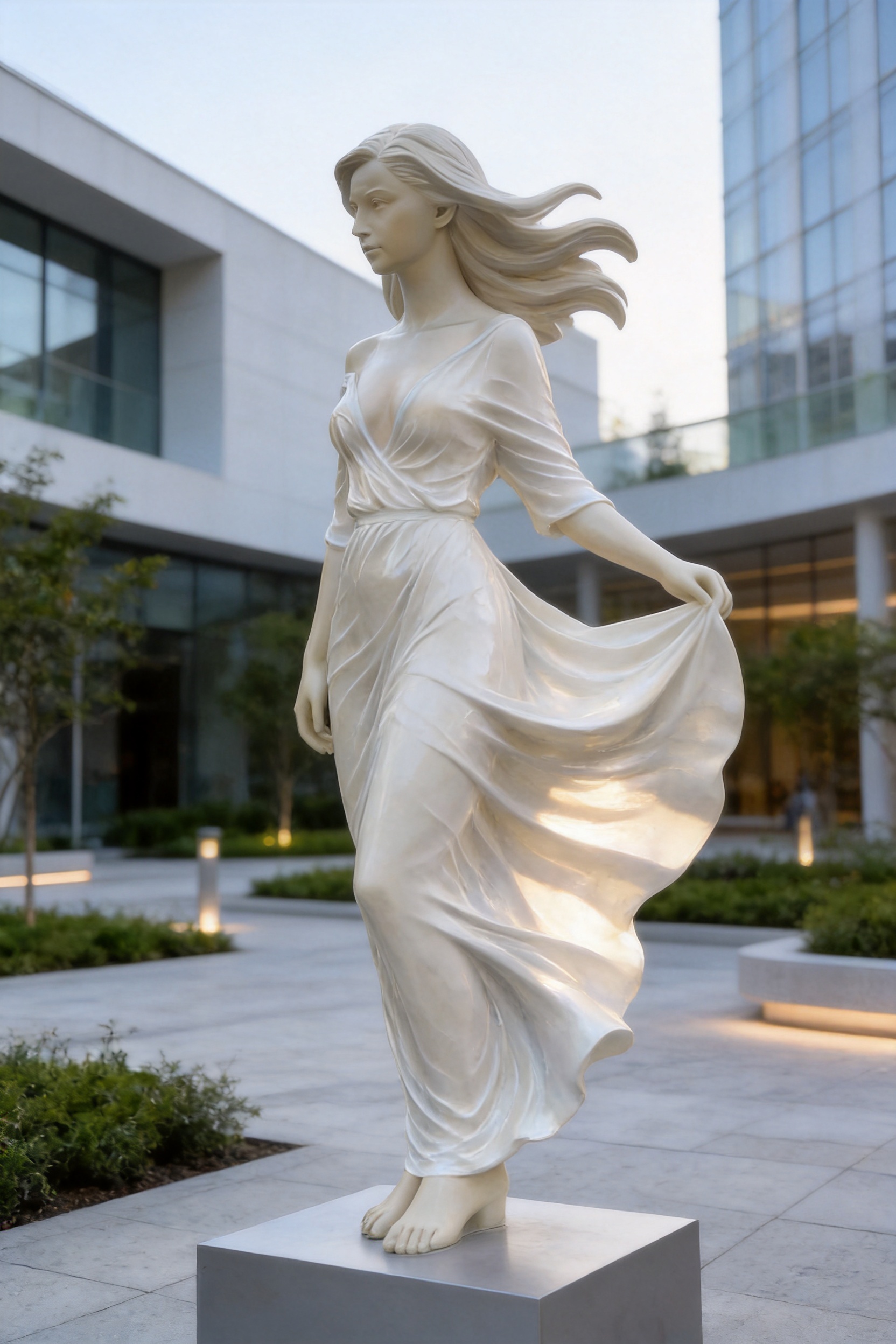
The extended folds can catch changing daylight and create alternating areas of highlight and shadow. In the morning, the surface may appear crisp and bright. Under afternoon light, the folds can become deeper and more dramatic. At night, carefully planned illumination can emphasize the silhouette and make the sculpture a focal point after dark.
For developers and landscape designers, this strong silhouette provides an efficient way to establish identity within a large site. A single sculpture can help mark an entrance, identify a pedestrian route, distinguish a cultural district, or create a memorable photo location. The design has enough visual character to function independently, yet it can also be incorporated into a wider landscape composition.
A female figure in a flowing skirt can be interpreted in many ways. It may represent elegance, hospitality, celebration, movement, or the relationship between people and the natural environment. This adaptability enables the sculpture to serve different types of projects without being limited to one narrow theme.
In a cultural tourism district, it may become a symbolic attraction that visitors associate with the location. In a hotel garden, it can support an atmosphere of refinement. In a shopping or entertainment area, the sculpture can create a lively visual moment. In a residential development, it may contribute a human-centered artistic element that softens the surrounding buildings.
Because the concept is based on movement rather than a specific historical person, it can also be customized in color, finish, scale, base design, and surrounding presentation. Buyers can request a treatment that aligns with an existing architectural palette or landscape plan.
Fiberglass, commonly used in composite sculpture production, is valued for its combination of low weight, strength, moldability, and surface adaptability. These characteristics are particularly useful when an artwork includes large flowing forms, raised sections, thin visual edges, or an extended pose.
The material allows a sculptural concept to be enlarged without the same mass associated with stone. It can also provide a more manageable alternative to heavy metal structures when the design includes broad skirts, elongated hair, or other projecting features. The lower weight does not eliminate the need for careful engineering, anchoring, and site planning, but it can simplify many stages of the project.
One of the most significant advantages of fiberglass is its relatively low weight. A sculpture with an overall height of approximately 2 to 2.5 meters, including the base, can be handled more easily than an equivalent work made entirely from marble or another dense stone.
This practical benefit affects transportation, unloading, positioning, and installation. Projects with restricted access may find it easier to move fiberglass through narrow entrances or along pedestrian routes. Where heavy lifting equipment would be difficult to use, a lighter sculpture may reduce logistical complexity, although the final installation should always be evaluated by qualified personnel.
Lower weight can also reduce the demands placed on the supporting foundation. The exact requirements depend on the sculpture’s center of gravity, wind exposure, base configuration, anchoring method, and local building conditions. Nevertheless, a lightweight composite design can provide greater flexibility during early planning than a comparably sized stone sculpture.
The flowing folds of the skirt require more than a simple cylindrical or geometric form. The material must support transitions between broad curves, narrow ridges, recessed folds, and extended edges. Fiberglass is well suited to this type of shaping because it can be formed over a developed model and reproduced with a controlled surface profile.
This forming flexibility is important for a design that depends on the impression of movement. If the folds are too shallow, the skirt may look flat. If they are too heavy, the figure may appear static. If the edges are too thick, the feeling of wind and lightness may be reduced. Careful mold and surface work helps preserve the balance between strength and visual delicacy.
The same principle applies to the hair. Flowing hair often includes numerous overlapping curves that would be difficult to carve consistently from a solid block. Fiberglass production makes it possible to create those contours as part of a planned shell structure, while maintaining a manageable overall weight.
Outdoor art must withstand sunlight, rain, humidity, temperature changes, dust, and occasional contact. Fiberglass is commonly selected for exterior applications because it can be finished with protective coatings and surfaces designed for outdoor use. Its corrosion resistance is especially useful in environments where moisture or atmospheric pollutants may affect exposed materials.
A fiberglass sculpture does not require the same type of corrosion management as untreated steel. It will not develop rust in the manner of ordinary carbon steel, and it can retain a clean decorative finish when appropriate surface preparation and coating systems are used. This is a practical advantage for public spaces where maintenance access may be limited.
Long-term performance still depends on the quality of fabrication, resin system, surface coating, drainage, anchoring, and maintenance schedule. No outdoor material is completely maintenance-free. Regular inspection can identify surface damage, fading, dirt accumulation, or sealant issues before they become more serious. With responsible care, fiberglass can provide a durable and attractive outdoor solution.
Bronze, stainless steel, marble, weathering steel, and fiberglass each have their own artistic and technical strengths. The right choice depends on the visual objective, installation conditions, budget, and maintenance expectations. The “Skirt in the Wind” sculpture has particular advantages when the project prioritizes dynamic form, efficient installation, and a balance between appearance and cost.
| Material | Typical Strengths | Potential Considerations for a Flowing Human Figure | Why Fiberglass Can Be Advantageous |
|---|---|---|---|
| Fiberglass | Lightweight, shapeable, corrosion-resistant, adaptable in finish | Requires careful coating, anchoring, and surface maintenance | Supports large dynamic forms with reduced handling weight and flexible customization |
| Bronze | Traditional prestige, rich patina, strong artistic heritage | Heavier and often more costly for large forms; casting details and finishing require specialized work | Can provide a more economical and manageable option for expressive public installations |
| Stainless Steel | Modern appearance, reflective surface, strong structural character | May require complex fabrication for soft folds and can create a colder visual effect | More easily delivers a soft, flowing, fabric-like appearance |
| Marble | Natural stone beauty, permanence, prestigious appearance | Very heavy and vulnerable to transport and handling challenges; complex thin forms may be difficult | Offers greater freedom for extended skirts, hair, and suspended visual movement |
| Weathering Steel | Industrial character, strong color development, architectural presence | Heavy, visually dense, and less naturally suited to delicate human forms | Creates a lighter and more graceful alternative for cultural and landscape settings |
Bronze is widely respected for figurative sculpture because of its historical associations, tactile warmth, and ability to develop a distinctive patina. It remains an excellent choice for projects seeking a classical or monumental identity. However, a bronze sculpture of similar size and complexity may involve greater material weight, casting requirements, and transportation demands.
The fiberglass version is particularly competitive when the design includes a large skirt that extends outward or upward. A broad bronze form can become structurally heavy, while fiberglass can reproduce the visual volume without filling the entire shape with dense material. This helps maintain the impression of wind and lightness that defines the concept.
Fiberglass can also be finished in a variety of colors and surface treatments. It may imitate certain metallic appearances or use a bright contemporary color that would be difficult to achieve through a traditional bronze patina. For projects with a tight delivery schedule or a strong need for reduced installation costs, fiberglass can be a practical alternative.
Stainless steel is associated with clean lines, contemporary architecture, and reflective surfaces. It performs well in many outdoor conditions, but the fabrication of a soft human figure with flowing textile-like folds can be demanding. Welded seams, polished areas, and reflective distortions may change the way viewers perceive the form.
Fiberglass offers a warmer and more painterly appearance. Its surface can be finished with matte, satin, gloss, or customized color effects. This enables the skirt to appear like fabric, painted movement, or a stylized sculptural volume rather than a hard reflective shell.
For an installation intended to feel approachable and graceful, the softer visual quality of fiberglass may be more appropriate than the technical or industrial character of polished steel.
Marble provides natural variation, visual prestige, and a strong connection to classical sculpture. However, its density creates significant handling and foundation requirements. A life-size marble figure may require specialized transport and lifting equipment, particularly when the form includes a wide base or delicate projecting elements.
The “Skirt in the Wind” pose relies on visual extension and motion. Fiberglass allows these features to be developed without the same risk of excessive weight. It also permits a broader range of color treatments, which can be important for branded public spaces, themed attractions, or contemporary landscape designs.
Fiberglass does not replace marble in every project. Buyers seeking the permanence and natural character of carved stone may prefer marble. However, for projects that value deployment efficiency and dramatic movement, fiberglass offers clear practical advantages.
Weathering steel is often selected for its architectural strength and rust-colored surface. It works well in industrial landscapes, memorial settings, and modern developments that seek a bold material statement. Yet its visual weight and planar character may not naturally support the softness of a wind-blown skirt.
Fiberglass creates a more fluid transition between body, clothing, and hair. It can be shaped into rounded, organic contours and finished in tones that complement gardens, colorful buildings, or tourism-oriented spaces. The result is a figure that feels lighter and more animated.
The quality of a fiberglass sculpture depends on more than the material itself. The design must be translated into a stable structure, the surface must accurately preserve the intended artistic details, and the final finish must be prepared for its environment. Jiangsu Xinyesheng Sculpture Co., Ltd. operates as a sculpture manufacturer with experience across multiple materials, including fiberglass, bronze, stainless steel, marble, and weathering steel.
This range of capabilities is valuable because it places fiberglass production within a broader sculpture-making environment. A buyer can discuss artistic goals, material selection, dimensions, surface effects, and installation considerations with a supplier familiar with different production methods. The company’s custom design orientation also supports projects that require adjustments rather than a completely standardized catalog product.
Production begins with understanding the desired artistic result and the conditions of the installation site. For the “Skirt in the Wind” concept, important design questions include the direction of the implied wind, the relationship between the skirt and hair, the viewer’s expected distance, and the amount of movement visible from major approach routes.
Dimensions are also established at this stage. The supplied product range identifies an overall height, including the base, of approximately 2 to 2.5 meters. The sculpture body itself is approximately 1.8 to 2.2 meters high. These dimensions place the work close to life size while giving buyers room to select a proportion appropriate for the site.
For a custom project, the design can be reviewed according to the surrounding architecture and landscape. A sculpture beside a narrow pathway may require a more compact projection. A plaza centerpiece may benefit from a broader skirt and stronger rotational movement. A roadside or entrance installation may need a silhouette that reads clearly from a greater distance.
Once the concept is confirmed, the figure is developed as a three-dimensional form. The modeling stage is critical because it establishes posture, anatomy, balance, fabric movement, hair direction, and the overall rhythm of the silhouette.
Particular attention is required at the transitions between the body and clothing. A skirt that appears to be blown by wind must look connected to the figure while also suggesting lift and separation. The folds need enough variation to avoid mechanical repetition. The hair must complement the skirt rather than compete with it. These details determine whether the final sculpture appears graceful and convincing.
At this stage, the manufacturer can also consider practical issues such as internal support, access points, thickness, drainage, and connection to the base. Artistic movement and structural stability must be developed together rather than treated as separate concerns.
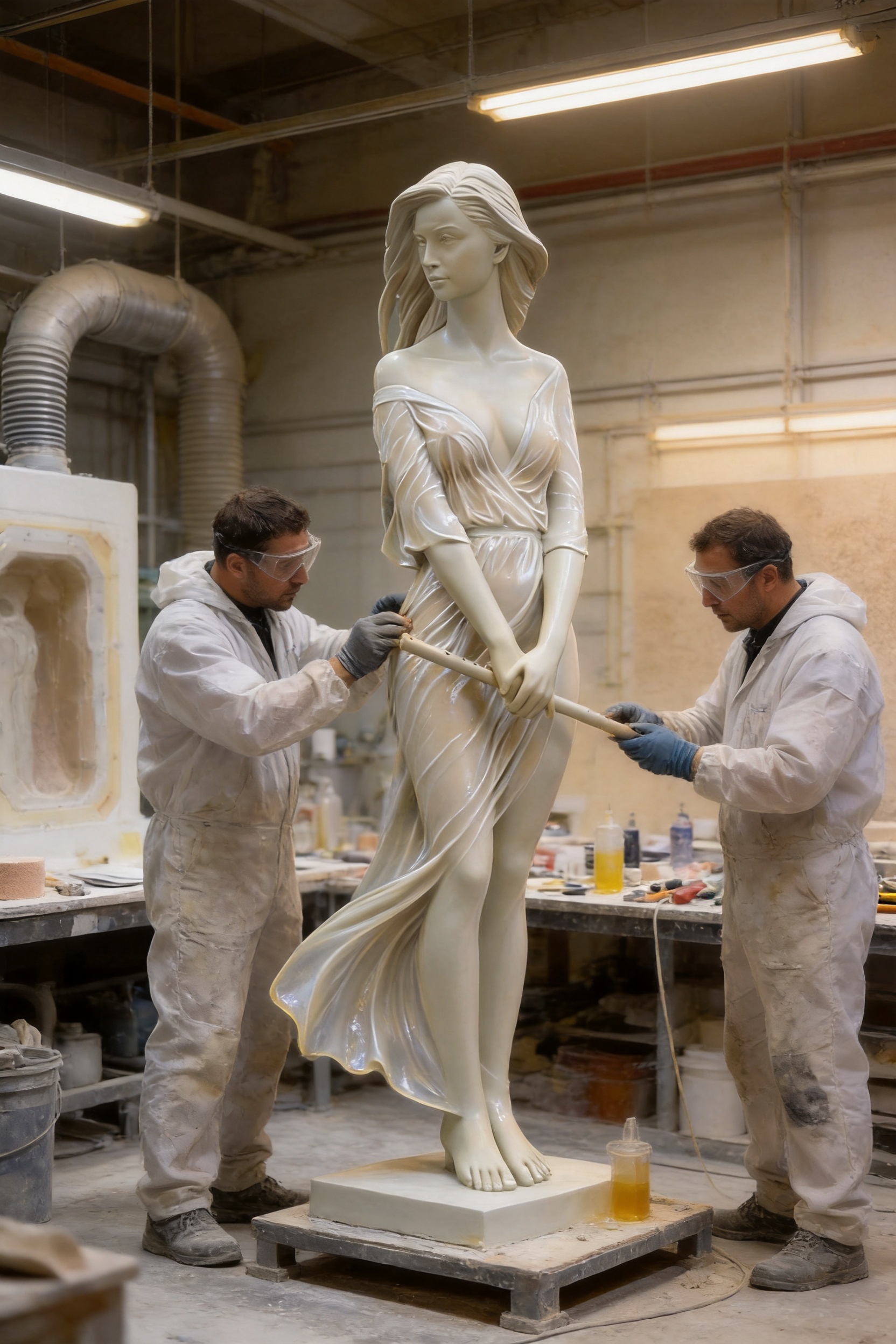
After the model is approved, a mold or production surface can be prepared to capture the sculpture’s contours. Fiberglass manufacturing generally involves combining reinforcing fibers with a resin system to create a rigid composite shell. The number and arrangement of reinforcement layers can be adjusted according to the size and form of the piece.
Areas with greater projection or stress may require additional reinforcement. The base connection, skirt extensions, and internal structural points should be treated as important load-transfer zones. The precise construction depends on the design and engineering requirements, but the general objective is to create a shell that maintains its form while remaining lighter than a solid stone or cast-metal equivalent.
Careful lamination helps minimize weak areas, air pockets, uneven thickness, and unwanted distortion. A controlled production environment can improve consistency from one section to another. For custom orders, this is especially important because modifications must be accurately incorporated into the final form.
After the composite structure has cured, the surface is refined. Seams, transitions, and minor imperfections are addressed so that the final finish presents a coherent sculptural surface. The finishing process may include sanding, filling, priming, color application, protective coating, and detail enhancement.
Surface treatment has both aesthetic and practical roles. A smooth finish can give the skirt a clean contemporary appearance, while a textured or layered finish may emphasize the folds. Matte coatings can reduce glare in bright sunlight. Gloss finishes can make colors appear more vivid. Satin finishes often provide a balanced appearance for public installations.
For exterior use, the coating system should be selected according to expected exposure. Ultraviolet radiation, moisture, temperature fluctuation, and pollution can all affect decorative surfaces. A suitable protective layer helps preserve color and texture, while regular inspection ensures that small defects are repaired before moisture or weathering affects the underlying surface.
Jiangsu Xinyesheng Sculpture Co., Ltd. is identified as a China-based sculpture manufacturer and supplier providing custom design services. Its product range includes bronze sculptures, stainless steel sculptures, marble sculptures, fiberglass sculptures, and weathering steel sculptures. This multi-material capability is a significant strength for buyers who need to compare alternatives before committing to a final production solution.
Rather than limiting its work to one material or one artistic style, the company can support different project directions. A buyer may require a lightweight fiberglass figure for one site, a stainless steel landmark for another, and a bronze sculpture for a more traditional environment. Access to several materials within one manufacturing organization can make communication more efficient and support consistent project coordination.
Custom sculpture production is useful when a standard product does not perfectly match a site. Buyers may request changes to height, pose, base dimensions, color, finish, clothing details, or the amount of skirt movement. Customization can also help incorporate local artistic themes or architectural references.
For the “Skirt in the Wind” sculpture, customization may involve adjusting the apparent wind direction, changing the proportions of the figure, creating a different base, or producing a larger centerpiece version. The manufacturer can also discuss whether the work should be presented as a single figure, repeated as a series, or coordinated with other sculptures in a public art program.
Working with multiple sculpture materials requires an understanding of different forming, casting, carving, welding, polishing, coating, and installation practices. This experience can strengthen the material selection process. The supplier can compare the practical consequences of fiberglass against bronze, stainless steel, marble, and weathering steel rather than presenting fiberglass as a one-size-fits-all solution.
Such comparison is beneficial for architects, landscape designers, contractors, hospitality groups, and public art buyers. It encourages decisions based on the complete project, including visual identity, transportation, foundation, maintenance, and budget.
The company provides international contact information and offers its sculpture products for overseas buyers. For an export project, clear communication is important from the initial design inquiry through packaging, shipping coordination, delivery, and installation planning.
Buyers should provide the intended destination, outdoor exposure, preferred dimensions, quantity, finish, color expectations, delivery schedule, and any local installation requirements. Supplying this information early allows the manufacturer to prepare a more accurate proposal and reduce avoidable changes later in the process.
The sculpture’s scale and subject make it adaptable to many public and commercial environments. Its life-size presence is large enough to attract attention but not so monumental that it overwhelms every surrounding structure. The final effect will depend on placement, viewing distance, lighting, landscaping, and the design of the base.
Urban streets and alleys often need visual elements that create orientation and character. A figure with a wind-blown skirt can turn an otherwise ordinary passage into a recognizable cultural or artistic route. It may be positioned near a corner, plaza entrance, mural wall, café area, or pedestrian transition zone.
Because fiberglass is relatively easy to deploy, the installation may be suitable for locations where heavy machinery or large construction work would cause disruption. Nevertheless, the sculpture should be securely anchored and protected from accidental impact, unauthorized climbing, and vehicle movement.
Cultural tourism destinations depend on memorable visual experiences. A dynamic female figure can become an identifiable photo point and contribute to the storytelling of a district. Several sculptures with coordinated finishes could create a visual sequence along a walking route.
The design can also be adapted to local color palettes or themed environments. A bright finish may suit a lively entertainment district, while a restrained neutral tone may complement historical architecture. The sculpture’s non-specific human identity allows it to support many narratives without representing a particular individual.
In a park or garden, the movement of the skirt can echo the movement of leaves, grasses, and branches. The figure may be placed near an open lawn, flower bed, water feature, or tree-lined path. A carefully selected color can either blend with the natural environment or create deliberate contrast.
Garden placement requires attention to irrigation, soil conditions, drainage, maintenance equipment, and seasonal visibility. The base should remain stable and should not create a trip hazard. If the sculpture is placed near water or dense planting, the selected coating and cleaning plan should account for increased humidity and organic debris.
Hospitality and commercial properties often use sculpture to establish an atmosphere at entrances, courtyards, reception gardens, and event spaces. The “Skirt in the Wind” pose communicates elegance and movement, making it suitable for locations that want an artistic but welcoming first impression.
For a hotel or resort, the sculpture can become part of the guest experience and a recurring visual symbol in photographs. In a shopping development, it can help define a central gathering place. In an office or residential project, it can soften hard architectural lines and create a more human-centered environment.
The listed dimensions are approximately 2 to 2.5 meters in total height, including the base, with the sculpture body measuring approximately 1.8 to 2.2 meters. This near-life-size range provides a balance between personal scale and public visibility.
| Item | Provided Product Information | Project Planning Note |
|---|---|---|
| Overall height | Approximately 2–2.5 meters including base | Confirm final height according to viewing distance and site proportions |
| Body height | Approximately 1.8–2.2 meters | Suitable for a recognizable life-size human presence |
| Material | Fiberglass | Supports lightweight construction and flexible surface finishing |
| Price range | Approximately US$1,022.61–1,178.84 | Final quotation should confirm finish, customization, packaging, shipping, and installation scope |
| Recommended use | Outdoor public art, streets, cultural tourism areas, parks, and commercial spaces | Review foundation, anchoring, exposure, lighting, and local regulations |
The stated price range provides an initial reference, but buyers should request a project-specific quotation. The final price may vary according to dimensions, quantity, surface finish, custom modeling, packaging, shipping destination, internal reinforcement, base design, and installation services.
For multiple-unit projects, buyers may also ask about coordinated production. A series of sculptures can use the same basic concept while varying posture, skirt movement, color, or height. This approach can create visual continuity across a large site while avoiding the appearance of identical repetition.
Even a lightweight sculpture requires responsible installation. The site should be assessed for ground condition, wind exposure, pedestrian activity, drainage, and access for delivery. The base and anchoring system should be designed according to the final dimensions and local conditions.
The sculpture should be positioned so that viewers can appreciate the silhouette without creating circulation problems. In a busy public area, a protective distance may be needed. In a quiet garden, the work may be placed closer to a path for intimate viewing. If the sculpture is located near vehicles, bollards or landscape barriers may be appropriate.
The foundation must provide sufficient stability for the sculpture and its base. Wind pressure is an important consideration because the extended skirt may present a larger surface area than a compact human figure. The appropriate anchoring method depends on the base structure, ground material, local climate, and engineering requirements.
Installation should be carried out by qualified professionals who can verify level, alignment, fastener security, and water management. If the sculpture includes internal reinforcement or a connection plate, those components should be checked before final placement.
Routine cleaning can preserve the sculpture’s appearance. Dust, airborne pollution, bird residue, leaves, and soil may accumulate in the folds of the skirt and hair. A gentle cleaning method is generally preferable to abrasive tools that could damage the coating.
Cleaning frequency depends on the location. A sculpture beside a busy road may require more frequent attention than one in a protected garden. Buyers should ask the manufacturer for recommendations that match the selected coating and finish.
Periodic inspection should examine the surface coating, seams, edges, base, fasteners, and areas exposed to impact. Any chip or crack should be evaluated promptly. Early repair can help prevent water penetration and reduce the possibility of larger maintenance costs.
In coastal, industrial, or highly humid environments, inspection intervals may need to be shorter. Although fiberglass resists corrosion, attached metal components, anchors, lighting fixtures, or nearby structures may require their own protection and maintenance.
The supplied design is a starting point for a broader custom sculpture program. Buyers can discuss adjustments that preserve the central concept while making the work better suited to a particular site.
The near-life-size version is suitable for many pedestrian environments. A larger version may be appropriate for a broad plaza, hotel entrance, or major tourism landmark. A smaller version may work in an indoor lobby, private garden, or compact courtyard.
Changing scale requires more than simply enlarging or reducing the model. The manufacturer should review structural support, fold thickness, base proportions, center of gravity, packaging, and installation method. Maintaining visual elegance at every scale is an important part of professional production.
Fiberglass allows the sculpture to be finished in many colors and visual effects. A white or pale finish may emphasize the lightness of the skirt. Deep blue, green, or red can create a stronger landmark effect. Metallic-look finishes can provide a connection to bronze or steel aesthetics while retaining the practical characteristics of a composite sculpture.
Surface sheen also influences how the figure interacts with light. A matte finish can appear soft and refined. A semi-gloss finish may increase color depth. A brighter gloss can make the sculpture more visible in commercial settings but may produce stronger reflections under direct lighting.
The base can be treated as a simple support or as part of the artistic composition. A clean geometric pedestal may suit modern architecture. A textured base may connect the sculpture to a garden or cultural theme. The base can also include a plaque, lighting provision, or concealed anchoring arrangement, provided these features are coordinated during production.
For large developments, a group of related female figure sculptures can create a unified artistic identity. Each figure could have a different wind direction or pose while sharing the same material and finish. Alternatively, the same pose could be repeated in different colors to establish a recognizable visual system.
This collection-based approach is useful for resorts, theme districts, pedestrian streets, and public art routes. Fiberglass production can support the creation of multiple pieces while maintaining a consistent design language.
Buyers should begin by identifying the purpose of the sculpture. Is it intended to serve as an entrance marker, a central landmark, a decorative garden element, a photo opportunity, or part of a wider public art program? The answer will influence dimensions, viewing angles, color, base design, and lighting.
The site should then be documented with photographs, measurements, access information, and notes about ground conditions. A simple site plan can help the manufacturer understand the available space and the relationship between the sculpture and nearby buildings or paths.
Before placing an order, buyers should confirm the following details:
1. Final sculpture height and overall footprint.
2. Fiberglass construction and reinforcement requirements.
3. Color, surface texture, and protective coating.
4. Base material, base dimensions, and anchoring method.
5. Indoor or outdoor installation conditions.
6. Packaging and export transportation arrangements.
7. Expected production schedule and approval stages.
8. Whether installation guidance or on-site installation is included.
9. Maintenance recommendations for the selected finish.
10. Final price, payment terms, shipping charges, and any applicable local costs.
Clear confirmation of these points helps ensure that the final product matches both the artistic intent and the practical needs of the project.
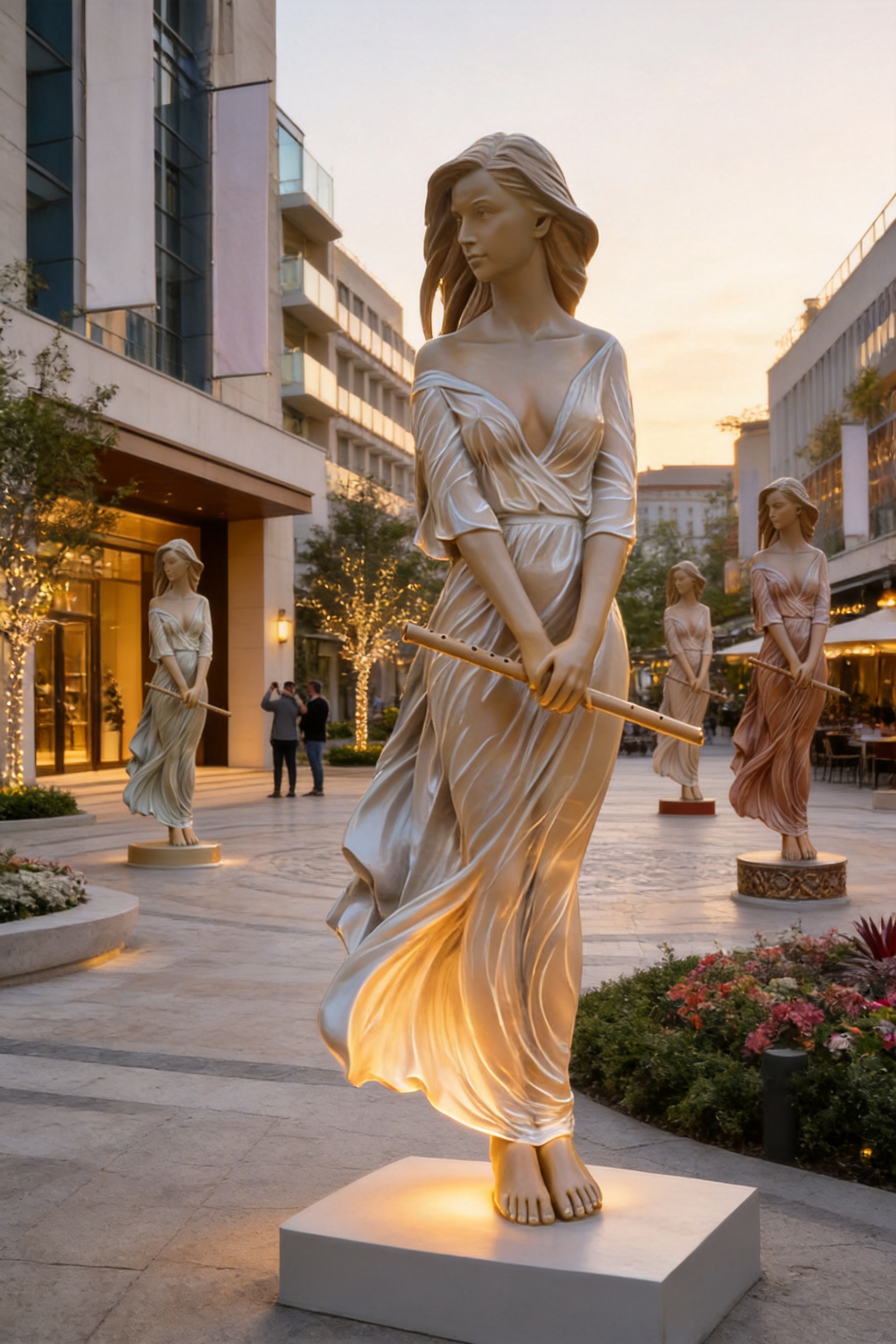
The sculpture is made from fiberglass, a composite material known for its relatively low weight, strength, shapeability, and suitability for decorative outdoor applications. The final construction may include internal reinforcement and protective surface coatings according to the design and installation requirements.
Yes. The product is designed for outdoor art installations such as streets, alleys, cultural tourism districts, parks, and commercial landscapes. Its weather-resistant and corrosion-resistant characteristics help it withstand normal outdoor exposure. Site-specific factors such as extreme weather, coastal air, high humidity, and possible impact should be reviewed before installation.
The listed overall height is approximately 2 to 2.5 meters, including the base. The sculpture body is approximately 1.8 to 2.2 meters high. Custom sizes may be discussed according to the requirements of the site.
Fiberglass is significantly easier to handle than a comparably sized marble sculpture and offers greater flexibility for large flowing forms. It can reproduce the visual movement of the skirt and hair without creating the same level of weight and transportation difficulty associated with solid stone.
Bronze offers traditional prestige and a distinctive metal character, while fiberglass emphasizes lighter deployment, flexible coloring, and efficient reproduction of large dynamic forms. Fiberglass may be a practical choice when the project needs an expressive landmark with lower handling and installation demands.
Fiberglass can generally be finished in a range of colors and surface effects. Buyers should confirm the exact color standard, sheen, protective coating, and outdoor performance requirements with the manufacturer before production.
As a custom design sculpture manufacturer, Jiangsu Xinyesheng Sculpture Co., Ltd. can discuss modifications to the pose, skirt movement, hair direction, scale, base, and finish. Custom changes should be reviewed before production so that artistic and structural requirements can be coordinated.
A stable foundation and secure anchoring method are normally required for outdoor installation. The exact solution depends on the ground, wind exposure, base configuration, sculpture weight, and local regulations. Professional installation planning is recommended.
The provided price range is approximately US$1,022.61 to US$1,178.84. This should be treated as an initial product reference. A final quotation may change according to customization, finish, packaging, shipping, installation, and other project details.
Potential locations include pedestrian streets, alleys, cultural tourism areas, parks, gardens, hotel entrances, resort grounds, shopping districts, residential developments, plazas, and other public or commercial spaces. The sculpture should be positioned where its silhouette, movement, and relationship with surrounding architecture can be appreciated.
Yes. Fiberglass is durable but not completely maintenance-free. Periodic cleaning and inspection are recommended. Owners should check the surface coating, seams, base, fasteners, and areas that may be exposed to impact. Repairs should be carried out promptly if chips, cracks, or coating damage appear.
Yes. The company’s listed product categories include bronze sculptures, stainless steel sculptures, marble sculptures, fiberglass sculptures, and weathering steel sculptures. This allows buyers to compare materials and commission different sculpture types through one manufacturer.
The Fiberglass Human Sculpture in the “Skirt in the Wind” Pose is designed for projects that want a recognizable human landmark with an expressive sense of motion. Its flowing skirt and hair create a memorable silhouette, while fiberglass provides the practical advantages of relatively low weight, flexible shaping, corrosion resistance, and adaptable finishing.
Compared with heavier stone and metal alternatives, the sculpture can be easier to transport, position, and install. Compared with more industrial materials, it can provide a softer and more approachable appearance. These advantages make it suitable for public streets, cultural tourism districts, gardens, hotels, resorts, commercial spaces, and other outdoor environments where visual appeal and practical deployment must work together.
Jiangsu Xinyesheng Sculpture Co., Ltd. supports this product with custom sculpture manufacturing capabilities and experience across several material categories. Its ability to work with fiberglass as well as bronze, stainless steel, marble, and weathering steel gives buyers a broader basis for material comparison and project planning.
For buyers seeking an outdoor sculpture that combines graceful human form, dynamic movement, manageable installation, and customization potential, the “Skirt in the Wind” design offers a compelling solution. With appropriate site assessment, anchoring, protective finishing, and routine maintenance, it can serve as a durable artistic landmark and a lasting visual focal point.
1. General principles of composite material design and fiberglass-reinforced sculpture construction.
2. Outdoor sculpture planning guidelines for public spaces, pedestrian environments, and landscaped sites.
3. Comparative material considerations for bronze, stainless steel, marble, fiberglass, and weathering steel sculpture.
4. General recommendations for sculpture foundation planning, anchoring, transport, and installation safety.
5. Product specifications and company information supplied for the Fiberglass Human Sculpture in the “Skirt in the Wind” Pose.
6. General conservation and maintenance principles for coated composite artworks installed outdoors.
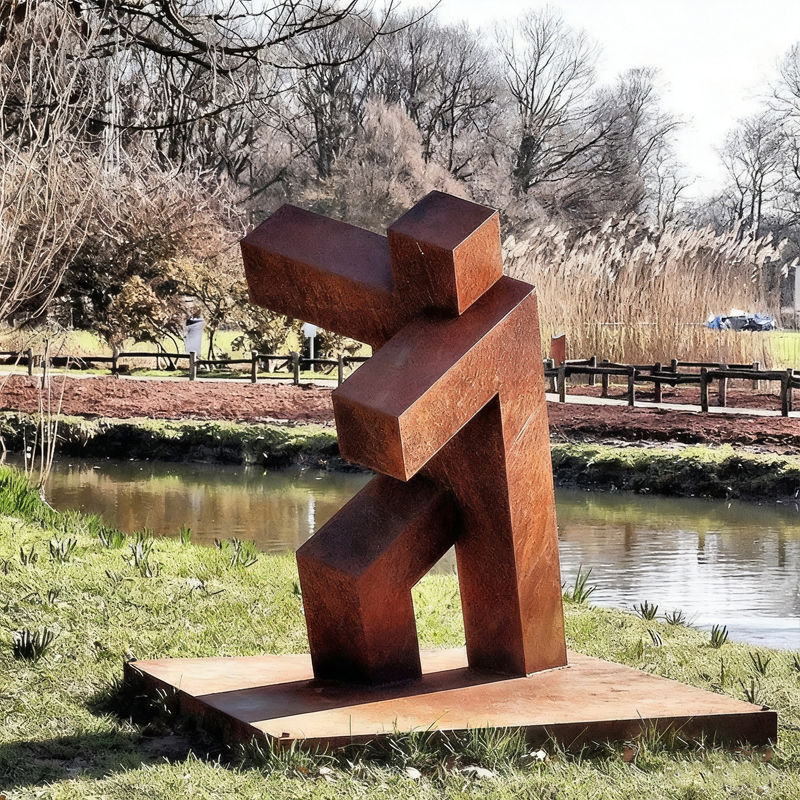 Abstract Weathering Steel Decorative Sculpture
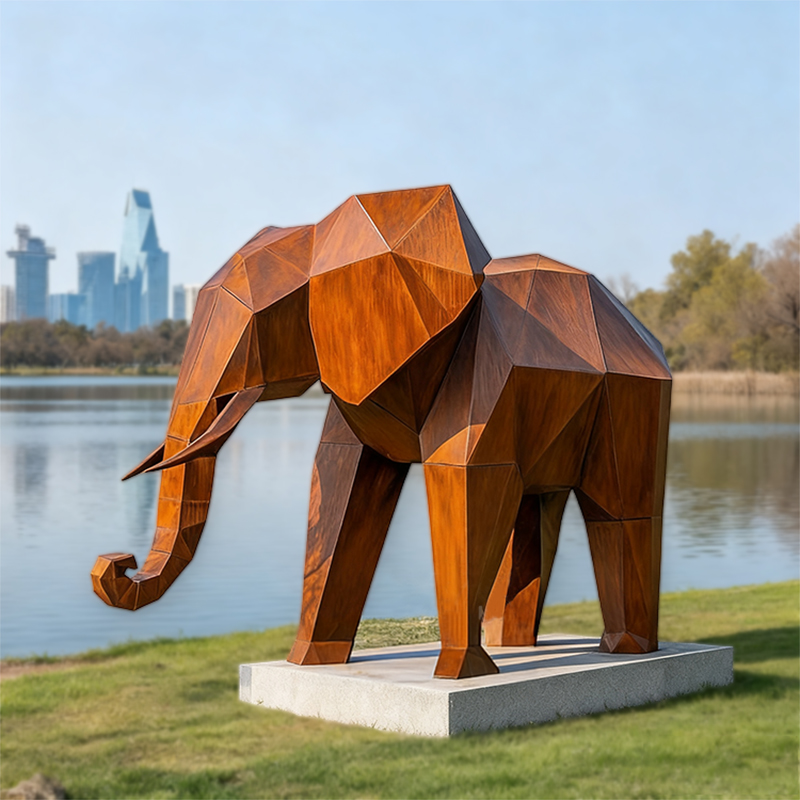 Weathering Steel Faceted Geometric Elephant Animal Sculpture
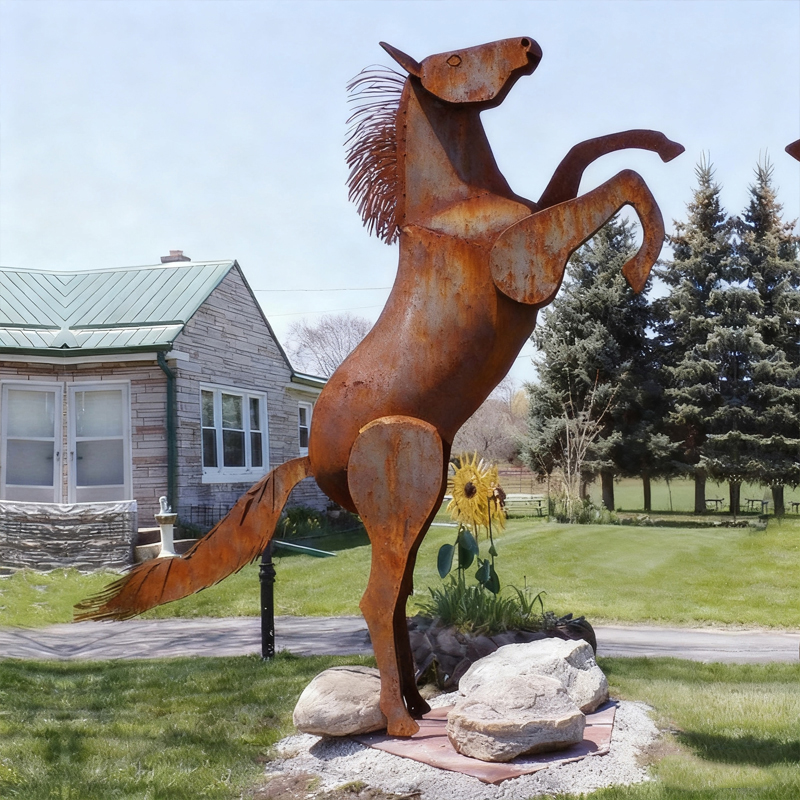 Weathering Steel Galloping Horse Animal Sculpture
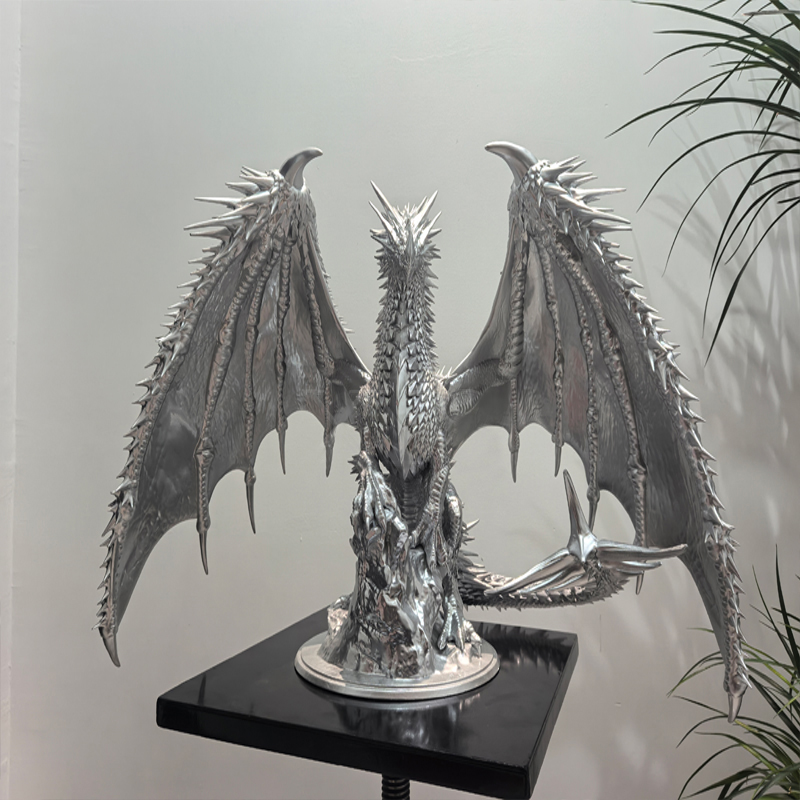 Fiberglass Human Sculpture in a Gargoyle Style
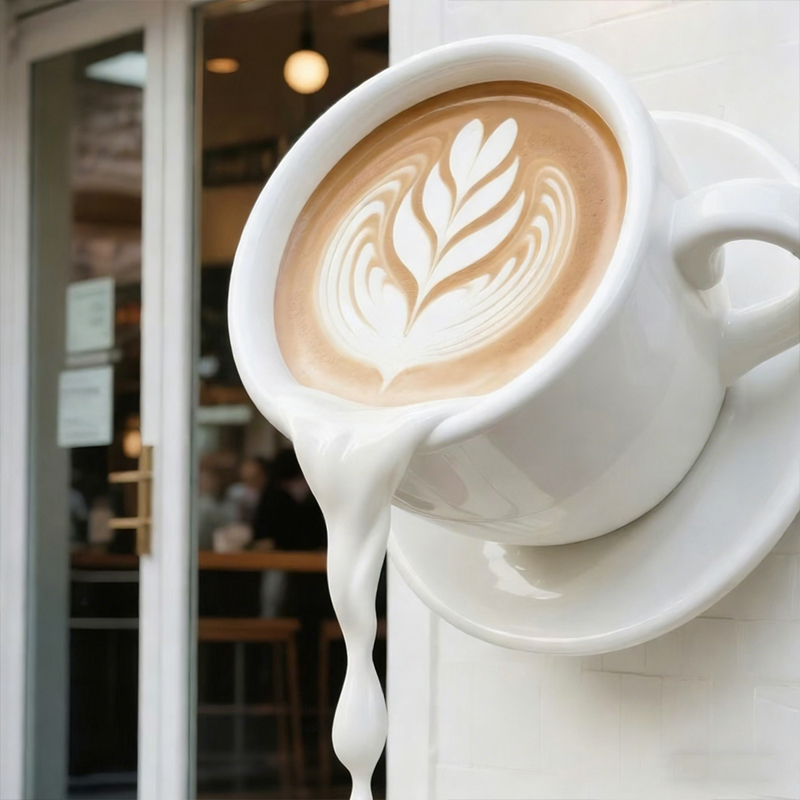 Fiberglass Floating Coffee Cup Decorative Sculpture
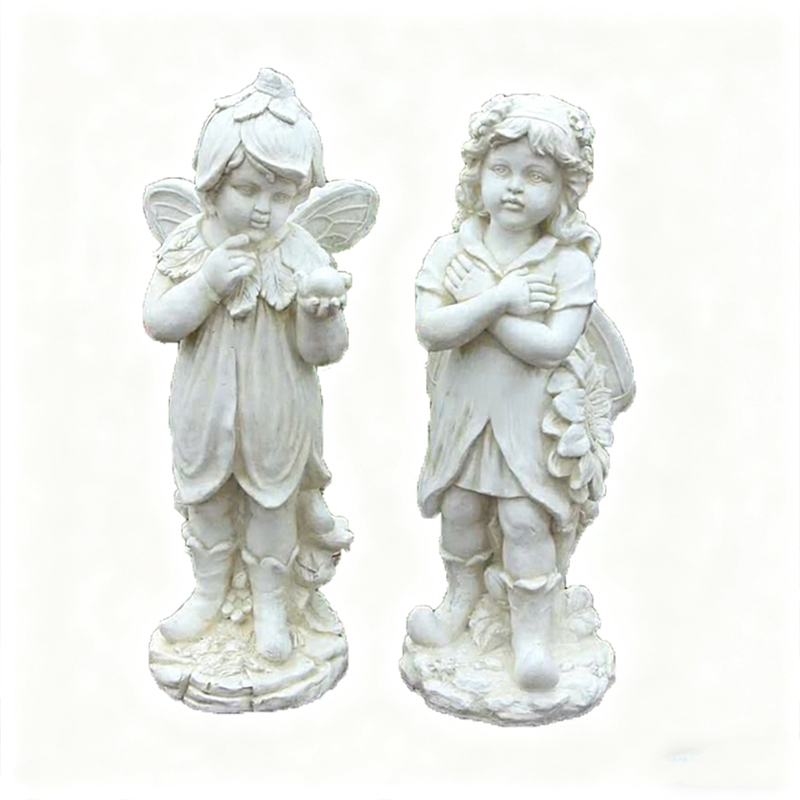 Fiberglass Human Sculpture of a Little Angel



Daniel H.

Amanda R.

Robert B.

Jennifer S.

James W.

Barry G.

Michael T.

Emily K.

David L.

Sarah M.


Mikey XV

Jagxue

 English
 Español
 عربى
عربى Français
 italiano
 Deutsch